Sports Insight

Student researcher, Bianca Henline, studies sports-related head and chest impacts

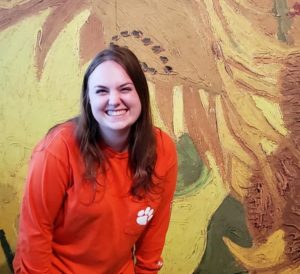
Bianca Henline, senior bioengineering student at Clemson University

Bianca Henline is currently a senior bioengineering student at Clemson University. After joining the Clemson Headgear Impact Performance (CHIP) Laboratory in the Fall of 2022, Bianca has been a part of multiple projects within the lab, testing the impact of large forces on protective headgear. The CHIP lab produces research that develops testing methods to understand the effects of impacts to the head and neck in order to aid in the prevention of sports related injuries.

The research Bianca most recently participated in involved using a pneumatic linear impactor to evaluate the effectiveness of commonly worn bull riding helmets. With the help of a grant from the Robert H. Brooks Sports Science Institute, Bianca is starting a new project that is exploring sports-related impacts in order to evaluate the effectiveness of chest protective equipment.

We recently spoke to Bianca about her experience in the CHIP lab and how this research impacts the standard of safety for protective gear across sports.

Why did you choose Clemson University?

I knew Clemson had a good bioengineering program and the sporting aspect was a huge draw for me. Being from Ohio, I felt pushed to go out of state and once I went on a tour here, I fell in love with the school and small-town community.

What made you decide to major in Bioengineering?

I always knew that I wanted to do something in the medical field and for a while I thought I wanted to be a doctor but I also had a love for design. When I took Intro to Bioengineering, I realized I could combine the design aspect with math, physics and the human body and it was the perfect mix for me. 

Pneumatic linear impactor stimulates force of impact that occurs during contact in sports

How did you get involved in the Clemson Headgear Impact Performance Lab?

I took Dr. Harvey’s sports engineering class and Dr. Avedesian, the director of sports science at Clemson, came into our class looking for students that were interested in getting involved in sports science. I decided to join and got the chance to analyze the performance of Clemson Olympic sports athletes. We made presentations and pitched our findings to the coaches on how their athletes were performing. During that time, I was paired with Adam Smith and he recruited me to join the CHIP lab. One of the reasons I love my major is because everyone is so supportive and is working toward the same goal.

What projects have you worked on in the Clemson Headgear Impact Performance Lab?

One of the big projects I helped work on involved testing bull riding helmets. A Ph.D. student in the CHIP lab, at the time, was given the project but had other projects he was working on so I worked with a master’s student to help with testing. I got to head the project over the semester and we used mask testing and the linear drop tower to test the durability and protectiveness of the helmets. I’ve also gotten to work on testing for other projects and over the summer, I started looking at other protective equipment like shoulder pads used in different sports protective gear.

Bianca is programming the linear impactor to test the impact of force against a bull riding helmet

Can you explain what you did during these projects?

I used an impact ram and fitted bull riding helmets on a head form that could be manipulated. Then, I impacted the helmet and recorded rotational acceleration and looked at head criterion and damage. Based on the metrics and the damage each helmet had, I categorized the helmets based on their rankings.

Were there any challenges you faced while working on these projects?

While using the linear drop tower, one of the heavy head forms was accidentally dropped, which led to the nose breaking. We tried gluing it, epoxy, etc. and ultimately, we had to order a new head which was expensive and took a while to come in. I also had an issue with the neck of one of the head forms that kept cracking. I didn’t know if it was a location or speed problem but I tried gluing it together to see if it would hold during the testing. I noticed that the times of impact were getting influenced by the glue so I ended up having to order a new neck. One thing about the lab is that everyone is very resourceful and we try to fix the problem ourselves before having to order new equipment.

Is there a specific reason you wanted to study the impact of safety gear?

I grew up playing tennis and freshman year of high school I kept passing out on the court. I was in and out of the hospital and the doctors couldn’t figure out why it kept happening. I eventually got diagnosed with POTS, postural orthostatic tachycardia syndrome, after a family friend was diagnosed with it, sparking my diagnosis. There is still a lot we don’t know about the human body and I know how important research is, especially in sports. I want to contribute to research that helps  people so that they don’t have to struggle getting a health diagnosis due to a lack of knowledge and research.

I am also very mechanical in the way I think. Force, velocity and pressure makes sense to me and dealing with armor was easier to understand.

Linear drop tower is used to test the durability of helmets

Your team was recently awarded a new grant by the Robert H. Brooks Sports Science Institute. Can you tell me about the goals of this research?

This project is a holistic approach to body armor instead of just headgear. It provides a great opportunity to explore other parts of the body for research, like chest protectors, elbow pads, etc. I am looking at impacting similarly to the bull riding project and the effects of certain materials and positions of gear on their performance in a sports application.

Right now, we are doing preliminary literature reviews and testing out dummies. Once I have the equipment that I need and have outlined the method of what specifically I want to do, we will begin the actual testing. For this research project, we have three new Creative Inquiry students, one Bioengineering and two Packaging Science majors, and then three people that were already working in the lab that will be assisting in the research.

How has funding from the Robert H. Brooks Sports Science Institute helped in your research?

Using the grant, I was able to get an entire body form to use for the protective gear testing. The body was super expensive but that grant has allowed us to expand our research capabilities to test different sports protective gear, outside of headgear testing. This equipment is a vital component of my current research but will also be used for other projects within the CHIP lab. 

How do you think the work being done in the CHIP lab impacts the standards of protective gear in sports?

Bianca presenting her research on the effectiveness of bull riding helmets 

I recently presented about the bull riding project and someone came up to me and shared how she wasn’t aware that people were having serious brain damage from the hockey helmets that were used for bull riding. It really puts into perspective that my work is impacting people and there are people that are truly touched. Through my research, I learned about a bull rider that committed suicide due to CTE, chronic traumatic encephalopathy, caused by repetitive impacts to the head. This really emphasized to me the importance of bringing awareness to the need for protective gear improvements and the work being done in the CHIP lab is contributing to that progress.

What are you involved in outside of the classroom?

I volunteer with Clemson Life every week and help with their cooking classes. Working with them is the highlight of my week. I have learned so much from them and I really do look up to them. I am also involved in Tau Beta Pi, the engineering honor society, and two bioengineering organizations on campus. Outside of that, I am also super passionate about working out and running. I recently completed my first marathon and I definitely want to run more of them in the future.

What are your plans after graduating with your undergraduate degree in May?

I am staying at Clemson for my master’s in Bioengineering. I will be continuing my research in the CHIP lab looking into protection gear. After I finish my master’s, I want to go work in the industry, either in orthopedic or sports science.

The Transformative Power of Adaptive Sports

By: Dr. Jasmine Townsend, CTRS, CARSS-I, Associate Professor, Clemson University

My introduction to adaptive sports occurred at the National Ability Center in Park City, Utah (www.discovernac.org). They are a community recreation organization that provides adaptive sports and recreation activities like mountain biking, sled hockey, river rafting, handcycling, and waterskiing, among others, to individuals with a variety of physical and cognitive disabilities. People come from all over the United States, at all times of the year, to participate in their programs. I spent my time helping kids and adults learn new skills, push the boundaries of their abilities, and generally just have a great time in the mountains, lakes, and deserts of the Mountain West. It was the best job ever. We had tons of fun, and I developed lasting friendships with many of my coworkers.

Clemson University student Scarlett Lawthorne, a senior studying recreational therapy, practices with her compound bow for the 25th annual Southeastern Regional Wheelchair Games, May 17, 2019. (Photo by Ken Scar)

My work in adaptive sports over the last decade has continued through both direct service provision and research activities. In all my interactions with participants across these various experiences, I have heard statements like “Adaptive sports have changed my life” ;or “My son/daughter has changed so much since they started playing wheelchair basketball”; or “I’m more confident in my abilities, and I have a sense of purpose now.” It was quite fulfilling as a health and recreation professional to know that what we were doing had such impact. I absolutely believe it changed lives, because I saw it happen. However, the researcher in me wanted to know more.

The Clemson Adaptive Sports and Recreation lab aims to provide evidence that informs decisions about adaptive sport programming and enhance outcomes associated with involvement in those programs. This mission is perfectly geared to examine the transformative nature of adaptive sports for individuals with disabilities. Recent research (Duerden, et al., 2018) has provided definitions of a continuum of general experience types ranging from ordinary, to memorable, meaningful, and finally transformative. Other research has also identified adaptive sport participation as transformational to participants’ self-identity (Lundberg, Taniguchi, McCormick, & Tibbs, 2011).

be  Clemson alumni Marsden Miller plays in an intramural wheelchair basketball game, an opportunity available through a collaboration between PRTM and Department of Campus Recreation
be Clemson alumni Marsden Miller plays in an intramural wheelchair basketball game, an opportunity available through a collaboration between PRTM and Department of Campus Recreation.

No research, however, has used a reliable measure to gauge the impact of adaptive sport experiences. Furthermore, no research has connected program characteristics to the experience types, leaving program administrators with little systematic and reliable information with which to intentionally design programs to facilitate growth and development among individuals with disabilities participating in adaptive sport.

In January 2021, and in collaboration with colleagues at Brigham Young University, my students and I will embark on a study to determine the impact of adaptive sport experiences using the Experience Impact Measure (EIM). This will be the first study to use this measure in an adaptive sport context and will contribute to validation of the instrument. We will also explore a variety of program characteristics that may prove important for each type of experience (ordinary to transformative). Such information will be useful to various stakeholders in their efforts to understand the impact of adaptive sport programs but will also help in efforts to refine the design and implementation of these programs.

While anecdotal evidence from participants is meaningful in the moment and powerful as a testimonial, a systematic and data-driven understanding of the impact of adaptive sport participation is needed. This project will provide that understanding, and we feel it perfectly complements the aims of the Robert H. Brooks Sport Science Institute.


References:

Duerden, M. D., Lundberg, N. R., Ward, P., Taniguchi, S. T, Hill, B., Widmer, M. A., & Zabriskie, R. (2018). From ordinary to extraordinary: A framework of experience types. Journal of Leisure Research, 49(3-5) 196-216.

Lundberg, N. R., Taniguchi, S., McCormick, B., & Tibbs, C. (2011). Identity negotiating: Redefining stigmatized identities through adaptive sports and recreation participation among individuals with a disability. Journal of Leisure Research, 43(2), 205-225.


Exploring Fan Advocacy in Sport: “Save our Spikes” and the Proposal to Change MiLB

By: Dr. Virginia S. Harrison, Assistant Professor, Clemson University

Christen Buckley, Ph.D. Candidate, Pennsylvania State University

On October 18, 2019, the New York Times released a list of 42 minor league baseball teams across the United States that were slated for elimination by Major League Baseball (MLB) after the 2020 season. The news shocked minor league team officials (Sanchez, 2020), who launched communications campaigns aimed at showing the importance of the teams to their local communities. One such campaign included the Save Our Spikes campaign in State College, PA, pictured here. Through tactics like holding local rallies with media or displaying signage, teams encouraged fan advocacy as critical parts of their campaigns. The outlook turned particularly bleak when COVID-19 shut down the minor league baseball season for all of 2020, leaving the 42 teams in limbo.

Save Our Spikes tweet
State College Save Our Spikes campaign tweet.

Our study seeks to understand the dynamics of the fan advocacy and team communication efforts behind the Save Our Spikes campaign and those like it across the minor leagues. Given the unprecedented nature of this announcement coupled with COVID-19, we want to know how fans engage in and view advocacy as part of their fandom. Additionally, how are teams’ strategic communications departments motivating fan advocacy? Advocacy literature typically focuses on nonprofit actions and work toward a specific cause (e.g., Corning & Myers, 2002), and our study takes a new direction with scholarship by applying these nonprofit principles to sport.

Baseball fans fight for their MLB teams.
Baseball fans around the country are fighting for MiLB teams.
Photo by Jose Francisco Morales

We also want to understand how fans feel about their local minor league teams. Unlike relationships with major professional teams, minor league fan affiliations are unique and often tied to community identity (Wear & Heere, 2019; Wegner, Delia & Baker, 2018). While research exists on the impacts of professional sports teams moving to new towns (Mitrano, 1999), little research focuses on this connection for minor league professional teams. The current situation is a unique opportunity to look at the ways that fans show support for their teams when their existence is threatened.

We are conducting a three-pronged methodology to tackle this issue: interviews with fans and team officials, fan survey, and social media content analysis. We are still looking for interview participants and would love to hear from you if you are a fan of a minor league baseball team or employee of a minor league baseball team. Please reach out to Dr. Virginia Harrison, vsharri@clemson.edu, or Christen Buckley, clb5344@psu.edu, to see if you are eligible for the study. We look forward to sharing the results of our work with you in a future post!

References

Corning, A. F. & Myers, D. J. (2002). Individual orientation toward engagement in social action. Political Psychology, 23(4), 703-729. DOI: www.jstor.org/stable/3792364.

Mitrano, J. R. (1999). The “sudden death” of hockey in Hartford: Sports fans and franchise relocation. Sociology of Sport Journal, 16, 134-154.

Sanchez, R. (2020, May 19). “Minor league baseball in crisis.” Sports Illustrated. Accessed https://www.si.com/mlb/2020/05/19/minor-league-baseball-is-in-crisis.

Wear, H. & Heere, B. (2019). Brand New: A Longitudinal Investigation of Brand Associations as Drivers of Team Identity Among Fans of a New Sport Team. Journal of Sport Management. Advanced publication doi: 10.1123/jsm.2018-0204.

Wegner, C. E., Delia, E. B., & Baker, B. J. (2018). Fan response to the identity threat of potential team relocation. Sport Management Review. Advanced publication doi: 10.1016/j.smr.2019.01.001


True Colors: Research team adjusts how TVs read team colors

A view of how Clemson University’s football team’s purple jerseys appeared on televisions around the country.

The Saturday before Thanksgiving in 2018, my family and I settle into our living room to watch the Clemson Tigers play the Duke Blue Devils. I was lucky to be able to fly home a little before the break began and was thrilled to be able to watch the football game with my family. My mom prepared for the occasion, filling the coffee table with snacks usually reserved for our Super Bowl watch party. As the camera pans to the Tigers making their run down the Hill as part of the most exciting 25 seconds in college football, my brother only makes one comment: “Oh, Duke is running down the Hill!”

Emma Mayes, a Clemson student on Dr. Walker’s research team

Of course, it wasn’t Duke. There is no way an opponent would run down the Hill at a Clemson home game. But lo and behold, it appeared that way. Clemson’s purple jerseys donned to celebrate Clemson’s “Purple Out” football game in honor of its Military Appreciation Day, appeared navy blue on the screen, a similar shade to Duke’s team colors. And it wasn’t just our TV; Clemson looked to be wearing navy blue across broadcast footage and television screens. My dad and brother had a field day, cracking jokes about how Duke was playing themselves in Death Valley.

This is not a problem limited to Clemson. This brand color discrepancy is also apparent with other teams when they play, such as the Dallas Cowboys, where their silver pants appeared green during a broadcasted game. And what is a sports team without their team colors? Unfortunately, trying to correct the brand colors means all the colors in the frame would suffer. Environmental lighting and post-production color adjustments affect the entire frame of the broadcast feed. So, while the brand color could be adjusted to appear correct, the rest of the frame would be adjusted as well, ruining other colors at the expense of fixing one.

Dr. Erica Walker, a Clemson University graphic communications professor

Enter Dr. Erica Walker, a Graphic Communications professor at Clemson University, who brought together a team that asked whether the frame could be adjusted so these colors appear to brand specification, but not at the cost of the rest of the frame being adjusted as well. She partnered with the Watson in the Watt Creative Inquiry run by Dr. Hudson Smith and Dr. Carl Ehrett to work with undergraduate students to develop an AI-based solution. I ended up being one of those undergraduate students. I was thrilled to get involved with research about AI but was even more excited by this problem we would be solving, remembering that this was something my own family had commented on weeks before.

Once a week, as the ColorNet research team settles into their meeting room in the Watt Family Innovation Center and exchanges what their week looks like, Dr. Walker comes into the team room with a big smile on her face. “Hey y’all, how’s it going?” she says as she sets down her bag. It always starts the weekly meetings on a good note and the team can’t help but be excited about what they will accomplish that day.

And accomplish great things we did. With the efforts of Dr. Walker, ColorNet was developed, a patent-pending artificial intelligence (AI) technology that takes a live video feed and adjusts it frame-by-frame, pixel-by-pixel, in real-time to ensure brand color accuracy. This convolutional neural network, a type of machine learning model, was trained on numerous clips from Clemson’s football games that were manually color corrected using Adobe Premiere Pro. ColorNet learns what areas of the frame are considered brand colors and how to shift those pixels so that they appear to visually match Clemson’s brand colors without losing the distinctions between highlights and shadows and without changing the non-brand color areas.

Michelle Mayer, a Clemson student on Dr. Walker’s research team

After training the model to color correct Clemson’s orange, Pantone 165, it was time to test it. All testing took place in Littlejohn Coliseum, allowing the technology to be tested on a standard jumbotron and within the current infrastructure of a live event. The alpha test involved streaming one of Clemson’s home football games into Littlejohn and onto the jumbotron to determine if ColorNet would catch the various spots of Clemson orange in each frame and adjust these areas to be the recognizable color fans know and love. With some adjustments to the program and support provided via pizza from Dr. Walker, the alpha test proved to be a success.

The beta test took place during a live women’s basketball game, where we ran ColorNet on the jumbotron feed during the basketball game in front of a live audience of fans. The goal was to determine if ColorNet was truly targeting areas of brand color and was able to be extended to other sports or broadcast arenas. The technology proved itself once again! It correctly picked out the women’s jerseys and the splashes of Clemson orange found on the spectators in the arena. I remember walking the arena with Dr. Walker, both of us looking up at the jumbotron in wonder at what we had accomplished with ColorNet.

Our work is by no means over. The goal is to make it where we can color correct any team’s colors, not just Clemson’s. While we were able to expand ColorNet’s capabilities so it can also color correct Clemson purple along with orange, the goal is to generalize the application of the model so that it can color correct to a given color based on user input. Are we playing Alabama? Let’s correct for Crimson Tide red as well. LSU? Let’s adjust for their purple and gold. While COVID-19 makes it hard to meet and collaborate in person towards this development, the meetings are still opened the same. And the same excitement for where ColorNet will go next is tangible even through the screen, thanks to the passion of Dr. Walker.