
Clemson Division of Research

Dec. 2019: Proper Planning is Crucial to be Successful

Tanju Karanfil
Tanju Karanfil

As this semester comes to a close, I want to congratulate you on your successes this past year. Our research enterprise continues to post strong growth, with annual competitive expenditures topping $100 million for the first time. Read more about the state of Clemson research in my latest report to the Board of Trustees here.

For the Board of Trustees meetings in February, trustees have asked us to review our efficiency. As I compare our growth to our Carnegie R1 peers and consider our institutional size, I believe we operate efficiently. We are conducting more research than ever before. Our success in securing competitive awards has undoubtedly increased our workloads and stressed our ability to prepare and submit new proposals.

I feel this challenge myself. Proper planning is crucial. For the past three months, I have set aside a couple hours each week to work on a grant proposal for my own research that I finally submitted in November. Penny, my executive assistant, can attest that even a few hours on my calendar can be hard to find, as I am sure it is for you to find as well. But this is critical; the product I submit should be polished and professional.

Click to read Dr. Karanfil's latest quarterly report to the Clemson University Board of Trustees.
Click to read Dr. Karanfil’s latest quarterly report to the Clemson University Board of Trustees.

As educators, we have all received student papers we believe were hastily written a night or two before the due date. Funding agencies can also tell which proposals are thoroughly researched, written and edited. In some cases, poorly prepared proposals may not be read at all. The National Science Foundation, for example, automatically roots out all proposals that aren’t formatted correctly.

This seems simple but can be easily overlooked. We have seen proposals rejected because they were submitted in the wrong font. We have seen instances where two abstracts were incorrectly submitted rather than an abstract and a project narrative. These mistakes are made because documents were filed right at the deadline without thorough review. Your Office of Sponsored Programs (OSP) Support Center can help ensure that doesn’t happen to you, but you must submit documents to OSP at least two business days before proposals are due.

Grant awards are significant investments in your research and your career. I encourage you to make a plan to have proposals written early so we can help you put your best foot forward. Our goal should not be to meet the deadline. Our goal should be to put forward our best. Best is the standard at Clemson.

Thank you for your contributions to scholarship and discovery at Clemson. I wish you a restful holiday break and successful new year.

–Tanju


A Note on International Research from Provost Bob Jones and Vice President for Research Tanju Karanfil

Dear Colleagues,

The federal government is increasingly concerned with attempts from foreign governments to unduly influence and exploit U.S.-funded research and is taking steps to protect our research integrity and intellectual capital.

International research engagements support the free exchange of ideas that has been central to our successes in scholarship and discovery, but we must make sure these engagements are conducted securely, transparently and ethically. Research integrity is paramount to our mission as educators and researchers.

The Division of Research has compiled a Guidance for Managing International Relationships and Activities to share recent statements from federal funding agencies, as well as information on federal policies and disclosure requirements. We encourage you to view that guidance and bookmark this webpage here. This guidance serves to help you navigate successful international research engagements.

This matter continues to evolve. The newly established Joint Committee on the Research Environment (JCORE) is coordinating federal agency activities and policies regarding research security. This includes establishing and coordinating disclosure requirements for participation in federally funded research and developing best practices for academic research institutions. JCORE also will be sharing a list of examples to help us understand the various ways research can be exploited or compromised.

We will be monitoring this closely and sharing new information with you as it becomes available.

In the meantime, if you have any questions about international research, please contact Tami Hemingway, Director, Office of Export Compliance and Research Security, at theming@clemson.edu.

Best,

Robert H. Jones                                                          Tanju Karanfil
Executive Vice President for                                         Vice President for Research
Academic Affairs and Provost                                       Clemson University, Division of Research


September 2019: Welcome Back!


Tanju Karanfil
Tanju Karanfil

I hope you had a restful summer break following what was a very productive year for our research enterprise.

During Fiscal Year 2019, we achieved two key goals of our ClemsonForward strategic plan:

  • Our Carnegie R1 status among the nation’s most active research universities was confirmed.
  • Our competitive research expenditures (Fund 20) topped $100 million for the first time, reaching $104 million during fiscal year 2019.

Additionally, our competitive awards topped $100 million for the fourth consecutive year. Congratulations on these achievements and thank you for your hard work and dedication to advancing scholarship and discovery at Clemson University. Our challenge is to maintain this level of research activity.

As you settle into a new semester, I want to provide a few reminders for conducting research at Clemson and make sure you are aware of some of the services the Division offers to help you advance your research portfolio:

  • Do not sign any research-related documents (e.g., non-disclosure agreements, grant agreements, research contracts, consulting agreements). Contact the Division of Research.
  • Visit our Office of Research Development to view various funding opportunities.
  • When you identify a funding opportunity for which you plan to apply, first notify the Office of Sponsored Programs (OSP) Support Center in your college. Contacts are listed here.
  • If you haven’t already, complete the Sponsored Programs Certification Program here. You will not be able to submit proposals through Clemson University without the certification.
  • Register when applicable for any electronic registrations/accounts (NSF Fastlane/research.gov, eRA Commons, etc.) required by the funding agencies.
  • Faculty should have a current Conflict of Interest Disclosure on file to be able to submit proposals (e.g., NIH, NSF). Access COI training here and submit your disclosure through InfoEd here.
  • The photo shows the fountains in front of the library with a the Division of Research logo placed in the top left corner. Make sure to set up your lab on the new online BioRAFT platform to begin managing your research safety requirements. Log in with your university credentials and follow the BioRAFT Quick Start Guide. If setting up a new lab or beginning research in a new area, include the Office of Research Safety in your planning.
  • Register for a Brown Bag Series seminar to better understand research integrity and compliance and earn credits toward required Responsible Conduct of Research training, when applicable. If you have questions or concerns related to research integrity/misconduct, please contact the Research Integrity Officer.
  • Prior to beginning a research project, make sure that all regulatory and compliance protocols regarding animal care, biosafety, human subjects and other research have been submitted and approvals are in place. Consult with the Office of Research Compliance on regulatory and compliance matters.
  • Once you have been awarded funds, OSP will forward the award to the Grants and Contracts Administration (GCA), which will set up the award and provide an account number. Do not start your funded research project prior to account setup, unless you obtain a risk account.
  • Review your Sponsored project dashboard with the Faculty Business Information System (FBIS), which provides an expense summary, transaction details and burn-rate information. Use the Sponsored Program Verification System to manage your semi-annual compensation reporting requirement online.
  • To disclose an invention, license intellectual property, or identify an industry collaborator, contact the Clemson University Research Foundation.
  • If submitting a proposal to an industry sponsor, the Office of Industry Contracts will need to review your proposal and negotiate an agreement with the industry sponsor before you initiate the project.

The Division of Research can help you identify opportunities, submit proposals, manage awards, work with industry, navigate research-related regulations and much more. If you need assistance and aren’t sure who to contact, please fill out this form and we will get back to you as quickly as possible.

Or if you have any comments or suggestions, please reach me directly at vpr@clemson.edu.

Thank you again for your contributions to scholarship and discovery at Clemson University.

Go Tigers!

– Tanju


Introducing an easier way to manage research safety

The Division of Research rolled out a new digital solution from BioRAFT that makes it easier for faculty, staff and students to complete safety training, inventory chemicals and other materials, track safety equipment, and complete other safety tasks.

This secure, intuitive online platform provides automated reminders to help faculty complete safety tasks quickly and return to their research. BioRAFT replaces the current method of searching for training materials online, emailing documents to Research Safety staff, trying to track down laboratory personnel to check training status, and searching for chemical hazard information and safety data sheets (SDSs).

Researchers at other universities reported spending 60.5% less time on average completing the top 15 common safety tasks when using BioRAFT. Additionally, researchers spent 53%-84% less time on training and other safety specific tasks, allowing more time to focus on research while incorporating safety into their daily activities.

BioRAFT offers several features:

  • Easily access SDSs and track inventories of chemicals and hazardous materials using Chemtracker.
  • Manage safety and other research equipment.
  • Streamline inspections and follow-ups.
  • Complete online training and track training requirements and statuses for PIs and lab and research area members.
  • Easily access safety documents and standard operating procedures (SOPs).

BioRAFT is accessible online here. Log in with your Clemson University ID and password and follow the Quick Start Guide.

The BioRAFT site is compatible with your mobile device.

BioRAFT offers several different “modules” for specific tasks, such as inventorying chemicals, scheduling inspections or meeting training requirements. Those modules will be implemented in the following steps:

  • As of Aug. 1 –  Bioraft is live for PIs and supervisors to set up their labs and work areas.
  • As of Aug. 15 –  Online training is now available.
  • Sept. 30 – Inspection module becomes available.
  • Oct. 30 – Chemtracker and SDS becomes available.
  • Nov. 30 – Equipment module becomes available.

The Office of Research Safety will notify faculty via email from the BioRAFT platform when new modules are available.

QUESTIONS?

Please read the FAQs here.

Research Safety will conduct BioRAFT training throughout campus during the fall semester. You can also submit questions about this new platform to bioraftRShelp@clemson.edu.

May 2019: The High Value of Research Integrity

Duke University’s ground-breaking $112 million settlement of a False Claims Act lawsuit underscores the high stakes of research integrity and raises important questions for research institutions.

  • On what basis is a university responsible for misconduct committed by one individual?
  • By what measures can universities practically monitor the conduct of research to prevent falsification or fabrication of data?
Tanju Karanfil

This much is clear: We must work together to foster and preserve a culture that places an emphasis on research integrity. Merriam-Webster defines integrity as a “firm adherence to a code of especially moral or artistic values: incorruptibility.” This is essential to any institution whose primary purpose is to educate and generate knowledge.

The issue of responsible conduct poses serious challenges as both research enterprises and regulatory requirements grow. To assess these challenges and create a roadmap for responsible research culture, The Committee on Science, Engineering, and Public Policy (COSEPUP) of the National Academy of Sciences, the National Academy of Engineering, and the Institute of Medicine released a comprehensive report, Fostering Integrity in Research, that is a worthwhile read.

The Duke case

The Duke settlement far exceeds other recent federal cases. In 2015, the University of Florida settled for $19.8 million, for example, and at the time, that was high. Cornell University had resolved a 2009 case for $2.6 million, by comparison, and Northeastern University in 2013 for $2.9 million. Those two cases involved misappropriated federal funds, breaches that could be traced back to the failure of internal controls or insufficient staff training and expertise in grant management. These errors could be remedied with improvements to administrative systems.

In the Duke case, however, the falsification of data was much more difficult to detect by administrative systems. The primary tools available to universities are preventative in nature and primarily fall into the categories of training and education. Responsibility for actually monitoring data collection generally falls to the academic or laboratory personnel local to where the research occurs.

The recent settlement was the second high-profile case of data falsification at Duke’s medical school in a decade, which may have influenced the magnitude of the penalty levied against the university. You can read more about the Duke case here.

Action steps

Promoting research integrity requires high-level support and also collegiality, communication and cooperation with research teams, academics departments and administrative units across the entire Clemson community.
Promoting research integrity requires high-level support and also collegiality, communication and cooperation with research teams, academic departments and administrative units across the entire Clemson community.

Among initiatives outlined in a corrective action plan with the National Institutes of Health, Duke is creating an Office of Scientific Integrity, establishing an Associate Vice Provost for Scientific Integrity, and forming an Executive Oversight Committee. Duke also formed an Advisory Panel on Research Integrity and Excellence to provide additional recommendations to the university this summer.

At Clemson, the Office of Research Compliance manages a robust Responsible Conduct of Research program with training opportunities, answers to frequently asked questions, numerous forms and other resources, and a confidential third-party Ethics/Safety hotline to report concerns.

Additionally, our Office of Sponsored Programs provides materials on the False Claims Act as part of the Training in Research Administration at Clemson (TRAC) program delivered to both grant support staff and associate deans for research.

Please visit the webpages hyperlinked above and familiarize yourself with these matters and contact these offices for guidance.

Promoting research integrity requires high-level support and also collegiality, communication and cooperation with research teams, academic departments and administrative units. The high visibility of the Duke case will undoubtedly stir conversations on best practices among research universities. Perhaps most importantly, this presents an opportunity to open campus-wide dialogue on expectations and ethical and regulatory responsibilities.

I would like to close with this: At universities, our primary role is to educate and to create new knowledge to share with the world. Everything we do is rooted by facts, by scientific evidence, by experimental failures and successes, by the endlessly hard work of searching for answers, by truth. This is our responsibility and our opportunity. Integrity, then, is at the heart of the university mission. It is more important than dollars awarded or manuscripts published.

As always, I welcome your input. Email vpr@clemson.edu.

This is an exciting time to be a Clemson Tiger. The future is bright.

Go Tigers!

Tanju

Research Safety announces new employees

The Office of Research Safety announced the addition of Samuel Forrest as hazardous materials specialist and Laura (Yan) Ye as health and safety specialist.

Samuel Forrest
Samuel Forrest

For the past 6 years, Sam served as a Health and Safety Specialist at the Innovation Campus and Technology Park in Anderson and other assigned Upstate facilities, providing support in laboratory and non-laboratory safety as well as management of hazardous and biological waste management.

Sam is now assigned to main campus. Sam’s new duties consist of assisting the hazardous materials manager in hazardous and biological waste as well as hazardous materials transportation and shipping for all Clemson University facilities statewide.

 Laura (Yan) Ye
Laura (Yan) Ye

Laura succeeds Sam at the Innovation Campus and Technology Park. She previously held the position of health and safety specialist on main campus where her duties included safety inspections in both labs and non-lab areas, fume hood certifications, working with facilities to make sure hood repairs were completed as well as preparing health and safety fact sheets and other duties as assigned.


Feb. 2019: A Big Win for Clemson Research

Tanju Karanfil
Tanju Karanfil

Hours after winning his second national championship in three years, Coach Dabo Swinney said he couldn’t wait for his first team meeting as the Tigers prepare for next season.

His desire for continued greatness inspires me, and I hope it inspires you too. Like Coach Swinney, I am excited for the future and I am ready to work.

In December, we received the exciting news that our status as a Carnegie R1 institution has been confirmed for three more years through 2021. This is a significant achievement and a key goal of our ClemsonForward strategic plan. For our research enterprise, this is our national championship. Carnegie R1 classifies Clemson as one of the nation’s most active research institutions. It helps us recruit the best and brightest faculty members and students and puts us in a great position to compete for high-value research projects.

For “little old Clemson,” to borrow a phrase from Coach Swinney, achieving this status once seemed like an insurmountable mountain. But we continue to improve in the metrics Carnegie collects to classify universities.  As you know, Clemson first achieved R1 classification in 2016. Our reconfirmation in December came amid unexpected and uncertain changes to Carnegie’s data collection cycle and methodology, a testament to the strength and positive trajectory of our research enterprise over the past few years. Now, we must continue to work.
To help continue this momentum, we have taken several steps to help you advance your research portfolio. We are again funding competitive grants through our R-Initiative programs. We have already invested $3 million the past two years and these funds are helping faculty members hire research faculty, acquire equipment, pursue external funding and launch or complete scholarly projects (Read more). We are investing in unique, highly advanced equipment at our core research facilities (Read more).

Faculty members from each college attended the 2018 Research Symposium to listen to presentations and share research ideas.

We have several ideas in the works, including the potential for new R-Initiative programs and an industry Research Symposium next fall to help you market your work to the private sector. On May 8, we will have our annual Research Symposium at the Watt Family Innovation Center. Please mark your calendars and plan to attend. This is a wonderful opportunity to meet your colleagues and begin new collaborations. The organizing committee is currently accepting ideas. You can suggest a topic by emailing planning committee chairman Brian Powell at bpowell@clemson.edu.

As always, I welcome your ideas on programs that could help your research. Email vpr@clemson.eduto provide input.

This is an exciting time to be a Clemson Tiger. The future is bright.

Go Tigers!

Tanju

R-Initiatives showing impact; More awards announced

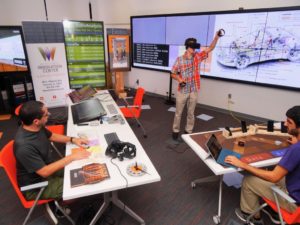
One of the early R-Initiative Recipients, Brygg Ullmer, chair of the university’s Human-Centered Computing Division, received additional external funding from the National Science Foundation to develop a customizable, hands-on virtual reality and advanced display system, pictured.
One of the early R-Initiative recipients, Brygg Ullmer, chair of the university’s Human-Centered Computing Division, received additional external funding from the National Science Foundation to develop a customizable, hands-on virtual reality and advanced display system, pictured.

The first recipients of R-Initiative grants administered by the Division of Research in 2017 have secured an additional $2.5 million in external funding, have two book proposals in press and six manuscripts under review, have written four peer-reviewed journal articles and eight book chapters, have submitted 17 conference papers and presentations, and have held one juried art exhibition.

These are just the early results of R-Initiative programs launched in 2017. The Division of Research has awarded more than $3 million in R-Initiative funding for research projects involving 172 faculty members across all colleges over the past two years. Programs provide funds for equipment purchases, for hiring research faculty, for initiating or completing research projects, and for competing for high-value external research funding.

In January, the Division awarded SEED grants to 11 faculty members from nine different departments and five colleges. These funds help faculty members initiate new research or complete scholarly products, such as books or book chapters, peer-reviewed publications, or visual and performing arts showings.

Applications are being accepted now for grants under the Major Research Instrumentation and Core Incentivized Access programs:

The Major Research Instrumentation program provides funds to purchase, replace or upgrade major research equipment. The submission deadline is March 27. Awards will be announced May 1. MORE DETAILS.

The Core Incentivized Access program (CU-CIA) provides access to Clemson’s core research facilities, at no cost, to help Clemson University faculty build research data that will supplement a new grant proposal. These facilities offer cutting-edge technologies, high-end instrumentation, technical support and educational services. The submission deadline is April 8. Awards will be announced May 6.  MORE DETAILS.


Clemson research facilities get big boost

Clemson University is adding new advanced equipment to three of its high-tech research facilities – the Electron Microscopy Facility, the Light Imaging Facility and the Micro Fabrication Facility.

The news tools will be used by Clemson researchers from numerous fields, as well as private industry, to fuel innovation for the advanced materials, advanced manufacturing, healthcare, digital, energy and environmental sectors, among many others.

Electron Microscope Facility

The Electron Microscopy Facility (EMF) at the Advanced Materials Research Lab in Anderson is adding three products:

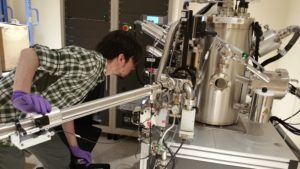
  • Hitachi’s SU9000 Ultra-High Resolution Scanning Electron Microscope with Electron Energy Loss Spectroscopy (EELS) capability is the highest resolution scanning electron microscope in the world and the only advanced microscope of its kind in the United States. This microscope will be ideal for catalysis, biological and pharmaceutical research, polymer and fiber analysis, life sciences and medicine, electronics, and advanced nanotechnology materials.
  • The Hitachi H7830 Transmission Electron Microscope (TEM) is the latest and most advanced tunable energy 120 kV TEM, featuring dual-mode objective lens technology that allows users to image their specimens in a variety of conditions, such as low magnification, wide-field high contrast, high resolution, and more — all in one microscope. This advanced TEM will allow users to study their material at the nanometer scale. Users from academia and industry from a variety of disciplines are expected to benefit from this advanced TEM.
  • Hitachi’s SU5000 Variable Pressure Scanning Electron Microscope (VP-SEM) allows for samples to be analyzed for a long duration with a stable and finely tuned electron beam. This microscope comes with a large chamber that is highly useful for irregularly shaped specimens. These types of microscopes are the work horse microscopes and provide steady and stable usage for extended period of time.

These additions make EMF one of the premiere electron microscopy labs in the country. This equipment is expected to be available for use by the end of the summer. Visit the EMF webpage for contact information and details on using equipment.

Meanwhile, the Clemson Light Imaging Facility (CLIF) is acquiring a new widefield imaging system, the Leica DMi8 TIRF HP with GSD Super-resolution. This powerful new live cell imaging tool offers traditional widefield imaging in X, Y, Z, T with multiple channels available for various fluorescent and transmitted light modes.  With the addition of the Total Internal Reflection Fluorescence (TIRF) module, users can now access four channels of TIRF imaging with Leica’s uniquely simple, one-click calibration, which provides highly repeatable penetration depths relative to the specimen’s refractive index without ever having laser light emitted into the room.  With the same four lasers, and Leica’s Laser Scanner, users can also now utilize the CLIF for photo-activation, photoconversion, optogenetics, and more, which may all be integrated into any of the imaging modes on the system.  The system is also capable of 2D GSD (Ground State Depletion) and dSTORM super-resolution. With the high performance stage and easy to use navigational software, users may now stitch large images, image multi-well plates, or image multi-positions within a dish, maximizing the data from every imaging run.

This equipment is expected to be delivered during the Spring semester. Visit the CLIF webpage for contact information and details on using the facility.

The Micro Fabrication Facility has added an EVG 501 wafer bonder, which can bond 4-inch diameter wafers  of similar or dissimilar materials together using heat and pressure. This capability allows researchers to take advantage of one material property while exploiting another.

In the 2nd quarter of 2019, the facility also will take delivery of a Raith EBPG5200 Series Direct Write Electron Beam Pattern Generator. This tool is state-of-the-art in E-beam direct writing, capable of producing sub 10nm structures with overlay accuracy of <5nm. With this new equipment, Clemson researchers will no longer need to travel to other institutions to produce nanotechnology-level devices.

Visit the Micro Fabrication Facility webpage for contact information and details on using the facility.

These are significant investments in Clemson’s research infrastructure. In 2019, the Division of Research again will offer faculty an opportunity to utilize these facilities, as well as the Godley-Snell Research Center, Aquatic Animal Research Lab, and High Performance Computing, through the Clemson University Core Incentivized Access program (CU-CIA). CU-CIA is one of six  R-Initiative programs created to spur research activity at Clemson and open new opportunities for faculty. In the last two years, the university has invested more than $3 million through its R-Initiative programs in projects involving 161 faculty members from 36 departments representing each college. Applications for the CU-CIA incentive will be due in April. More information on the CU-CIA program and other R-Initiatives is available online here

Applications now accepted for more R-Initiative grants

The Division of Research is now accepting applications for grants under the Faculty SUCCEEDS and Major Research Instrumentation programs.
These are two of six R-Initiative programs created to spur research activity at Clemson and open new opportunities for faculty. In the last two years, the university has invested more than $3 million through its R-Initiative programs in projects involving 161 faculty members from 36 departments representing each college.

The Clemson Faculty SUCCEEDS (Strategic University Challenge for Competitive Excellence and Expertise in Discovery and Scholarship) program provides seed grants that support leading-edge research and scholarship that capitalize on the existing intellectual capital at Clemson University. Recipients are expected to submit a major research proposal ($1.5 million or more) to federal agencies, foundations, corporate consortia or any other external sponsor. The deadline to apply is Feb. 27. Awards will be announced April 15. MORE DETAILS.

The Major Research Instrumentation program provides funds to purchase, replace or upgrade major research equipment. The submission deadline is March 27. Awards will be announced May 1. MORE DETAILS.

Next spring, the Division of Research will accept applications for the Core Incentivized Access program (CU-CIA), which provides access to Clemson’s core research facilities, at no cost, to help Clemson University faculty build research data that will supplement a new grant proposal. These facilities offer cutting-edge technologies, high-end instrumentation, technical support and educational services. The application period will open Jan. 21,  and the submission deadline will be April 8. Awards will be announced May 6.  MORE DETAILS.

Next summer, the Division of Research will accept applications for the Research Fellows program, which provides grants to assist regular faculty, academic departments, centers and institutes in the hiring and training of qualified research faculty and post-doctoral researchers. The application period will open May 15, and the submission deadline will be Sept. 13. Awards will be announced Nov. 18. MORE DETAILS.

The application period is now closed for the Clemson University SEED program, which provides funding for the initiation of a research project or the completion of a product, such as a book or piece of artwork. Awards will be announced on Jan. 28.

For questions on these R-Initiative programs, contact Diana Thrasher with the Division of Research at dianas@clemson.edu or 864-656-3908.


Nov. 2018: Exploring opportunities to collaborate

Tanju Karanfil
Tanju Karanfil

Did you know one of the few places in the Southeast where university scientists can print circuit boards is at a Clemson University campus in Blackville, about 30 miles southeast of Aiken?

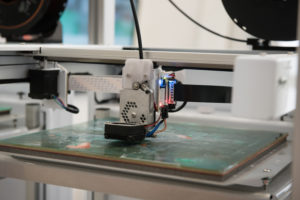
At Clemson’s Edisto Research and Education Center, sensor engineer Joe Maja is able to rapidly design, print and test circuit boards for emerging sensor-based technologies for the agricultural and environmental sectors.

The Sensor Lab was just one of the stops on a recent tour my staff and I took at the Edisto REC. The REC has a strong team of scientists studying plant physiology, soil health, animal health, crop improvement and much more. Several faculty members expressed interest in working with faculty on campus – with computer engineers, chemists or geneticists, for example. And the Edisto REC is just one of Clemson’s off-campus research facilities as part of the Experiment Station managed by Clemson Public Service and Agriculture. There are also research stations in Georgetown, Florence, Charleston, Columbia and here near Clemson’s main campus. These facilities house top-notch faculty and offer invaluable opportunities for conducting experiments in real-world situations.

Joe Maja gives a tour of the sensor lab at the Edisto Research and Education Center.

I encourage you to familiarize yourself with Clemson’s various facilities and programs. Our reach – and your opportunities for collaboration – stretch across the state and beyond. You can find collaborators by using the Faculty Insight tool on the Division of Research website. With this tool, you can search by keyword to find collaborators by expertise.

Additionally, the Division hosts the Research Symposium in May to bring together faculty members from across our campuses to share research ideas and results and to pursue collaborators. The Symposium includes breakout sessions on numerous research topics of which faculty members share interest. We are currently gathering ideas for session topics for the 2019 Symposium, which will be May 8 at the Watt Family Innovation Center. If you have an idea for a session topic, please email vpr@clemson.edu. We are also planning to have a keynote presentation from an external speaker. If you have any suggestions, please email vpr@clemson.edu.

Collaboration is critical to our ongoing growth as a research institution. Funding agencies are looking for multidisciplinary teams to tackle societal problems with far-reaching impact.

One of the products in development at the Edisto Research and Education Center.

Research with real-world impact is at the heart of our land-grant mission and is on full display at our research stations like the Edisto REC. I want to thank the administrators, faculty and staff at the Edisto REC for hosting us and informing us of some various research ongoing at the station.

The trip to the Edisto REC, as well as the Clemson University Restoration Institute in North Charleston, was part of a working retreat my staff and I take each year to discuss issues with limited distraction. This year, we discussed challenges we face in providing our services to you. One of those challenges is better communicating our various roles and ensuring our faculty members understand the many policies covering their research.

Our Office of Export Controls, for example, can help you identify and manage risks involved with international shipments, international travel, foreign scholars and employees, and research security. Please reach out to export control officer Tami Hemingway at theming@clemson.edu for guidance on these matters. Additionally, our Office of Industry Contracts can help you negotiate agreements to work with private companies. Our of Office of Research Safety can help you maintain safe laboratories.  An overview of the Division of Research and our various offices and services is outlined here. Please take a look and contact us with any questions you may have.

Irrigation Specialist Jose Payero discusses water-related research at the Edisto Research and Education Center.

Our conversation on the challenges facing our team was valuable. I appreciate similar input from you. What are the challenges you face in conducting research at Clemson? What would better help you meet those challenges? Please email vpr@clemson.edu with comments and suggestions any time. Also, discuss these matters with your representative on my Faculty Advisory Board. Members for each college and the libraries are listed here. The board serves to bring to my attention ideas that could improve the research environment at Clemson University, that could help you become more successful at Clemson. Please engage with your Faculty Advisory Board representative and share your insights on making Clemson University the best we can be.

I want to express my appreciation and gratitude for your hard work and commitment to research and education at Clemson University. I wish you and your families a safe and happy Thanksgiving holiday.

Go Tigers!

Tanju

Division of Research staff members pose for a photo with faculty and staff of the Edisto Research and Education Center.

More funding available through R-Initiatives

The Division of Research will accept applications in the fall and spring for funding under the Clemson R-Initiative programs. In the last two years, these programs have invested more than $3 million in projects involving 161 faculty members from 36 departments representing each college.

Submission dates have changed from previous years; additional details are below.

R-Initiative programs provide financial support to hire post-doctoral researchers, to compete for large research grants, to complete books or other scholarly projects, to upgrade or acquire equipment, or to initiate research.

Meghnaa Tallapragada, assistant professor of strategic communication, received a SEED grant for her research on the public perceptions of genetic modification.

The Division is currently accepting applications for the Clemson University SEED program, which provides funding for the initiation of a research project or the completion of a product, such as a book or piece of artwork. Applications are due Nov. 30 and awards will be announced Jan. 28. More details are available in the Call for Proposals online here.

The Division also will award funds under the following R-Initiative programs:

Clemson Faculty SUCCEEDS: The Strategic University Challenge for Competitive Excellence and Expertise in Discovery and Scholarship program (SUCCEEDS) positions interdisciplinary faculty teams to successfully compete for significant external funding (>$1.5 million). The application period opens Dec. 3, and the submission deadline is Feb. 27. Awards will be announced April 15. MORE DETAILS.

Major Research Instrumentation: The Clemson Major Research Instrumentation (CU-MRI) program provides funds to purchase, replace or upgrade major research equipment. The application period opens Dec. 3, and the submission deadline is March 27. Awards will be announced May 1. MORE DETAILS.

Research Fellows: Clemson Research Fellows provides grants to assist regular faculty, academic departments, centers and institutes in the hiring and training of qualified research faculty and post-doctoral researchers. The application period opens May 15, and the submission deadline is Sept. 13. Awards will be announced Nov. 18. MORE DETAILS.

For questions on these R-Initiative programs, contact Diana Thrasher with the Division of Research at dianas@clemson.eduor 864-656-3908.

ADDITIONAL REMINDER:

The Division of Research continues to accept applications under the new Clemson University Core Incentivized Access program (CU-CIA), which provides access to Clemson’s core research facilities, at no cost, to help Clemson University faculty build research data that will supplement a new grant proposal. These facilities offer cutting-edge technologies, high-end instrumentation, technical support and educational services. Applications are due Nov. 19. MORE DETAILS.