Mary Gray, senior researcher at Microsoft Research and fellow at Harvard’s Berkman Klein Center for Internet and Society, talked to Clemson University students, faculty and staff on Sept. 14, 2018, about researchers’ responsibilities when using data collected from social media. Her presentation was part of the Responsible Conduct of Research training opportunities provided to Clemson faculty and was sponsored by the Clemson University Office of Research Compliance, the Robert J. Rutland Institute for Ethics and the Office of Inclusion and Equity.
Before her talk she answered a few specific questions from her unique perspective as one of the country’s leading experts in internet ethics.
When I met Hai Yao he was a junior faculty member with a big idea, and I was the associate dean for research and graduate studies in the College of Engineering and Science. That was 2014. Hai wanted to establish a Center of Biomedical Research Excellence (COBRE) to revolutionize musculoskeletal health care.
The university already had a COBRE application to the National Institutes of Health, one that ultimately was funded; The Eukaryotic Pathogens Innovation Center led by Lesly Temesvari with Kerry Smith received $10.5 million in 2016. EPIC was another major project that took years of planning to come to fruition.
To his credit, Hai was not discouraged. He was determined. He continued to develop his COBRE proposal by advancing his research and building his project team, working with leadership in the Clemson University School of Health Research (CUSHR) and faculty from different departments, as well as his collaborators at Greenville Health System and the Medical University of South Carolina. We had initiated a new seed grant program (TIGER) in the college in 2014; Hai was one of the first recipients and used the funding to advance this project. The Research Division is providing a much broader version of a similar funding program to faculty now through our R-Initiative programs, which have resulted in more than $3 million invested to advance projects involving 161 faculty members in 36 departments representing each college.
Hai Yao, left, will lead an $11 million Center of Biomedical Research Excellence on musculoskeletal health.
Hai’s first proposal submitted to the National Institutes of Health in 2016 scored well but was not approved. He tried again in 2017. No award. Hai’s research continued to advance, and he maintained contact with NIH program officers about his desired COBRE.
In October 2017, Provost Jones and I accompanied Hai to Washington D.C. to meet with NIH to reaffirm our institutional commitment to Hai’s project. We had advanced our partnerships with GHS and MUSC and were committed to Hai’s COBRE. He submitted a third and final COBRE proposal in January 2018.
Last week, we celebrated the award of an $11 million COBRE for the S.C. Translational Research Improving Musculoskeletal Health (SC-TRIMH), led by Hai. Working closely with GHS and MUSC, Hai and his team propose to develop virtual clinical trials that aim to quicken the transfer of translational research to the bedside. You can learn more about his project here.
This is very exciting news for the university. COBREs have the potential to provide approximately $30 million in funding over 15 years, building research capacity by investing in both research infrastructure and junior investigators. In fact, Hai was a junior investigator on a COBRE project managed by MUSC years ago. Now, he is leading his own COBRE.
Continue reading below video:
https://youtu.be/9rKzw_tLEpE
Clemson now has three active COBRE projects: EPIC; SC-TRIMH; and the S.C. South Carolina Bioengineering Center of Regeneration and Formation of Tissues (SC-BioCRAFT), led by Naren Vyavahare.
First funded in 2009, SC-BioCRAFT has supported 23 faculty members and resulted in 16 awarded patents, the creation of four start-up companies, and the indirect funding of $35 million. This incredible productivity by Dr. Vyavahare and his team advances our institutional reputation for managing these large-scale NIH projects. SC-BioCRAFT will graduate to become a Phase III COBRE next year, pending NIH approval. That opens the door for Clemson to add another COBRE project.
So who will lead it? We will begin the selection of a new COBRE proposal team in February 2019, with submission in the following year. This will take a significant investment in time, energy and resources, but institutionally, Clemson will back transformative ideas led by dedicated, hard-working principal investigators.
These large projects take considerable time to plan, and initial rejection happens. Hai proves that perseverance and passion pays off. There are other large funding programs offered by federal agencies, as well. I encourage you to begin planning early, as Hai did, and to reach out to me to discuss your ideas. Our Office of Research Development is also ready to assist in refining your proposal and putting your best foot forward.
During Board of Trustee meetings last week, I was proud to watch Hai speak so passionately of his research and to report many important achievements by Clemson faculty. We are proving that if we think big, we can do great things together.
Go Tigers!
Tanju
October 19, 2018
The Office of the Vice President for Research and the Research Advisory Board proudly announce the creation of the Researcher of the Year award to recognize the accomplishments of our outstanding faculty members.
The Research Advisory Board will select one senior and one junior faculty member to receive this recognition annually. Recipients will receive a $5,000 award.
Each College should select one senior faculty member and one junior faculty member (<10 years after the completion of ther terminal degree) to nominate for the Researcher of the Year award.
Applications should be submitted by March 29, 2019. Awards will be announced at the annual Research Symposium on May 8, 2019.
The Office of Research Development (ORD) within the Division of Research will again be offering its CAREER Development Academy, which guides faculty participants step-by-step to construct a competitive NSF CAREER proposal. Spanning January to July 2019, the Academy comprises workshops presented by former NSF program officers, ORD personnel, CAREER awardees, and external consultants, complemented by small-group writing sessions, peer-review activities, and one-on-one coaching.
There will be an information session on the Academy onThursday, November 1, from 12:30 to 2:00 p.m. in Room 118 of the Academic Success Center. The workshop will provide an overview of the NSF CAREER program and of the Academy. The workshop will be facilitated by Dr. Chris Paredis, BMW Endowed Chair in Automotive Engineering; Dr. Delphine Dean, Gregg-Graniteville Associate Professor of Bioengineering; and Jane Jacobi, ORD staff.
Faculty interested in participating in this kick-off workshop should RSVP by October 25th by using the following link: https://goo.gl/forms/P62id9aQevGs1BO83.
The Office of Research Safety has hired Laura He as lab safety specialist, Jeff Anthony as industrial hygienist, Chris Weber as chemical and lab safety manager, and Ayman Seliman as assistant radiation safety officer.
Laura He
Laura He earned a master’s degree in plant physiology from Shanxi Agricultural University in China and most recently worked as a lab specialist for the science department at Tricounty Technical College. She also has worked as a research associate at the Clemson University Department of Biological Sciences and as a research assistant for the Department of Genetics and Biochemistry.
Jeff Anthony
Jeff Anthony is a graduate of Indiana University and served in the U.S. Air Force from 1998 to 2007. He currently serves as a chemical specialist, HAZMAT technician and unit safety officer in the U.S. Army Reserve. He recently worked as an environmental analyst and explosive hazardous waste manager at Aerotek.
Chris Weber
Chris Weber worked as senior scientist and chemical hygiene officer at Voxtel Inc. since 2015. He earned his master’s degree and PhD in chemistry from the University of Oregon, where he also worked as a postdoctoral researcher and laboratory safety officer.
Ayman Seliman
Ayman Seliman received a PhD in radiochemistry from Ain Shams University in Cairo, Egypt in 2009 and returned to school to receive a master’s degree in environmental engineering and science from Clemson in 2016. He worked as a research associate with the Department of Environmental Engineering and Earth Sciences since 2013.
The Office of Research Safety strives to promote a culture of safety, integrity and quality within the university research community. Along with the Office of Research Compliance, the Office of Research Safety works to facilitate university research, teaching and public service programs by providing oversight and coordination of research compliance and safety areas.
Welcome back to campus! I hope you had a restful summer break and are settling into the busy pace of another successful semester at Clemson University.
With the rush of beginning a new semester now behind you, I hope you will take a look at several new services and resources the Division of Research has created over the summer to help advance your research and scholarship.
First, we have created a new R-Initiative funding program that will provide access, at no cost, to our core research facilities, including the Electron Microscope Facility, High Performance Computing, Light Imaging Facility, Godley-Snell Research Center, Micro Fabrication Facility and the Aquatic Animal Research Lab. These facilities offer cutting-edge technologies, high-end instrumentation, technical support and educational services.
Godley-Snell Research Center
This Clemson University Core Incentivized Access program is intended to help you build research data that will supplement a new grant proposal, while increasing your awareness of the core facilities available to you. The program is detailed in the Call for Proposals here.
Our various R-Initiative programs have aided numerous faculty research projects. We awarded nearly $2 million in R-Initiative program funding last fiscal year to support projects involving 67 faculty members from 27 departments. This summer, we awarded 23 Doctoral Dissertation Completion grants, another R-Initiative, to help students from 16 different programs complete their degrees. This is the second year the Division has awarded such grants. I appreciate and encourage everyone’s participation in these R-Initiative programs.
Electron Microscope Facility
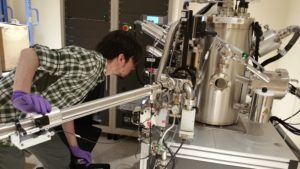
Secondly, we have completed an expansion at our Electron Microscope Facility to add state-of-the-art combined X-ray Photoelectron Spectroscopy (XPS) and Auger Electron Spectroscopy (AES) equipment. This represents a significant investment and adds capability that has been highly sought by Clemson researchers working on advanced materials, bio-materials, advanced manufacturing, healthcare, digital and information technology and environmental projects, among other projects. Visit the EMF webpage for more information on this facility.
Third, we have compiled internal policies related to research into a new digital Research and Sponsored Activities Policy Manual that you can view online here. The document includes links to internal policies governing proposal development and submission and more. Please bookmark this page.
Fourth, the Office of Strategy and Analytics, with the aid of the Grants and Contracts Administration and Public Service and Agriculture, has developed a new Faculty Business Information Systems tool (FBIS) available here. FBIS allows Principle Investigators to see all of their associated Fund 20 projects, along with a snapshot of their budgets, actuals, project balances, and project life percent. The new FBIS tool preserves all the original site’s capabilities, including a list of user’s Fund 20 projects upon login, projects’ direct budget balances, and payroll and journal entry drill down capabilities. However, the navigation has been updated to be more simplistic and intuitive.
Fifth, we have posted the 2018-19 Research Reference Guide available here to recap our institutional research advancements and goals and to provide an introduction to each office within the Division of Research. The Reference Guide includes numerous links to important documents, resources and services that the Division provides to help increase your research activity.
I hope you will find these resources useful. We’re always working to improve our services to you. If you have any suggestions, please email vpr@clemson.edu.
This capability has been highly sought by Clemson researchers working on advanced materials, bio-materials, advanced manufacturing, healthcare, digital and information technology and environmental projects. XPS and AES will directly contribute to ongoing polymer, fiber and textile research, new catalysts developments, biological implants and biomedical research, geochemical research, alternative energy technology development and all aspects of surface science-based projects at Clemson University and regional educational institutions.
Clemson faculty can schedule time for this equipment by emailing Dayton Cash at ECASH@clemson.edu. Scheduling will be accommodated on a first-come-first-serve basis. XPS/AES usage rates are posted at EMF website.
Following are some of the features of the new XPS:
XPS Instrumentation with “scanning” monochromatic x-ray source, a motorized specimen stage, an electron energy analyzer and state-of-the-art associated electron optics.
Small spot (<10 µm ) scanning X-ray source and imaging capabilities designed on similar approach used for electron microscopy. The instrument will be capable of producing and displaying a secondary electron (SE) image generated by the raster scanned x-ray spot. Multiple regions for further spectral analysis within the field of view will be selectable from the captured image using the instrument software, without changing the position of the specimen or translating the specimen stage.
The instrument will be capable of <10um multi-point analysis within the FOV without moving the stage. Types of analysis include survey spectra, high-resolution spectra, and multi-point depth profiling.
The instrument will be equipped with a 180° hemispherical electron analyzer designed for small spot sensitivity for secondary electrons, photoelectrons, and auger electrons.
The instrument will have a charge neutralization capability that permits the analysis of electrically insulating materials. This will be based upon a dedicated adjustable low-energy electron source, which may be used in conjunction with a low-energy ion source.
The instrument will be equipped with a computer-controlled ion gun capable of removing material from specimens by bombarding with argon (Ar) ions. This is useful during sputter depth profile experiments.
The instrument will be equipped with a C60 cluster ion gun, adjustable up to 20 kV, aligned to sputter the specimen at the analysis point without translation of the specimen. The instrument will be capable of sputtering a mixture or alternating layers of inorganic and organic films.
The instrument will have an electron gun controlled by the same computer and operating software to capture Auger Electron Spectra. The electron source will be capable of producing spot size <100nm for AES imaging and spectra. Switching between XPS and AES will take less than 5 seconds.
The instrument will contain a precision five (5) axis (X, Y, Z, rotation, tilt) motorized stage. The stage will be capable of continuous motorized 360 deg. rotation during ion sputtering.
The instrument will have a sample heating stage. The sample stage will be capable of in-situ heating and cooling from -140 C to +600 C.
The instrument will be equipped with an automated bake out system capable of baking out the instrument. The instrument will allow the bake out time to be operator selectable, and will include automatic shutoff of the bake out system when done. The instrument will be equipped with interlocks to terminate the bake out in the event of pressure overload, ion pump failure, or excessive temperatures.
A strong multi-year support and training from manufacturer will be in place.
For more information on this equipment and other equipment at the Electron Microscope Facility, click here.
Clemson University associate professor of plant and environmental sciences Christopher Saski (left) is among the recipients of this year’s R-Initiative grants.
The Division of Research has awarded nearly $1.9 million through its R-Initiative programs to support projects involving 67 faculty members from 27 departments.
The funding fosters cross-disciplinary, team-focused research and lays a foundation for future success with support for faculty and infrastructure investments to make that work possible.
“The R-Initiative proposals were competitive and we are pleased to invest in research across the colleges,” said Tanju Karanfil, vice president for research. “Research at Clemson achieved a lot of success in recent years, culminating in our designation as a Carnegie R1 university. We want to build on the momentum created by the faculty, students and staff to do even greater things. These R-Initiatives help us do that.”
The R-Initiative funds are part of the ClemsonForward strategic plan, representing the “R” of the REAL priorities – Research, Engagement, the Academic core and the Living environment.
The $1.9 million investment amounts to a 26 percent increase in R-Initiative funding from the previous fiscal year.
Grants were awarded under the following R-Initiative programs:
Clemson Faculty SUCCEEDS (Strategic University Challenge for Competitive Excellence and Expertise in Discovery and Scholarship) positions interdisciplinary faculty teams to successfully compete for significant external funding ($1.5 million or more) that will enhance the stature and distinction of the university in all key areas of research, scholarship and creative activities. VIEW GRANT RECIPIENTS
Clemson SEED (Support for Early Exploration and Development) provides two tiers of funding support to eligible Clemson faculty in either the initiation of research activities or the completion of a scholarly project or product. VIEW GRANT RECIPIENTS
Clemson Research Fellows provides grants to assist regular faculty, academic departments, centers and institutes in the hiring and training of qualified research faculty and post-doctoral researchers. VIEW GRANT RECIPIENTS
Clemson Major Research Instrumentation (CU-MRI) program provides financial support to researchers for the purchase of major research equipment or to replace or upgrade major research equipment that will likely impact funding, scholarship and research productivity, and the probability of increased extramural funding. VIEW GRANT RECIPIENTS
In the past four years, we have seen unprecedented growth in our research enterprise. Grant awards hit an all-time high of $109 million in the 2017 academic year, an astonishing 40 percent increase over a four-year period.
With two months remaining in the current fiscal year, we have already exceeded last year’s totals, reaching $118 million as of April 30.
This growth has been critical to our Carnegie R1 classification. Reaching that goal in 2016 was just the start, not the end. To maintain our R1 status among the nation’s top research universities, we must remain steadfast in our pursuit of funded research.
This year, our proposal submissions have softened. Increased student enrollment and added workload from the research projects we have added the past few years have undoubtedly left you with less time to prepare grant proposals. I expect to end the fiscal year with around $450 million in proposal submissions, a drop from around $560 million a year ago.
More submissions mean more opportunities to be funded, and this year, there will be opportunities. Federal budget analysts say the recently approved omnibus spending bill provides the largest year-over-year spending increase for federal research agencies since the 2009 American Recovery and Reinvestment Act, which was a significant boon for university research.
Universities across the country will also be competing for these investments. At Clemson, we have been highly competitive and our awards have grown greatly even as total federal investments in university R&D have been relatively flat.
Clemson University associate professor of plant and environmental sciences Christopher Saski (left) is among the recipients of this year’s R-Initiative grants.
To help you seize this opportunity, we are investing nearly $2 million (up from $1.5 million a year ago) in our R-Initiative programs that provide seed funding and grants to support proposal submissions, the hiring of postdocs and research associates, the purchase of equipment, and other research endeavors. Read more about that here.
We have also launched Faculty Insight, an online portal that will help you identify collaborators and search for funding opportunities specific to your area of expertise. The customizable database of funding opportunities is a new, highly valuable feature in this new Faculty Insight system, which replaces the Research Expertise Discovery Suite. Please check out this new platform and see how it can help you advance your research.
Additionally, we are implementing a single-rate tuition schedule for graduate students that will reduce administrative burden and provide a competitive level of support to graduate students. One of the major benefits of sponsored awards is the support provided to graduate students in the form of graduate assistantships and tuition remission/Graduate Assistant Differential. More information on single-rate tuition is available here.
I want to thank everyone who participated in the recent Research Symposium and the organizing committee led by Brian Powell for putting together a great event. The Symposium connects researchers from across campus in hopes of sparking inter-disciplinary collaboration. We had representatives from each college and more than 40 departments participate in the various research presentations this year. Attendance has grown each year, and I appreciate your willingness to spend a day meeting colleagues and exploring opportunities to collaborate on impactful research. You can view the presentations here.
The Clemson University Research Foundation welcomes Dr. Alan Alfano and Clarissa Williams to its team.
Alan will be working as a technology commercialization officer (TCO) with Clemson inventors on biomedical, bioengineering, and life sciences technologies, among others. Clarissa will serve as CURF marketing manager, working to help CURF launch new marketing initiatives.
Alan Alfano
Alan completed a dual BS degree from Towson University (molecular biology/chemistry) in 2009, and subsequently earned his Ph.D. from the University of Maryland, School of Medicine (molecular medicine) in 2015. His thesis work focused on drug resistance and metastatic spread of aggressive prostate cancer. During his time as a Ph.D. student at UMSOM, Alan also completed a technology development internship with UMVentures (UMB Technology Transfer Office), where he assisted senior staff in conducting commercial analysis and targeted marketing of selected technologies.
Following completion of his Ph.D. work at UMSOM, Alan completed a post-doctoral Cancer Research Training Award (CRTA) Fellowship at the National Cancer Institute Technology Transfer Center (NCI-TTC). As a fellow at NCI TTC, Alan worked to perform a variety of invention development activities for clinicians and researchers at the NIH/NCI Center for Cancer Research. His primary subject areas of invention management/expertise include: oncology (general), experimental transplants, immunology and immunotherapeutics (e.g. novel antibodies, CARs, ADCs, RITs, etc.), vaccine development, radiation oncology, molecular diagnostics, genetics, and software/digital solutions.
Through his work in disease research, and his biotech business experience at UMB and NCI, Alan has developed skills that will enable him to learn and adapt quickly in his new role as a TCO with CURF. Please welcome him; he is looking forward to working with you!
Clarissa Williams
Clarissa comes to CURF with a wealth of knowledge in branding, social media management, website development, and graphic design. Before accepting the marketing manager position with CURF, Clarissa was the training and communications coordinator at Clemson University in the Office of Sponsored Programs. While there, she redeveloped the office website, managed social media platforms, and coordinated a number of campus-wide events.
Clarissa completed a BA degree in English from Clemson University in 2013 and later received her MS in Marketing, also from Clemson University, in 2017. Through her education and years working in the marketing industry, Clarissa has developed skills that will allow her to successfully adapt to her new role as marketing manager at CURF so that she is able to build the CURF brand by increasing engagement and awareness on and offline.
Beginning mid-August 2018, principal investigators (PI’s) and faculty of sponsored projects awarded to Clemson University will see an improved method of verifying pay charged toward sponsored project and federal land grant activities. The new system, Sponsored Compensation Verification System, incorporates the exceptional feedback received by our project team from faculty, staff, and current certifiers of the Clemson Link to Employee Activity Reports (CLEAR) system. The CLEAR system is expected to be retired during late summer.
A few of the major and widely anticipated changes of the new system include:
Reports will be produced bi-annually for approval rather than three times per year.
The new report will represent real dollars rather than percentages.
PI’s will approve personnel paid on a project-by-project basis rather than individually by person.
Graduate students will no longer be responsible for approving their own reports.
PIs will approve reports for all employees on each sponsored project for which they are responsible (inclusive of related cost-share funds 10, and 15).
Additional communications, including reference to quick guides and frequently asked question documents, will be provided to assist in the transition to the new system in advance of the systems’ launch in mid-August. Meanwhile if you have any questions or comments, please email Tracy Walters or Karen Lantgios for additional information.
To become one of the nation’s premiere research institutions, we must break down silos and work collaboratively – with our peers, with industry and with each other. Solutions to complex global problems require new knowledge created by collaborative, interdisciplinary teams of scientists with unique perspectives and ideas.
We are collectively building these teams at Clemson, and I want to thank everyone who is engaging in collaborative research, seeking new discoveries, and working to make Clemson a leader in transformational research.
We can do more, and we want to help facilitate connections with your colleagues. Research Innovation Month and the upcoming Research Symposium offer great opportunities for this.
Additionally, the Research Symposium on May 9 will feature numerous panel discussions and presentations designed to encourage multidisciplinary research collaboration. These panel topics have been chosen by a faculty member organizing committee for their relevance and impact. At the Symposium, the Division of Research also will announce the first recipients of the new University Research, Scholarship and Artistic Achievement Awards, a new awards program created to honor faculty who have achieved the highest levels of national and international recognition.
Collaborations with industry also are important to the ongoing success of our research enterprise. As a faculty member at Clemson, you have access to numerous tools to help facilitate successful industry collaboration through the University Industry Demonstration Partnership (UIDP), a membership-driven organization that includes many of the world’s finest companies and research universities. Our organizational membership in UIDP allows you to participate in UIDP events and webinars; to access UIDP publications and reports; to take advantage of numerous networking opportunities; and to receive valuable insights from experts. Sign up to receive insights and information from UIDP here, and visit the organization’s website here to learn more about the benefits of our membership. Anyone with a Clemson.edu email address can access members-only materials by clicking on the “Members-Only Area” button on the homepage and clicking on “Register” to set up an account.
Thank you for your ongoing commitment to research and innovation at Clemson University.


 The Office of the Vice President for Research and the Research Advisory Board proudly announce the creation of the Researcher of the Year award to recognize the accomplishments of our outstanding faculty members.
 The
The 


 Fifth, we have posted the 2018-19 Research Reference Guide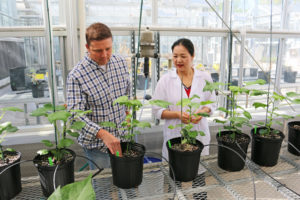
 Grants were awarded under the following R-Initiative programs:
 In the past four years, we have seen unprecedented growth in our research enterprise. Grant awards hit an all-time high of $109 million in the 2017 academic year, an astonishing 40 percent increase over a four-year period.

