By Marissa Kuula, a current Community Recreation and Sport Management focused student within the Parks, Recreation and Tourism Management Department (PRTM)

Going into its fifth year under a grant from the United States Department of Veteran Affairs this past spring, the Clemson University Paralympic Soccer Program team headed by Parks, Recreation and Tourism Management faculty member Dr. Skye Arthur-Banning with assistance from Dr. Barry Garst was gearing up for another year of planning and implementing adaptive soccer camps for injured military veterans and professionals across the country. With plane tickets booked and a total of eight camps already under their belt, the team was prepared for a summer focused on delivering ten additional programs around the country in order to improve the quality of life, well-being and independence of military veterans.
Plans, however, were derailed when COVID-19 hit. With the virus rapidly spreading across the world, quarantine and social distancing guidelines went into effect to protect the population, halting all non-essential travel and upcoming gatherings, including the camps.
In the past, a series of camps were held in different American cities, hosting around fifteen veterans and professionals over the course of three days. Participants took part in both classroom and on-field learning and training sessions for two types of soccer – 7-a-side for athletes with Cerebral Palsy, a traumatic brain injury or stroke, and 5-a-side for athletes with visual impairment. They also earned a Mental Health First Aid and a US Soccer Grassroots Coaching certification over the course of the camp.
In addition to these learning and developmental opportunities, participants also had the opportunity to socialize with staff and other participants through group dinners and a planned group activity, such as adaptive foot golf, attending a professional or semi-professional sporting event, adaptive rowing, adaptive golf and adaptive CrossFit.
After the camps, veterans can use their training to become players in adaptive soccer programs, use achieved certifications to help transition back into their communities and pursue coaching opportunities in existing programs. Using skills and certifications gained at camp, participants can also begin to work with community partners to expand adaptive sport participation in their areas and become more active members of their communities overall. The Mental Health First Aid certification gives participants the skills and ability to identify, understand and respond to signs of mental illness.
While new restrictions meant that the traditional camps could not be held in person, Margaret Domka, a Clemson Ph.D. student who works with Dr. Arthur-Banning to manage the program, says that the veterans’ camps may have been even more important to deliver this year than ever.
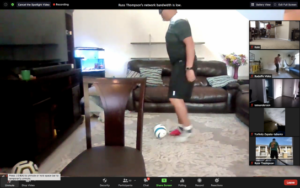
“It has been challenging for many people to find ways to remain physically active and involved in the community this year, and it can be an even greater challenge for veterans with disabilities who may, in normal circumstances, need assistance in finding ways to reintegrate into the community,” said Domka. “Our virtual camps provide an opportunity for veterans to connect with others and become active.”
While COVID-19 has created unexpected challenges, the planning team’s creative thinking and strong work ethic allowed for the virtual style camps to develop and take place. For example, the Mental Health First Aid and US Soccer Grassroots certification portion of the camps took a page out of the book of Zoom classroom sessions Clemson University used to finish its virtual school year after spring break, with certification professionals working their way through instructional PowerPoints and videos. That said, the training sessions and feeling of camaraderie and connectedness that in-person camp offered in the past was harder to facilitate in a virtual setting. In order to combat this obstacle, the undergraduate team that works on these camps came up with ways to engage the participants both physically and socially.
Kirsten Windbiel, a graduate research assistant for the program, said that the team had to be well organized and prepared ahead of time to make the virtual camps work.
“Moving into an online format, our team really needed to be extra organized and creative when it came to executing the camp. Our team met frequently before camp to make sure all the pieces came together in an organized fashion, considering all of the online components, such as who was presenting when, which students were monitoring the Zoom chat boxes, making sure we were communicating effectively to the camp participants and overall, finding a successful way to make the correct adaptations for a variety of disabilities,” Kirsten said.
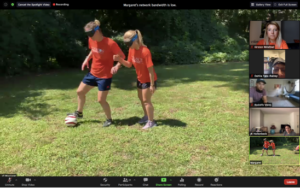
On the more physical side of things, camp attendees participated in chair yoga, seated weight training and adaptive soccer training sessions in which they could either practice drills in their living room or outside. Camp participants were shipped the equipment they needed to participate in these sessions in advance of the camp, including a regular soccer ball and a blind soccer ball (with rattles inside so players can hear the movement of the ball). A group Zoom dinner also helped create an environment conducive for social interactions. Team members took participants’ food orders and coordinated food delivery across three different time zones so that every person was able to eat at the same time while on the Zoom call.
According to Kirsten, the experience taught her that it’s important to stay connected and engaged with one’s community and peers, especially during uncertain times.
“Our community resources session at the end of camp allowed the veterans that participated to talk about resources within their communities and ideas for adaptive sports,” Kirsten said. “In general, the camp also really just allowed the group to come together during a difficult time, learn and have some fun doing something new.”
###
Future virtual camps are currently being planned to continue to benefit the veteran population across the United States. Updates regarding the dates and registration of these camps will be posted on the Clemson Paralympic Soccer website. You can also check out Clemson University Paralympic Soccer (@cuparasoccer) on Instagram, Twitter, and Facebook for updates on the program and other adaptive sport happenings.
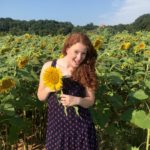 Hannah Snider is a senior at Clemson University, getting a Bachelor’s Degree in Parks, Recreation and Tourism Management with a concentration in Community Recreation, Sport and Camp Management. She is the daughter of Brian and Rebecca Snider and the sister of Rachel Snider. She is also the fiancé of Dillon Gums.
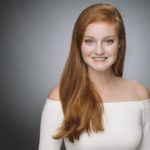 Ellerslie McCue is a senior majoring in Parks, Recreation and Tourism Management with a concentration in Travel and Tourism and an interest in Agriculture. She is very grateful to all of the professors and administrators in both PRTM and CAFLS for four amazing years and for encouraging her to be the best that she can be. She wishes to thank them (virtually) for going above and beyond for their students and making a huge impact in their lives that continues after they leave Clemson University.
 Cait Henry is a master’s student in the Department of Parks, Recreation, and Tourism Management with a B.A. in Environmental Studies and originates from Saint Louis, Missouri. She works as a Project Coordinator and Master’s Research Assistant in the Parks Solutions Lab, where she has had the opportunity to network with other highly motivated and passionate social scientists. She was accepted into the Ph.D. program at Kansas State University under Dr. Jessica Fefer in the department of Horticulture and Natural Resources, and will move back to the Midwest after graduating this May. Her hobbies include: hiking and backpacking along the Blue Ridge Parkway, reading at coffee shops, discovering new craft breweries and slowly turning her cats into Adventure Cats.
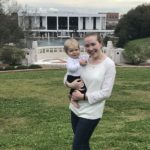 Kaitlin Mueller is a proud Clevelander with a passion to live in a world where one day all people have access to recreation therapy services. She completed her undergrad in RT at Slippery Rock University and finished her master’s studies at Indiana University in RT. After graduating from Slippery Rock University, Kaitlin worked as a recreational therapist in geriatric, sub-acute rehabilitation in Cleveland for five years. Kaitlin is now a 2nd year Ph.D. student in RT with hopes of becoming a future academic. Kaitlin’s research interest is currently transitional care for older adults when moving into a new senior facility. Kaitlin enjoys all the quality time she can get with her husband and almost one-year-old son, preferably at Clemson baseball or softball games. Go Tigers!
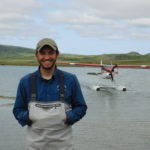 John is currently in the final semester of his master’s degree in Parks, Recreation, and Tourism Management at Clemson University where he works as a research assistant for Dr. Matt Brownlee in the Park Solutions Lab. Through his assistantship, he has helped to write four extensive visitor management reports for national parks across the country, conducted visitor surveys in three additional parks, and drafted five research articles for submission to peer reviewed journals this spring. His thesis focuses on integrating emotional affect into bear management and bear safety education. Prior to coming to Clemson, John received his bachelor’s degree in Wildlife Biology and Statistics from the University of Montana. Between programs, John worked as a veterinary technician in Texas, interpreter at a grizzly bear sanctuary in Montana, and a panda behavior intern in China. John and his fiancée, Emma, will get married in May and he hopes to continue on towards a doctoral degree in wildlife biology and work in grizzly bear research and management.
 Suk is a fourth-year graduate (Ph.D.) student in Parks, Recreation and Tourism Management with a research focus on the development of disability sport through corporate social responsibility. He has put forth significant effort to find ways for firms, as well as sport organizations, to make a social impact and address community priorities, especially for the communities of persons with a disability.
 Brian completed his bachelor’s degree at the University of San Diego, and he completed his master’s degree at the University of Utah. His doctoral research focuses on advancing spatiotemporal research of visitor travel patterns within parks and protected areas. His dissertation is comprised of research conducted at Theodore Roosevelt National Park in North Dakota, Hawai’i Volcanoes National Park and the Bonneville Salt Flats in Utah.
 Ali Dubin is a graduate student from East Greenbush, New York. She is working towards her Ph.D. in Community Recreation, Sport and Camp Management. After high school, Ali spent eight summers working at Girl Scout Camps in NY and VA, sparking her interest in camp and camp administration. Her research focuses on issues in camp administration, with a specific focus on children with severe food allergy and the constraints to participation that they face. She has had the opportunity to use her formal education and camp skills to teach many classes at Clemson University including Finding Your Voice, Camp Administration and the Writing Mentor Program. When Ali is not talking or thinking about camp, which is rare, she likes hiking with her dog Ari and spending time by the lake. Her other hobbies include wine tasting, reading cheesy romance novels and crafting: she hopes to have more time to do these things after finishing her dissertation.
 Donna earned her Bachelor’s degree in Recreational Therapy at the University of Maryland. She earned an MBA from the Pennsylvania State University and is currently working toward her Ph.D. at Clemson University. She is the Chief of Recreational Therapy at the National Institutes of Health Clinical Center. She has managed interdisciplinary treatment teams and has clinical experience working with a variety of patient populations including individuals who have sustained traumatic brain injuries. Her interests include program development, process improvement, and research related to the health and well-being of at-risk populations.
 Jennifer Kinch Garcia is finalizing her 2nd year as a doctoral student with the Clemson University Parks, Recreation and Tourism Management program. Her focus lies mostly within Community Recreation, Sport and Camp Management with an emphasis in youth development. Jennifer is working towards the evaluation of nature based free play, and how communities can support the spaces and policies that surround the concept of free play. After graduating with a B.S. in Biology from West Texas A&M University, she began her career within the world of zoos and aquariums at the Amarillo Zoo in Amarillo, Texas. She started her role at the Greenville Zoo as the Education Coordinator in 2012. Since moving to Greenville, South Carolina she has earned her M.Ed. for Curriculum Development and through her work, has been fortunate to be a part of the Association of Zoos and Aquariums Nature Play initiatives along with the Children and Nature Network’s family nature clubs, to encourage communities to get outdoors. Jennifer looks forward to promoting play through more equitable access to parks and community engagement.
 Wright Garrett is a Junior from Fountain Inn, South Carolina. He is honored to receive the Award for Excellence in Professional Golf Management because he is very passionate about the sport of golf and what it has taught him and what it has done for so many others. As an aspiring PGA professional, Wright hopes to continue to inspire others through the game that has helped shape him into the person he is today.
 Rachel Knauer is a junior from Sumter, South Carolina. She found out about Recreational Therapy from a friend, fell in love with the mission and ended up transferring to Clemson University in order to get involved in the Department of PRTM. Because of her experience in EDGE, Rachel became an EDGE Mentor, which enriched her education through leadership training and professional development.
 Aysia is a senior PRTM major with an emphasis in Travel and Tourism from Greer, South Carolina. Aysia’s active spirit and mind has manifested itself into a love for running, traveling and hiking. This Summer she will serve as the City of Greenville Special Events intern, and upon completion will graduate in August. After graduation she hopes to pursue a career in community development.
 Ryan Piller is from Greenville, South Carolina. She is a PRTM major with a concentration in Parks and Conservation Area Management and a minor in History. She’s currently a junior, but is a senior in academic standing. She is a founding member and current secretary for the club, Young Women for America at Clemson, a place for women to discuss politics and religion freely.
 Bryson Smith grew up playing on his grandfather’s land in Pauline, South Carolina. There he found his passion for the outdoors, spending every free moment out in the woods or on the pond. A love of nature led him to Clemson University and a major in PRTM with a concentration in Parks and Conservation Area Management. He plans on making a career out of preserving the outdoors so that others can enjoy it like he has.