By Evelyn Lane
Throughout the 2025 summer, Robert H. Brooks Sports Science Institute Faculty Fellow and Assistant Professor in the Department of Parks, Recreation and Tourism Management, Dr. Felipe Tobar, has been conducting sport research around the world. From Clemson to Germany, Australia and Taiwan, Tobar has taken his passion for soccer and research on the intersection of sport, tourism, history, events, politics, and technology across the world.
Holocaust remembrance connected to German soccer culture

In early May, Tobar took a group of students from Clemson to Germany to study “the Culture of Remembrance and Political Activism in German Football.” The first stop was Berlin, where they toured the city and its remembrance sites to help students understand that the impact of the Holocaust was not solely confined to concentration camps, but weaved into daily life, including soccer. They also attended the Babelsberg 03 vs. FC Carl Zeiss Jena match and witnessed the “Alle zusammen – voran 03!” initiative (“All Together – Leading 03!”), which is a campaign working to eliminate barriers in the stadium and in the way people think about inclusion in soccer between players with and without disabilities.
The next stop was Bremen, where the group walked around the city learning about the systematic use of forced labor under the Nazi regime and how the local community was fully aware of all crimes, and how political engagement in soccer is a necessity. After the walking tour, they visited Bunker Valentin, which was a Nazi-era submarine bunker, where they reflected on how to understand the victims in the eyes of soccer to present them as fans who never got to support their club again. They also got to tour Werder Bremen and retrace the Nazi-era history. After that tour, they got to witness the Werder Bremen vs RB Leipzig game and interact with locals.

After Bremen, they visited Hamburg, Dortmund, and Cologne, where they visited the FC St. Pauli Museum, HSV Museum, Borussia Dortmund, and the FC Köln Stadium. Not only did they get to experience German culture through soccer matches and stadium and museum tours, but they also gained a deeper understanding of how players, directors, and fans were important in helping build a culture of remembrance.
“Football clubs have the power, and the social responsibility, to remember, speak out, and act.” – Dr. Felipe Tobar
Their last stop was in Munich, where they played street soccer with locals and learned how the game of soccer at any level can teach important values that immigrant youth can take with them throughout their lives and help them adapt to new communities. The group then visited the FC Bayern Museum and reflected on how Bayern players and directors were affected by Nazi ideologies and how Munich played a central role in Hitler’s rise. The students also presented social media campaigns they had created focusing on topics such as racism, religious intolerance, and intersectionality in soccer.
During and after the trip, Tobar initiated two different studies. The first is about stickers. He noticed that around the soccer stadiums, there were stickers everywhere. These can easily be overlooked, but when he looked at these, he saw a version of fan expression, fans communicating their social and political beliefs and how German soccer culture is a vehicle of political activism. The second is a study focused on the benefits of teaching Holocaust history and how German soccer clubs can collaborate with remembrance centers and former concentration camps to attract new audiences and use soccer’s influence to communicate Holocaust history and ensure that it never happens again.
Presentations abroad
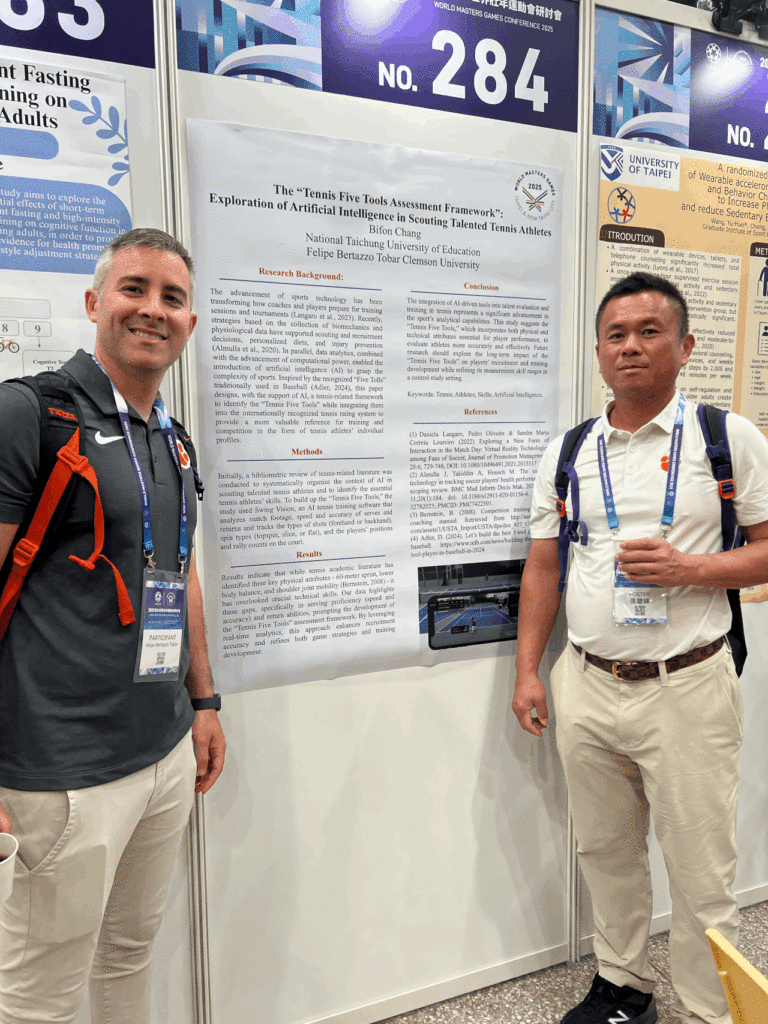
Tobar was invited as a visiting researcher and teacher to the National Taichung University of Education in Taiwan, where he had the opportunity to speak at three different undergraduate courses. He shared his experiences working with Paralympic soccer athletes and the importance of respect. He also presented his teaching philosophy, which is one where it is important to promote kindness and learning to create more engaged and curious students.
In Australia, he presented at the 16th International Conference on Sport and Society at Monash University in Melbourne. He presented his paper about English soccer stadiums, specifically Liverpool FC and how the presence of tourists and their use of mobile phones affect the local supporters’ match-day experiences. Through this study, he found that the presence of football tourists and their online engagement can be disruptive to the local football culture. He plans to share these results with both club and English Premier League teams in the future.
American and European soccer research
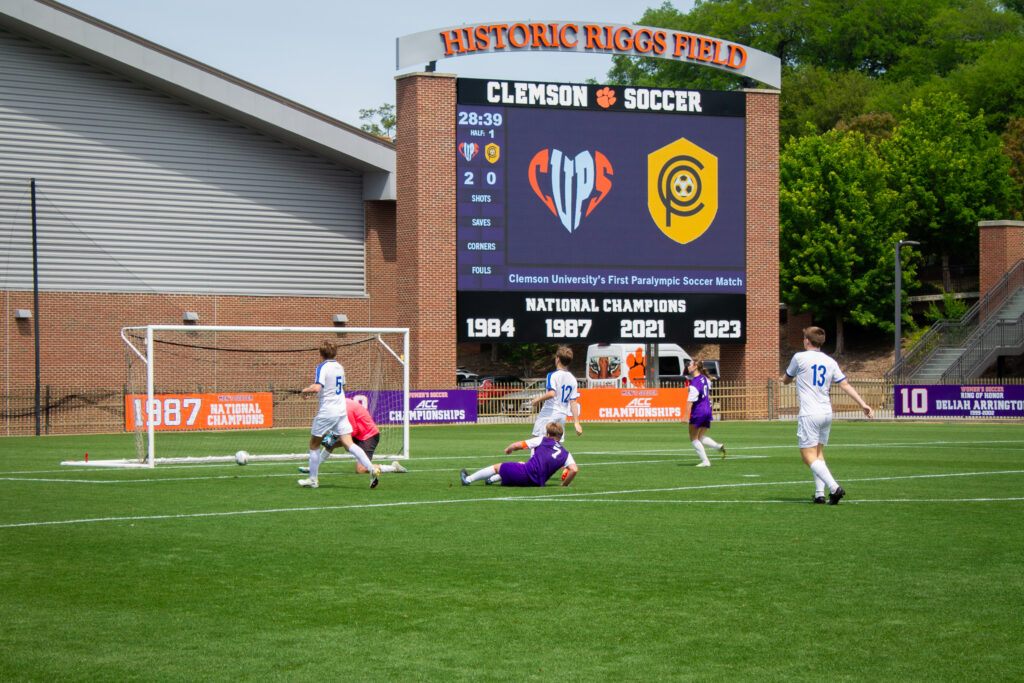
During Clemson’s first-ever Paralympic soccer match, Tobar conducted a survey to understand the perception of players with disabilities. He discovered that 84% of participants had changed their opinions positively towards para-athletes. He also surveyed the perceptions and attitudes of long-term volunteers towards people with disabilities.
Additionally, Tobar has two studies where he focuses on soccer and environmental sustainability. The first follows his attendance at the UEFA EURO, where the institution implemented a €29.6 million investment in environmental, social and governance (ESG) initiatives. The tournament achieved a 21% reduction in emissions compared to initial forecasts, largely through measures like encouraging public transport and minimizing flights. This study was focused on whether these changes towards sustainability changed fan behavior after the championship.
The second was focused on the Clemson Women’s Soccer team. In 2024, Tobar accompanied the team to Spain, where they observed how facilities and clubs tackle climate change. Now that a year has passed, he is asking 19 players and two managers if they have changed their behaviors and show that the players can have a voice and help others become more environmentally friendly.
The documentary
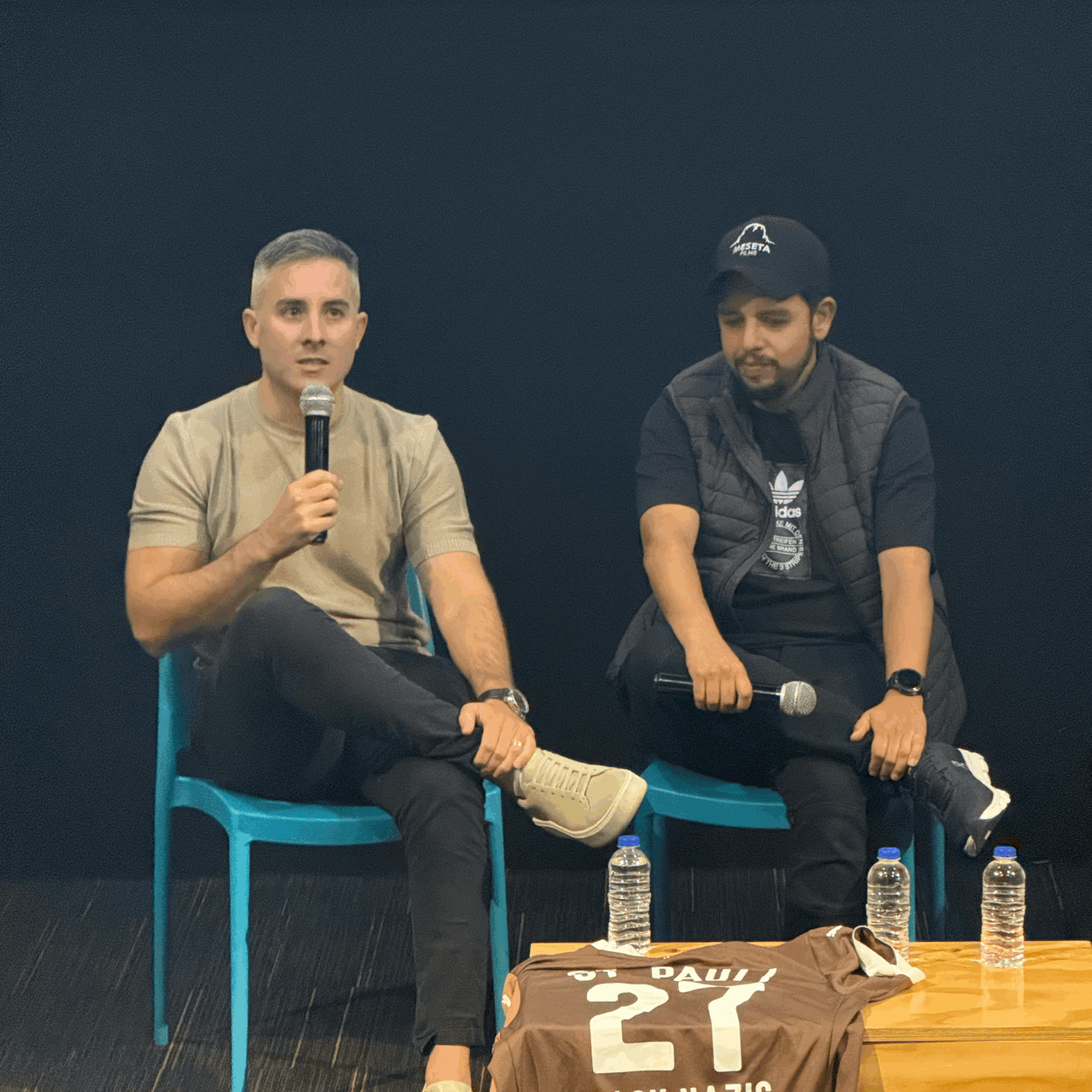
Tobar has recently launched his documentary called “The Match That Not Every Club Wants to Play.” This documentary takes viewers to Spain, showing the Real Madrid soccer club and how it attempted to keep its role in the Spanish Civil War a secret. It also takes us to FC St. Pauli in Germany, where the club is a symbol of resistance, and where the fans demand accountability for the club’s Nazi-era past.
Just like Tobar, this documentary is making its way around the world. It debuted at the Tercer Tiempo-Festival Mundial de Cine Futbolero in Bogotá, Colombia, where his father is from. There, he received a “Special Mention” for the quality of the production and thought-provoking investigation. Additionally, it was the first film in six years to have a full-house at the viewing.
Soon, the documentary will be shown at the Sports & Entertainment Film Festival in Birmingham, Alabama, the Festigol, Festival de Cine + Futbol, in Santiago, Chile, and at the Paladino D’Oro in Palermo, Italy, which is the world’s oldest sport film festival.
Coming up…
Following his first documentary, Tobar is in the process of developing another around the unspoken functions of Weserstadion in Bremen during the Nazi regime. The Nazis took it and used Eastern European slaves to build military defense structures. The stadium also facilitated the distribution of furniture from Jewish houses, and even today, much of this furniture is still not found.
Additionally, Tobar is studying how cultures influence how coaches coach their players. He plans to interview professional and collegiate coaches to understand how culture shapes play style. His brother is a coach for the most important Division One team in Ecuador, which is inspiring this study.
He is also working with Master’s students and colleagues from Colombia, Spain, and Chile to take a look at paralympic soccer and analyze how countries organize offensively and defensively. They are asking the question, “What is the best way to win games?” Paralympic players expend three times more energy than normal players, so they work to prove that the best paralympic teams play zone, which allows more conservation of energy, versus a man-to-man structure.
