Clemson Division of Research

Nov. 2020: Key updates as online instruction is set to resume

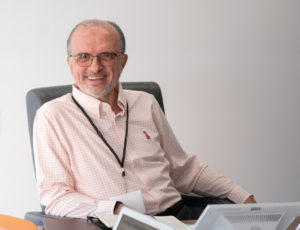
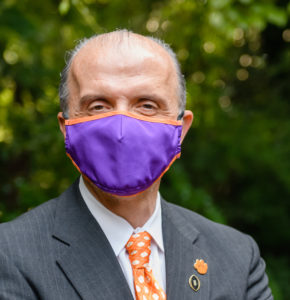
Clemson University Vice President for Research Tanju Karanfil wearing a mask to help slow the spread of COVID-19
Tanju Karanfil

This has been an incredible semester, one unlike any other in my 24 years at Clemson. I am increasingly proud of how you have navigated the challenges brought on by COVID-19, and I want you to know we are working to provide support.

First, I want to share my gratitude. Despite COVID-19, institutional research expenditures remain strong and proposal activity has been exceptional. You submitted $734 million in research proposals in fiscal year 2020, a banner year for Clemson. That is outstanding and a testament to your unwavering desire to feed knowledge to the world. Thank you. Please keep up your great work.

That said, I know from my own research activities that operational disruptions due to COVID are painful. That pain may not be felt equally across campus, however. While some of you may be continuing to work in your labs and offices, we know researchers from some disciplines still can’t access off-campus sites to continue their projects. Schools, hospitals and other community sites, for example, may limit access and in-person interaction still. I know some faculty and students have missed important travel opportunities and events. Some have been unable to advance the work necessary for tenure or graduation.

We are not alone in this. I have been meeting regularly with my peers through the Association of Public and Land Grant Universities (APLU) and the Council of Government Relations (COGR), as well as the funding agencies. We are continuously providing information and presenting a strong case for federal support for university research that would help us ease the effects of COVID-19.
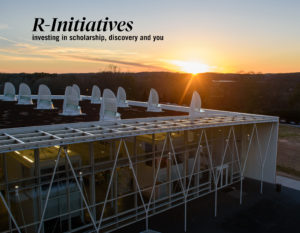
This is a photo of Lee Hall at Clemson University with the words "R-Initiatives, investing in scholarship, discovery and you" Click the photo to access a webpage that details R-Initiative funding programs.
Click for information on R-Initiatives.

In the meantime, we plan to support your research through our R-Initiative funding programs. While trying to cushion the financial sting to our own operations, the Division of Research anticipates releasing calls for proposals for numerous R-Initiative funding programs. You can view the list of current and upcoming R-Initiative solicitations, submission deadlines, and other details here.  We are trying to use limited resources strategically, while reducing some of the burden on you. For example, we have lifted the cost-share requirements from some competitions for this year in hopes this will provide you more opportunities to submit a proposal. However, because our resources are limited, proposals that are able to offer cost-share may receive preference.

Finally, with the University reverting to online-only instruction from the Thanksgiving holiday through the end of the Fall semester, I want to clarify facility access for conducting research during this time.

Faculty, students and staff will continue to have access to facilities during the period of online instruction. Core research facilities (Godley-Snell Research Center, Clemson Light Imaging Facility, Aquatic Animal Research Laboratory, and Electron Microscopy Facility) will continue to provide pre-approved access. Users should continue to follow the guidelines for these facilities posted to the COVID-19 Research Resources webpage.

During holiday breaks, buildings will be locked, as they have been in the past. In addition, buildings will also remain locked during times of reduced staffing. General building access for faculty, students and staff will be unavailable these dates:

  • November 26-29
  • December 14-January 3

You will need card access to enter buildings on these dates. If you have any issues with access on these dates, please contact your Department Chair and Building Security Coordinator to request access. You can search for your Building Security Coordinator here.

Thank you for your patience and productivity throughout this semester and next.

Go Tigers!

–Tanju
Sept. 2020: Extraordinary work during the COVID-19 pandemic

Clemson University Vice President for Research Tanju Karanfil wearing a mask to help slow the spread of COVID-19
Tanju Karanfil

This fiscal year, Clemson University faculty collectivity submitted $734 million in research proposals, a 23 percent increase from the prior year.

Your productivity in the months on-campus access was limited was extraordinary. As you juggled online instruction, uncertain funding guidelines, childcare, remote working and many more matters that I’m sure I am forgetting, you did not rest on your research. You seized the opportunity to do more. You sought more projects. You pushed forward. In fact, in the months of April, May, June and July, you submitted $311 million in research proposals, twice as much as the same period a year ago. Congratulations and thank you. I am so proud to work with such an extraordinary group of scholars who are constantly seeking answers to society’s grand challenges.

Despite the challenges of COVID-19, our competitive expenditures exceeded our Clemson Forward goal for a second year, and seven years ahead of schedule. Our competitive awards again increased. You can read more about our research activity in my September 2020 Research Report to the Board of Trustees. During my report to trustees, Trustee Joe Swann, who chairs the Research and Economic Development Committee, asked me to pass along his appreciation for all of the work you are doing. He said the entire report, which highlights your research productivity, made him very proud.

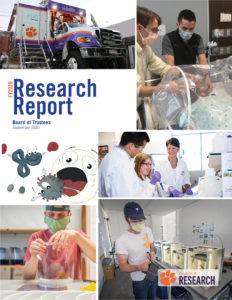
The cover page of the September 2020 Research Report to the Board of Trustees includes a collage of photos related to COVID-19 research, including pictures of a mobil health clinic, a student making face masks, a faculty member in a lab with students, and a doctor seeing a patient under a protective hood.
The September 2020 Research Report to the Board of Trustee highlights some of the ways Clemson faculty and students have lent their expertise during the COVID-19 pandemic.

Challenges persist. We must remain United as Tigers to protect our own health and the health of the entire Clemson Family, so we can continue with in-person instruction and research. Wear a mask. Stay home if feeling ill. Wash hands regularly. You all know the routine. We have developed several guidance documents to provide tips for ramping up laboratories after extended shutdowns, sanitizing equipment and limiting coronavirus spread in laboratories. You can view those documents and other information on our COVID-19 Research Resources webpage. We will update this page as necessary, and I will email you and your college leadership with important updates on research activity, as needed.

Please note that while in-person instruction resumes, some members of the Division of Research team continue to work remotely. That said, the entire Division of Research is available and ready to support you. You can reach us via the emails listed on the Division of Research website, as well as the webpages for each office within the Division of Research. You can also call us on our office numbers, which will forward to team members’ mobile numbers if they are working remotely. If you receive voicemail, my expectation is that we will respond as quickly as possible. Like others, our team members will be taking furlough over the next several months. We will work to manage this time off with little disruption to the services we provide.

As you have likely noticed, the university has revamped Clemson.edu. As part of that, we have a new Division of Research landing page.  Here you will find information on our R-Initiative support programs; links to our offices, which provide support for proposal submissions, grant administration, industry collaboration, compliance training and more; along with introductions to the Division of Research Leadership Team. You’ll also find timely announcements and notices of upcoming events and workshops aimed at helping you advance your research. Important links that you may have bookmarked for safety, compliance or regulatory programs have not changed. If you notice anything working incorrectly, please notify Division of Research communications director Scott Miller at srm@clemson.edu.

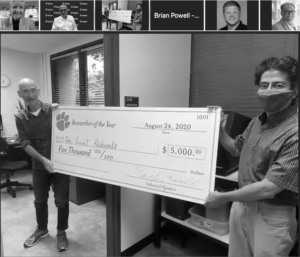
Vincent Richards, left, accepts a check as junior faculty Researcher of the Year during a virtual awards ceremony.

Finally, I want to congratulate our Researchers of the Year and recipients of our University Research, Scholarship and Artistic Achievement Awards. Please take a moment to read about these outstanding faculty members. They are doing outstanding work and serving as role models for all of us, continuously seeking to impact society through their research. Unfortunately, but necessarily, our research awards celebration had to be conducted virtually this year. You can watch the video here. The event included some surprise award presentations that I hope made the occasion memorable. It is important for us to continue to celebrate our accomplishments together and to support each other in our efforts to improve the world.

Thank you for all you do and for your ongoing commitment to scholarship and discovery at Clemson University.

Go Tigers!

–Tanju

May 2020: Thank you. Hang in there. Be ready.

Tanju Karanfil
Tanju Karanfil

I want to thank you again for your patience and perseverance as we continue to manage a major disruption to our personal and professional lives. Your response to this unprecedented challenge has been inspiring. You have adjusted to online instruction here at Clemson, while in some cases homeschooling your children, too. You are juggling work-from-home schedules with your families. I have seen PhD students defend their dissertations on Zoom calls. I have seen our faculty members race to the call for research support from our health care partners. You have quickly ramped down your research projects to help protect the health of our Clemson family.

You have done all of these things while faced with the uncertainty and stress of a global pandemic. The Clemson COVID-19 Updates page includes a list of resources available for support. Your health and wellbeing is the top priority.

I thank you for all you have already done and appreciate your patience and support as we continue to work through this.

Research Operations

This is not over, and we will continue to work under modified operating conditions until further notice, with only essential research activity performed on site. A couple reminders on essential research:

We are monitoring funding agency responses to this pandemic and have compiled a list of frequently asked questions at our COVID-19 Research Resources webpage that may answer some of your questions about research funding and operations. Please review and if you have additional questions not listed there, email vpr@clemson.edu so we can find answers to share with the entire Clemson research community.

I have been communicating regularly with vice presidents of research at regional universities, Atlantic Coast Conference universities and with others around the country to compare continuity plans and learn from their planning and experiences. We have been monitoring COVID-19 responses at major universities across the country. Clemson is not alone. This is an unprecedented challenge to the global academic community.

Opportunities

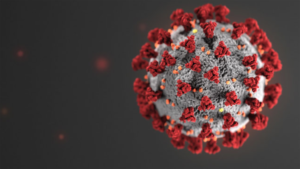
This image is an illustration of coronavirus. The cutline contains links to COVID-19 Research Resources, including guidance documents and answers to frequently asked questions at https://www.clemson.edu/coronavirus/research/index.html and a list of funding opportunities at https://www.clemson.edu/research/development/funding-opportunities/funding/covid19.html and names of faculty members conducting COVID-19 relevant research at https://www.clemson.edu/coronavirus/research/research-initiatives.html

     The Division of Research has compiled operating guidance, answers to commonly asked questions and other resources to help you navigate this unprecedented disruption in your research. This situation is fluid, so the pages below will be updated regularly as new information becomes available.  
COVID-19 Research Resources, Guidance and FAQs
COVID-19 Funding Opportunities
COVID-19 Research at Clemson

I encourage you to continue to push research forward however possible: reading literature; analyzing data; writing and/or revising publications, including student theses and dissertations; preparing new ideas and developing new proposals. New opportunities may be on the horizon, so we must prepare.

With the United States reeling from recession in 2009, Congress invested heavily in an economic turnaround through the American Recovery and Reinvestment Act. That stimulus package amounted to a one-time increase to research spending of 25 percent, according to the American Association for the Advancement of Science. Could a similar opportunity come in COVID-19’s wake? Very likely in my opinion.

Economic concerns have already pushed Congress to pass the CARES Act, which provides billions in taxpayer payments, cash-flow assistance to small businesses, loans to large corporations and other stimulus aid.

The act provides federal research agencies with additional funds to prevent, prepare for, and respond to COVID-19.

Additional federal research funding includes:

  • $75 million for the National Science Foundation (NSF) for RAPID grant awards;
  • $945 million to the National Institutes of Health (NIH) for COVID-19 research;
  • $99 million to the Department of Energy’s Office of Science to support the national laboratory system’s work on COVID-19; and
  • $60 million to National Institute of Standards and Technology (NIST) with $50 million for the Hollings Manufacturing Extension Partnership to support manufacturing research and $10 million for Manufacturing USA to spend on pharmaceutical and biotech research.
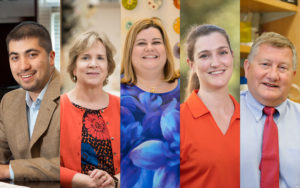
This image shows Clemson faculty involved in COVID-19 response efforts, from left to right: Mark Blenner, Sarah Harcum, Terri Bruce, Delphine Dean and Ken Marcus
Thank you to all in the Clemson University family who acted quickly to assist with COVID-19 response efforts and lent their expertise to help calculate the pandemic’s far-reaching effects and help the public cope. Here are just a few examples.
S.C. universities, hospitals join forces to develop coronavirus antibody test
Clemson professor’s book encourages children to ‘be brave’ during pandemic
How coronavirus is affecting South Carolina food supply and farmers that produce it
SC’s only Certified Deaf Interpreter helps communicate to Greenvillians during the coronavirus crisis
Artificial intelligence could aid in fight against COVID-19
Finding a solution to the N95 mask shortage

The Office of Research Development has compiled an online list of COVID-19 Funding Opportunities available. Check this site regularly because we are updating it daily.

Additionally, we have worked with the School of Health Research to identify Clemson faculty members interested in collaborating on COVID-19 research. Be sure to add your information to the page.

This pandemic will challenge higher education operations. We are hopeful that the CARES Act and potentially future stimulus packages will provide support for higher education. The Association of Public and Land-grant Universities and universities across the country have banded together.

In the meantime, prepare yourself for new opportunities. Think creatively. Consider how you could shift your research to support this pandemic in some way. Find collaborators. Keep moving forward.

I empathize with what you and all of our Clemson faculty, students and staff members are facing. I continue to conduct research under the modified operational conditions. I am working with graduate students and postdocs, writing proposals and manuscripts, and searching for answers as research stalls. Like all of us, I want to see this situation resolve quickly. These unprecedented circumstances will test our ingenuity and resolve, but I believe we can tackle this challenge through empathy, cooperation and support of one another.

Sincerely,

–Tanju


Jan. 2020: Something Special is Happening at Clemson

The growth in our research enterprise is being noticed. In December, President Clements was contacted by a PhD student studying higher education management at the University of Pennsylvania. The student is researching Carnegie R2 universities who achieved R1 status in 2015 and had that status reaffirmed in 2018. Clemson, of course, fits the bill. “And, in looking at the research trends over time, Clemson didn’t just cross the line, Clemson jumped over it and is forging ahead. Hence my interest in studying whatever special is going on at the university,” the student wrote in his request.

Tanju Karanfil
Tanju Karanfil

To better understand what is making Clemson’s research enterprise special, the student visited Clemson in January to interview numerous people, including me. As I considered the answers to his question, one thing became clear: Together, we are nurturing a research culture with big aspirations. We are pursuing and securing large grant projects. We are joining our colleagues to form interdisciplinary teams that can tackle big societal questions. We are increasing our expenditures. We are increasing our PhD productivity. We are conducting more research than ever before.

Next month, I will present on our “research efficiency” to the Board of Trustees. I am proud to show them how favorable our growth is compared to our peer Carnegie R1 institutions and how much hard work you all have done. Thanks for all that you do to support scholarship and discovery at Clemson. All of my Board of Trustees reports are archived online here. The February report will be posted after the meetings in February.

In the meantime, I want to provide a couple important reminders from agency sponsors:

No. 1: Faculty seeking awards from the National Science Foundation must complete biosketches in a new format under a revised NSF Proposal & Award Policies & Procedures Guide. This is just one change implemented under the new guide. Read this announcement from the Office of Sponsored Programs to learn more of your responsibilities under this policies and procedures guide.

No. 2: Individuals supported by research training, fellowship, research education, and career development awards from the National Institutes of Health, the Agency for Healthcare Research and Quality, or the Centers for Disease Control and Prevention will be required to have Open Researcher and Contributor Identifiers (ORCID IDs). Read more on that here.

Click to read Dr. Karanfil's latest quarterly report to the Clemson University Board of Trustees.
Click to read Dr. Karanfil’s latest quarterly report to the Clemson University Board of Trustees.

As you settle into another semester, I want to provide a few additional reminders for conducting research at Clemson:

  • Do not sign any research-related documents (e.g., non-disclosure agreements, grant agreements, research contracts, consulting agreements). Contact the Division of Research.
  • Visit our Office of Research Development to view various funding opportunities.
  • When you identify a funding opportunity for which you plan to apply, first notify the Office of Sponsored Programs (OSP) Support Center in your college. Contacts are listed here.
  • If you haven’t already, complete the Sponsored Programs Certification Program here. You will not be able to submit proposals through Clemson University without the certification.
  • Register when applicable for any electronic registrations/accounts (NSF Fastlane/gov, eRA Commons, etc.) required by the funding agencies.
  • Faculty should have a current Conflict of Interest Disclosure on file to be able to submit proposals (e.g., NIH, NSF). Access COI training here and submit your disclosure through InfoEd here.
  • Make sure to set up your lab on the new online BioRAFT platform to begin managing your research safety requirements. Login in with your university credentials and follow the BioRAFT Quick Start Guide. If setting up a new lab or beginning research in a new area, include the Office of Research Safety in your planning.
  • Register for a Brown Bag Series seminar to better understand research integrity and compliance and earn credits toward required Responsible Conduct of Research training, when applicable. If you have questions or concerns related to research integrity/misconduct, please contact the Research Integrity Officer.
  • Prior to beginning a research project, make sure that all regulatory and compliance protocols regarding animal care, biosafety, human subjects and other research have been submitted and approvals are in place. Consult with the Office of Research Compliance on regulatory and compliance matters.
  • Once you have been awarded funds, OSP will forward the award to the Grants and Contracts Administration (GCA), which will setup the award and provide an account number. Do not start your funded research project prior to account setup, unless you obtain a risk account.
  • Review your Sponsored project dashboard with the Faculty Business Information System (FBIS), which provides an expense summary, transaction details and burn-rate information. Use the Sponsored Program Verification System to manage your semi-annual compensation reporting requirement online.
  • To disclose an invention, license intellectual property, or identify an industry collaborator, contact the Clemson University Research Foundation.
  • For assistance with any research or research-related agreements with industry, contact the Office of Industry Contracts.

If you have any comments or suggestions, please reach me directly at vpr@clemson.edu.

Thank you again for your contributions to scholarship and discovery at Clemson University.


Go Tigers!

— Tanju


Dec. 2019: Proper Planning is Crucial to be Successful

Tanju Karanfil
Tanju Karanfil

As this semester comes to a close, I want to congratulate you on your successes this past year. Our research enterprise continues to post strong growth, with annual competitive expenditures topping $100 million for the first time. Read more about the state of Clemson research in my latest report to the Board of Trustees here.

For the Board of Trustees meetings in February, trustees have asked us to review our efficiency. As I compare our growth to our Carnegie R1 peers and consider our institutional size, I believe we operate efficiently. We are conducting more research than ever before. Our success in securing competitive awards has undoubtedly increased our workloads and stressed our ability to prepare and submit new proposals.

I feel this challenge myself. Proper planning is crucial. For the past three months, I have set aside a couple hours each week to work on a grant proposal for my own research that I finally submitted in November. Penny, my executive assistant, can attest that even a few hours on my calendar can be hard to find, as I am sure it is for you to find as well. But this is critical; the product I submit should be polished and professional.

Click to read Dr. Karanfil's latest quarterly report to the Clemson University Board of Trustees.
Click to read Dr. Karanfil’s latest quarterly report to the Clemson University Board of Trustees.

As educators, we have all received student papers we believe were hastily written a night or two before the due date. Funding agencies can also tell which proposals are thoroughly researched, written and edited. In some cases, poorly prepared proposals may not be read at all. The National Science Foundation, for example, automatically roots out all proposals that aren’t formatted correctly.

This seems simple but can be easily overlooked. We have seen proposals rejected because they were submitted in the wrong font. We have seen instances where two abstracts were incorrectly submitted rather than an abstract and a project narrative. These mistakes are made because documents were filed right at the deadline without thorough review. Your Office of Sponsored Programs (OSP) Support Center can help ensure that doesn’t happen to you, but you must submit documents to OSP at least two business days before proposals are due.

Grant awards are significant investments in your research and your career. I encourage you to make a plan to have proposals written early so we can help you put your best foot forward. Our goal should not be to meet the deadline. Our goal should be to put forward our best. Best is the standard at Clemson.

Thank you for your contributions to scholarship and discovery at Clemson. I wish you a restful holiday break and successful new year.

–Tanju


September 2019: Welcome Back!


Tanju Karanfil
Tanju Karanfil

I hope you had a restful summer break following what was a very productive year for our research enterprise.

During Fiscal Year 2019, we achieved two key goals of our ClemsonForward strategic plan:

  • Our Carnegie R1 status among the nation’s most active research universities was confirmed.
  • Our competitive research expenditures (Fund 20) topped $100 million for the first time, reaching $104 million during fiscal year 2019.

Additionally, our competitive awards topped $100 million for the fourth consecutive year. Congratulations on these achievements and thank you for your hard work and dedication to advancing scholarship and discovery at Clemson University. Our challenge is to maintain this level of research activity.

As you settle into a new semester, I want to provide a few reminders for conducting research at Clemson and make sure you are aware of some of the services the Division offers to help you advance your research portfolio:

  • Do not sign any research-related documents (e.g., non-disclosure agreements, grant agreements, research contracts, consulting agreements). Contact the Division of Research.
  • Visit our Office of Research Development to view various funding opportunities.
  • When you identify a funding opportunity for which you plan to apply, first notify the Office of Sponsored Programs (OSP) Support Center in your college. Contacts are listed here.
  • If you haven’t already, complete the Sponsored Programs Certification Program here. You will not be able to submit proposals through Clemson University without the certification.
  • Register when applicable for any electronic registrations/accounts (NSF Fastlane/research.gov, eRA Commons, etc.) required by the funding agencies.
  • Faculty should have a current Conflict of Interest Disclosure on file to be able to submit proposals (e.g., NIH, NSF). Access COI training here and submit your disclosure through InfoEd here.
  • The photo shows the fountains in front of the library with a the Division of Research logo placed in the top left corner. Make sure to set up your lab on the new online BioRAFT platform to begin managing your research safety requirements. Log in with your university credentials and follow the BioRAFT Quick Start Guide. If setting up a new lab or beginning research in a new area, include the Office of Research Safety in your planning.
  • Register for a Brown Bag Series seminar to better understand research integrity and compliance and earn credits toward required Responsible Conduct of Research training, when applicable. If you have questions or concerns related to research integrity/misconduct, please contact the Research Integrity Officer.
  • Prior to beginning a research project, make sure that all regulatory and compliance protocols regarding animal care, biosafety, human subjects and other research have been submitted and approvals are in place. Consult with the Office of Research Compliance on regulatory and compliance matters.
  • Once you have been awarded funds, OSP will forward the award to the Grants and Contracts Administration (GCA), which will set up the award and provide an account number. Do not start your funded research project prior to account setup, unless you obtain a risk account.
  • Review your Sponsored project dashboard with the Faculty Business Information System (FBIS), which provides an expense summary, transaction details and burn-rate information. Use the Sponsored Program Verification System to manage your semi-annual compensation reporting requirement online.
  • To disclose an invention, license intellectual property, or identify an industry collaborator, contact the Clemson University Research Foundation.
  • If submitting a proposal to an industry sponsor, the Office of Industry Contracts will need to review your proposal and negotiate an agreement with the industry sponsor before you initiate the project.

The Division of Research can help you identify opportunities, submit proposals, manage awards, work with industry, navigate research-related regulations and much more. If you need assistance and aren’t sure who to contact, please fill out this form and we will get back to you as quickly as possible.

Or if you have any comments or suggestions, please reach me directly at vpr@clemson.edu.

Thank you again for your contributions to scholarship and discovery at Clemson University.

Go Tigers!

– Tanju


May 2019: The High Value of Research Integrity

Duke University’s ground-breaking $112 million settlement of a False Claims Act lawsuit underscores the high stakes of research integrity and raises important questions for research institutions.

  • On what basis is a university responsible for misconduct committed by one individual?
  • By what measures can universities practically monitor the conduct of research to prevent falsification or fabrication of data?
Tanju Karanfil

This much is clear: We must work together to foster and preserve a culture that places an emphasis on research integrity. Merriam-Webster defines integrity as a “firm adherence to a code of especially moral or artistic values: incorruptibility.” This is essential to any institution whose primary purpose is to educate and generate knowledge.

The issue of responsible conduct poses serious challenges as both research enterprises and regulatory requirements grow. To assess these challenges and create a roadmap for responsible research culture, The Committee on Science, Engineering, and Public Policy (COSEPUP) of the National Academy of Sciences, the National Academy of Engineering, and the Institute of Medicine released a comprehensive report, Fostering Integrity in Research, that is a worthwhile read.

The Duke case

The Duke settlement far exceeds other recent federal cases. In 2015, the University of Florida settled for $19.8 million, for example, and at the time, that was high. Cornell University had resolved a 2009 case for $2.6 million, by comparison, and Northeastern University in 2013 for $2.9 million. Those two cases involved misappropriated federal funds, breaches that could be traced back to the failure of internal controls or insufficient staff training and expertise in grant management. These errors could be remedied with improvements to administrative systems.

In the Duke case, however, the falsification of data was much more difficult to detect by administrative systems. The primary tools available to universities are preventative in nature and primarily fall into the categories of training and education. Responsibility for actually monitoring data collection generally falls to the academic or laboratory personnel local to where the research occurs.

The recent settlement was the second high-profile case of data falsification at Duke’s medical school in a decade, which may have influenced the magnitude of the penalty levied against the university. You can read more about the Duke case here.

Action steps

Promoting research integrity requires high-level support and also collegiality, communication and cooperation with research teams, academics departments and administrative units across the entire Clemson community.
Promoting research integrity requires high-level support and also collegiality, communication and cooperation with research teams, academic departments and administrative units across the entire Clemson community.

Among initiatives outlined in a corrective action plan with the National Institutes of Health, Duke is creating an Office of Scientific Integrity, establishing an Associate Vice Provost for Scientific Integrity, and forming an Executive Oversight Committee. Duke also formed an Advisory Panel on Research Integrity and Excellence to provide additional recommendations to the university this summer.

At Clemson, the Office of Research Compliance manages a robust Responsible Conduct of Research program with training opportunities, answers to frequently asked questions, numerous forms and other resources, and a confidential third-party Ethics/Safety hotline to report concerns.

Additionally, our Office of Sponsored Programs provides materials on the False Claims Act as part of the Training in Research Administration at Clemson (TRAC) program delivered to both grant support staff and associate deans for research.

Please visit the webpages hyperlinked above and familiarize yourself with these matters and contact these offices for guidance.

Promoting research integrity requires high-level support and also collegiality, communication and cooperation with research teams, academic departments and administrative units. The high visibility of the Duke case will undoubtedly stir conversations on best practices among research universities. Perhaps most importantly, this presents an opportunity to open campus-wide dialogue on expectations and ethical and regulatory responsibilities.

I would like to close with this: At universities, our primary role is to educate and to create new knowledge to share with the world. Everything we do is rooted by facts, by scientific evidence, by experimental failures and successes, by the endlessly hard work of searching for answers, by truth. This is our responsibility and our opportunity. Integrity, then, is at the heart of the university mission. It is more important than dollars awarded or manuscripts published.

As always, I welcome your input. Email vpr@clemson.edu.

This is an exciting time to be a Clemson Tiger. The future is bright.

Go Tigers!

Tanju

Feb. 2019: A Big Win for Clemson Research

Tanju Karanfil
Tanju Karanfil

Hours after winning his second national championship in three years, Coach Dabo Swinney said he couldn’t wait for his first team meeting as the Tigers prepare for next season.

His desire for continued greatness inspires me, and I hope it inspires you too. Like Coach Swinney, I am excited for the future and I am ready to work.

In December, we received the exciting news that our status as a Carnegie R1 institution has been confirmed for three more years through 2021. This is a significant achievement and a key goal of our ClemsonForward strategic plan. For our research enterprise, this is our national championship. Carnegie R1 classifies Clemson as one of the nation’s most active research institutions. It helps us recruit the best and brightest faculty members and students and puts us in a great position to compete for high-value research projects.

For “little old Clemson,” to borrow a phrase from Coach Swinney, achieving this status once seemed like an insurmountable mountain. But we continue to improve in the metrics Carnegie collects to classify universities.  As you know, Clemson first achieved R1 classification in 2016. Our reconfirmation in December came amid unexpected and uncertain changes to Carnegie’s data collection cycle and methodology, a testament to the strength and positive trajectory of our research enterprise over the past few years. Now, we must continue to work.

To help continue this momentum, we have taken several steps to help you advance your research portfolio. We are again funding competitive grants through our R-Initiative programs. We have already invested $3 million the past two years and these funds are helping faculty members hire research faculty, acquire equipment, pursue external funding and launch or complete scholarly projects (Read more). We are investing in unique, highly advanced equipment at our core research facilities (Read more).

Faculty members from each college attended the 2018 Research Symposium to listen to presentations and share research ideas.

We have several ideas in the works, including the potential for new R-Initiative programs and an industry Research Symposium next fall to help you market your work to the private sector. On May 8, we will have our annual Research Symposium at the Watt Family Innovation Center. Please mark your calendars and plan to attend. This is a wonderful opportunity to meet your colleagues and begin new collaborations. The organizing committee is currently accepting ideas. You can suggest a topic by emailing planning committee chairman Brian Powell at bpowell@clemson.edu.

As always, I welcome your ideas on programs that could help your research. Email vpr@clemson.eduto provide input.

This is an exciting time to be a Clemson Tiger. The future is bright.

Go Tigers!

Tanju

Nov. 2018: Exploring opportunities to collaborate

Tanju Karanfil
Tanju Karanfil

Did you know one of the few places in the Southeast where university scientists can print circuit boards is at a Clemson University campus in Blackville, about 30 miles southeast of Aiken?

At Clemson’s Edisto Research and Education Center, sensor engineer Joe Maja is able to rapidly design, print and test circuit boards for emerging sensor-based technologies for the agricultural and environmental sectors.

The Sensor Lab was just one of the stops on a recent tour my staff and I took at the Edisto REC. The REC has a strong team of scientists studying plant physiology, soil health, animal health, crop improvement and much more. Several faculty members expressed interest in working with faculty on campus – with computer engineers, chemists or geneticists, for example. And the Edisto REC is just one of Clemson’s off-campus research facilities as part of the Experiment Station managed by Clemson Public Service and Agriculture. There are also research stations in Georgetown, Florence, Charleston, Columbia and here near Clemson’s main campus. These facilities house top-notch faculty and offer invaluable opportunities for conducting experiments in real-world situations.

Joe Maja gives a tour of the sensor lab at the Edisto Research and Education Center.

I encourage you to familiarize yourself with Clemson’s various facilities and programs. Our reach – and your opportunities for collaboration – stretch across the state and beyond. You can find collaborators by using the Faculty Insight tool on the Division of Research website. With this tool, you can search by keyword to find collaborators by expertise.

Additionally, the Division hosts the Research Symposium in May to bring together faculty members from across our campuses to share research ideas and results and to pursue collaborators. The Symposium includes breakout sessions on numerous research topics of which faculty members share interest. We are currently gathering ideas for session topics for the 2019 Symposium, which will be May 8 at the Watt Family Innovation Center. If you have an idea for a session topic, please email vpr@clemson.edu. We are also planning to have a keynote presentation from an external speaker. If you have any suggestions, please email vpr@clemson.edu.

Collaboration is critical to our ongoing growth as a research institution. Funding agencies are looking for multidisciplinary teams to tackle societal problems with far-reaching impact.

One of the products in development at the Edisto Research and Education Center.

Research with real-world impact is at the heart of our land-grant mission and is on full display at our research stations like the Edisto REC. I want to thank the administrators, faculty and staff at the Edisto REC for hosting us and informing us of some various research ongoing at the station.

The trip to the Edisto REC, as well as the Clemson University Restoration Institute in North Charleston, was part of a working retreat my staff and I take each year to discuss issues with limited distraction. This year, we discussed challenges we face in providing our services to you. One of those challenges is better communicating our various roles and ensuring our faculty members understand the many policies covering their research.

Our Office of Export Controls, for example, can help you identify and manage risks involved with international shipments, international travel, foreign scholars and employees, and research security. Please reach out to export control officer Tami Hemingway at theming@clemson.edu for guidance on these matters. Additionally, our Office of Industry Contracts can help you negotiate agreements to work with private companies. Our of Office of Research Safety can help you maintain safe laboratories.  An overview of the Division of Research and our various offices and services is outlined here. Please take a look and contact us with any questions you may have.

Irrigation Specialist Jose Payero discusses water-related research at the Edisto Research and Education Center.

Our conversation on the challenges facing our team was valuable. I appreciate similar input from you. What are the challenges you face in conducting research at Clemson? What would better help you meet those challenges? Please email vpr@clemson.edu with comments and suggestions any time. Also, discuss these matters with your representative on my Faculty Advisory Board. Members for each college and the libraries are listed here. The board serves to bring to my attention ideas that could improve the research environment at Clemson University, that could help you become more successful at Clemson. Please engage with your Faculty Advisory Board representative and share your insights on making Clemson University the best we can be.

I want to express my appreciation and gratitude for your hard work and commitment to research and education at Clemson University. I wish you and your families a safe and happy Thanksgiving holiday.

Go Tigers!

Tanju

Division of Research staff members pose for a photo with faculty and staff of the Edisto Research and Education Center.

Oct. 2018: Who at Clemson will lead the next major research project?

Tanju Karanfil

When I met Hai Yao he was a junior faculty member with a big idea, and I was the associate dean for research and graduate studies in the College of Engineering and Science. That was 2014. Hai wanted to establish a Center of Biomedical Research Excellence (COBRE) to revolutionize musculoskeletal health care.

The university already had a COBRE application to the National Institutes of Health, one that ultimately was funded; The Eukaryotic Pathogens Innovation Center led by Lesly Temesvari with Kerry Smith received $10.5 million in 2016. EPIC was another major project that took years of planning to come to fruition.

To his credit, Hai was not discouraged. He was determined. He continued to develop his COBRE proposal by advancing his research and building his project team, working with leadership in the Clemson University School of Health Research (CUSHR) and faculty from different departments, as well as his collaborators at Greenville Health System and the Medical University of South Carolina. We had initiated a new seed grant program (TIGER) in the college in 2014; Hai was one of the first recipients and used the funding to advance this project. The Research Division is providing a much broader version of a similar funding program to faculty now through our R-Initiative programs, which have resulted in more than $3 million invested to advance projects involving 161 faculty members in 36 departments representing each college.

Hai Yao, left, will lead an $11 million Center of Biomedical Research Excellence on musculoskeletal health.

Hai’s first proposal submitted to the National Institutes of Health in 2016 scored well but was not approved. He tried again in 2017. No award. Hai’s research continued to advance, and he maintained contact with NIH program officers about his desired COBRE.

In October 2017, Provost Jones and I accompanied Hai to Washington D.C. to meet with NIH to reaffirm our institutional commitment to Hai’s project. We had advanced our partnerships with GHS and MUSC and were committed to Hai’s COBRE. He submitted a third and final COBRE proposal in January 2018.

Last week, we celebrated the award of an $11 million COBRE for the S.C. Translational Research Improving Musculoskeletal Health (SC-TRIMH), led by Hai. Working closely with GHS and MUSC, Hai and his team propose to develop virtual clinical trials that aim to quicken the transfer of translational research to the bedside. You can learn more about his project here.

This is very exciting news for the university. COBREs have the potential to provide approximately $30 million in funding over 15 years, building research capacity by investing in both research infrastructure and junior investigators. In fact, Hai was a junior investigator on a COBRE project managed by MUSC years ago. Now, he is leading his own COBRE.

Continue reading below video: 

https://youtu.be/9rKzw_tLEpE

Clemson now has three active COBRE projects: EPIC; SC-TRIMH; and the S.C.  South Carolina Bioengineering Center  of Regeneration and Formation of Tissues (SC-BioCRAFT), led by Naren Vyavahare.

First funded in 2009, SC-BioCRAFT has supported 23 faculty members and resulted in 16 awarded patents, the creation of four start-up companies, and the indirect funding of $35 million. This incredible productivity by Dr. Vyavahare and his team advances our institutional reputation for managing these large-scale NIH projects. SC-BioCRAFT will graduate to become a Phase III COBRE next year, pending NIH approval. That opens the door for Clemson to add another COBRE project.

So who will lead it? We will begin the selection of a new  COBRE proposal team in February 2019, with submission in the following year. This will take a significant investment in time, energy and resources, but institutionally, Clemson will back transformative ideas led by dedicated, hard-working principal investigators.

These large projects take considerable time to plan, and initial rejection happens. Hai proves that perseverance and passion pays off. There are other large funding programs offered by federal agencies, as well. I encourage you to begin planning early, as Hai did, and to reach out to me to discuss your ideas. Our Office of Research Development is also ready to assist in refining your proposal and putting your best foot forward.

During Board of Trustee meetings last week, I was proud to watch Hai speak so passionately of his research and to report many important achievements by Clemson faculty. We are proving that if we think big, we can do great things together.

Go Tigers!

Tanju