The Office of the Vice President for Research and the Research Advisory Board proudly announce the creation of the Researcher of the Year award to recognize the accomplishments of our outstanding faculty members.
The Research Advisory Board will select one senior and one junior faculty member to receive this recognition annually. Recipients will receive a $5,000 award.
Each College should select one senior faculty member and one junior faculty member (<10 years after the completion of ther terminal degree) to nominate for the Researcher of the Year award.
Applications should be submitted by March 29, 2019. Awards will be announced at the annual Research Symposium on May 8, 2019.
The Office of Research Development (ORD) within the Division of Research will again be offering its CAREER Development Academy, which guides faculty participants step-by-step to construct a competitive NSF CAREER proposal. Spanning January to July 2019, the Academy comprises workshops presented by former NSF program officers, ORD personnel, CAREER awardees, and external consultants, complemented by small-group writing sessions, peer-review activities, and one-on-one coaching.
There will be an information session on the Academy onThursday, November 1, from 12:30 to 2:00 p.m. in Room 118 of the Academic Success Center. The workshop will provide an overview of the NSF CAREER program and of the Academy. The workshop will be facilitated by Dr. Chris Paredis, BMW Endowed Chair in Automotive Engineering; Dr. Delphine Dean, Gregg-Graniteville Associate Professor of Bioengineering; and Jane Jacobi, ORD staff.
Faculty interested in participating in this kick-off workshop should RSVP by October 25th by using the following link: https://goo.gl/forms/P62id9aQevGs1BO83.
The Office of Research Safety has hired Laura He as lab safety specialist, Jeff Anthony as industrial hygienist, Chris Weber as chemical and lab safety manager, and Ayman Seliman as assistant radiation safety officer.
Laura He
Laura He earned a master’s degree in plant physiology from Shanxi Agricultural University in China and most recently worked as a lab specialist for the science department at Tricounty Technical College. She also has worked as a research associate at the Clemson University Department of Biological Sciences and as a research assistant for the Department of Genetics and Biochemistry.
Jeff Anthony
Jeff Anthony is a graduate of Indiana University and served in the U.S. Air Force from 1998 to 2007. He currently serves as a chemical specialist, HAZMAT technician and unit safety officer in the U.S. Army Reserve. He recently worked as an environmental analyst and explosive hazardous waste manager at Aerotek.
Chris Weber
Chris Weber worked as senior scientist and chemical hygiene officer at Voxtel Inc. since 2015. He earned his master’s degree and PhD in chemistry from the University of Oregon, where he also worked as a postdoctoral researcher and laboratory safety officer.
Ayman Seliman
Ayman Seliman received a PhD in radiochemistry from Ain Shams University in Cairo, Egypt in 2009 and returned to school to receive a master’s degree in environmental engineering and science from Clemson in 2016. He worked as a research associate with the Department of Environmental Engineering and Earth Sciences since 2013.
The Office of Research Safety strives to promote a culture of safety, integrity and quality within the university research community. Along with the Office of Research Compliance, the Office of Research Safety works to facilitate university research, teaching and public service programs by providing oversight and coordination of research compliance and safety areas.
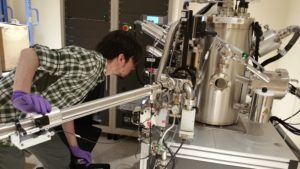
This capability has been highly sought by Clemson researchers working on advanced materials, bio-materials, advanced manufacturing, healthcare, digital and information technology and environmental projects. XPS and AES will directly contribute to ongoing polymer, fiber and textile research, new catalysts developments, biological implants and biomedical research, geochemical research, alternative energy technology development and all aspects of surface science-based projects at Clemson University and regional educational institutions.
Clemson faculty can schedule time for this equipment by emailing Dayton Cash at ECASH@clemson.edu. Scheduling will be accommodated on a first-come-first-serve basis. XPS/AES usage rates are posted at EMF website.
Following are some of the features of the new XPS:
XPS Instrumentation with “scanning” monochromatic x-ray source, a motorized specimen stage, an electron energy analyzer and state-of-the-art associated electron optics.
Small spot (<10 µm ) scanning X-ray source and imaging capabilities designed on similar approach used for electron microscopy. The instrument will be capable of producing and displaying a secondary electron (SE) image generated by the raster scanned x-ray spot. Multiple regions for further spectral analysis within the field of view will be selectable from the captured image using the instrument software, without changing the position of the specimen or translating the specimen stage.
The instrument will be capable of <10um multi-point analysis within the FOV without moving the stage. Types of analysis include survey spectra, high-resolution spectra, and multi-point depth profiling.
The instrument will be equipped with a 180° hemispherical electron analyzer designed for small spot sensitivity for secondary electrons, photoelectrons, and auger electrons.
The instrument will have a charge neutralization capability that permits the analysis of electrically insulating materials. This will be based upon a dedicated adjustable low-energy electron source, which may be used in conjunction with a low-energy ion source.
The instrument will be equipped with a computer-controlled ion gun capable of removing material from specimens by bombarding with argon (Ar) ions. This is useful during sputter depth profile experiments.
The instrument will be equipped with a C60 cluster ion gun, adjustable up to 20 kV, aligned to sputter the specimen at the analysis point without translation of the specimen. The instrument will be capable of sputtering a mixture or alternating layers of inorganic and organic films.
The instrument will have an electron gun controlled by the same computer and operating software to capture Auger Electron Spectra. The electron source will be capable of producing spot size <100nm for AES imaging and spectra. Switching between XPS and AES will take less than 5 seconds.
The instrument will contain a precision five (5) axis (X, Y, Z, rotation, tilt) motorized stage. The stage will be capable of continuous motorized 360 deg. rotation during ion sputtering.
The instrument will have a sample heating stage. The sample stage will be capable of in-situ heating and cooling from -140 C to +600 C.
The instrument will be equipped with an automated bake out system capable of baking out the instrument. The instrument will allow the bake out time to be operator selectable, and will include automatic shutoff of the bake out system when done. The instrument will be equipped with interlocks to terminate the bake out in the event of pressure overload, ion pump failure, or excessive temperatures.
A strong multi-year support and training from manufacturer will be in place.
For more information on this equipment and other equipment at the Electron Microscope Facility, click here.
Clemson University associate professor of plant and environmental sciences Christopher Saski (left) is among the recipients of this year’s R-Initiative grants.
The Division of Research has awarded nearly $1.9 million through its R-Initiative programs to support projects involving 67 faculty members from 27 departments.
The funding fosters cross-disciplinary, team-focused research and lays a foundation for future success with support for faculty and infrastructure investments to make that work possible.
“The R-Initiative proposals were competitive and we are pleased to invest in research across the colleges,” said Tanju Karanfil, vice president for research. “Research at Clemson achieved a lot of success in recent years, culminating in our designation as a Carnegie R1 university. We want to build on the momentum created by the faculty, students and staff to do even greater things. These R-Initiatives help us do that.”
The R-Initiative funds are part of the ClemsonForward strategic plan, representing the “R” of the REAL priorities – Research, Engagement, the Academic core and the Living environment.
The $1.9 million investment amounts to a 26 percent increase in R-Initiative funding from the previous fiscal year.
Grants were awarded under the following R-Initiative programs:
Clemson Faculty SUCCEEDS (Strategic University Challenge for Competitive Excellence and Expertise in Discovery and Scholarship) positions interdisciplinary faculty teams to successfully compete for significant external funding ($1.5 million or more) that will enhance the stature and distinction of the university in all key areas of research, scholarship and creative activities. VIEW GRANT RECIPIENTS
Clemson SEED (Support for Early Exploration and Development) provides two tiers of funding support to eligible Clemson faculty in either the initiation of research activities or the completion of a scholarly project or product. VIEW GRANT RECIPIENTS
Clemson Research Fellows provides grants to assist regular faculty, academic departments, centers and institutes in the hiring and training of qualified research faculty and post-doctoral researchers. VIEW GRANT RECIPIENTS
Clemson Major Research Instrumentation (CU-MRI) program provides financial support to researchers for the purchase of major research equipment or to replace or upgrade major research equipment that will likely impact funding, scholarship and research productivity, and the probability of increased extramural funding. VIEW GRANT RECIPIENTS
The Clemson University Research Foundation welcomes Dr. Alan Alfano and Clarissa Williams to its team.
Alan will be working as a technology commercialization officer (TCO) with Clemson inventors on biomedical, bioengineering, and life sciences technologies, among others. Clarissa will serve as CURF marketing manager, working to help CURF launch new marketing initiatives.
Alan Alfano
Alan completed a dual BS degree from Towson University (molecular biology/chemistry) in 2009, and subsequently earned his Ph.D. from the University of Maryland, School of Medicine (molecular medicine) in 2015. His thesis work focused on drug resistance and metastatic spread of aggressive prostate cancer. During his time as a Ph.D. student at UMSOM, Alan also completed a technology development internship with UMVentures (UMB Technology Transfer Office), where he assisted senior staff in conducting commercial analysis and targeted marketing of selected technologies.
Following completion of his Ph.D. work at UMSOM, Alan completed a post-doctoral Cancer Research Training Award (CRTA) Fellowship at the National Cancer Institute Technology Transfer Center (NCI-TTC). As a fellow at NCI TTC, Alan worked to perform a variety of invention development activities for clinicians and researchers at the NIH/NCI Center for Cancer Research. His primary subject areas of invention management/expertise include: oncology (general), experimental transplants, immunology and immunotherapeutics (e.g. novel antibodies, CARs, ADCs, RITs, etc.), vaccine development, radiation oncology, molecular diagnostics, genetics, and software/digital solutions.
Through his work in disease research, and his biotech business experience at UMB and NCI, Alan has developed skills that will enable him to learn and adapt quickly in his new role as a TCO with CURF. Please welcome him; he is looking forward to working with you!
Clarissa Williams
Clarissa comes to CURF with a wealth of knowledge in branding, social media management, website development, and graphic design. Before accepting the marketing manager position with CURF, Clarissa was the training and communications coordinator at Clemson University in the Office of Sponsored Programs. While there, she redeveloped the office website, managed social media platforms, and coordinated a number of campus-wide events.
Clarissa completed a BA degree in English from Clemson University in 2013 and later received her MS in Marketing, also from Clemson University, in 2017. Through her education and years working in the marketing industry, Clarissa has developed skills that will allow her to successfully adapt to her new role as marketing manager at CURF so that she is able to build the CURF brand by increasing engagement and awareness on and offline.
Beginning mid-August 2018, principal investigators (PI’s) and faculty of sponsored projects awarded to Clemson University will see an improved method of verifying pay charged toward sponsored project and federal land grant activities. The new system, Sponsored Compensation Verification System, incorporates the exceptional feedback received by our project team from faculty, staff, and current certifiers of the Clemson Link to Employee Activity Reports (CLEAR) system. The CLEAR system is expected to be retired during late summer.
A few of the major and widely anticipated changes of the new system include:
Reports will be produced bi-annually for approval rather than three times per year.
The new report will represent real dollars rather than percentages.
PI’s will approve personnel paid on a project-by-project basis rather than individually by person.
Graduate students will no longer be responsible for approving their own reports.
PIs will approve reports for all employees on each sponsored project for which they are responsible (inclusive of related cost-share funds 10, and 15).
Additional communications, including reference to quick guides and frequently asked question documents, will be provided to assist in the transition to the new system in advance of the systems’ launch in mid-August. Meanwhile if you have any questions or comments, please email Tracy Walters or Karen Lantgios for additional information.
The Division of Research is accepting applications for grants to assist in the purchase of major research equipment or in the hiring of research faculty and post-doctoral researchers.
Laine Mears, the BMW SmartState Chair in Automotive Manufacturing, was one of the recipients of a Clemson Research Fellows grant last fiscal year.
Funding is available through the Clemson Research Fellows and Clemson Major Research Instrumentation programs, two of four R-Initiative funding opportunities available this semester to spur collaborative research and boost scientific discovery.
Clemson Research Fellowsprovides grants to assist regular faculty, academic departments, centers and institutes in the hiring and training of qualified research faculty and post-doctoral researchers. Researchers may be hired to promote collaborative and creative interdisciplinary activities, research and demonstration projects with the goal of pursuing a large funding opportunity, building a major research program or a research center. These grants ($30,000 to $50,000 per year for each position) may run for a maximum of two years. At the end of the two-year period, the researcher position is expected to be fully supported by externally funded grants or the department. The deadline to apply is April 18.
Kyle Brinkman, associate professor in the Department of Materials Science and Engineering, was among recipients of a CU-MRI grant last fiscal year.
Clemson Major Research Instrumentation(CU-MRI) program provides financial support to researchers for the purchase of major research equipment or to replace or upgrade major research equipment that will likely impact funding, scholarship and research productivity, and the probability of increased extramural funding. The equipment will have a useful life of at least five years and cost more than $50,000. The deadline to apply is May 1.
For details, guidelines and instructions for applying, visit the R-Initiatives webpage. Questions should be directed to Diana Thrasher in the Division of Research at dianas@clemson.edu or 864-656-6444.
The University Industry Demonstration Partnership, of which Clemson University is a member, hosts a free webinar at 1 p.m. Thursday to introduce university faculty to opportunities available via the National Science Foundation’s Industry-University Cooperative Research Centers program.
Preliminary proposals for the NSF program are due in April, so register for this webinar and get started. This webinar will be presented by NSF Program Director Andre Marshall.
NSF’s Industry-University Cooperative Research Centers (IUCRC) Program was initiated in 1973 to develop long-term partnerships among industry, academe, and government. NSF invests in these partnerships to promote research programs of mutual interest, contribute to the nation’s research infrastructure base, enhance the intellectual capacity of the engineering or science workforce through the integration of research and education, and facilitate technology transfer. There are currently more than 65 IUCRCs consisting of more than 180 university sites and more than 1,200 industry members.
A new faculty award developed by the Research Advisory Board will celebrate faculty members who have received national and international recognition at the highest level.
The Advisory Board, consisting of representatives from each college and the University Libraries, has been working with Tanju Karanfil, vice president for research, to develop a mechanism to induct the university’s highest-achieving faculty into a university honors society that will be recognized and celebrated annually. Recipients of this new University Research, Scholarship, and Artistic Achievement Award (URSAAA) will be lifetime URSAAA members and will be invited to participate in an annual celebration with their peers.
The URSAAA webpage includes detailed information on criteria for the award, along with information on recommending yourself or another faculty member for the inaugural class. Recommendations are due April 16. Recipients will be announced and celebrated at the 2018 Research Symposium in May.
As CURF executive director, Chris Gesswein is charged with commercializing innovative Clemson technology and intellectual property and nurturing private-sector partnerships that will advance scientific discovery at Clemson and support economic growth. Gesswein, who joined CURF in 2014 as director of licensing for technology transfer, has served as interim director since 2017.
“CURF serves as the intersection of university research and the economy. Chris’s business savvy and understanding of research-and-development will benefit Clemson faculty, industry and the South Carolina economy,” said Tanju Karanfil, vice president for research.
Prior to joining CURF, Gesswein served as vice president of business development at Ultradian Diagnostics, a start-up he helped nurture to a clinical stage medical device company while overseeing fundraising, regulatory compliance and research grants management. He has more than 20 years of experience bringing various technologies from concept to market working as a new product development and technology transfer specialist for early-stage startups as well as large multi-national companies. Gesswein also operated a consulting business to assist mid-market life-sciences companies and has been a co-author on approximately 21 federal SBIR/STTR and state technology-development grants.
Gesswein received his master’s degree in biotechnology and molecular biology from Johns Hopkins University and his bachelor’s degree from West Virginia University. He has an MBA from Rensselaer Polytechnic Institute in New York and is a member of the American Association of Clinical Chemistry, the American Society of Clinical Pathologists, the Association of University Technology Managers and the Licensing Executive Society.
“With a deep understanding of business, product development and research, Chris is well positioned to lead a great team at CURF and was an easy, unanimous choice by the board to move the organization forward,” said CURF board Chairman George Acker.
The Clemson University Research Foundation is a 501(c)(3) corporation organized exclusively for charitable, educational or scientific purposes to promote the research enterprise at Clemson University.
Through an agency agreement with the university, the foundation is commercializing intellectual property through technology transfer; licensing agreements and new venture formations; and assisting with research development through a Foundation-sponsored technology maturation program and participation in early-stage research grants and sponsored research activities.
The Division of Research will award grants through the Clemson Research Fellows program to assist faculty, academic departments, centers and institutes in the hiring and training of qualified research faculty and post-doctoral researchers.
Through Clemson Research Fellows, researchers may be hired to promote collaborative and creative interdisciplinary activities, research and demonstration projects with the goal of pursuing a large funding opportunity or building a major research program or a research center. These grants ($30,000 to $50,000 per year for each position) may run for a maximum of two years. At the end of the two-year period, the researcher position is expected to be fully supported by externally funded grants or the department.
Clemson Research Fellows is one of four R-Initiative funding opportunities available this semester. The R-Initiative funds are part of the ClemsonForward strategic plan, representing the “R” of the REAL priorities – Research, Engagement, the Academic core and the Living environment.
For details, guidelines and instructions for applying, visit the R-Initiatives webpage. Questions should be directed to Diana Thrasher in the Division of Research at dianas@clemson.edu or 864-656-6444.
 The Office of the Vice President for Research and the Research Advisory Board proudly announce the creation of the Researcher of the Year award to recognize the accomplishments of our outstanding faculty members.
 The
The 


 Clemson University has installed state-of-the-art combined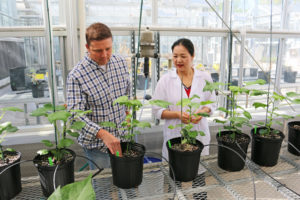
 Grants were awarded under the following R-Initiative programs:


 A new faculty award developed by the
