Dr. Rajandeep Sekhon leads the Clemson University team participating in a four-year, $6 million National Science Foundation collaborative grant for the project “Collaborative Research: FEC: Converging AI, Biomechanics, and Genomics to Engineer Lodging Resilient Field Crops.”
Dr. James Morris is part of a team that was awarded a NIH grant, “Optimization of N. fowleri inhibitors for rodent efficacy and validation of target.”
Dr. Hong Luo received the Society for In Vitro Biology (SIVB) 2026 Distinguished Service Award for his contribution in fundraising and service as member of the SIVB Board of Directors.
Senior genetics and Honors College student Jennifer Covel was chosen to represent Clemson University at the 20th annual ACC Meeting of the Minds Undergraduate Research Conference.
Four Department of Genetics and Biochemistry faculty members were promoted at the beginning of the Fall 2026 semester: Lindsey Beebe to senior lecturer and Miriam Konkel, Lela Lackey and Fabio Morgante to associate professor with tenure.
Genetics and Biochemistry students Elizabeth Polatty and Addison Vondersaar have been selected to explore global policy issues through the Honors College’s selective Dixon Global Policy Scholars program.
Graduate students Alp Ummet, Fengge Chang, Vijay Shankar, Xiaotong (Stone) Chen, Zhaohui (Charlie) Chen, Ryan Watts and Ming Liu attended national and international conferences presenting posters and giving oral presentations.
Alexandra Harrington, an Honors College student and biochemistry and genetics double major with minors in Spanish studies and microbiology was selected for a Fulbright teaching assistantship in Galicia, Spain.
Ph.D. student Xiaotong (Stone) Chen received the Society for In Vitro Biology 2026 Philip R. White Memorial Award for his outstanding research.
Amy Lawton-Rauh, senior associate provost and professor in the Department of Genetics and Biochemistry has been named a 2025 Fellow of the American Association for the Advancement of Science (AAAS), which is one of the highest honors in the scientific community.
Selected for her exceptional research and leadership in her field, with this election, Lawton-Rauh is being recognized by the AAAS for her contributions to the field of plant evolution. Her latest research addresses a rapidly growing agricultural challenge: herbicide-resistant Palmer amaranth (pigweed) invading cotton and soybean fields. This research also advanced understanding of resistance mechanisms across many organisms, including pathogens and invasive species.
Lawton-Rauh sees her election as an AAAS as both an honor and a responsibility, aiming to keep her own scientific spark and creativity while creating an environment at Clemson where students, faculty and staff can find and cultivate theirs.
“Dr. Amy Lawton-Rauh’s election as a fellow of AAAS recognizes not only her important research contributions, but also her exceptional leadership at Clemson,” Young said. “She has cultivated excellence in scholarship, empowered colleagues and students, and helped shape a collaborative environment where scientific innovation thrives in meaningful and lasting ways.”
Assistant professor in Genetics and Biochemistry Dr. Stephen Dolan, who is also a part of the Eukaryotic Pathogens Innovation Center (EPIC), has joined forces with molecular biologist Gustavo Goldman at the University of São Paulo in Brazil to understand how dangerous fungi survive their own poisons and how that could be turned into a new antifungal drug.
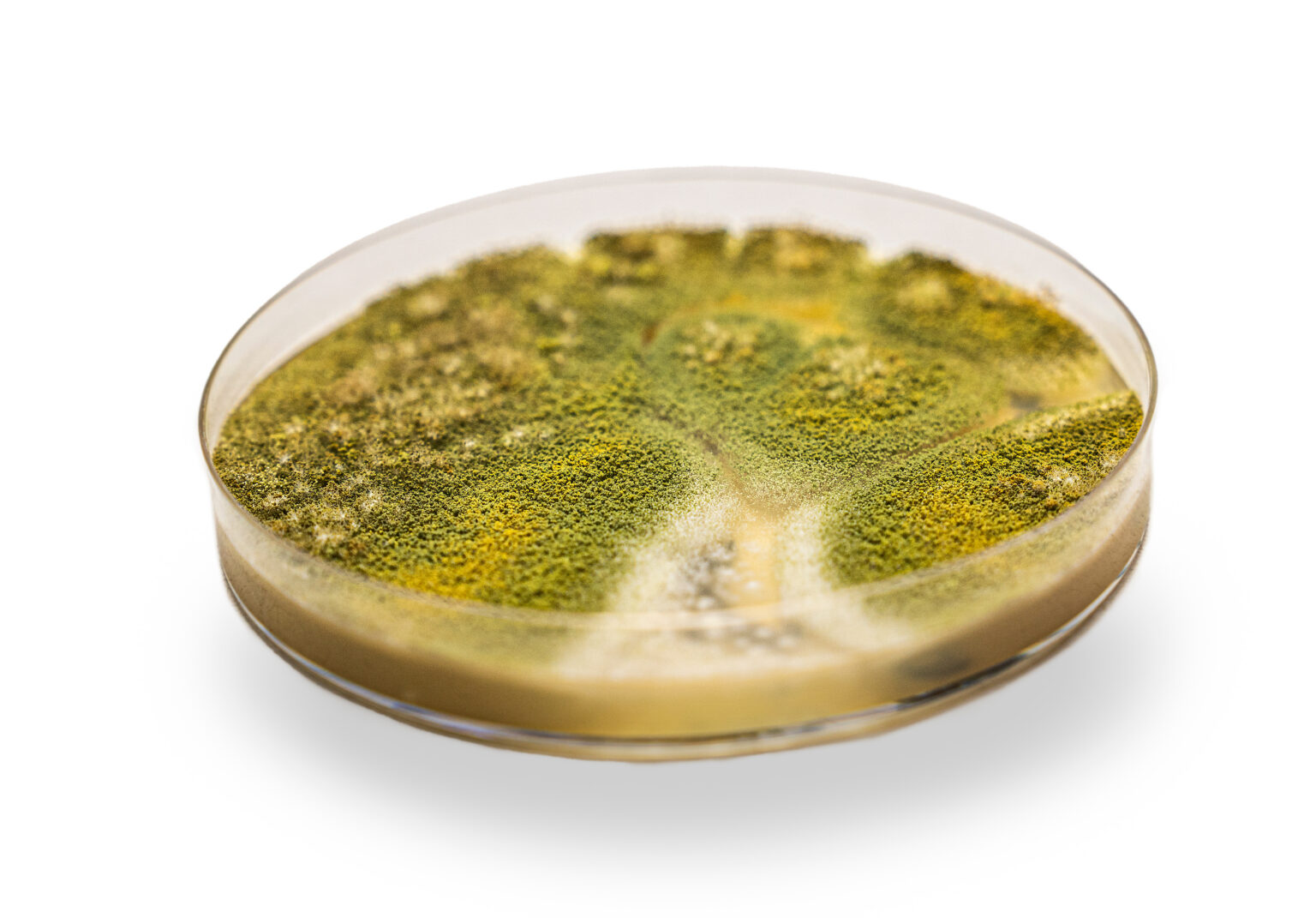
The two researchers work on the fungi Aspergillus fumigatus, a common mold that can cause life-threatening lung infections in people with weakened immune systems. A. fumigatus produces a potent toxin called gliotoxin that enables the fungus to cause disease and outcompete other microbes, but it is also so toxic that it can poison the fungus itself. To survive, the fungus has developed protective systems that neutralize gliotoxin.
With Dolan specializing in creating mutant strains of fungi and analyzing the resulting data to see which genes matter most for survival and Goldman’s strengths in fungal genetics and biochemistry, the team was able to connect molecular mechanisms to big-picture questions about how fungi cause disease.
Together they discovered that mitochondria are a key weak spot for gliotoxin. The toxin disrupts mitochondrial function, and when defenses fail, the fungus’s energy systems collapse, leading to cell death. The results reveal new details about how fungi defend themselves against their own toxins and highlight mitochondria as a possible target for future antifungal treatments, which is important because drug resistance is on the rise and current treatments for fungal infections can be toxic or ineffective.
Dolan has actually been working with Goldman since his Ph.D. and they have published two papers together, with more forthcoming and they’ve started participating in virtual joint lab meetings once a month. Dolan believes that collaboration in research is essential for impactful work.
“The mindset of working independently without engaging other labs is disappearing,” Dolan says.
Department of Genetics and Biochemistry assistant professor and member of the Center for Human Genetics Dr. Miriam Konkel is part of a team of scientists that have produced the most complete and accurate look at the human genome to date, even in regions that have long been considered too complex to resolve.
“The greatest advancement in this work is that we can get into these really difficult regions and build the structure and show the genetic variation within them, and now investigate how they are contributing to phenotypes or disease,” said Dr. Konkel.
The team of 65 individuals, making up the Human Genome Structural Variation Consortium, represent a variety of the world’s populations. The team assembled near-complete genomes, advancing the scientific exploration of complex genetic structural variation.
On Thursday, May 1, the College of Science celebrated its faculty and staff with awards and recognition at its annual awards ceremony. Many genetics and biochemistry departmental members were honored with nominations and awards.
Alison Starr Moss – Dean’s Distinguished Lecturer Award
James Morris – Dean’s Distinguished Professor Award
Heidi Anderson – Excellence in Teaching Award
Rick Moseley – Outstanding Staff Member Award
G&B Advising and Registration Services Team – Oustanding Team Award
Dr. Cheryl Ingram-Smith is an associate professor of genetics and biochemistry and serves as the department’s graduate program director. She teaches courses in biochemistry, genetics and molecular biology and her primary research interests include metabolism of eukaryotic pathogens during infection in a human host and enzymology of metabolic enzymes.
Dr. Ingram-Smith graduated with her B.S. in biology from MIT and her Ph.D. in molecular biology from University of Pennsylvania. She came to Clemson in 2001, serving as a lecturer, senior lecturer and undergraduate academic advisor before moving to a tenure track position in 2011.
As part of Clemson University’s Eukaryotic Pathogens Innovation Center (EPIC), an interdisciplinary research cooperative founded in 2013 that is at the forefront of biomedical research on the devastating eukaryotic pathogens, Dr. Ingram Smith’s lab is interested in the intestinal parasite Entamoeba histolytica, which causes severe dysentery in ~100 million people each year worldwide.
E. histolytica causes amoebic dysentery in ~100 million people each year. E. histolytica is ingested in its cyst form in contaminated food and water. In the small intestine it converts to its amoeba form and then colonizes the large intestine, where is can cause dysentery or establish an asymptomatic infection.
Dr. Ingram-Smith’s lab is studying how E. histolytica adapts to and thrives in the glucose-poor environment of the large intestine where it colonizes. Her lab has established robust, reproducible cyst formation in laboratory culture and are studying how this process is regulated directly in the human pathogen.
Considering the world’s growing population and less land being available for farming, it’s becoming more important than ever to increase nutritional quality and crop yield of food crops. One way to achieve this is by genetically modifying a plant by introducing a foreign gene (called a transgene) from another organism, essentially giving the plant a new trait not naturally present in its genome.
This often enhances a plant’s resistance to pests, diseases and environmental stresses, improves its nutritional value. Plant’s traits can also be improved by modifying the genes they already have through gene-editing technology.
However, when foreign genes are introduced into target crops using the transgenic approach or by manipulating endogenous gene expression in target crops using genome editing for trait modification, some unneeded DNA may end up permanently residing in the host genomes of the final transgenic products, which raises questions of potential hazards or adverse effects to the host, environment and human health. Professor Hong Luo and his lab have been studying this genome editing in crops.
“The unnecessary DNA that gets into the transgenic plants with the target gene need to be removed,” says professor Hong Luo.
One way to remove them is by using site-specific DNA recombinases. Site-specific recombinases recognize specific DNA sequences by flanking the desirable gene with target sequences that the recombinase can recognize and excise.
Professor Luo has received a $650,000 grant from the U.S. Department of Agriculture to study these unintended consequences of three site-specific DNA recombination systems commonly used to genetically engineer target crops.
In this study, Luo will study three different recombinase genes — Cre, FLP and PhiC31 — in plants creeping bentgrass and Arabidopsis by investigating whether there are unintended off-target effects to host genomes, epigenomes and phenotypes and whether they negatively or positively affect plant traits and present hazards to the environment.
“This will give us an idea about what aspects those recombinases impact in which particular plant species,” he said.
Authority Magazine recently highlighted Professor Shahid Mukhtar’s work and career journey in science in the article, “AgTech: Shahid Mukhtar of Clemson University On The New Technologies That Are Revolutionizing Agriculture.” The interview for the article is done by Martita Mestey and the questions asked give great insight into Dr. Mukhtar’s life and career.