Authority Magazine recently highlighted Professor Shahid Mukhtar’s work and career journey in science in the article, “AgTech: Shahid Mukhtar of Clemson University On The New Technologies That Are Revolutionizing Agriculture.” The interview for the article is done by Martita Mestey and the questions asked give great insight into Dr. Mukhtar’s life and career.
Associate professor of genetics and biochemistry at Clemson University, Dr. Lukasz Kozubowski earned his bachelor’s and then master’s degrees in pharmaceutical sciences at the Medical University of Warsaw in Poland, whihc is one of the oldest and the largest medical schools in Poland. The first academic department of medicine was established as far back as two centuries ago in 1809.
He then completed his doctorate under the mentorship of Dr. Kelly Tatchell at Louisiana State University Medical Center, studying mechanisms of cell division and morphogenesis (more specifically the biology of septin proteins and related cell signaling involving the PP1 phosphatase). He continued similar investigations under the guidance of Dr. Danny Lew, when he moved to Duke University for his postdoctoral studies.
Subsequently, he performed studies in several labs at Duke (including Joseph Heitman, Andy Alspaugh, and John Perfect) investigating the biology and pathogenicity of a human fungal pathogen Cryptococcus neoformans.
In 2013 he established research program at Clemson University with the main aim to elucidate mechanisms of cell division and stress response in C. neoformans. Dr. Kowzubowski studies C. neoformans to understand the mechanistic cellular processes used by pathogenic microorganisms to allow survival in the infected host. C. neoformans is a major opportunistic fungal pathogen worldwide and a leading cause of morbidity and mortality in AIDS patients.
Dr. Kozubowski’s work with C. neoformans leads to the hypothesis that this pathogen has evolved unique pathways to control cell division in a manner that allows it to survive within a human host. Testing this hypothesis would provide insights into how eukaryotic pathogens adapt to the host environment and could potentially reveal new targets for therapeutic interventions.
In addition to research, Dr. Kozubowski teaches, writes grants and publishes papers in peer-reviewed journals. Read more here.
Director of the Eukaryotic Pathogens Innovations Center (EPIC) and professor of Genetics and Biochemistry Dr. Kerry Smith has taken a role with the Clemson University School of Health Research (CUSHR) as campus research director for the Prisma Health Education and Research Institute (PHERI).
“In this role, I am able to extend my efforts beyond my own laboratory’s research and assist in advancing impactful health-related research in diverse scientific and clinical fields,” said Smith.
PHERI, a collaboration between Prisma Health, Clemson, Furman University and University of South Carolina, seeks to bridge the gap between academics, research, clinical practice and healthcare transformation in a way that is innovative, inter-institutional, inter-professional and interdisciplinary. In his new role, Dr. Smith will work to build and enhance research collaboration between Clemson researchers and clinical faculty from Prisma.
“The increased collaboration will be advantageous for both Clemson researchers and the clinical faculty, as it will enable the Clemson researchers to conduct health-related research in an applied environment that will have a positive impact on individuals,” Smith said. “This will enable the clinical faculty member to offer scientific assistance for innovative interventions that could potentially be implemented outside of Prisma Health–Upstate.”
As campus research director for PHERI, Smith expects these collaborations to continue to generate presentations at conferences for academic researchers and for physicians and healthcare professionals, publications in peer-reviewed journals and external funding.
“Kerry has shown his commitment to our vision of expanding health research at Clemson,” Sherrill said. “We look forward to his success in his new role as Clemson University Campus Research Director for Prisma to enhance our research partnerships and Clemson’s health research mission.”
The director of the Clemson University Center for Human Genetics, Dr. Trudy Mackay, has been named Clemson University’s first-ever member of the prestigious National Academy of Medicine, one of the highest honors in the fields of health and medicine.
Mackay is among the 100 new members currently by NAM members. Election to the Academy recognizes individuals who have made major contributions to the advancement of medical sciences, health care and public health.
“Trudy Mackay is a world-renowned researcher in the field of genetics. Her election to the National Academy of Medicine is a historic and exciting day for Clemson University,” said President Jim Clements. “As Clemson’s first National Academy Member of Sciences and now our first National Academy Member of Medicine, Trudy continues to elevate our University’s research profile to new heights. I am thrilled that Trudy has received such an incredible honor, and I am excited to see how her research further transforms and positively impacts the lives of others for generations to come.”
Mackay is among the 100 new members elected Monday by current NAM members. Election to the Academy recognizes individuals who have made major contributions to the advancement of medical sciences, health care and public health.
“I am very honored that the National Academy of Medicine recognizes the value of my model organism work with fruit flies, which has so much potential to impact human health,”Mackay said.
Founded in 1970 as the Institute of Medicine, three academies make up the National Academies of Sciences, Engineering and Medicine — and Mackay is now a part of two of them, having been elected to the National Academy of Sciences in 2010 as well. Mackay is the only one in South Carolina to be elected to more than one.
Mackay’s groundbreaking research uses the common fruit fly Drosophila to discover the genetic roots of complex traits — traits that are influenced by multiple genes — that are important to human health. She developed the Drosophila Genetic Reference Panel, a valuable resource used by researchers from all around the world. The panel includes more than 1,000 fly lines with fully sequenced genomes.
“The whole premise of genetic medicine is that once you know the genes involved, you understand the processes and networks, or the context in which those genes are involved, which often leads to drugs that can target those disease,” said Mackay. “My work historically has been trying to identify those genes and understand those networks.”
Mackay said the NAM honor will enhance Clemson’s advancement of precision medicine.
“Dr. Mackay is a pioneer in human genetics, and this spectacular honor is further recognition of Clemson’s excellence in improving lives through research,” said Cynthia Young, dean of Clemson’s College of Science. “Clemson continues to accelerate her vision of precision medicine — integrating a person’s genetics, environment and lifestyle leading to healthier lives.”
Assistant professor Dr. Stephen Dolan studies microbial interactions in human infections, particularly the dynamics within polymicrobial communities that contribute to complex, multi-species infections.
Since joining Clemson University in 2023 as an assistant professor in the Department of Genetics and Biochemistry, his lab has been part of the Eukaryotic Pathogens Innovation Center (EPIC) — a leading interdisciplinary hub for cutting-edge research on devastating pathogens.
Dr. Dolan earned his Ph.D. in 2016 from Maynooth University in Ireland under the mentorship of Dr. Sean Doyle. His dissertation research employed comparative ‘omics and reverse genetics to uncover novel regulators of toxin production in the pathogenic fungus Aspergillus fumigatus.
Prior to moving to the US, he was a Herchel Smith research fellow at the University of Cambridge, where he worked in Dr. Martin Welch’s lab. This fellowship allowed him to leverage comparative ‘omics techniques to study the key respiratory pathogen Pseudomonas aeruginosa, while also developing expertise in fungal-bacterial interactions in clinical settings.
Dr. Dolan’s research centers on respiratory infections in individuals with cystic fibrosis (CF), where abnormal mucus makes them vulnerable to a wide array of bacterial, viral and fungal pathogens. Rather than focusing on a single model organism, he has deliberately pursued broad training across multiple co-infecting human pathogens—most notably Aspergillus and Pseudomonas.
This comprehensive approach enables him to decipher the complex mechanisms of microbial communication during infection. By using clinical isolates from people with CF, Dr. Dolan explores how the physiology of both pathogens shifts when co-cultured in a model CF environment, compared to when they are grown in isolation.
Dr. Dolan’s research goal is to leverage this cross-kingdom perspective to uncover how fungi respond to bacterial presence (and vice versa) in polymicrobial settings. This insight is crucial for developing innovative therapeutic strategies that could revolutionize the treatment of microbial infections. Pathogenic microbes not only impose a significant burden on healthcare but also impact agriculture.
His research aims to elucidate the physiology and behavior of fungi during human infections, particularly in their interactions with bacteria. By advancing our mechanistic understanding of these processes, he seeks to contribute to the development of novel approaches to combat microbial pathogenesis.
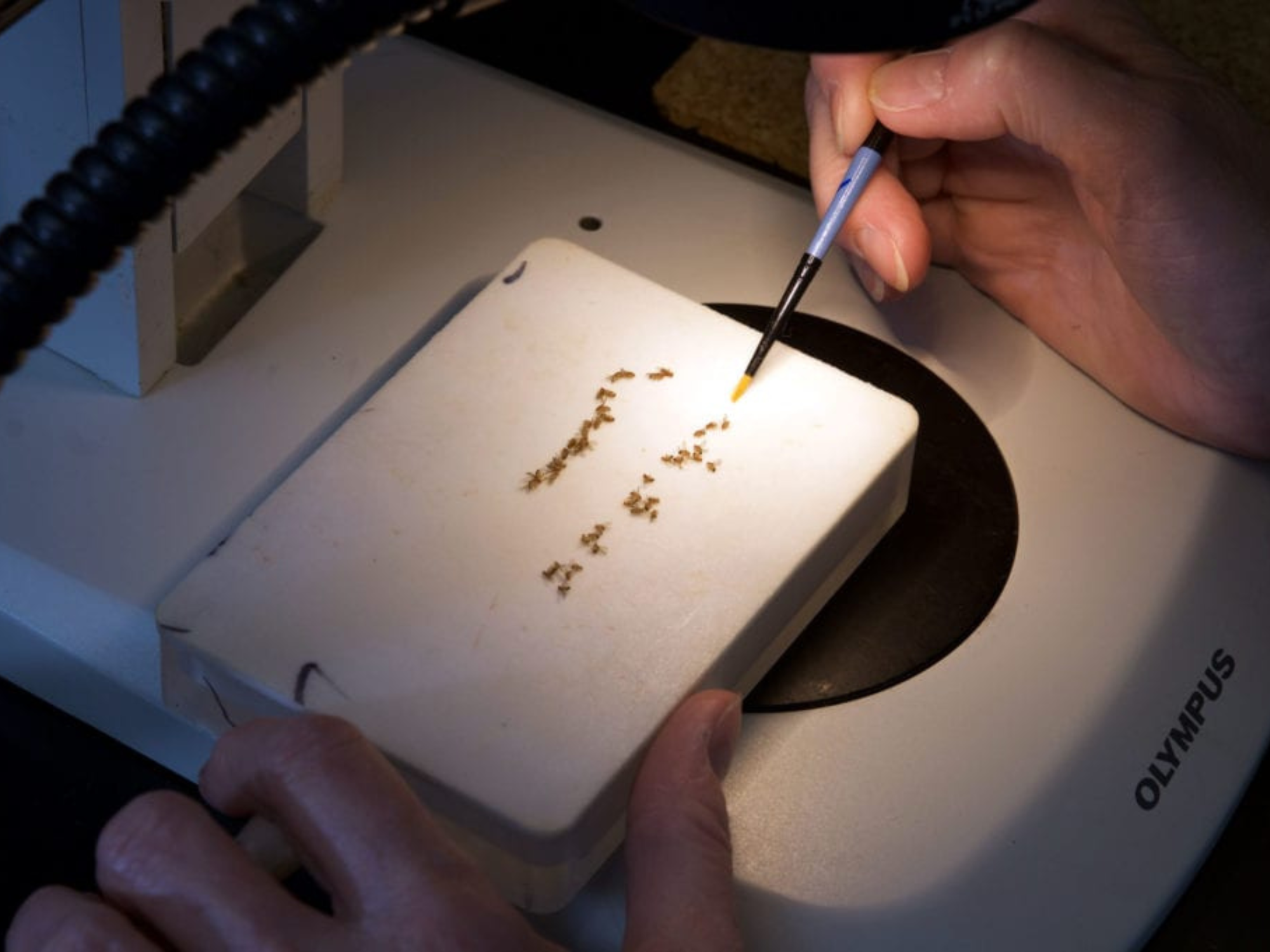
Researchers at the Center for Human Genetics (CHG) in Greenwood, SC are using Drosophila melanogaster — the common fruit fly – to identify potential therapeutics for Sanfilippo syndrome.
Sanfilippo syndrome is a rare and fatal genetic metabolic disorder that is often referred to as childhood Alzheimer’s. Children with Sanfilippo syndrome lack a single enzyme necessary to break down and recycle heparan sulfate, a large, complex molecule that is important for cell-cell interactions resulting in too much partially degraded heparan sulfate accumulates inside cells in a compartment known as the lysosome and causing progressive damage, especially in the brain. There is no treatment or cure, with most suffering from the syndrome dying in their teens or early 20s.
Fruit flies share 75% of disease-causing genes with humans and is a well-established genetic model for studying the underlying genetic causes of rare human diseases.
“Drosophila also has heparin sulfate and all of the enzymes in the same pathway that degrades it,” Mackay said.
Researchers are tracking activity, sleep and how gene expression in the brain changes in the flies and are identifying human counterparts of the genes that were differentially expressed in flies with the mutations.
“We see changes in expression in components of the synapse and neurodevelopmental genes,” Mackay said.
Dr. Robert Anholt, Provost Distinguished Professor of Genetics and Biochemistry and Director of Faculty Excellence for Clemson’s College of Science said researchers don’t have to target the defective gene itself but can look for therapies that will act indirectly on the affected gene.
“There are multiple enzymes in the heparan sulfate degradation pathway and there is the potential that a modifier that acts on one component of the pathway could have beneficial effects across the entire pathway,” says Anholt.
This research is made possible by the two-year renewal grant from the Cure Sanfilippo Foundation, founded by South Carolina parents Glenn and Cara O’Neill after their daughter Eliza was diagnosed with the disorder. With this grant, CHG scientists will screen several drugs that are approved by the Federal Drug Administration for pediatric use to determine if they restore sleep patterns to normal in the mutant flies. The drugs will be selected based on known gene-drug interactions.
Professor Dr. Alex Feltus is part of a new collaborative research study that found some genetic traits modern humans inherited from Neanderthals may increase a person’s susceptibility to autism. The study suggests long-term effects of ancient human hybridization on brain organization and function and could possibly lead to earlier diagnosis.
“This is the first evidence that I am aware of actually showing that Neanderthal DNA is associated with autism,” said Dr. Feltus.
In this study, the researchers used data from publicly available data bases: Simons Foundation Powering Autism Research (SPARK). They found specific Neanderthal genetic markers were enriched in people with autism compared to ethnically-matched control groups.
However, this does not mean that everyone who has these Neanderthal-derived variations will develop autism. The hypothesis of the study is instead, that Neanderthals gave us some of the gene tweaks that give a higher susceptibility for autism.
“Autism is a complex trait. It is controlled by many, many genes. A big part of what we do in my lab is try to understand the level of complexity,” said Dr. Feltus. “Of the 60,000 genes in the human genome, how many genes are at play when you’re developing autism or cancer or any other complex trait? We embrace complexity. We don’t try to erase complexity.”
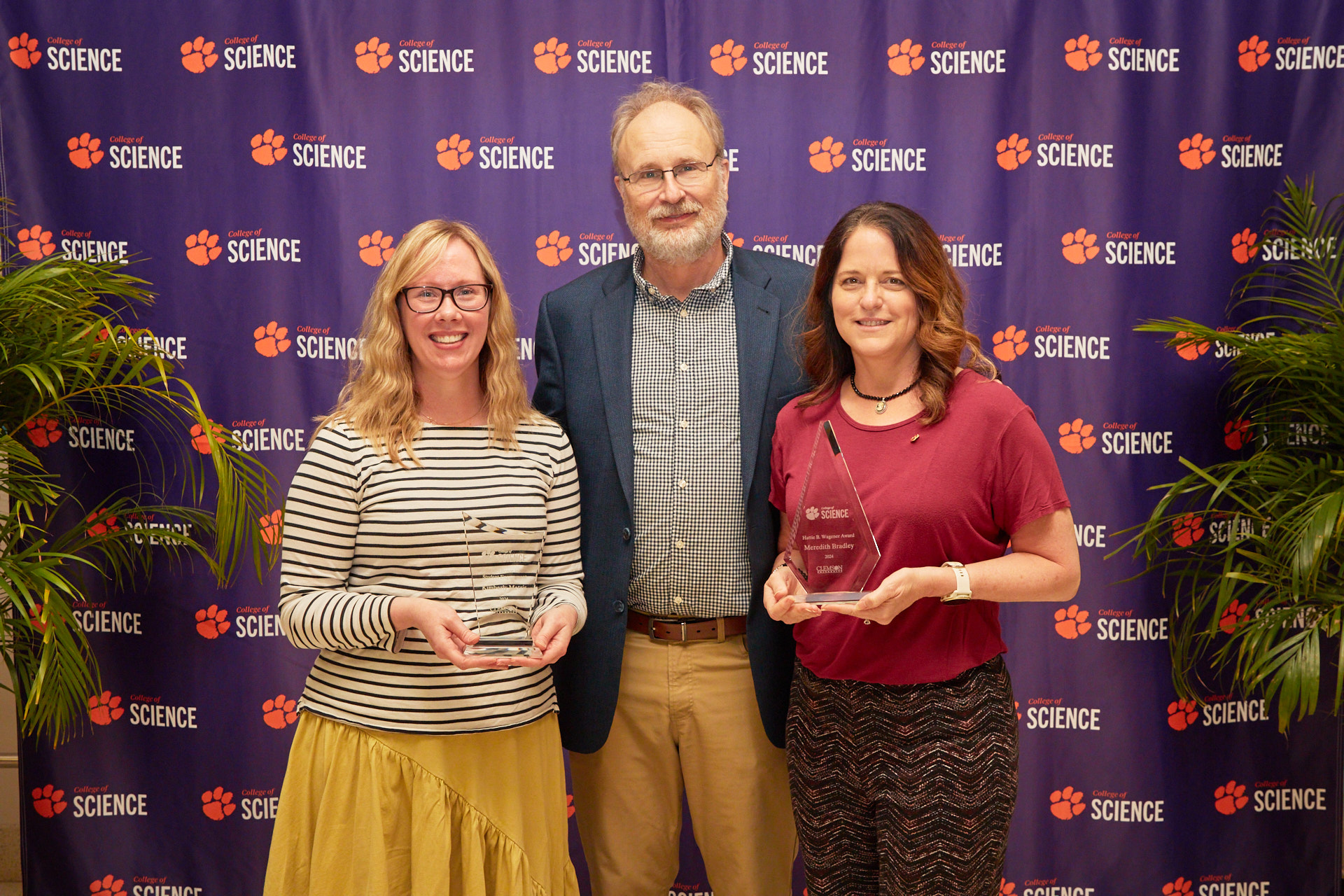
The College of Science faculty and staff awards celebration was held Tuesday, April 30, 2024, in the Life Sciences Building atrium.
Two members of the Department of Genetics and Biochemistry team were honored with awards at the recent College of Science Faculty and Staff Awards ceremony: senior lecturer Dr. Kimberly Métris and office manager Meredith Bradley.
Dr. Kimberly Métris was awarded the College of Science Excellence in Student Engagement Award, which honors a faculty member who has demonstrated excellence in service and innovation in teaching, with emphasis on the most recent three years.
She has developed a Creative Inquiry, a new experiential learning course and a project with a new, unique presentation method, all while mentoring at least 30 graduated students. Dr. Métris’ students thrive in and out of the classroom with at least six of her undergraduate students conducting field, lab, and bioinformatics research and five winning university awards over the last few years.
A student wrote, “As I told Dr. Métris, she was truly born to teach.”
Meredith Bradley was awarded the endowed 2024 Hattie B. Wagener Award, which is named after Hattie Boone Wagener, a long-time administrative staff member at Clemson. The award recognizes an individual who readily and routinely exceeds stated job expectations and presents a positive work attitude.
Meredith came to the department with a wealth of experience in administrative support roles in business environments in October 2021 as the administrative assistant. Department chair David Clayton said he quickly came to appreciate her capacity for thinking strategically about what needed to get done, why and when.
In just a couple short years, Meredith was juggling two jobs for the department: one the role for which she was first hired and the other by covering more duties for the department’s human relations and payroll liaison. After the HR person resigned in summer of 2023, Meredith quickly stepped into the role while continuing to serve as the chair’s direct administrative assistant.
Meredith has become the go-to person for the faculty and staff of the Genetics and Biochemistry Department. She leads the office with purposefulness and consistently exceeds expectations.
Congratulations to both Dr. Métris and Meredith on their accomplishments. We can’t wait to see what you achieve in the future!