Genetics and Biochemistry News

G&B faculty and students publish articles – Summer 2025

Dr. Rajan Sekhon, Manwinder Brar and Barath Kunduru, recent Ph.D. graduates from the Sekhon lab, published a Plant Cell study identifying metabolites and genes controlling maize leaf senescence titled, “Temporal analysis of physiological phenotypes identifies metabolic and genetic underpinnings of senescence in maize.” 

Manwinder Brar was first author on a collaborative study with USDA scientists with an article titled “Untargeted metabolomics reveals key metabolites and genes underlying salinity tolerance mechanisms in maize” in Plant Genome.

Dr. Jennifer Mason and post doctoral fellow Josh Turner published “FBH1 and the replication stress response: Implications for genome stability and cancer” in DNA Repair.

Drs. Trudy Mackay and Robert Anholt published three articles together

“Ultrastructural expansion microscopy reveals unexpected levels of glycosome heterogeneity in African trypanosomes” by Drs. Heidi Anderson and Meredith Morris has been accepted in the Journal of Microscopy.

Dr. Andrew Jezewski’s paper “Discovery and mechanism of a highly selective, antifungal acetyl CoA synthetase inhibitor” was accepted into Nature Communications.

Dr. Fabio Morgante had three publications:

“Non-coding RNAs in plant stress responses: molecular insights and agricultural applications” was published in Plant Biotechnology Journal. Graduate student Xiaotong Chen is the first author, Dr. Hong Luo and two of his other students, Zhaohui Chen and Ryan Watts are co-authors of this article.

Dr. Robert Anholt was asked by Chem Senses to write the obituary for well-renowned artist and scientist Bert Menco when he passed earlier this summer after the pair had worked together for years.

G&B faculty invited for talks – Summer 2025

Dr. Hong Luo was invited to give four talks:

  • At the Louvain Institute of Biomolecular Science and Technology at the Catholic University of Louvain, Belgium.
  • In the session “Biotechnology approaches for animal and crop improvement and environmental risk assessment of genetically engineered organisms” of the Society For In Vitro Biology 2025 Meeting in Norfolk, VA.
  • At Lanzhou University as a part of their seminar series.
  • At the International Pastureland and Forage Industry Congress 2025 in Hulunbuir, China.

Dr. Stephen Dolan and Ph.D. students Jessica Aycock, Shafi Mondal and Lindsay Pauls attended the Gordon Research Seminar & Conference on Microbial Adhesion and Signal Transduction in Newport, RI, where all three gave research presentations.

Zane Tolbet, a Ph.D. candidate, gave an oral presentation at the Midwest DNA Repair Symposium at the University of Michigan.

Dr. Fabio Morgante was invited to speak at the CM Statistics 2024 conference in London and at Clemson University for the Medical Biophysics Seminar Series. The titles of his talks were “A variational empirical Bayes approach to multivariate multiple regression, with applications to polygenic prediction” and “Exploiting Complexity to Improve Phenotype Prediction,” respectively.

Post doctoral fellow Anurag Chaturvedi gave an oral presentation, titled “Unravelling toxicogenomics: From single cell to populations” as part of a workshop at the Drosophila Research Conference in San Diego.  

Dr. Robert Anholt presented a workshop presentation skills and was a panel member of a grant review writing session at the 2025 SC INBRE Career Development Workshop at the USC School of Medicine in Columbia, SC. He also served on the NIH Special Emphasis Panel/Scientific Review Group for Program Projects: Centers of Biomedical Research Excellence (COBRE) Phase 1.

G&B faculty receive grants – Summer 2025

Dr. James Morris received the grant “Optimization of delivery of HEX for treatment of primary amebic encephalitis” from the National Center for Advancing Translational Sciences/NIH.

Dr. Rajan Sekhon received a $2.4M NSF grant, titled “BIO-AI: RESEARCH-PGR: Harnessing Multi-Omics and AI/ML to Unveil Nutrient Recycling Mechanisms in Maize Senescence,” a collaboration between Clemson University (lead), Cornell University, and the University of Florida. The project uses systems genetics and AI/ML to identify key mechanisms of maize leaf senescence and nutrient remobilization, guiding improvements in nitrogen use efficiency, grain quality, and crop resilience.

Graduate students Xiaotong Chen and Zhaohui Chen were awarded travel grants to attend 2025 Society for In Vitro Biology Meeting held in Norfolk, VA in June.

Dr. Andrew Jezewski was awarded a South Carolina Department of Agriculture – Agribusiness Center for Research and Entrepreneurship (SCDA-ACRE) grant to study “Biocontrol of Salmonella using nutritional yeasts.”

Post doctoral fellow Anurag Chaturvedi received a $25,000 grant from the Clemson University Research Foundation to develop high-throughput screening of drugs using Drosophila.

G&B faculty and students receive awards and honors – Summer 2025

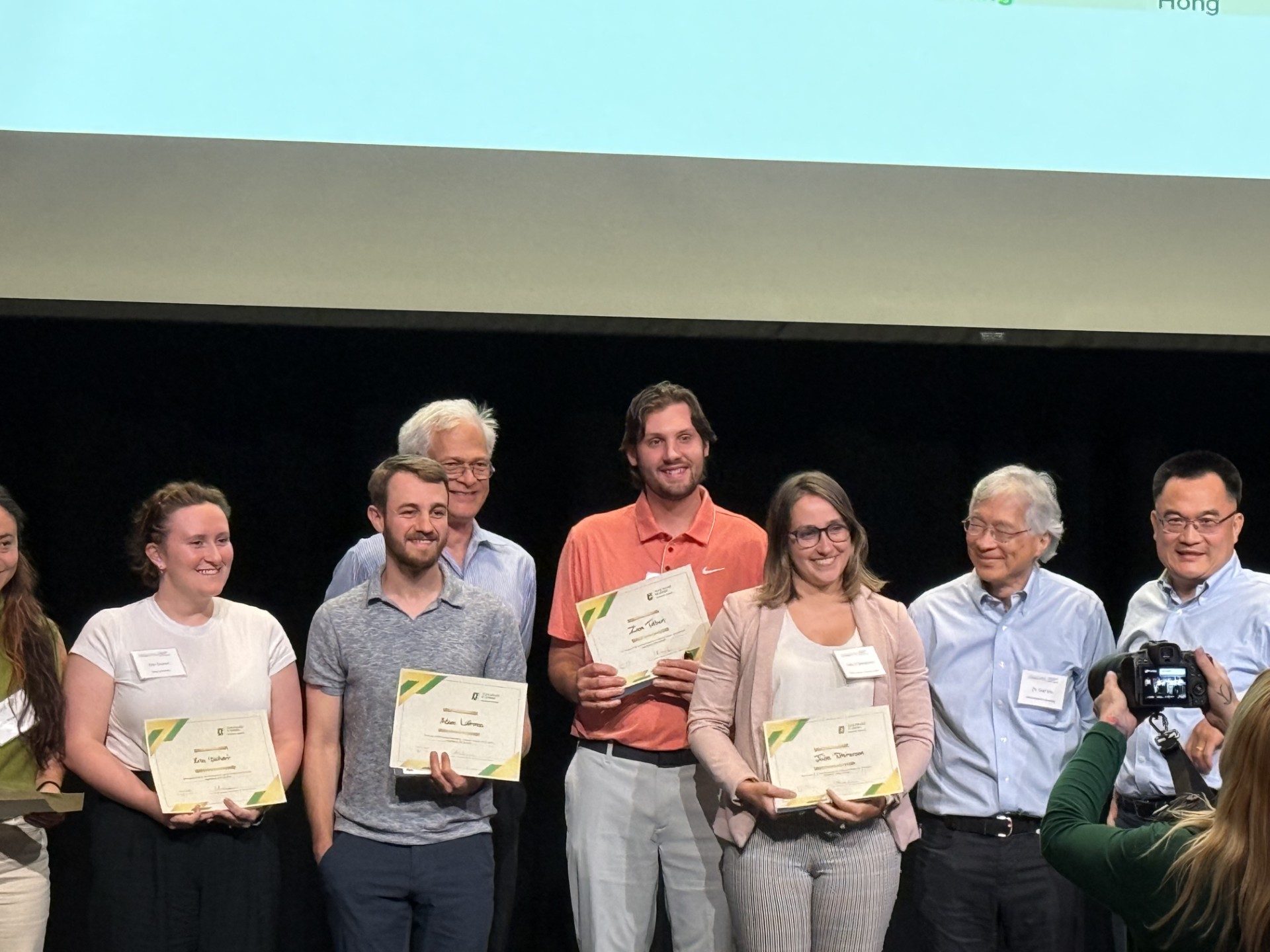
Doctorate student Zane Tolbert pictured winning an award in the middle.

Ph.D. student with Dr. Jennifer Mason, Zane Tolbert, was awarded second place for his poster presentation titled, “Nascent strand degradation and genomic instability in FANCD2 and FANCA deficient cells requires RAD54L-mediated fork reversal” at the Inaugural Symposium on Genome Integrity and Chromatin Regulation at UNC-Charlotte.

Dr. Michael Sehorn received the Clemson University National Scholars Program Award of Distinction.

Biochemistry alum Adam Gatch ’25 has received a Fulbright research award to study abroad in Munich, Germany at Ludwig Maximilian University. Adam has respectfully declined the Germany Fulbright offer after earning a Churchill scholarship earlier in the spring.

Drs. Heidi Anderson, Michael Harris and Todd Lyda have been promoted to senior lecturer.

Ph.D. student under Dr. Stephen Dolan, Jessica Aycock was honored with the Cell Press Best Poster Award at the Gordon Research Seminar & Conference on Microbial Adhesion and Signal Transduction in Newport, RI.

Dr. James Morris was quoted in the Washington post article “Brain-eating amoebas are rare. But hot weather increases the risk” regarding his expertise in the brain-eating amoebas Naegleria fowleri.

Graduate student Xiaotong Chen was awarded the first prize for poster presentation competition in the 2025 Society for In Vitro Biology Meeting.

Dr. Robert Anholt joined the Advisory Board of the Blackland Charity Initiative, Ghana.

Graduate student Bibhu Simkhada attended the summer course on Neurobiology of Drosophila at the Cold Spring Harbor Laboratories. He also won second place in the Clemson iGRADS video competition and the people’s choice award for his video on Sanfilippo disease.

Dr. Kim Paul recently celebrated 20 years with Clemson Univeristy.

Naegleria fowleri is a rare and complex infection that is severely underresearched. After a case was confirmed in the state, the news outlet WYFF reached out to Clemson University’s Eukaryotic Pathogen’s Innovation Center and its post doctoral fellow Dr. Jillian MeKon, who focuses on these organisms.

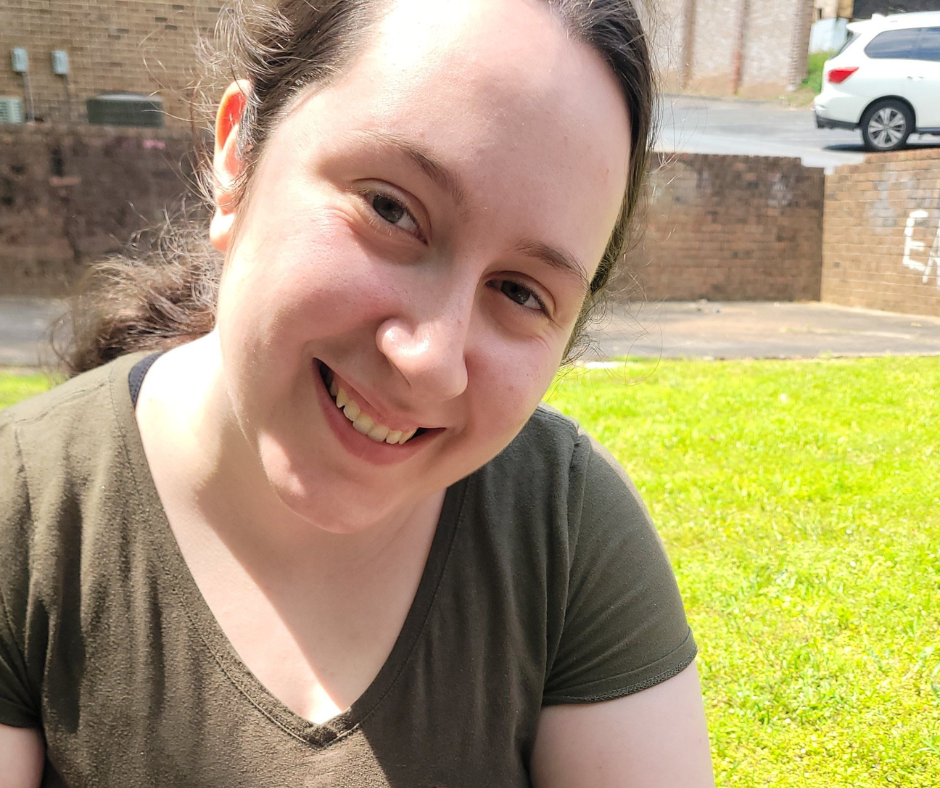
G&B Graduate Students: Kathryn Howe

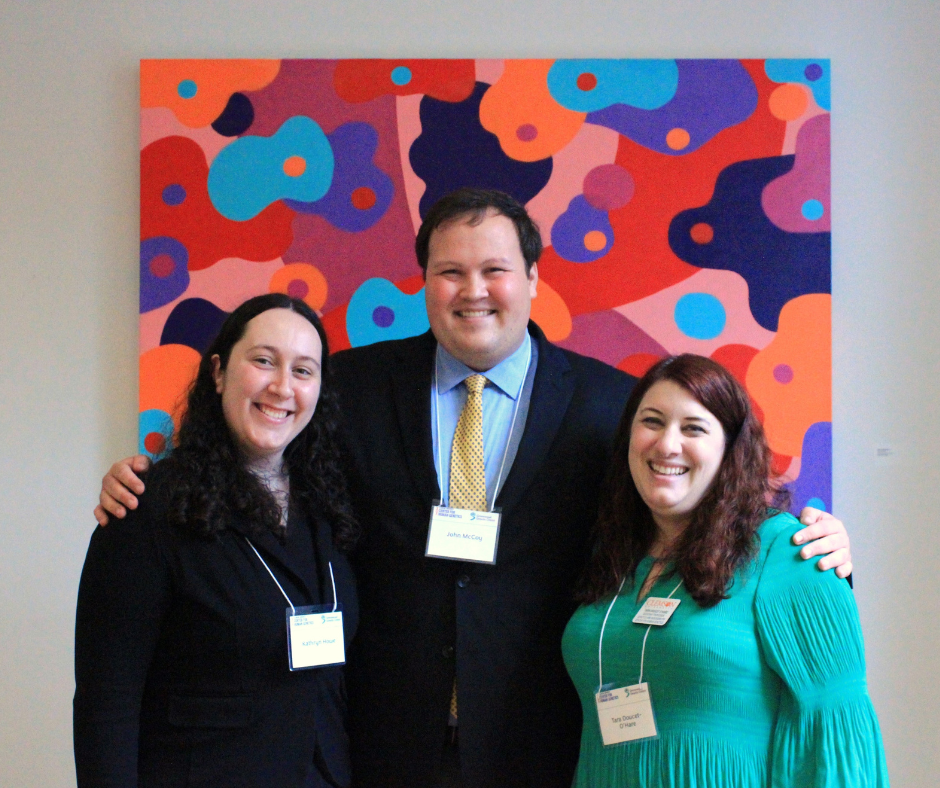
Located at Clemson’s Center for Human Genetics in Greenwood, SC, graduate student Kathryn Howe recently completed her first year of Ph.D. research under assistant professor Dr. Tara Doucet-O’Hare.

“When I was taking classes in high school, I fell in love with chemistry and biology and really enjoyed learning about cancers and genetics.”

It was this love for science that led Kathryn to pursuing her bachelor’s degree in biochemistry and molecular biology at Mercer University in GA.

“While I was there, I was an active member of the marching band and served as band captain for two years. I love the classes and the chance to get involved in research early in my education.”

Kathryn’s primary research at Mercer was focused on bacteria and trying to design and test small molecules that would inhibit the production of biofilm without killing the bacteria.

“I also got to spend some time in Peru measuring the amount of mercury in the air around small-town gold shops and working with the engineering department to design and install mercury capture systems. It was through these projects and many others at Mercer that made my love for research really began to grow.”

After graduating, Kathryn took a position as a research technician at Johns Hopkins in the Gastroenterology Lab, gaining insight into academic labs, Ph.D. programs, clinical trial research and the versatility of the mouse model, which inspired her to pursue our Ph.D. program in genetics.

“I am currently working on transposable elements and their role in cancers, neurodevelopment and therapeutics. We use the chicken embryo model for a lot of our developmental work and the eggs come from right here at Clemson Poultry farm.”

Kathryn is a member of the Genetics and Biochemistry Graduate Student Association, where she plans to schedule social events for the Greenwood campus and encourage cross-campus interaction between the grad students.

“I chose Clemson for my Ph.D. because of the resources they had for their students, the involvement of the students in each step of their thesis project and the supportive and friendly faculty and staff in the G&B department.”

After obtaining her Ph.D. Kathryn hopes to stay on the research side of things, continuing to work in a research lab setting, specifically cancer and genetics.

Summer Internships 2025

GABBIE GARDINER

Senior genetics and biochemistry student Gabbie Gardiner spent her summer in Charleston, South Carolina participating in the Summer Undergraduate Research Program at the Medical University of South Carolina (MUSC) researching a protein called PTP1B with Dr. Lalima Katyayani Madan.

“This summer, I conducted research at the Medical University of South Carolina focused on developing more precise cancer therapies by studying a protein called PTP1B (Protein Tyrosine Phosphatase 1B).”

PTP1B plays a critical role in cellular signaling and has been linked to diseases like breast cancer, diabetes, and Alzheimer’s. However, designing drugs that target it specifically has been extremely difficult due to similarities it shares with other proteins.

“My project aimed to overcome this challenge by exploring how PTP1B can be inhibited allosterically – meaning, by targeting areas outside the active site that control the protein’s shape and function.”

By combining lab-based protein purification and activity testing with computational analysis of over 250 crystal structures, we can begin to understand how the protein shifts between different conformations. This research led to findings that will lay the groundwork for creating highly specific inhibitors that could one day be used in targeted cancer treatments.

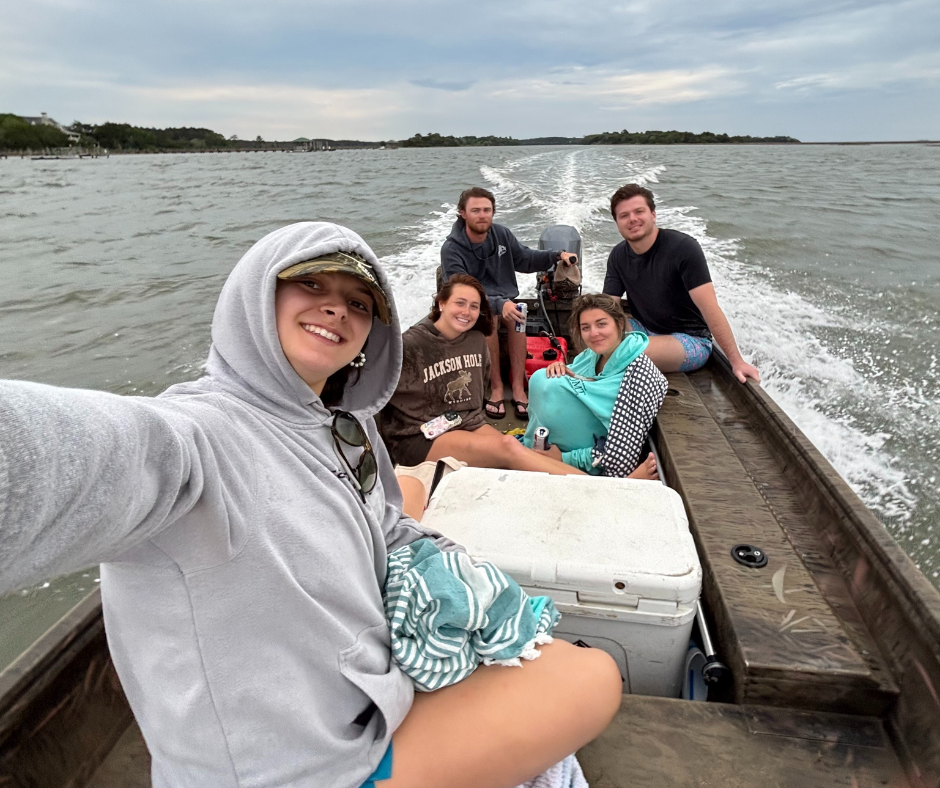
While not in the lab, Gabbie took in all that Charleston had to offer: the beach, amazing restaurants, yoga, Pilates and more!

“I love going to the beach; my favorite beach is Sullivan’s Island Beach. I’ve also loved trying a ton of restaurants in the area. I can’t pick a favorite; they are all so good.”

This summer at MUSC was invaluable to Gabbie, reiterating her passions for research and science.

“This summer really opened my eyes to what research is all about. I learned how to work with proteins in the lab, analyze data, and think through problems when things didn’t go as planned. Being part of a project that could actually help lead to new treatments for cancer made the work feel really meaningful. It confirmed for me that I want to keep doing this kind of work in the future as a doctor and scientist.”

HELEN LARKIN

Senior biochemistry student Helen Larkin spent the summer on the University of Michigan’s campus in Ann Arbor, MI researching how circulating tumor cells can cause inflammatory effects in a patient.

“I participated in the Cancer Research Summer Internship Program (CaRSIP) through the Rogel Cancer Center and the University of Michigan Medical School. I worked in Dr. Sunitha Nagrath’s lab, which is in the Department of Chemical Engineering.”

Helen found this internship on the program’s website. When looking for internships, she would go through the websites of graduate schools that she was interested in and see the summer research internship positions available.

In the Nagrath lab, Helen worked on researching the effect of glioblastoma extracellular vesicles (EVs) on neutrophils. In other words, Helen looked at how circulating tumor cells can cause inflammatory effects in a patient and potentially contribute to malignancies.

“This project has involved cell culture, flow cytometry, and different types of assays. I have learned a lot about new techniques and experiments from being there. This has been an incredibly valuable experience. I feel more prepared to apply to graduate school this fall and I have a better understanding of what life in graduate school will be like.”