Genetics and Biochemistry News

Sekhon leads stalk lodging project

Stalk lodging, which is the bending, breaking, or falling of corn stalks before harvest, is a major agricultural challenge, causing more than $6 billion in maize yield losses worldwide each year, according to a peer-reviewed study by Clemson researchers and collaborators.

However, G&B’s Rajandeep Sekhon is leading a new, four-year, $6 million National Science Foundation grant that brings together plant geneticists, engineers, statisticians and artificial intelligence researchers from Clemson, the University of Nebraska Medical Center and the University of Idaho to develop corn plants that are less likely to bend or break before harvest. Sekhon will use Clemson’s $2 million share of the award to investigate the genetic and biological factors that influence stalk strength.
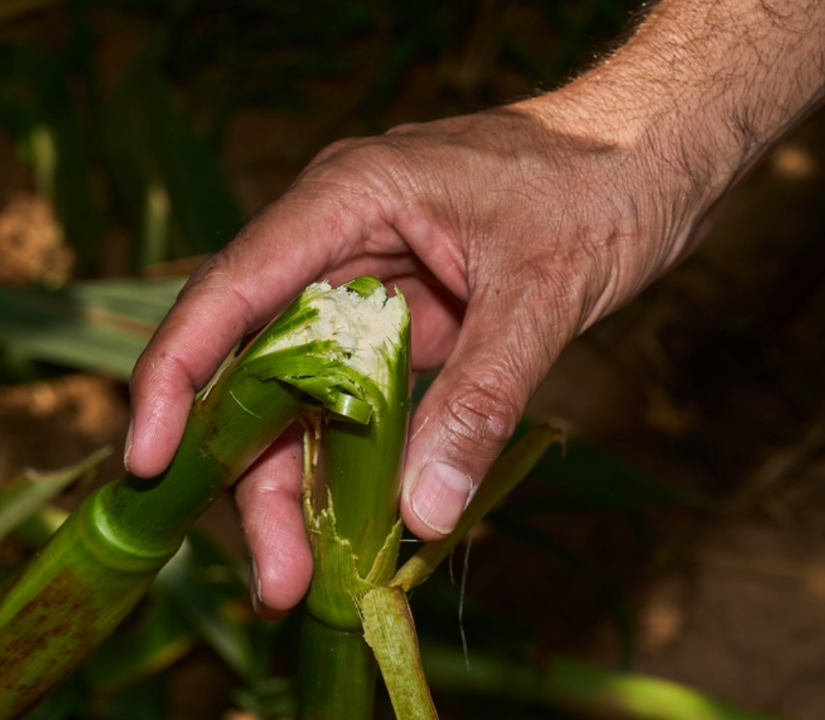
Researchers will grow and study about 1,000 maize inbred lines in South Carolina field trials, comparing plants with strong and weak lodging histories and measuring their stalk strength, stiffness, diameter, rind thickness and cellular characteristics.

“Our goal is to turn the genetic markers and biological insights we identify into practical tools breeders can use to develop stronger, more lodging-resistant corn. Ultimately, that could mean fewer losses in the field, more reliable harvests for farmers and more resilient food production,” Sekhon said.

Read more in the Clemson News article.

G&B students named 2026 National and Breakthrough Scholars

This fall, Clemson welcomed its newest class of National and Breakthrough Scholars, highlighting students whose talents, curiosity and leadership reflect the university’s commitment to academic excellence. Both programs aim to recruit exceptional students from South Carolina, across the nation and around the world while providing scholars with access to research, mentorship and experiences that broaden their perspectives, deepen their interests and open new avenues for discovery and growth.

The Department of Genetics and Biochemistry had one student selected for each program. Freshman biochemistry student Zoey Bergeron was named a National Scholar, while sophomore genetics student Caroline Clayton was named a Breakthrough Scholar.

Clemson University’s National Scholars Program is its most prestigious and selective undergraduate scholarship, recognizing a small cohort of first-year students for their academic excellence, intellectual curiosity, leadership and potential for impact.

“Being named a National Scholar is an incredible honor, and I am so grateful for this opportunity,” says Zoey Bergeron. “I am excited to be surrounded by other motivated students who share my passion for learning and for making tangible differences within our communities. I know that the National Scholars Program will challenge me academically, encourage me to deepen my interests in medicine and research, and help me build a strong foundation for my future and my career.”

Clemson’s Breakthrough Scholars Program supports students who have demonstrated the potential to make an impact in their fields, communities and beyond. Scholars receive opportunities to connect with faculty mentors, research labs and professionals in science, engineering and health.

“I am very honored and excited to begin my first semester at Clemson as a Breakthrough Scholar! I was initially interested in the program because it will allow me to focus on STEM and research,” says Caroline Clayton. “I believe the scholarship will be beneficial towards my goals of medicine and clinical research. I have already enjoyed the program very much, specifically the opportunity to conduct research over the summer through the EUREKA! program. I am excited to see what the next four years bring!”

Congratulations Zoey and Caroline!

Grad Feature – Stephanie Toft ’26

August 2026 G&B graduate Stephanie Toft would tell you she had the best of both worlds during her undergraduate career – experiencing all things college and Clemson while fulfilling her dream of working in aviation for the National Guard.

While on campus, Stephanie participated in Tigers on Track, a cohort-based internship preparation program for first-generation and Pell/Federal undergraduate students at Clemson. This program is designed to equip students with the knowledge they need to secure and succeed in an internship.

“Tigers on Track taught me about professional development and gave me valuable information on connections, interviews, and platforms like LinkedIn.”

In addition, Stephanie was involved in undergraduate research by taking part in a Creative Inquiry for Dr. Michael Sehorn’s lab from the Fall of 2024 to spring of 2026. 

“It was so rewarding to be involved in such cool lab work with Dr. Sehorn’s Lab and also able to have a fulfilling military career.”

Stephanie has been in the National Guard for nine years as of July and works full-time as a Flight Operations Specialist at a Flight Facility in Greenville. Her unit is involved in a lot of state aid, including helping with Hurricane Helene, the Table Rock forest fires that happened this past fall and rescuing stranded hikers and their pets in state.

“With the devastation that Hurricane Helene has caused the Carolinas, the need for assistance [was] dire and that is one of the many reasons I chose to be in the military – to aid my state in moments of need.”

Stephanie will miss the simple days when she grabbed coffee and strolled around campus taking in the scenery, which was one of the first things that attracted her to Clemson in the first place.

“I was grateful to just be able to walk around [campus] every day and sit outside the library or around the reflecting pond and take it all in…Being at Clemson has been some of the most transformative years of my life and an enriching experience overall.”

Stephanie’s post-graduation plans are to continue her aviation work full-time and also pursue a master’s degree in genetic counseling after taking a gap year to gain clinical experience and shadow genetic counselors.

Mason receives Samuel H. Wilson Award

Assistant professor Jennifer Mason has received the 2026 Samuel H. Wilson Award from the Environmental Mutagenesis and Genomics Society.

This award was created in honor of Samuel H. Wilson, who made seminal contributions to the field of DNA repair and who served for decades as a leader at the National Institutes of Health. The Samuel H. Wilson Award is given annually to provide career advancement opportunities for the next generation of environmental health scientists.