Associate professor Rajan Sekhon along with a team of researchers at Clemson University and partner organizations have received a $2.4 million, four-year grant to map genes that control leaf senescence in corn. Funded by the National Science Foundation through both the Plant Genome Research Program and the Cross-Directorate Activities program, this project aims to sustain photosynthesis longer, improve yield stability and support smarter on-farm nitrogen use.
For International Microorganism Day Clemson News highlighted G&B’s Manuel Fierro and his research with the cell biology of the microorganism that causes malaria.
Three G&B lecturers were recently promoted to senior lecturer including Heidi Anderson, Michael Harris and Todd Lyda.
Graduate students Sky Lu and Roger Zhang gave poster presentations on their dissertation research at the North Carolina Chestnut Festival, where Sky won first prize for her presentation.
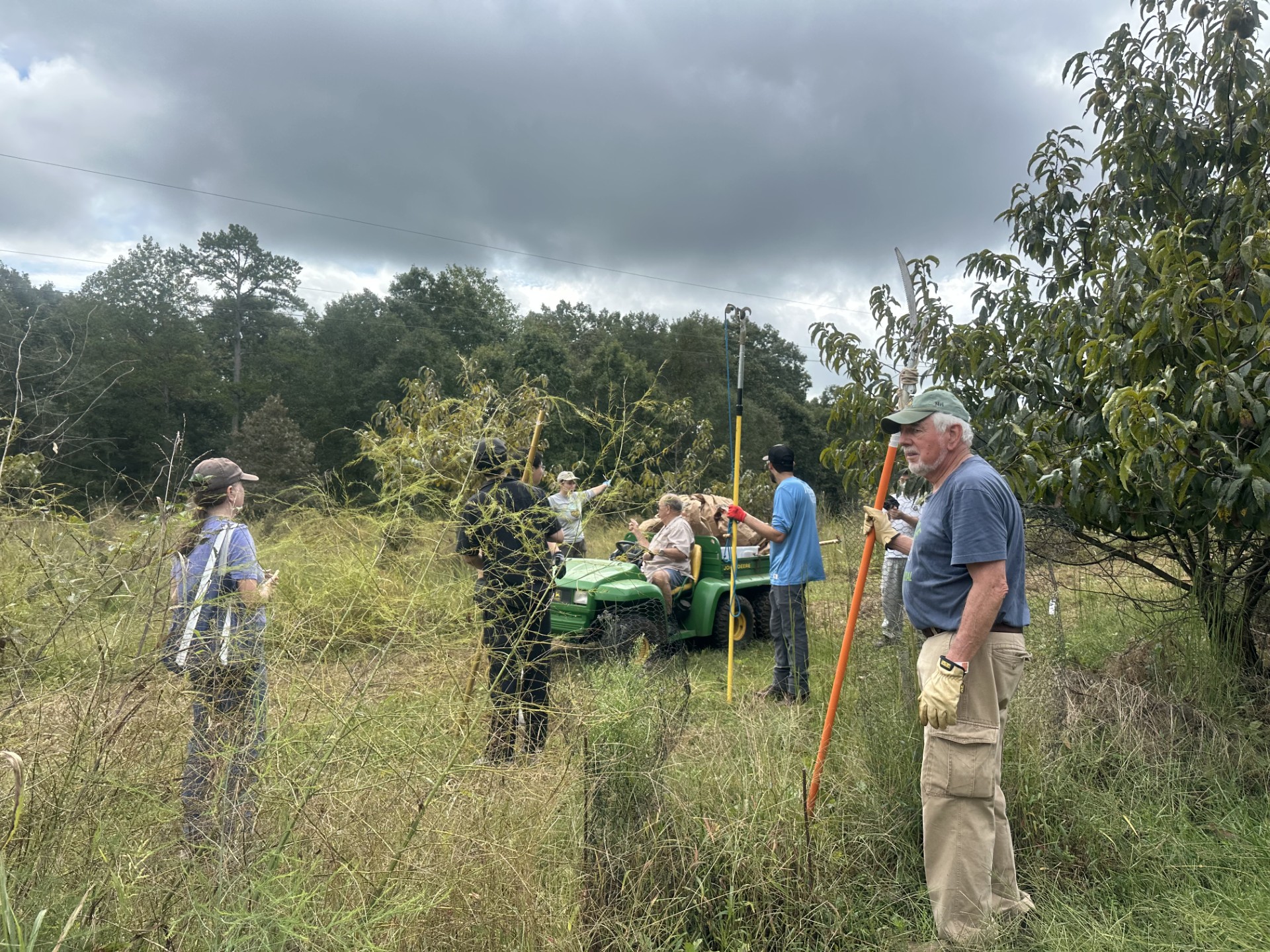
Recently Haiying Liang and her lab assisted at the Chestnut Return Farm in Seneca, SC and the North Carolina Chestnut Festival in Asheville, NC
Tara Doucet-O’Hare was invited to give a seminar to the Department of Biology at UNC Asheville. The title was “Diving into the dark genome: endogenous retroviruses in human health and disease.”
Pursuing a Ph.D. wasn’t always the plan for biochemistry alum Sydney Clark ’25, who is currently a first year Ph.D. student in the Healthcare Genetics and Genomics Laboratory under the School of Nursing at Clemson University.
“Although I had strong grades, I didn’t imagine I would be accepted into a PhD program right out of undergrad. I was told I needed to have a very clear trajectory for why I wanted to pursue graduate school and where I wanted to end up after I received a graduate degree. While I still do not have a perfectly defined path for my future, I know this was the best next step I could have taken.”
Originally from Charleston, SC, Sydney came to Clemson for undergraduate studies, graduating in May 2025 with a degree in biochemistry with minors in microbiology and biological sciences. Sydney first joined the Healthcare Genetics and Genomics Lab during her junior year and later applied to continue the Ph.D. research with the help of her mentor, Dr. Aubrey Mattingly.
“I am now working as a Graduate TA/RA for the HCG Lab, where I help train undergrad students in various aspects of cancer research.”
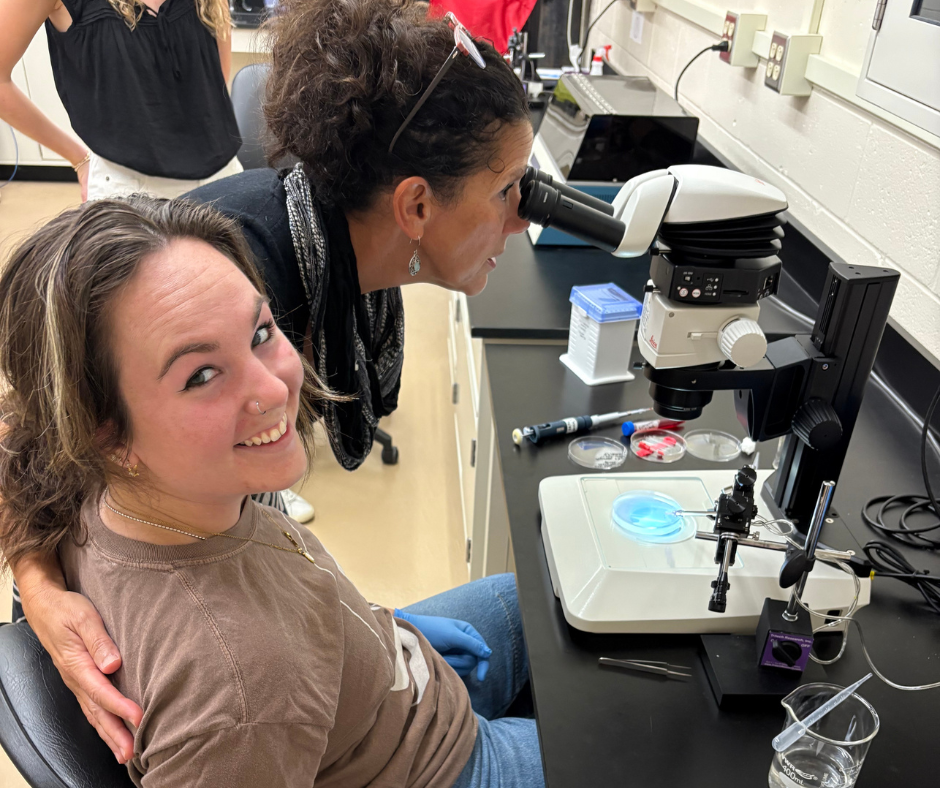
Sydney’s dissertation work focuses on the use of natural pharmaceutical extracts to treat breast cancer in a zebrafish model organism. Specifically, she studies how these herbal extracts influence the regulation of key anti-cancer genes involved in apoptosis, proliferation, migration, and other processes.
“This program has already allowed me to gain hands-on experience with a wide range of laboratory techniques, including culturing, fluorescent tagging, metabolomics, embryo microinjections and fluorescent microscopy, among others. More importantly, it has given me the freedom to explore, experiment and teach others the “why” behind what we do in research.”
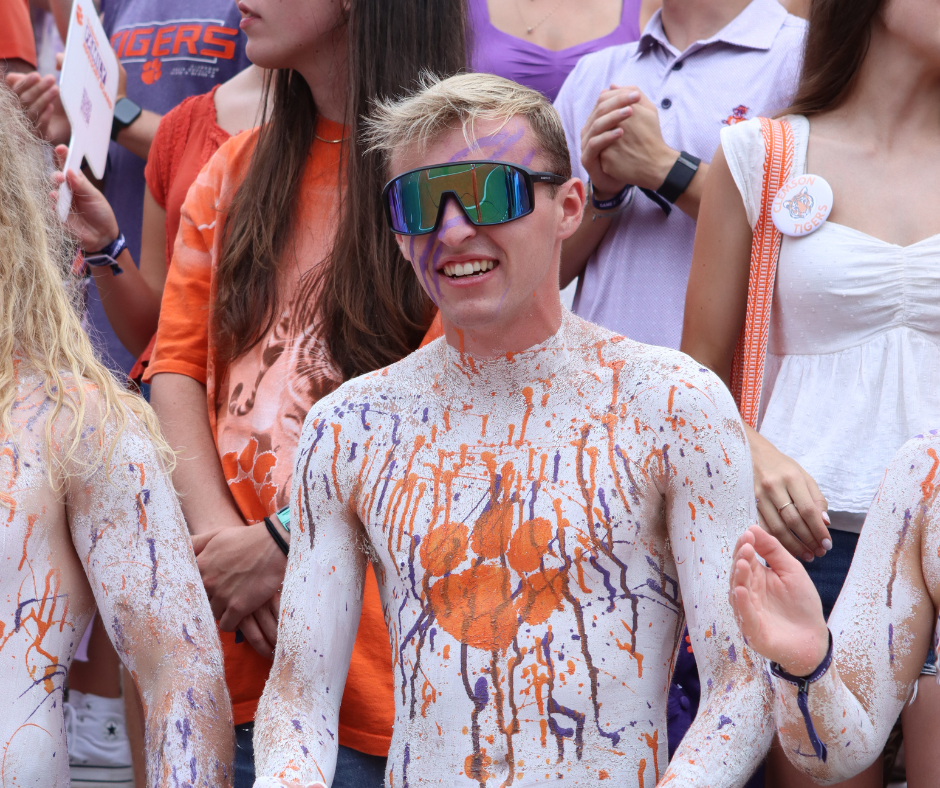
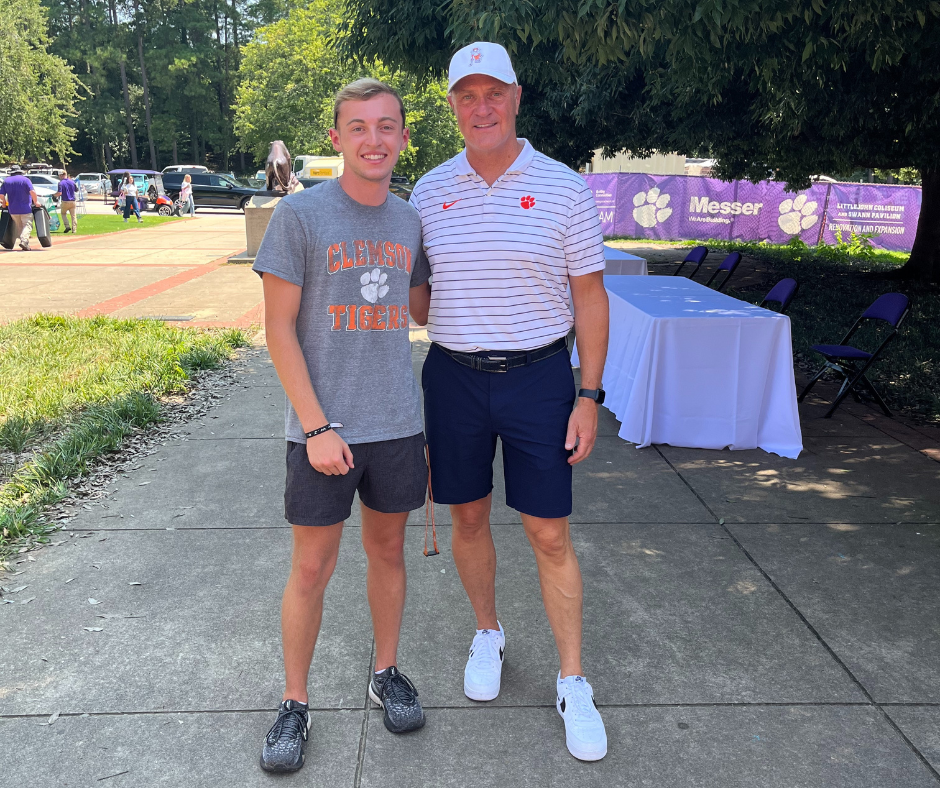
If you haven’t already, you’ll probably spot freshman biochemistry student Jackson Miller on the paint line at Clemson games, whether it’s on the jumbotron or even on ESPN. Jackson is passionate about all things Clemson, Disney, sports, family and his future dentistry career.
“Originally from the small town of Lake Wylie, SC located just outside of Charlotte, NC, I come from a small family of four that brings me constant joy and laughter. We are probably the biggest Disney fans on the face of Earth. This Christmas I will be making my 24th trip and I couldn’t be more excited since I will be there on Christmas day for the first time.”
Jackson attended a small private Christian school called Gaston Christian School with only 1,000 students from kindergarten through 12th grade. This small, tight-knight community is what led him to Clemson.
“That is what played a huge role in my college search. I wanted to find a college that gave me that same feeling as my school back home, family. Clemson was just that for me. As soon as I walked on campus, I could feel the love and family.”
Since being on campus for a few months, he has found everyone to be friendly and loves the people and connections made so far from in the Shoeboxes to Central Spirit, which is the club that Jackson has gotten most involved in.
“Central Spirit is such a great and tight community where we are constantly having fun. That being from yelling at games in hopes of helping our Tigers to victory or goofing off while at flag practice. The community has welcomed me so quickly and it has been such a blessing to have these people in my life.”
As an aspiring orthodontist, the biochemistry department seemed like a perfect fit for Jackson, providing the perfect blend of chemistry and biology. It is also a huge plus that our program is an excellent preparer for the DAT.
“I have met so many dentists and orthodontists telling me how it is a great program here at Clemson and a great way to be prepared for a dental school wherever I end up. The hope is to be able to help other kids like my sister feel more confident with their smiles and less scared of the people behind the mask at the dentist office.”
Now almost halfway through his first semester, Jackson is enjoying college life, getting involved in organizations and immersing himself in his studies.
“It is a true blessing to be at the school I wanted to be at more than anywhere else.”
Lenox Hill Neurosurgery is a top destination for advanced cranial and spinal care, consistently ranking among the best hospitals in the world for neurosurgery by annual rankings in U.S. News & World Report.
Griffin is not new to research. While an undergraduate he performed research in Dr. James Morris’ lab where he studied the metabolism of T. brucei and Nagleria Fowleri.
This also isn’t Griffin’s first time at Lenox Hill. One summer, he had the opportunity to shadow in the Department of Neurosurgery at Lenox Hill Hospital – the very same department he works in now.
“This experience affirmed my passion to pursue a career in medicine and my interest in neurosurgery.”
Griffin is using his time at Lenox Hill to hone in on and perfect his research skills before applying to medical school and is finding his time valuable.
“It’s going great! I’ve really enjoyed learning how to use clinical research and technology to optimize patient care. I’ve spent a lot of time exploring ways to incorporate AI into neurosurgical practice.”
Congrats and continued good luck to recent graduate Griffin!
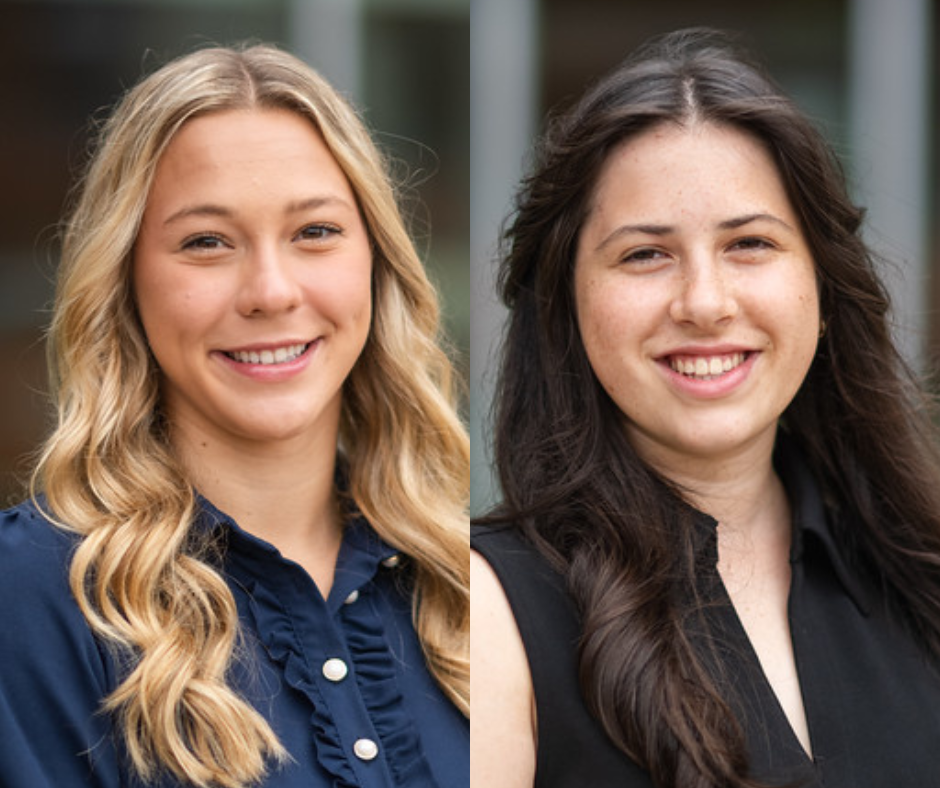
Elizabeth Polatty (left) and Evgenia Zheltov (right).
Two students from the Department of Genetics and Biochemistry joined the National Scholars Program(NSP), which serves students from all majors who demonstrate a unique combination of academic excellence, intellectual curiosity, leadership ability and demonstrated impact on their local and global communities.
Scholars were chosen from more than 6,000 applications to the Honors College. They receive personalized support to develop their leadership skills and deepen their academic experience, equipping them to excel in the classroom and beyond. Many National Scholars go on to earn major University awards and nationally competitive fellowships.
The National Scholars Program strives to create a transformative community offering life-changing experiences and developing thoughtful scholar-leaders who listen, critically examine their place in the world, and use their talents to serve.
Senior genetics and biochemistry student Gabbie Gardiner spent her summer in Charleston, South Carolina participating in the Summer Undergraduate Research Program at the Medical University of South Carolina (MUSC) researching a protein called PTP1B with Dr. Lalima Katyayani Madan.
“This summer, I conducted research at the Medical University of South Carolina focused on developing more precise cancer therapies by studying a protein called PTP1B (Protein Tyrosine Phosphatase 1B).”
PTP1B plays a critical role in cellular signaling and has been linked to diseases like breast cancer, diabetes, and Alzheimer’s. However, designing drugs that target it specifically has been extremely difficult due to similarities it shares with other proteins.
“My project aimed to overcome this challenge by exploring how PTP1B can be inhibited allosterically – meaning, by targeting areas outside the active site that control the protein’s shape and function.”
By combining lab-based protein purification and activity testing with computational analysis of over 250 crystal structures, we can begin to understand how the protein shifts between different conformations. This research led to findings that will lay the groundwork for creating highly specific inhibitors that could one day be used in targeted cancer treatments.
While not in the lab, Gabbie took in all that Charleston had to offer: the beach, amazing restaurants, yoga, Pilates and more!
“I love going to the beach; my favorite beach is Sullivan’s Island Beach. I’ve also loved trying a ton of restaurants in the area. I can’t pick a favorite; they are all so good.”
This summer at MUSC was invaluable to Gabbie, reiterating her passions for research and science.
“This summer really opened my eyes to what research is all about. I learned how to work with proteins in the lab, analyze data, and think through problems when things didn’t go as planned. Being part of a project that could actually help lead to new treatments for cancer made the work feel really meaningful. It confirmed for me that I want to keep doing this kind of work in the future as a doctor and scientist.”
HELEN LARKIN
Senior biochemistry student Helen Larkin spent the summer on the University of Michigan’s campus in Ann Arbor, MI researching how circulating tumor cells can cause inflammatory effects in a patient.
“I participated in the Cancer Research Summer Internship Program (CaRSIP) through the Rogel Cancer Center and the University of Michigan Medical School. I worked in Dr. Sunitha Nagrath’s lab, which is in the Department of Chemical Engineering.”
Helen found this internship on the program’s website. When looking for internships, she would go through the websites of graduate schools that she was interested in and see the summer research internship positions available.
In the Nagrath lab, Helen worked on researching the effect of glioblastoma extracellular vesicles (EVs) on neutrophils. In other words, Helen looked at how circulating tumor cells can cause inflammatory effects in a patient and potentially contribute to malignancies.
“This project has involved cell culture, flow cytometry, and different types of assays. I have learned a lot about new techniques and experiments from being there. This has been an incredibly valuable experience. I feel more prepared to apply to graduate school this fall and I have a better understanding of what life in graduate school will be like.”
Margo Courtney’s ’21 experience in research labs and creative inquires (CI) during her undergraduate experience at Clemson prepared her for her career at Ionis Pharmaceuticals in San Diego, CA.
“My time in research labs and my CI prepared me well to feel comfortable in the [Ionis Pharmaceuticals] lab and the background in genetics and biochemistry has made it very easy to understand the concepts of our therapies and the diseases we work to treat.”
Margo was a genetics and biochemistry double major with a minor in life sciences and worked at the Academic Success Center as a peer tutor for general and organic chemistry.
“Orgo was probably my favorite class of all of college!”
Margo was member of the Zeta Tau Alpha sorority and held an executive position as the academic achievement chair. She also worked in Dr. Will Richardson’s lab for a CI in the biomedical engineering department.
“We developed in vitro tissue culture platforms to create technologies to control fibrosis related to heart failure.”
After graduating in May of 2021, Margo moved to San Diego to work for as a Research Associate II at Ionis Pharmaceuticals, a company that focuses on developing RNA-targeted therapies, specifically Antisense Oligonucleotides for a variety of diseases.
“It’s been a great experience, and I can see the ocean from my lab which is pretty fun! They really helped develop my skills both professionally and in the lab. I often times am asked to present my research, help with publications and attend conferences so it has the feel of academia even though I’m working in industry.”
Margo works for the Genome Integrity Group, where they mainly focus on age-related diseases and neurodegenerative conditions. Margo’s main concern is working to identify a target and relevant treatment of Huntington’s Disease (HD).
“I make in vitro neuronal models for the disease starting with iPSCs, then differentiating them into neurons or organoids, and finally try to model the repeat instability of the repeat in HD in these cell models with the hope of reversing somatic instability with our various therapies.”
The day-to-day at work changes depending on the specific project she is working on or protocols, but it mainly entails working in the lab doing cell culture, treatment and downstream analysis of Next-Generation Sequencing or qPCR.
“I knew I enjoyed the lab and wanted to spend some time in industry out of school to figure out what specific type of genetic research and science related path I wanted to go down.”
Margo’s time in industry motivated her academically to obtain her Ph.D. Last year she started back in school at Clemson in the Healthcare Genetics and Genomics (HGG) Program. Going back to school and getting a higher degree will open doors to careers that truly interest her. Margo hopes in the future to stay in industry but lean more into the translational science that is highlighted in the HGG program.
“Becoming a medical science liaison would be great to bridge the gap between my knowledge of genetic research and clinical practice as I have always loved discussing, teaching and communicating scientific concepts and ideas to make it more accessible and impactful for others hopefully in the neurodegenerative or aging field.”