To help support commonly requested embeds that are not allowed directly in blogs.clemson.edu sites due to network blog security settings, we’ve created three custom blocks for you to use. These restrictions are related to WordPress roles and capabilities (such as unfiltered_html), which limit iframe usage in standard editors. You can read a bit more about unfiltered_html permissions here: https://wordpress.org/documentation/article/roles-and-capabilities/#unfiltered_html
Let’s get to it!
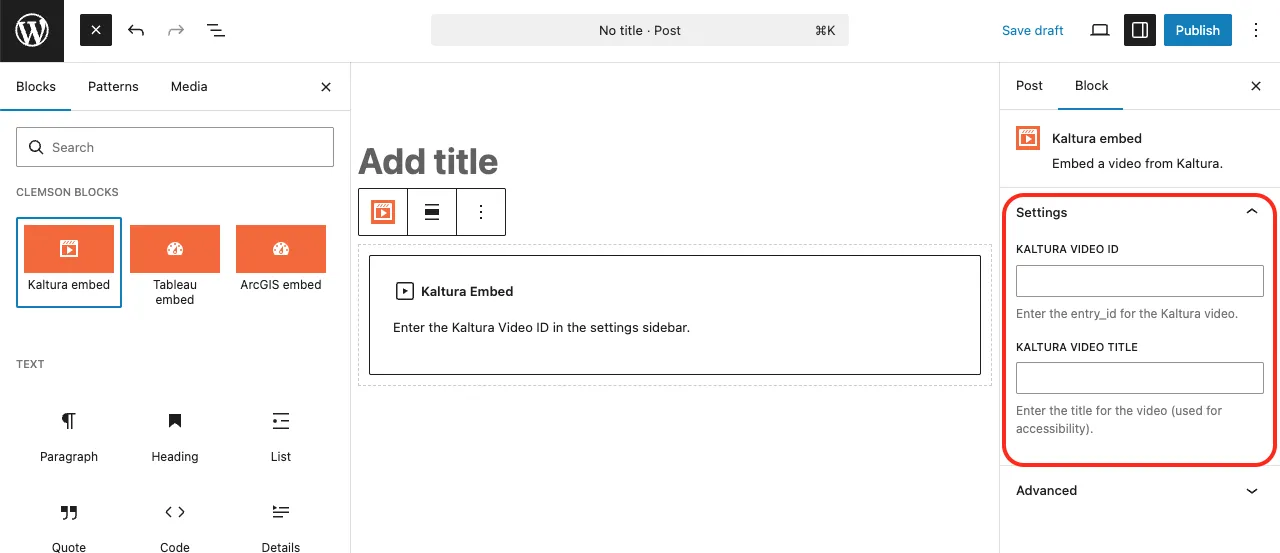
You can find these blocks in the “Clemson Blocks” category within the block editor.
Kaltura Video Embed
Step 1: Click the Kaltura Embed block.
Step 2: Enter the Kaltura Video ID.
Go to your Kaltura media library
Select your video
Click the Share tab
Copy the string at the end of the media page URL
Step 3: Enter the Kaltura Video Title (required for accessibility).
Tableau Dashboard Embed
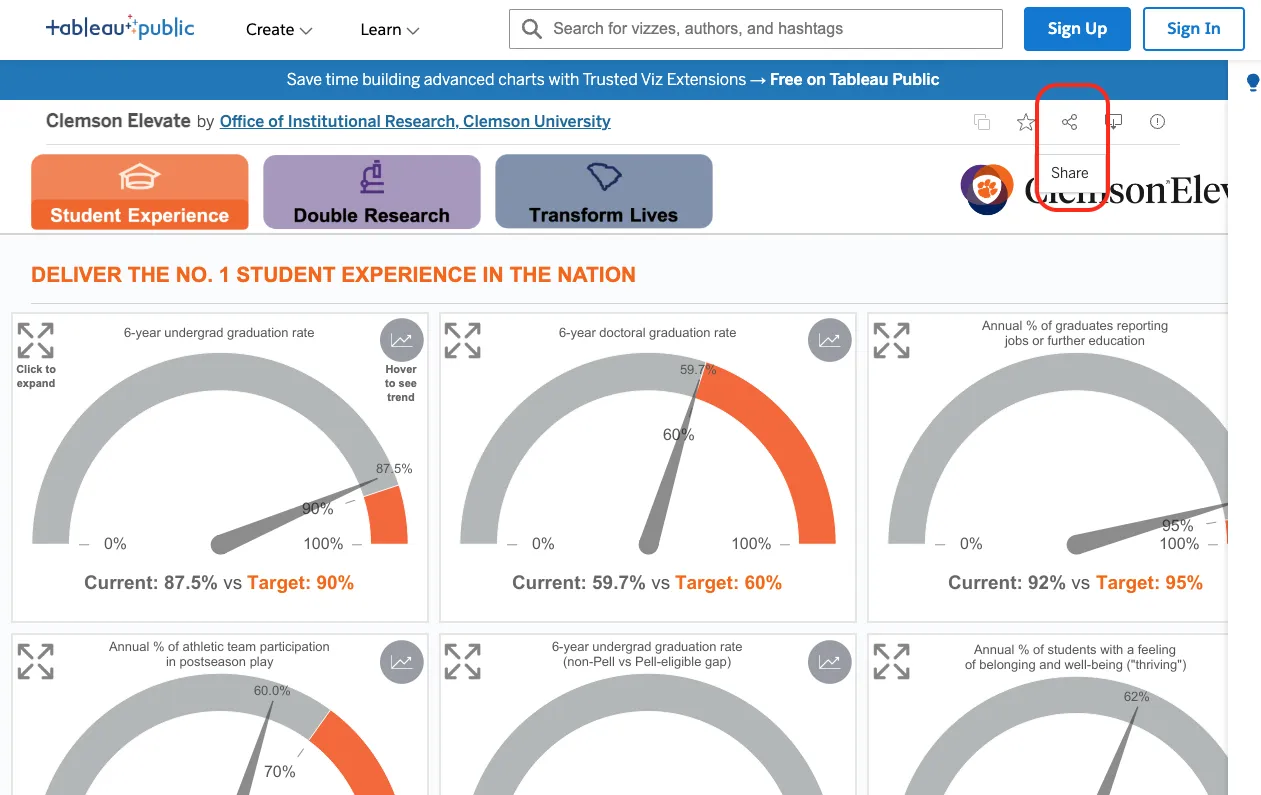
Step 1: Enter the Tableau Dashboard URL.
Open a public Tableau dashboard
Click the Share button
Click Copy Link
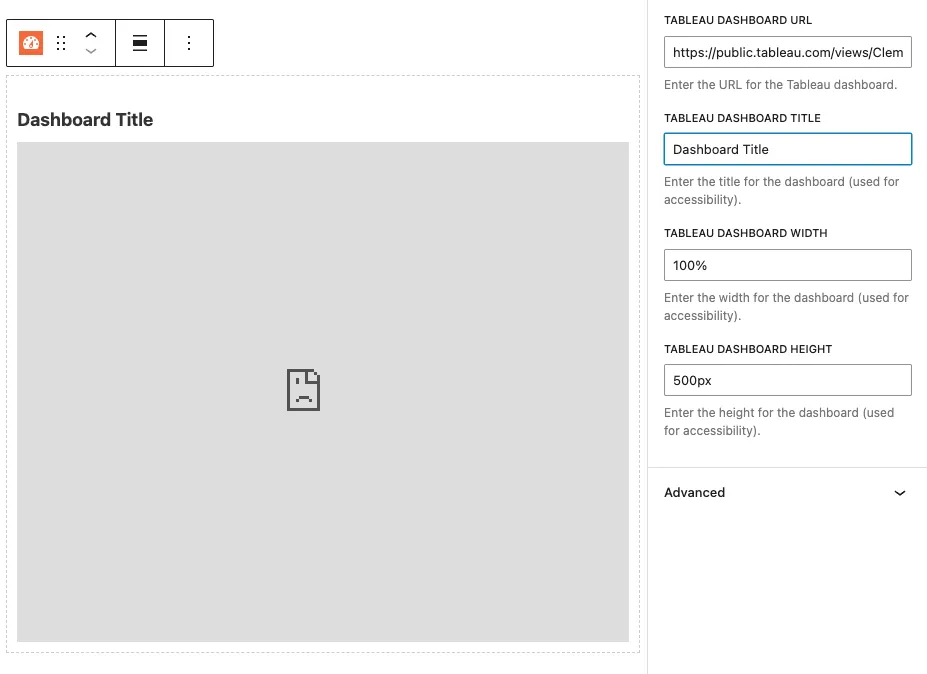
Step 2: Fill out the remaining fields:
Dashboard Title (required for accessibility)
Width
Height
Note: Tableau dashboards will not display inside the WordPress editor due to browser security restrictions:
Refused to display 'https://public.tableau.com/' in a frame because it set 'X-Frame-Options' to 'sameorigin'.
This is expected behavior. The dashboard will display correctly in preview and after publishing.
ArcGIS Experience Dashboard Embed
Step 1: Enter the ArcGIS Experience Dashboard URL.
Open a public ArcGIS Experience dashboard
Copy the URL from your browser’s address bar
Step 2: Fill out the remaining fields:
Dashboard Title (required for accessibility)
Width
Height
Summary
These custom blocks make it easy to safely embed external content while staying within WordPress security guidelines. Always include descriptive titles for accessibility and preview your post to confirm everything displays correctly.
Starting August 1, 2025 Clemson University is moving to LiveWhale for the University Calendar. The new calendar will be hosted at events.clemson.edu. As part of the changeover process you will need to update any of your pages in Cascade where you pull an event feed. In this post I’ll show you how you can easily make this update so that your pages are ready when we flip the switch.
Step 1. Find your group calendar
First thing you need to do it hit the Calendar Group Listing page to find the calendar group name you want to embed events for on your page. The group names Once you have the correct group name copied you can paste that into the LiveWhale widget in Cascade.
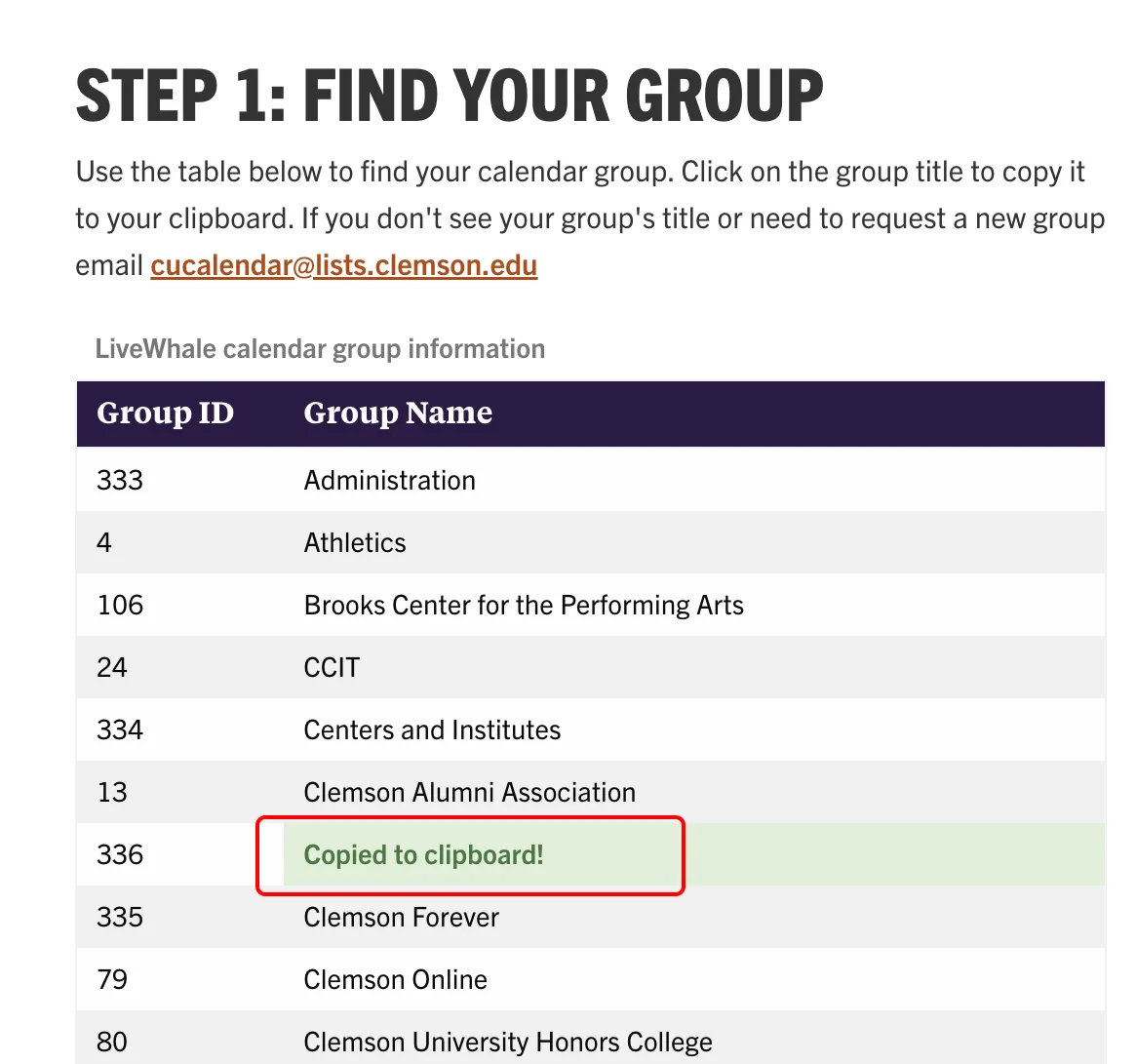
This is a screenshot of the calendar group listing page found at https://ows.sites.clemson.edu/cascade/tools/livewhale. The highlighted portion shows where you can click the name of the group.
When you find the group name for the calendar you want just click the name and it will automatically be copied to your clipboard so that you can paste it into the Cascade editor in the next step.
This image shows the group name being copied to clipboard automatically for the user.
Step 2. Head to Cascade and update your calendar modules/widgets
In Cascade, you can find the LiveWhale calendar embed as either a module or a widget. For the module selector, choose “LiveWhale Events Listing” and then paste in the group name you copied in the previous step.
The group name has been pasted in the LiveWhale Calendar Group Name input in the Cascade editor.
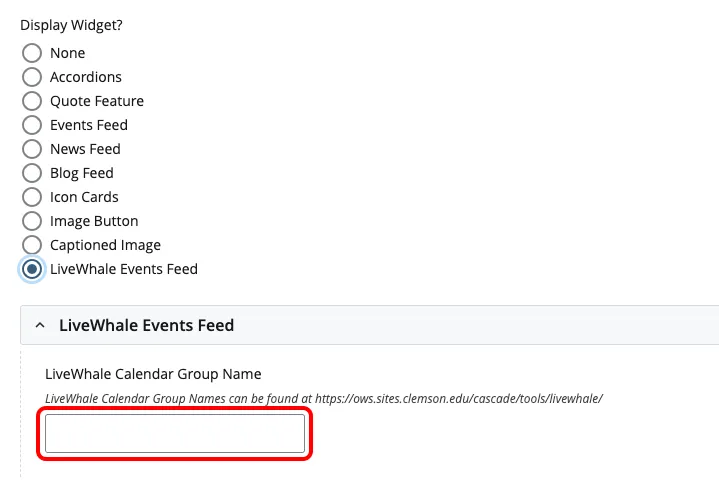
In Cascade, you can find the LiveWhale calendar embed as either a module or a widget. When using the widget, choose “LiveWhale Events Feed” option under the Display Widget question. You will then see the LiveWhale Calendar Group Name input, where you’ll paste the group name you copied in the earlier step.
The LiveWhale Calendar Group Name input is highlighted, where the group name will be pasted to show the correct calendar feed on the page.
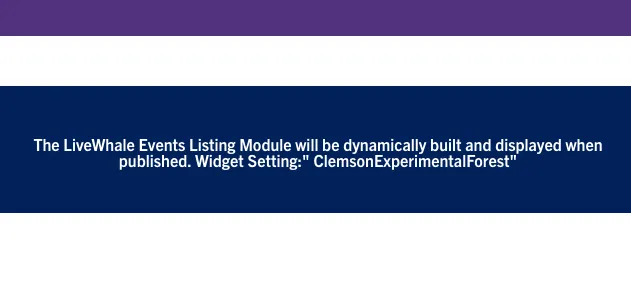
Much like our current event feeds, LiveWhale calendar feeds will not be displayed in the editor. You will see an editor that lets you know that one will be shown on publish as well as the settings you’ve pasted into the input.
This is the message in the editor you will see when you set up the LiveWhale Calendar module: This one says, ‘The LiveWhale Events Listing Module will be dynamically built and displayed when published. Widget Setting:” Clemson Experimental Forest”‘
Step 3. Publish your changes
Once you publish these changes you’ll see the events feeding onto your page. They’ll look the same, but the links will now be pointed to the new-and-improved University Calendar! Congratulations on winning the day!
This is the new calendar feed from LiveWhale on the live web page.
Please note: If your widget doesn’t return any results then the entire widget is hidden.
Update: If you want to add a more-specific feed, you can add a filter for a specific tag. For example, to see academic calendar events that are tagged “summer-2025” you just need to enter: “Registration Services&tag=summer-2025” in the calendar group name input. You can read more about this and more in the LiveWhale API documentation at https://support.livewhale.com/live/blurbs/json-api.
We recently made some changes for better SEO by removing “index.html” from the ends of many of the links in navigation sections of the web templates. The reason behind this update is to unify the URL patterns across our HTML pages, sitemap, and Google indexes. Why does this matter?
Search engines prefer clean URLs that are easy for users to read and remember. Removing unnecessary parts like “index.html” can help improve our site’s search engine ranking and overall user experience.
In support of this, we’ve updated approximately 200 destination URLs in our main redirects file to remove “index.html.” If you’re adding redirects to your sites or subdirectories in the future, make sure to exclude “index.html” from the destination URL.
Here’s an example of the right and wrong way to set it up:
Important Note: It’s still acceptable to include “index.html” in the source URL (the first URL column), if you need to target it specifically. For example:
We’d like to share a couple recent updates the the video player in your Cascade templates. These updates provide a little more flexibility and accessibility for the video elements.
You can drop the controls below the player if you have the space and need that section of the video for captions, etc.
You can hide volume controls if the video has no volume.
Below you can see some example code that will output your video in these sweet new ways.
As the new templates age and we approach the end of the
content migration process, our team has been listening to feedback and keeping
an eye on how the templates are being implemented and performing. With this redesign,
our goal has been to take a proactive approach to making incremental changes
that address feedback from users and contributors as well as performance.
Through this we hope to constantly improve and update the website rather than
go through a full-scale redesign every 10-15 years as we have in the past.
As part of our most recent update some of the default sizing
for typographic elements such as paragraphs, headings, and lists have been
adjusted to reflect a more proportionally consistent sense of scale and spacing
between elements. Scale and proportion were also considered in the initial
design, but with this update, a mathematical approach to the values was used to
bring them into more precise and cohesive proportion.
These changes mainly targeted the basic instances of these
type elements and may not reflect in some of the modules, widgets, and menus.
We will be taking a look at the performance and functionality of each of the
modules and widgets in the near future and more changes to typography would
coincide with that update.
Detailed below are the main changes from the March 8th
update.
Updates to Default Heading and Paragraph Values
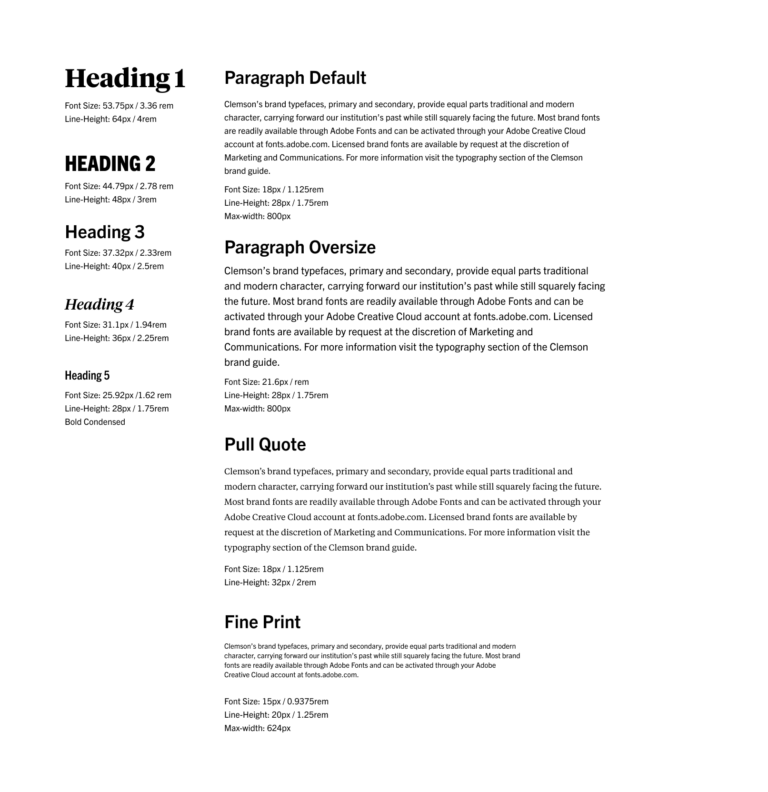
The mathematical basis of these changes start with an update to the default paragraph size from 16px to 18px. This change increases the legibility of our more detailed and lengthy copy and takes advantage of the generous amount of space the larger content area these templates allow. From there this 18px value was used with the minor third typescale(x1.2) to generate incrementally larger and smaller values for the rest of the basic web typographic elements. From here resizing to mobile was as simple as taking each level down one size in the scale.
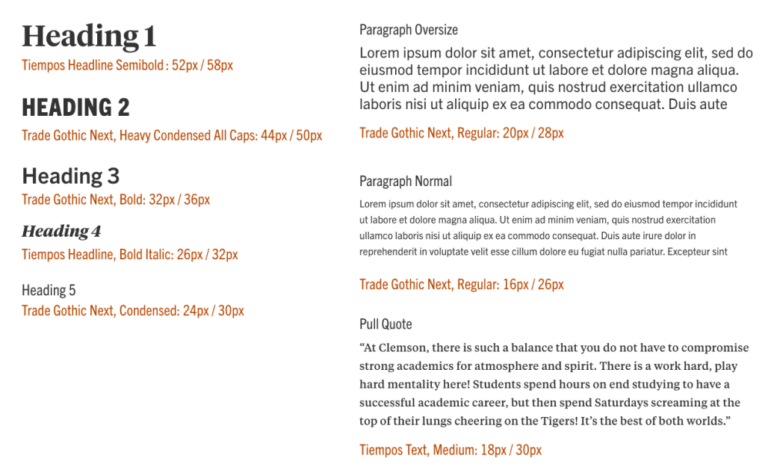
This is an example of the old font sizes in a Figma design file. See tables below for sizing information.
This is an example of the old font sizes in a Figma design file. See tables below for sizing information.
Addition of max-width value to paragraphs
With this update, a max-width value of 800px was added globally to paragraph tags and lists to help curb unintentional instances of copy that run across the entire width of a page. The ideal line length for legibility is within 45-85 characters, and this update will bring copy closer to those values if they were not originally put into appropriately sized columns. This value was also adjusted to accommodate for some edge cases such as when an image element is contained within a paragraph. While these changes will help, please continue to be mindful of column layout choices to maximize use of space and legibility when building pages.
Moving towards a consistent 8px grid for layouts
Moving towards a consistent 8px grid for layouts
As we continue to revisit the UI elements of the new
template, we are seeking to adjust specific sizes of elements to adhere to a
standardized 8 pixel grid format. Along
with the font size adjustments, the line-heights for the different type
elements may have been tweaked to begin moving towards a standard grid layout
for Clemson.edu. These changes will add more consistency to sizing and spacing across
the site and ease of design and development in the future.
If you’re interested in learning more, here a few good
articles that explain further about using grids for UI design.
Updates to Twitter Icon and the Custom Clemson Fonts
This update also adds a few updates and additions to the Clemson custom icon font. The biggest being the change to the twitter icon to reflect their updated brand. For widgets that add icons automatically through the cascade backend such as the contact widgets and modules, you may have to republish the include files themselves for changes to take effect. For instances where the icon was added manually to HTML or in the content modules of the cascade templates like image and icon buttons, the new classes to use are “clemson-icon clemson-twitter-x” instead of “lab la-twitter”.
Attention Cascade users! It seems that Cascade recently made a change to the default setting for displaying asset names. If you prefer to see file names instead of titles or display names (which you should!), you’ll need to make a quick adjustment.
Here’s how you can revert to displaying file names:
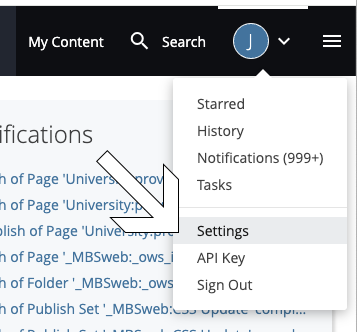
Click on the user menu dropdown located at the top right corner of your screen.
In the dropdown menu, select “Settings” from the list.
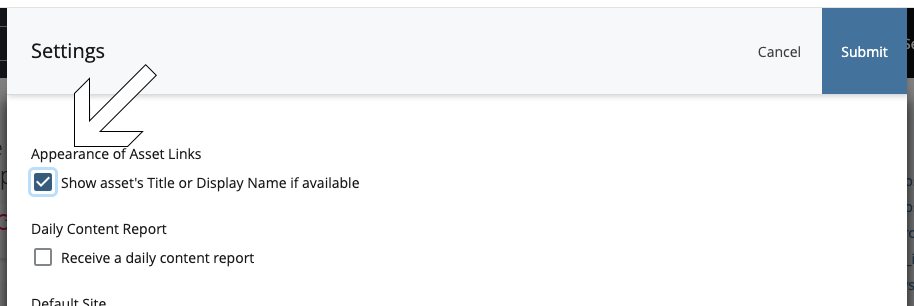
In the Settings menu, look for the checkbox labeled “Show asset’s Title or Display Name if available.” Make sure it is unchecked.
Once you’ve unchecked the box, click “Submit”.
That’s it! You’ve successfully reverted to displaying file names instead of titles or display names for your assets in Cascade.
If you ever wish to switch back to displaying titles or display names, you can revisit your settings and re-enable the option at any time. We don’t recommend that!
As described in step 1 aboveAs described in step 3 above
Attention web editors working in Cascade templates: here’s a quick tip to improve user experience.
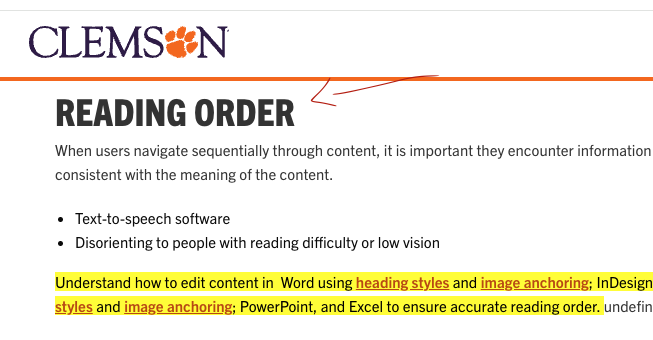
If you’ve encountered issues with anchor tags scrolling under fixed headers, worry no more. With the .anchor-space class, you can easily add some top space to your anchor tags, ensuring they can still be in the viewport even with fixed header in place.
Simply apply the .anchor-space class to your anchor tags. No more content hidden under fixed header. This should clear up some user confusion.
Check out the example below:
<h2>
  <a id="reading-order" class="anchor-space"></a>
  Reading Order
</h2>
This is still dev-only but will soon be pushed to production.
With the rebrand and launch of the new Clemson News we are making a few changes to the news feeds workflow in order to serve up the best user experience across sites. Below are the details on the philosophy behind the new workflow and how you can incorporate Clemson News into your redesign project.
Organization
There are some organizational changes on the Clemson News site that will affect how feeds are pulled into Cascade. Clemson News uses three primary taxonomies to achieve the new organization: Categories, Tags, and External Site Feeds. (Need to find out more about taxonomies? See the explanation on wordpress.org.)
New Taxonomy: Clemson News administrators created a new taxonomy called “External Site Feeds” that can be applied to stories that should be pulled onto the main pages for college/divisions. This new taxonomy is primarily used for main pages, for example college/division homepages, and the main landing pages in the .edu site.
Categories and tags will continue to be used for departmental feeds. Be aware that some categories and tags have been recently changed so you will want to utilize the new parameter builder tool I show you below.
This new taxonomy allows communicators in Clemson News to control what stories funnel to the main .edu website and which should remain only available on the Clemson News site.
Each category on the Clemson News site has a customizable landing page that houses any post in that category. The communications team also heard multiple requests for a way to keep certain stories from being pushed to the main website and the External Site Feeds taxonomy does just that.
This is the archive landing page for the College of Education on the Clemson News site. All stories with the College of Education category will be shown on this page.
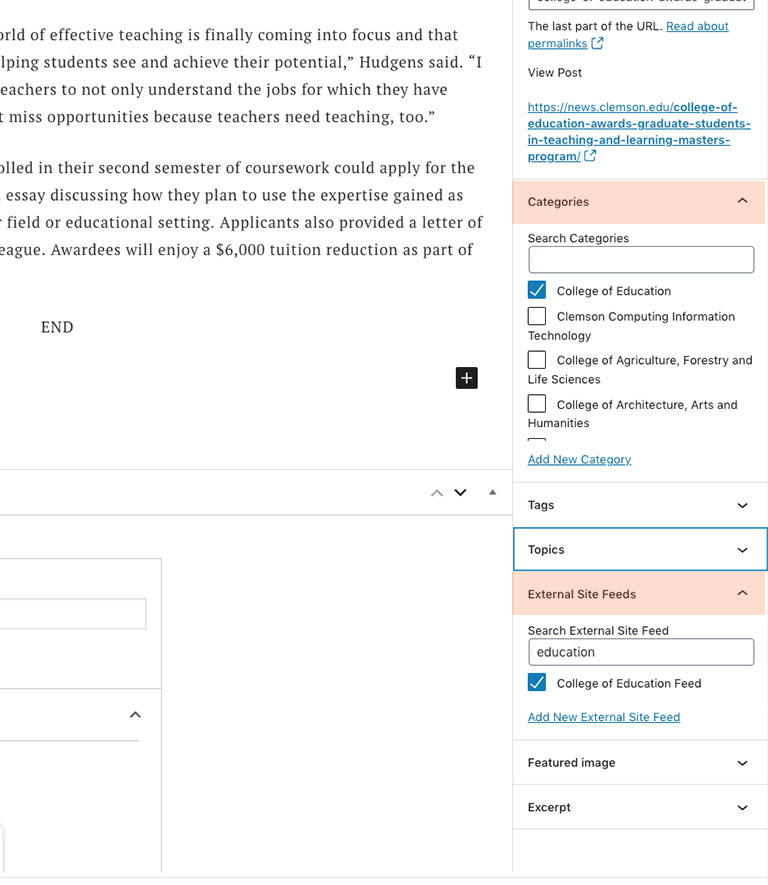
For example, if someone in the College of Education has a story they’d like to push to both the Clemson website and the College landing page in Clemson News she would need to apply both the Category and External Site Feeds selection of “College of Education”.
The Categories taxonomy puts this post on the archive landing page in Clemson News. The External Site Feed pushes this post to the feed on the College of Education’s homepage.
Generating the feed
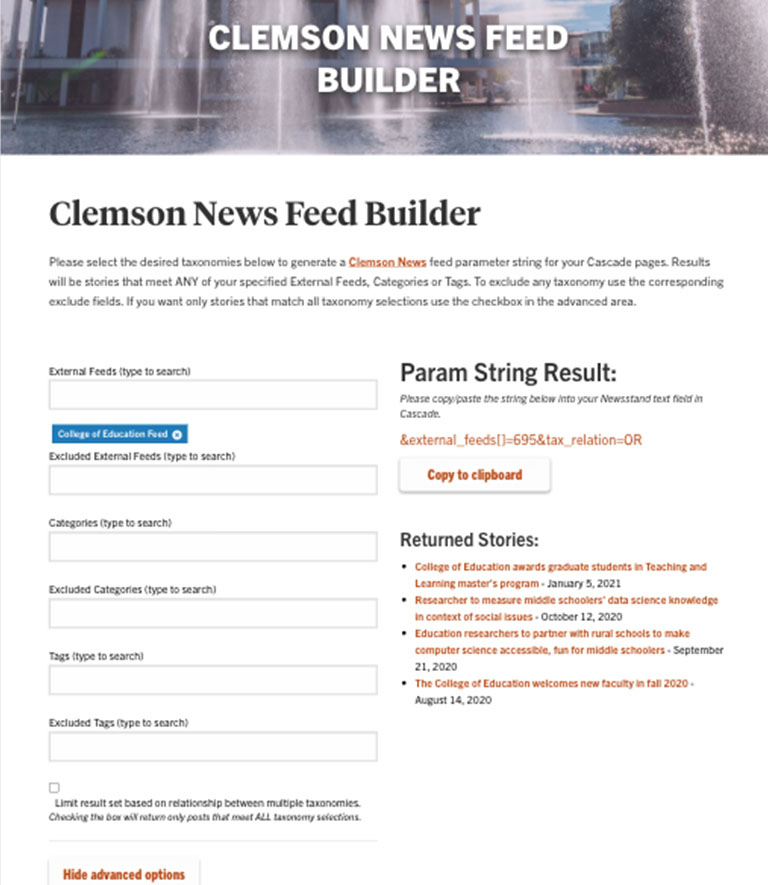
We have an updated parameter builder tool for web editors to pull Clemson News feeds into their sites in Cascade. To get the feed into Cascade just make the taxonomy selections to filter Clemson News content to your specific needs, copy the param string result, and paste that into the News widget in the Cascade editor. Once the page is published it will pull the appropriate stories into the feed on your page.
The parameter builder tool provides easy, granular filtering for Clemson News content.
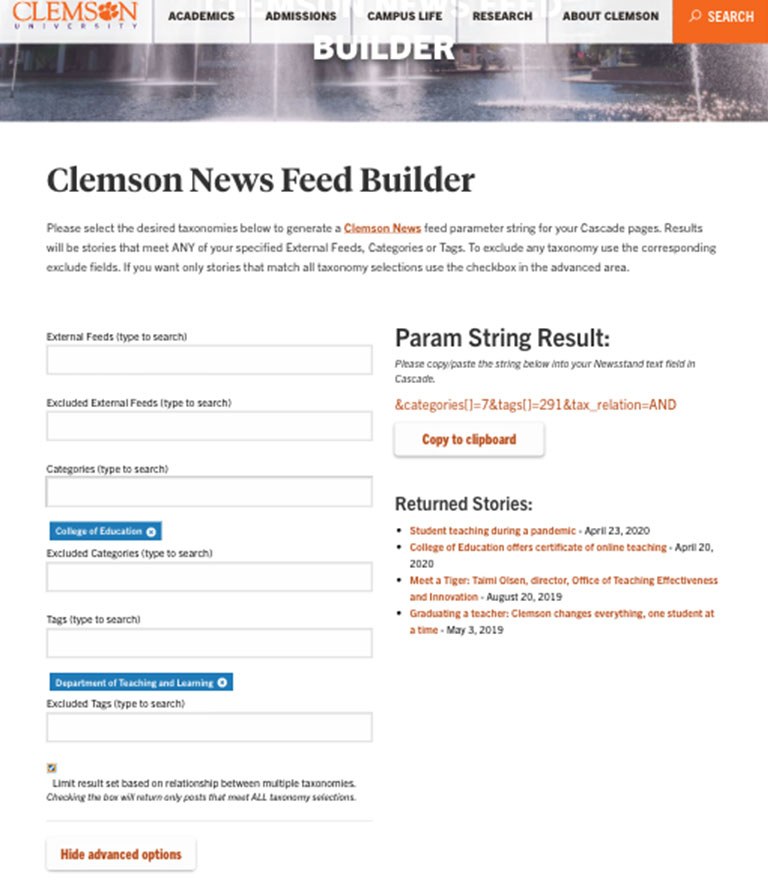
For a college homepage it may be best to utilize just the external site feed taxonomy, but the builder tool allows you to customize the filter to give them just the feed you need. In the example below the feed has been filtered to show just stories tagged Department of Teaching and Learning in the College of Education category.
Departments are in the tag taxonomy in Clemson news. Colleges are in both category and external site feed taxonomies. Combining these taxonomies and their relationships gives web editors a lot of control over their Clemson News feeds.
We previously did not have some default color theming set on particular widgets, modules, and buttons. The default color if no color is selected should now be Diploma. Please let us know if anything different is discovered.
After much discussion and feedback, we will be removing the Intro Section area on the RedesignCollege Landing Page Templates.
We will be allowing till next Monday (23rd) to move any content previously input into this section into another content module of your choosing. Once we remove this from the data definition, your content will be lost from here. The intro section will remain on the Department Landing Page Templates.