Starting on March 2, Andy’s spring hours begin! With the warm weather on its way we’re switching to our spring hours so you can spend even more time outdoors. Visit us Monday to Friday from noon to 8 p.m. and weekends from 10 a.m. to 8 p.m.
Whether you’re gearing up for a camping trip, grabbing a paddleboard, or trying something new, we’ve got the equipment to help you make the most of the season.
And don’t forget, the beach remains open from sunrise to sunset, offering the perfect backdrop for early morning peace or golden-hour adventures.
Come explore, unwind, and enjoy the fresh spring air with us at Andy’s!
Andy Quattlebaum Outdoor Education Center (Andy’s) is in the Snow Family Outdoor Fitness and Wellness Complex beside the lake. Rentals require a membership. Hanging out on the beach does not!
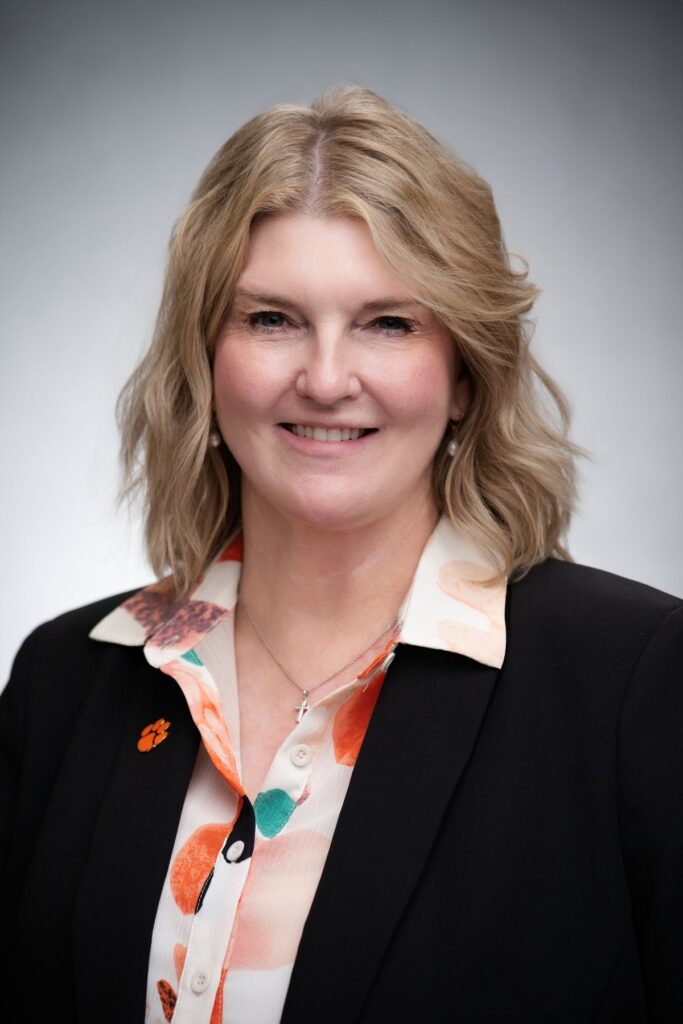
Kelley is currently the Interim Director of Export Control and Research Security. She was awarded the Research Division’s Special Achievement Award, highlighting her work surrounding Controlled Unclassified Information (CUI) and Cybersecurity Maturity Model Certification (CMMC). Notably, Kelley also earned the Certified CMMC Professional (CCP) credential. At the time of this recognition, the credential was held by fewer than 5 people across all U.S. higher education institutions.
Can you tell us about your role here at Clemson?
I joined Clemson’s Division of Research to help build and strengthen the University’s approach to research security and export control at a time when federal expectations were evolving rapidly. I started as Research Information Security Manager, working closely with faculty, research administrators, and IT partners to establish Clemson’s first comprehensive framework for protecting Controlled Unclassified Information (CUI) in research. I later served as Associate Director and now as Interim Director of Export Control and Research Security, where I provide strategic leadership and senior advisory support across research security, export control, and classified research governance. Throughout these roles, my focus has been on translating complex regulatory requirements into practical, scalable processes that protect the institution while enabling Clemson’s research mission to thrive.
What is something fun we might not know about you?
I love playing free, tournament-style poker. It’s a game full of strategy and never gets old for me. Before coming to Clemson, I played well enough in a free poker league to receive an invitation to the annual national championship, where I placed 12th out of 45 after only about a year and a half of playing. That was a really rewarding experience.
What brought you to Clemson?
When I came to Clemson, my older son had just graduated in Computer Science and was awaiting orders after being commissioned through Clemson’s USAF ROTC program. My younger son is also in the area studying nursing and hopes to finish his schooling as a Tiger. Those were the biggest draws for me initially, but the location is beautiful and the people here are truly exceptional. Those are the things that have kept me here.
Is there anything you would like for people to know about your department?
The Department of Export Control and Research Security directly supports the Clemson Elevate pillar of doubling research by 2035 by helping the University responsibly grow its portfolio of sensitive and regulated research- an area that is expanding rapidly as federal agencies and major research sponsors embed research security requirements earlier in agreements and funding vehicles. Our work focuses on supporting research at the award and agreement stage, where federal research security and export control requirements most directly shape how projects can move forward. We partner closely with faculty, research administrators, and campus stakeholders to translate complex regulations into clear, practical expectations that protect the University and our sponsors while enabling Clemson’s research enterprise to grow in a sustainable way.
The Clemson Champion is Staff Senate’s spotlight for exceptional staff and teams at Clemson. Stay tuned and meet more Clemson Champions in future posts.
At a training session recently, a participant asked me what she should do when she is in a difficult conversation, and her face communicates something before anything comes out of her mouth. She admitted that this has gotten her into trouble personally and professionally, even when she is trying to be wise and measured in her responses. Before she can acknowledge what she has heard someone say, ask thoughtful open-ended questions, and use the concern formula to express concerns, her face gives her away!
This is not an uncommon phenomenon, and it is not a dealbreaker in having productive conflict resolution conversations. Our bodies react to situations instantaneously, while our brains and language centers take a minute to catch up. This may come out on your face, your body language, or your tone. You might make a quick, snide comment before you can catch yourself. You might find yourself raising your voice to someone before you remember making the decision to yell. Some people turn red when they are upset or frustrated, even if they have not said a word. If this happens to you, there are ways to prevent damage from occurring.
The first step is to know about these reactions and explore why they might be happening. If your body is reacting before you say a word, the odds are someone has said something to you about it. Awareness of your reactions is key, but it also helps to reflect on why they might be occurring in the first place. When you know how you react, you can make those around you aware as well. In both personal and professional relationships, you can call out your tendency to react physiologically and let the other person know that your face’s reaction is not always indicative of what you are thinking or feeling. In other words, warn the people in your life that this will happen in times of conflict or tense conversations, and request that they withhold judgment until you have a minute to think and say what you actually want to say. I know that my husband retreats into silence if our discussions become tense. After I say something, I might have to wait 10 to 30 minutes for his response. When we were first together, I thought he was refusing to talk to me. Now I know that I will need to wait for his response. Relationships involve negotiating how you are going to interact and resolve conflict. Being able to share with someone that you know this about yourself, and here’s the best way for you both to handle it can help prevent difficult conversations from escalating.
Of course, it is not possible to tell everyone you interact with about your instinctive physiological reactions. So if it happens with someone who does not know you well, a great response is to acknowledge it. Saying something like, “It seems like you are reacting to the expression on my face, but I don’t want you to take that to represent how I am thinking and feeling. I know that my face reacts before I’m ready, and I might need a minute before I can respond to you.” Calling it out makes it clear that you are not trying to hide the reaction, but you are also requesting some time to state what your actual reaction is.
Finally, whether you are able to preempt these responses, or you are scrambling to respond to them after they emerge, you can work on them. You can work to control your face, tone, or body language, so they don’t give away what you are really thinking. My husband has lowered his response time the longer we have been married, so I’m not waiting quite as long for his responses to my questions. We can evolve and get better. Our faces, bodies, and tone might betray us, but the betrayal is not detrimental. It can even lead to knowing ourselves and each other better.
What is the Ombuds Office? The Ombuds Office is a confidential, independent, neutral, and informal space for staff to process concerns, get information, and develop options for how to move forward in a difficult situation. I can provide education, conflict coaching, mediation, and facilitation as well as referrals to other resources across Clemson. If you are unsure how to move forward in any way, I can help you work through it.
Tessa Byer Phone: 864-656-5353 Email: tbyer@clemson.edu Address: 135 Old Greenville Hwy, Ste. 203 (Next to Esso!)
Navigating Intergenerational Workplaces April 10, 2026, from 9:00 to 11:00 In person at University Facilities Center, sign up here: Registration link
Interested in advancing your career with a Clemson MBA? Discover Clemson University’s flexible MBA options and learn more about the ETAP benefits available exclusively to Clemson employees. Attend our upcoming Information Session on Tuesday, March 10, schedule a one-on-one meeting with our Admissions Team at a time that works best for you or email mbaprogram@clemson.edu to explore additional options. Those interested may access the admission application.
It’s the second month of the new year. Did you set New Year’s resolutions this year? Did you keep them? I do not set resolutions every year, but I have successfully set and kept them in the past. However, none of my resolutions were achieved without the accompanying shame and anxiety about how I would feel if I were to join the millions of others who abandon their resolutions by the second Friday in January. In other words, I have kept resolutions when the achievement was not the resolution itself but only the avoidance of failure.
When lamenting this tension recently, a friend told me she doesn’t count her January productivity toward her work or life projects at all. She does what she needs to do to get her job done, but if she has broader goals, such as “learn a language,” “write a novel,” or “lose weight,” she gives herself the month of January to be okay with her status quo, rather than striving for more. She looks at other months for productivity and achievement.
I was intrigued. My friend’s decision to only begin “counting” her productivity on February 1 made me think about seasons when we just need to sit back and survive. Staff at Clemson have been through a lot lately: leadership changes, ERP improvements, political shifts, financial mayhem, to name only a few. Maintaining our productivity and professionalism while handling so much change is an achievement in itself.
My No.1 strength in StrengthsFinder is “Achiever,” which I often find to be a burden, pushing me to strive more and rest never. Because of this “strength,” if I decide to call it that, I’m one of those people who need to have tiered goals: A big one that will take years, then something that will take this year, this semester, this month, this week, this day. Right now, my big goal is working on my PhD. But rather than a year-long or semester-long goal, what if I give myself permission to just get by?
I’m not advocating that we spurn productivity or stop trying. Caring about this place and pouring our hearts into our work is what makes this university run. But I found my productivity to be somewhat counterintuitive: When I gave myself permission to take a little break from the achievement grind, I was more productive than ever, without the fear or shame I’m used to. I actually made a personal breakthrough and started working on a project I had dreamed about for years and kept putting off, waiting until there was a lull in everything else in my life. That lull is not coming! I needed to create it for myself.
I’ve also started putting important but easily ignored things on my weekly to-do list: figure out what self-care I need, take a walk outside, spend uninterrupted time with my kids, have a conversation with my husband that does not involve logistics of feeding and housing and transporting these children. As someone guided by lists, when there is a place for a checkmark by these, I’m much more likely to see them as something to achieve and find fulfillment in.
So let me just say this: You’re doing fine. I’m doing fine. We’ll get through these seasons of change, and that can be our big achievement for 2026.
Box No.1:
What is the Ombuds Office?
The Ombuds Office is a confidential, independent, neutral, and informal space for staff to process concerns, get information, and develop options for how to move forward in a difficult situation. I can provide education, conflict coaching, mediation, and facilitation as well as referrals to other resources across Clemson. If you are unsure how to move forward in any way, I can help you work through it.
Clemson students and employees can enjoy free guided wildflower walks at SCBG!
Step into spring with us! Clemson University students, faculty, and staff are invited to enjoy free weekly guided wildflower walks along our peaceful Natural Heritage Trail. Wander at a relaxed pace with an experienced guide, soak in the beauty of the spring while discovering the hidden stories of our local plants and wildlife.
On Wednesdays, beginning March 11, join us to discover brand-new landscapes—fresh blossoms, unfolding leaves, and the ever-changing colors of spring. No two walks are the same, so come often and watch the Garden come alive! Space is limited, so pre-registration is required.
Campus Recreation is offering several opportunities this spring for staff to become certified in First Aid and CPR. No Campus Rec membership is required.
Upcoming February sessions are scheduled for February 26-27, with more class dates available in March and April. These courses equip participants with the knowledge and confidence to respond appropriately during a wide range of medical emergencies, including cardiac arrest, choking, and other life‑threatening situations. Learning how to recognize an emergency, provide immediate care, and coordinate with first responders can make a critical difference in the outcome.
All full CPR certification courses use a blended learning format, which combines online and in‑person training. Participants must complete the assigned online learning modules before the start of the in‑person session at Fike. This allows the classroom portion to focus on hands‑on practice, skill application, and real‑time instructor feedback.
All sessions are held at Fike Recreation Center, making it convenient for staff across campus to attend. You can also book a custom course for your own group, whether it be your office or a team you may be on. For those inquiries, contact Nicole Taylor. Her email is linked below.
We all know the traditional picture of a leader: someone with a corner office, a fancy title, and the final say, but the most dynamic and successful teams aren’t led by just one person at the top. They thrive because leadership is distributed at all levels of the organization. As leadership expert John C. Maxwell states, “Leadership is a choice you make, not a place you sit” (Maxwell, 2006).
No matter where you sit within your organization, you have the ability to influence those around you. Here at Clemson, where innovation and collaboration are a significant part of the strategic plan, mastering the art of leading your peers is essential. This is how we amplify our impact, solve tough problems, and build a workplace where everyone feels empowered to contribute.
So, how do we do this? It comes down to three fundamental strategies:
1. Build Trust and Empathy
Trust is what holds teams together, especially when you’re leading your peers and teammates without formal authority. Empathetic trust is built through your efforts to be a genuine, consistent and reliable teammate—someone who is honest with others and creates psychological safety for others to be honest too.
Imagine a co-worker needs help with a difficult report. Be a teammate who doesn’t just offer advice but instead devotes their time, being willing to step in to assist if needed. Ask them: What can you take off their plate? What can you do to help? Is there something you can take on, so they can focus on this project? Offering assistance isn’t just about being helpful; it creates trust and acknowledges the human element of office interactions.
When your peers know you’re reliable, dependable, selfless, and trustworthy, they will begin to look to you as a leader. [TB1] When an informal leader shows they care and are willing to step in to help others, they elevate the entire team. When others feel like you care, they’re more likely to consider your ideas, which opens the door for you to guide and influence.
2. Find the Best Solutions
Since good ideas are the building block of innovation within an organization, it is important to invest time and energy generating and fostering ideas. It is also natural to fight for your own ideas because of this investment, but a peer leader is more focused on the success of their team than their own personal agenda. Maxwell urges us to remember that “we aren’t perfect and maybe we don’t have the best ideas, but we should cherish and protect the creative people on our teams and their ideas, even if that means your idea gets refined, or even replaced, by someone else’s” (Maxwell, 2006).
Now imagine that you spent the last month brainstorming, developing and preparing a proposal presentation for an important stakeholder. Two weeks before this meeting, you and a colleague separately present your ideas to the rest of the team. After hearing your colleague’s proposal, you can see how some of their ideas are better than your own. As a peer leader, you decide to collaborate with your colleague to develop the best proposal, sharing the praise and credit, instead of pushing forward with your own and taking the praise for yourself.
The mindset where you actively solicit, value, and integrate input from your peers fosters an environment of psychological safety and shared ownership. When your peers feel their voices are heard and their contributions genuinely valued, they become more invested in the outcome and more willing to follow where the collective best interest leads. It’s a mindset where we can build something better together than we can on our own.
3. Create a Shared Destination
Even without a formal title, you have the ability to provide direction by helping your team visualize the shared destination. Leading your peers is often about providing the context and rationale that connect your daily tasks to the broader organizational mission, such as Clemson Elevate. When a team understands the bigger picture behind their daily work, they move with greater purpose and alignment. As Doug Thorpe describes, “Leading your peers is about becoming a reliable source of insight, solutions, and clarity allowing others to understand the bigger picture, positioning yourself as the beacon who connects daily work to the ultimate organizational mission” (Thorpe, 2025).
Imagine you have a co-worker who is frustrated with your department’s new tracking system and is struggling to see the value in moving away from the old system. As a peer leader, you don’t just focus on the technical execution; instead, you help your co-worker see the purpose behind the change. You take the time to explain how the change supports the strategic plan of the University and how their specific role is vital to that success. By serving as a beacon of clarity, you help your colleagues find meaning in the mission. When everyone can see the ultimate destination, they are more motivated and more likely to respect the informal guidance that helps the team reach its goals.
Unleashing Our Collective Potential
Peer leadership isn’t just a theory; it’s something you can put into practice today. By focusing on trust, finding the best solutions, and creating a shared destination, we unlock a dynamic that elevates ourselves, our departments, and Clemson University to new heights.
Sources
Maxwell, J. C. (2006). The 360 degree leader: Developing your influence from anywhere in the organization. Thomas Nelson.
The Ombuds Office is a confidential, independent, neutral, and informal space for staff to process concerns, get information, and develop options for how to move forward in a difficult situation. I can provide education, conflict coaching, mediation, and facilitation as well as referrals to other resources across Clemson. If you are unsure how to move forward in any way, I can help you work through it.
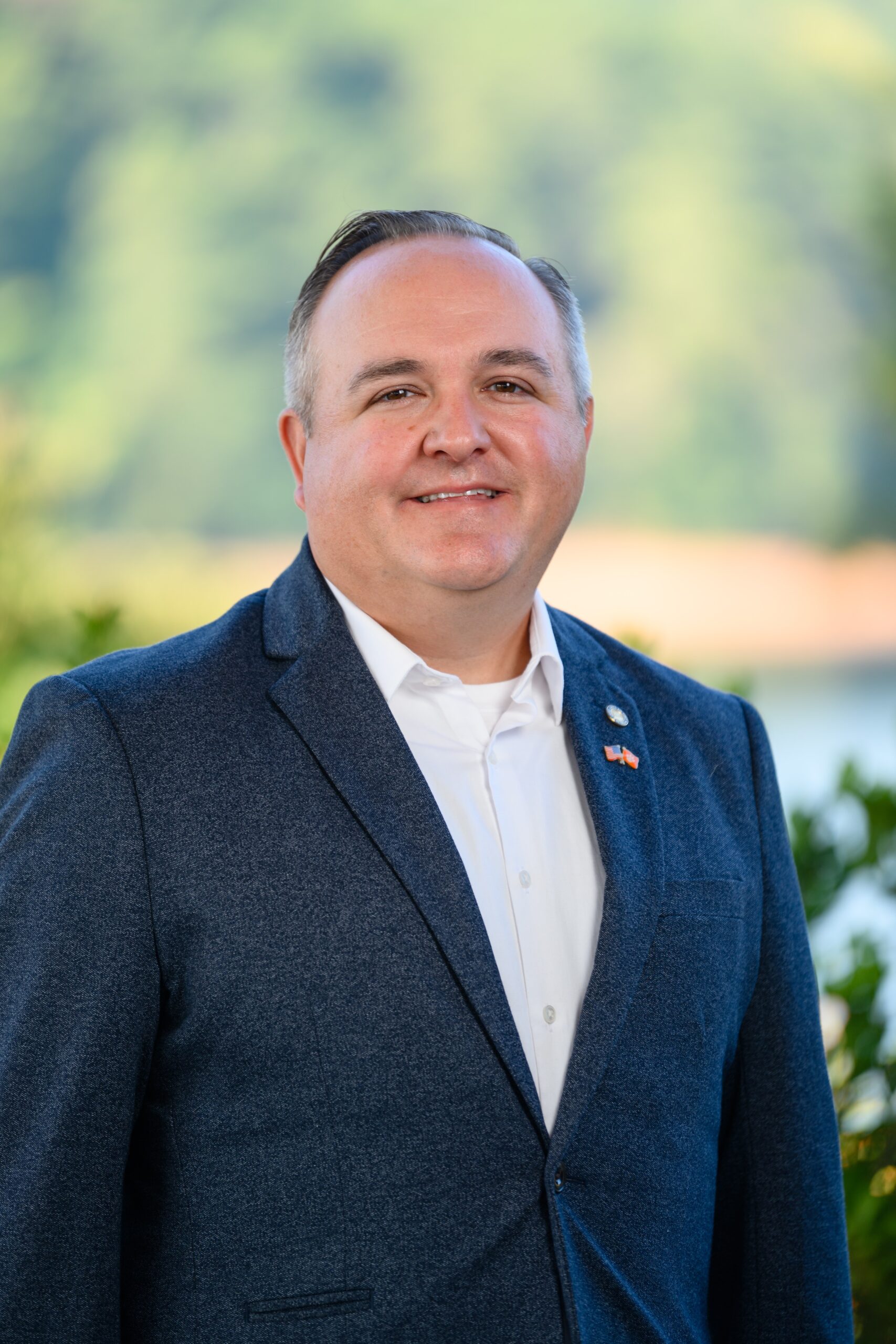
Michael Scott
Phone: 864-656-6353
Email: mesctt@clemson.edu Address: 135 Old Greenville Hwy, Ste. 203 (Next to Esso!)
Save the date for upcoming trainings offered by the Ombuds Office:
Looking for a fun, low-impact way to boost your fitness midweek? Fike Recreation Center is excited to introduce HIIT the Pool, a new 45-minute interval training class held on the pool deck in the shallow end.
This aquatic workout blends high-intensity intervals with the gentle resistance of water, making it easy on the joints and suitable for most fitness levels. Whether you’re a seasoned athlete or just starting out, the exercises are easily modifiable to meet your needs.
Class Details:
🗓 Wednesdays at 8:15 a.m.
📍 Lap pool, shallow end – Fike Recreation Center
👥 15 spots available – registration opens 23 hours before class
🌊 Low-impact, high-energy workout for all demographics
👙 Wear a bathing suit & bring towel and water bottle
And for a perfect post-workout treat, consider adding a relaxing sauna session to your routine. It’s a great way to unwind and reward yourself after a powerful start to your day.