Dr. Meredith Morris has been awarded a Fulbright Specialist grant to strengthen international research and training partnerships between the Institute of Parasitology in the Czech Republic and the Eukaryotic Pathogens Innovation Center (EPIC) at Clemson University. This project brings together two globally recognized centers focused on understanding parasites that impact human and animal health.
The Fulbright award will support scientific exchange, collaborative research and shared training opportunities for students and early-career researchers. By building a sustainable bridge between the two institutions, the partnership between EPIC and the Institute of Parasitology will expand international opportunities, foster innovation and strengthen global networks in infectious disease research.
Beyond advancing laboratory science, this collaboration emphasizes professional development, cross-cultural engagement and preparing the next generation of scientists to work across borders to address complex global health challenges.
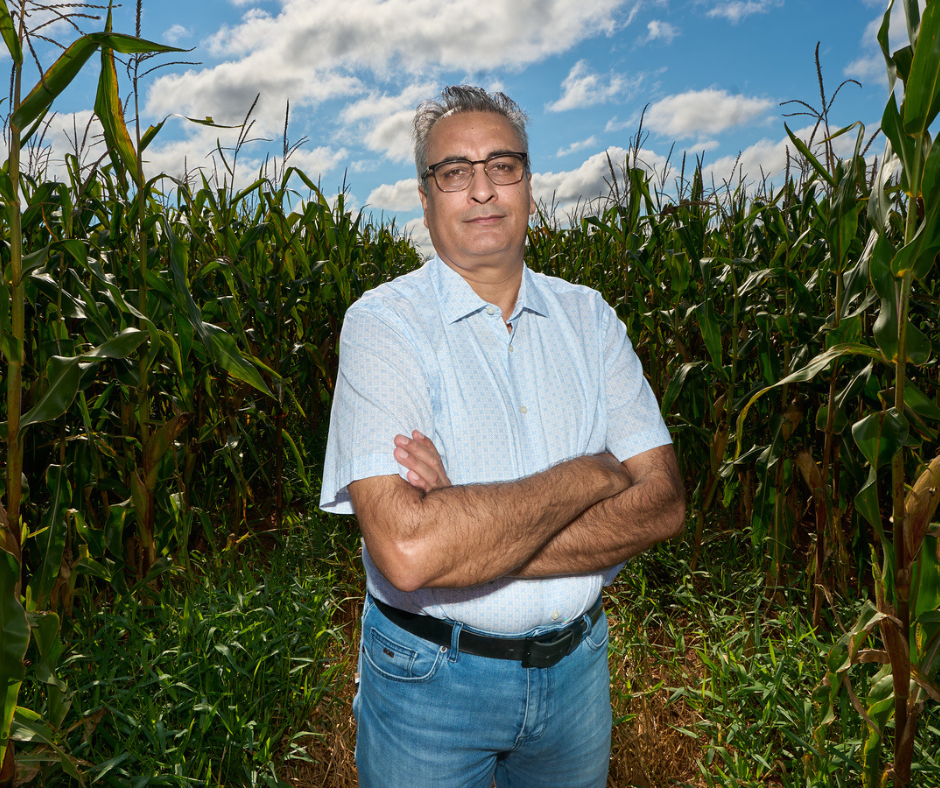
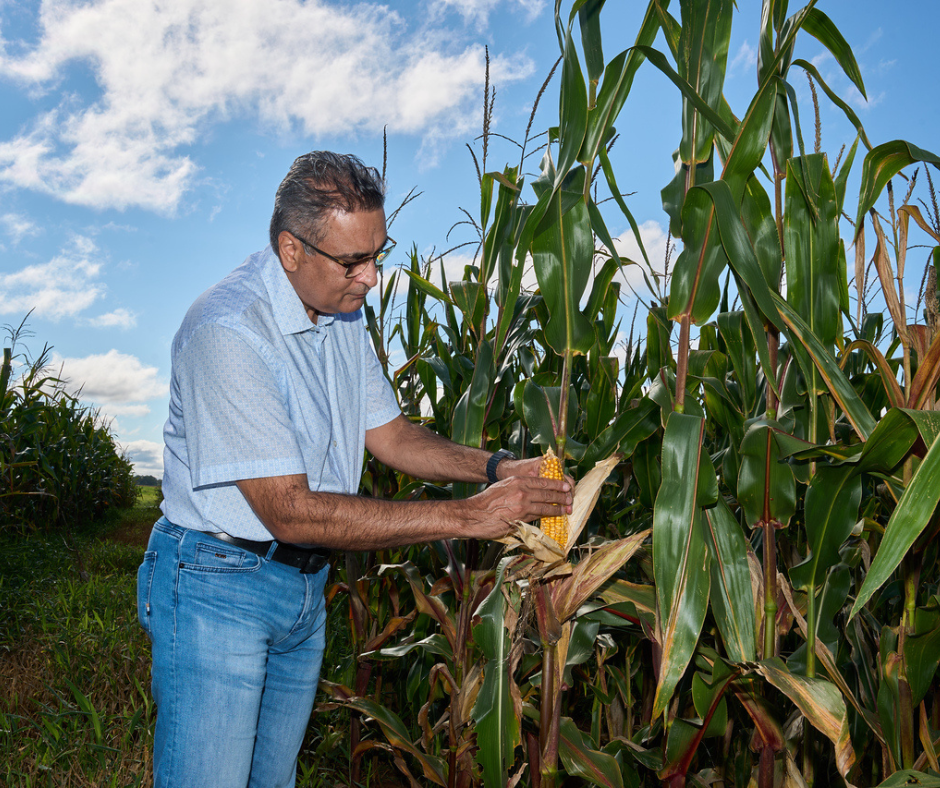
Associate professor Rajan Sekhon along with a team of researchers at Clemson University and partner organizations have received a $2.4 million, four-year grant to map genes that control leaf senescence in corn. Funded by the National Science Foundation through both the Plant Genome Research Program and the Cross-Directorate Activities program, this project aims to sustain photosynthesis longer, improve yield stability and support smarter on-farm nitrogen use.
“Our goal is to set the timing of leaf senescence so plants stay productive when it counts and still finish cleanly for harvest, which can also help keep more nitrogen working on the farm,” Sekhon said.
This project will determine when senescence, which is the aging process where plants recycle nutrients, begins and how quickly it proceeds. Sekhon’s group will map the genes and regulatory switches that control senescence by using a systems genetics approach that integrates physiology, metabolomics, transcriptomes, chromatin accessibility and single cell RNA sequencing. Artificial intelligence, primarily large language models (LLMs) and machine learning, along with advanced statistical methods, will combine these data to pinpoint genes and regulatory switches that set senescence timing in corn and possibly other crops.
“While we’re focused on the process of senescence, we are developing methods and datasets that can translate to other traits and crops,” he said.
Nitrogen is essential for protein formation in corn because it is a fundamental component of amino acids, the building blocks of all proteins.
“Most kernel protein is storage protein with limited amino acid balance, so lowering total kernel protein does not automatically reduce nutritional value. If we get the timing of leaf senescence right, we can keep yield steady and, over time, help more nitrogen remain on the farm.”
Biochemistry alum Adam Gatch ’25 has received a Fulbright research award to study abroad in Munich, Germany at Ludwig Maximilian University. The Fulbright U.S. Student Program offers unparalleled opportunities to pursue graduate study, conduct research or teach.
Adam has respectfully declined the Germany Fulbright offer after earning a Churchill scholarship earlier in the spring, which allows students to undertake a one-year master’s program in STEM fields at the University of Cambridge in the United Kingdom. The Churchill Scholarship is seen as the most prestigious and competitive international science, mathematics and engineering award for post-undergraduate researchers.
Adam’s proposed project at Ludwig Maximilian University of Munich would have explored how early-stage medin aggregates interact with amyloid-beta in the brain, advancing a novel line of inquiry in Alzheimer’s research.
At Clemson, Adam conducted extensive biophysics research in the lab of Dr. Feng Ding, exploring molecular mechanisms of neurodegenerative disease. Gatch also volunteered at the campus food pantry, worked as a tutor and gained clinical experience as an emergency medical technician (EMT). He plans to one day lead an interdisciplinary laboratory dedicated to neuroscience discovery while working in academic medicine.
Assistant professor Stephen Dolan has been awarded a Major Research Instrumentation (MRI) grant to acquire the university’s first hyperspectral snapshot imaging (HSI) system, a transformative technology poised to revolutionize pathogen research. This system will provide unparalleled spectral and spatial imaging capabilities, allowing researchers to enhance phenotypic profiling of eukaryotic pathogens that impact human health.
The title of the grant is “CU-MRI: Next-Generation Hyperspectral Snapshot Imaging for Enhanced Phenotypic Profiling of Eukaryotic Pathogens Impacting Human Health.”
The grant supports the acquisition of Ximea snapshot imagers, which leverage cutting-edge CCD technology to capture high-resolution spectral data across 57 bands in the visible spectrum. Unlike traditional hyperspectral imaging approaches that require slow, labor-intensive scanning, this new system operates in snapshot mode, capturing full spectral datasets at speeds of up to 300 frames per second. These capabilities will enable Clemson scientists to study dynamic biological processes in real time, advancing research in pathogen detection, host-pathogen interactions, and microbial physiology.
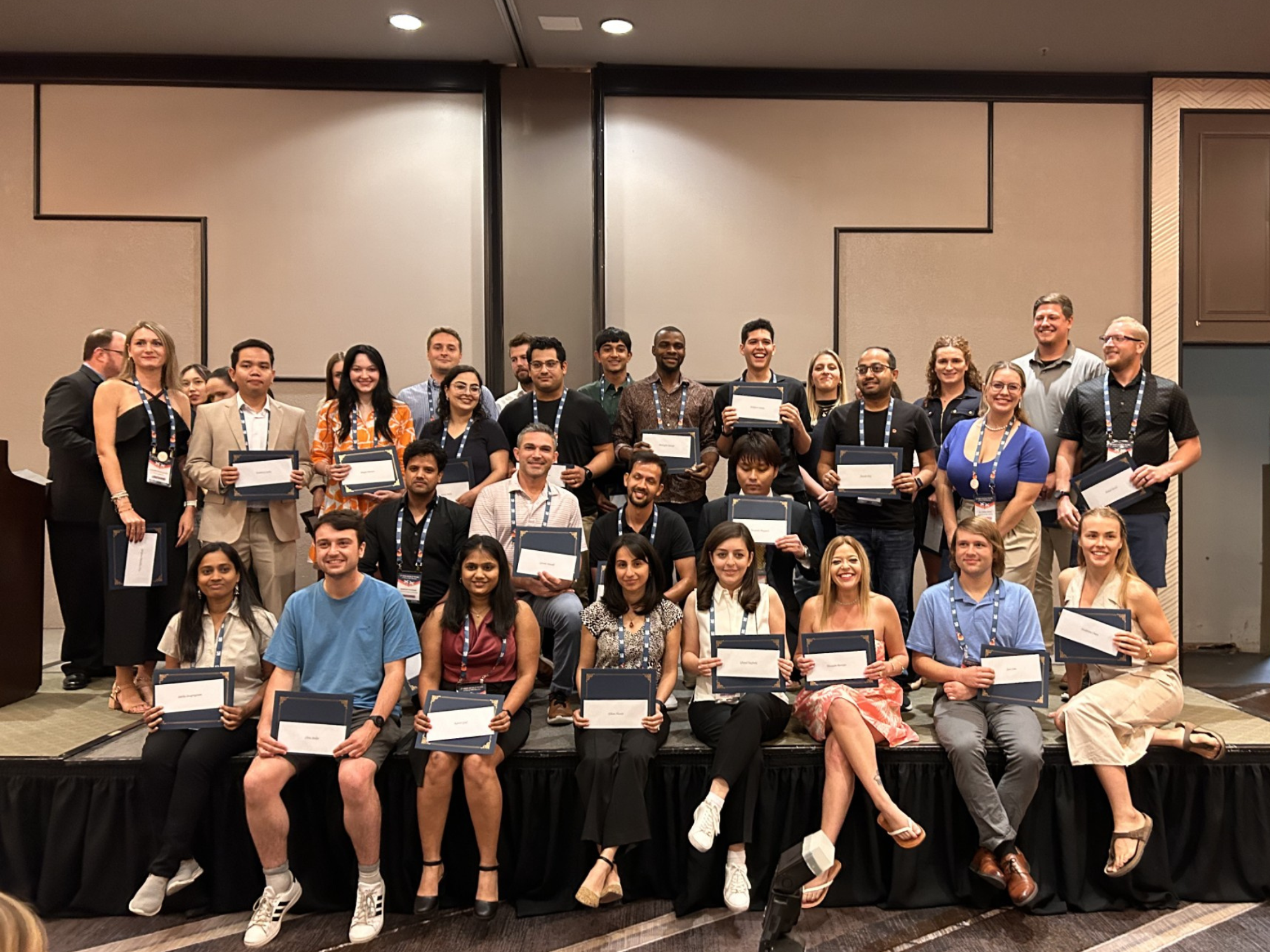
Pictured: the EMGS travel grant awardees. Josh Turner is second from top right.
5th year Ph.D. student in Dr. Jennifer Mason’s lab Josh Turner was recently awarded an Environmental Mutagenesis and Genomics Society (EMGS) $500 travel grant to attend the EMGS annual meeting in Palm Springs, CA.
EMGS provides a forum for the establishment and support of scientists in the field of environmental mutagenesis. The society seeks to understand and mitigate the impacts of environmental exposures on the genome to protect human health through diverse and inclusive leadership in research, professional development, and collaboration.
The Travel award was a $500 award to students and new investigators given by the society to promote new PI and trainee attendance.
“It has been really exciting to get this award for the past two years because EMGS is the most inviting and engaging conference I’ve ever been to. I’ve been able to troubleshoot experiments, gain collaborators on really exciting projects that I can’t wait to start soon, and even sit down and have a drink with top investigators at prestigious institutions.”
Senior biochemistry major Adam Gatch is many things: a student, a hiker, a researcher, a tutor, a Goldwater Scholar, an EMT, a volunteer, a writer, a backpacker – too many things to name.
Originally from Charleston, SC, Adam enjoys Clemson for its people and its proximity to great hiking spots and the mountains.
“It’s been nice to meet others with strong work ethic and passion for learning, and it has been motivating to be surrounded by other students with all kinds of exciting future plans.”
Being involved in many extracurricular activities, Adam’s main focus is his research work with Dr. Feng Ding, who runs the Clemson Multiscale Biophysics Lab in the Department of Physics and Astronomy. With Dr. Ding, he has worked on numerous independent projects investigating the structure and dynamics of various proteins implicated in neurodegenerative disease.
“The major theme of my personal research work is understanding the molecular basis of co-pathologies involving multiple disease-associated proteins. Essentially, many neurodegenerative diseases such as Alzheimer’s and Parkinson’s are characterized by the abnormal accumulation of certain proteins, and the inclusions they form are considered disease hallmarks.”
In some cases, multiple “hallmark” proteins are found in the same pathological assembly or in closely associated assemblies of each protein. Adam’s work seeks to elucidate the molecular mechanisms that enable the proteins to interact and give rise to these co-pathologies, and additionally to understand how that interaction can affect clinical presentation and disease outcome.
Adam’s research experience doesn’t stop there; he is involved in the Clemson University Clinical Undergraduate Research Experiences in Surgery (CURES) and has shadowed neurologists at MUSC. Also, he is involved in the Drug Design, Development, and Delivery (4D) lab led by Dr. Jeoung Soo Lee in the Department of Bioengineering, which is focused on nanoparticle-based therapeutics for traumatic brain injury and spinal cord injury.
“In contrast to my computational biophysics research, the 4D lab utilizes in vivo and in vitro experiments, using rats to study the effectiveness of the treatments developed by the group. While Dr. Ding’s lab appealed to me because of my strong interest in neurodegeneration and molecular-level study of disease, Dr. Lee’s lab was perfect for exploring another clinical interest of mine, namely traumatic brain injury.”
“In my [EMT] work, I have cared for many patients with highly advanced forms of neurodegenerative disease, which reinforces my motivation to study these diseases in the lab. These experiences have been hugely impactful in affirming my commitment to my future career as a physician-scientist.”
After graduation Adam plans to take a couple gap years traveling around Europe before applying to a number of MD-Ph.D. programs in neuroscience. Afterward, he plans to complete medical residency in neurosurgery and lead a research-intensive career as an academic neurosurgeon at a medical university.
“I plan to continue working on highly interdisciplinary research throughout my Ph.D. training and later in my career, hope to one day lead a successful lab.”
James Lewis, an assistant professor, was awarded a $1.3 million National Science Foundation CAREER grant. The NSF CAREER Award is among the most prestigious in the nation for early-career faculty who have the potential to serve as academic role models in research and education and to lead advances in their field.
Dr. Lewis will study Heliconiine butterflies living in Central America as a part of his grant. Heliconiine butterfly species that live in the same region often share the same wing color patterns, a process known as mimicry, to increase their individual protection from predators.
“A butterfly that is brightly colored, but not mimetic, is both easily seen by predators and lacks the protection they previously gained from wing pattern mimicry. This appears, at first glance, to be the worst of both worlds. This is exactly the sort of unexpected change that I want to study,” said Lewis.