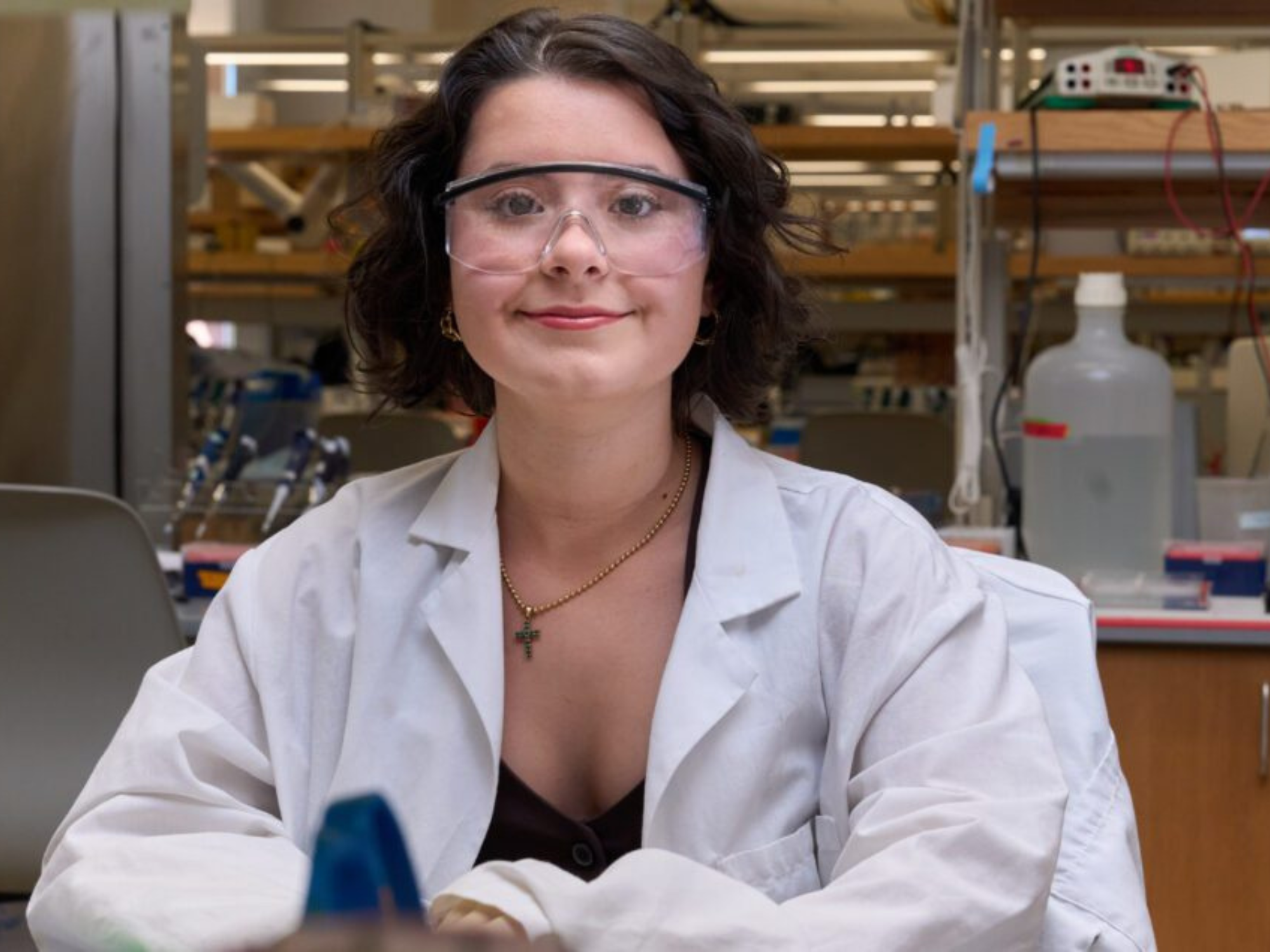
Senior genetics and biochemistry student Gabbie Gardiner spent her summer in Charleston, South Carolina participating in the Summer Undergraduate Research Program at the Medical University of South Carolina (MUSC) researching a protein called PTP1B with Dr. Lalima Katyayani Madan.
“This summer, I conducted research at the Medical University of South Carolina focused on developing more precise cancer therapies by studying a protein called PTP1B (Protein Tyrosine Phosphatase 1B).”
PTP1B plays a critical role in cellular signaling and has been linked to diseases like breast cancer, diabetes, and Alzheimer’s. However, designing drugs that target it specifically has been extremely difficult due to similarities it shares with other proteins.
“My project aimed to overcome this challenge by exploring how PTP1B can be inhibited allosterically – meaning, by targeting areas outside the active site that control the protein’s shape and function.”
By combining lab-based protein purification and activity testing with computational analysis of over 250 crystal structures, we can begin to understand how the protein shifts between different conformations. This research led to findings that will lay the groundwork for creating highly specific inhibitors that could one day be used in targeted cancer treatments.
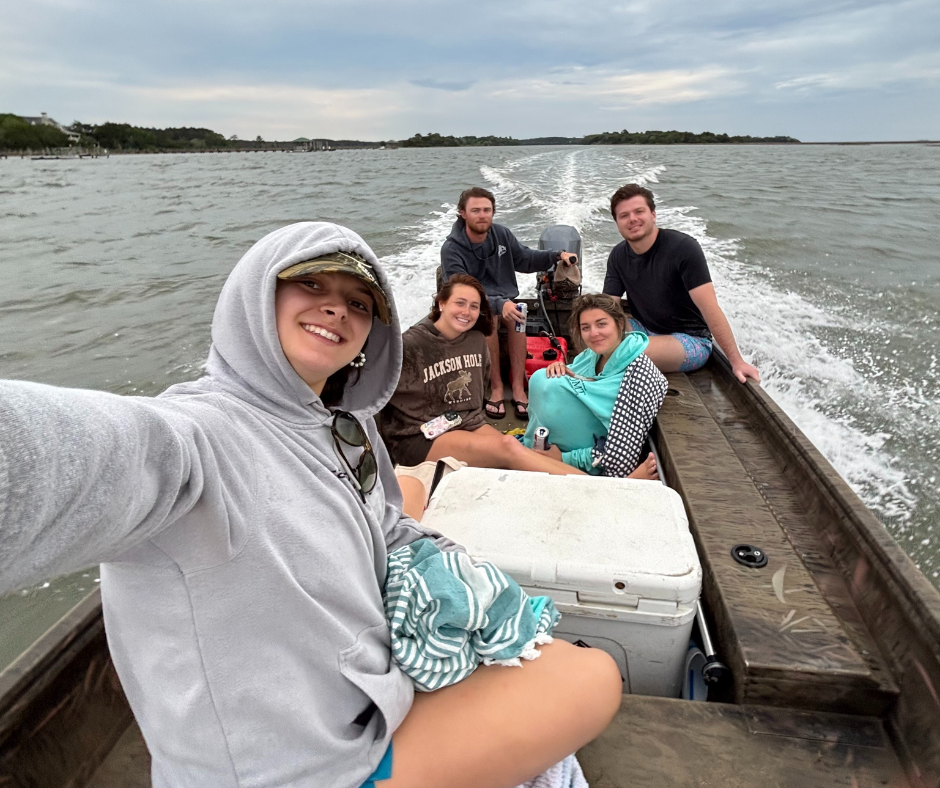
While not in the lab, Gabbie took in all that Charleston had to offer: the beach, amazing restaurants, yoga, Pilates and more!
“I love going to the beach; my favorite beach is Sullivan’s Island Beach. I’ve also loved trying a ton of restaurants in the area. I can’t pick a favorite; they are all so good.”
This summer at MUSC was invaluable to Gabbie, reiterating her passions for research and science.
“This summer really opened my eyes to what research is all about. I learned how to work with proteins in the lab, analyze data, and think through problems when things didn’t go as planned. Being part of a project that could actually help lead to new treatments for cancer made the work feel really meaningful. It confirmed for me that I want to keep doing this kind of work in the future as a doctor and scientist.”
HELEN LARKIN
Senior biochemistry student Helen Larkin spent the summer on the University of Michigan’s campus in Ann Arbor, MI researching how circulating tumor cells can cause inflammatory effects in a patient.
“I participated in the Cancer Research Summer Internship Program (CaRSIP) through the Rogel Cancer Center and the University of Michigan Medical School. I worked in Dr. Sunitha Nagrath’s lab, which is in the Department of Chemical Engineering.”
Helen found this internship on the program’s website. When looking for internships, she would go through the websites of graduate schools that she was interested in and see the summer research internship positions available.
In the Nagrath lab, Helen worked on researching the effect of glioblastoma extracellular vesicles (EVs) on neutrophils. In other words, Helen looked at how circulating tumor cells can cause inflammatory effects in a patient and potentially contribute to malignancies.
“This project has involved cell culture, flow cytometry, and different types of assays. I have learned a lot about new techniques and experiments from being there. This has been an incredibly valuable experience. I feel more prepared to apply to graduate school this fall and I have a better understanding of what life in graduate school will be like.”
When senior genetics major Sofia Willey was in middle school, she began having abnormally intense joint pain, something doctors attributed to the rigor of competitive gymnastics and her 20 hour-a-week training schedule.
At first, doctors diagnosed her with hip dysplasia, but that didn’t account for the hypermobility symptoms, scarring and low bone growth. Her doctor then suggested Sofia may have Ehlers-Danlos Syndrome (EDS), specifically the hypermobile subtype. EDS is a rare genetic disorder that affects the connective tissue and can cause weak joints, affecting 1 in 5,000 people.
“I didn’t understand what was happening to me, and no one around me did either.”
Doctors’ limited knowledge of the disorder is due in part to the EDS being under-researched. This has inspired Sofia to pursue a degree in genetics and focus on research while in college.
“It becomes a lot of explaining your own problems to your doctor so they can prescribe or help you find what you need.”
This summer Sofia worked with the Norris Lab at the Medical University of South Carolina on a project related to the complement system and its biological importance in hEDS. Dr. Russell Norris a professor in the Department of Regenerative Medicine and Cell Biology. Norris lab is one of the preeminent labs researching EDS.
Sofia’s specific research aims at finding a diagnostic tool that could use specific protein levels in the blood to determine if a patient has EDS. She focused on changes in the immune system of patients with EDS compared to those without the disease, finding a few significant proteins that had different levels in subjects with EDS than in those without.
Sofia says her time in the Norris lab, which also included patient education, has helped her better understand her disease and problems in her own body. She hopes to change patients’ lives through knowledge of under-recognized diseases.