Integrated Pest Management

Two-spot cotton leafhopper in South Carolina

Amrasca bigutulla, commonly know as the two-spot cotton leafhopper, has been detected in several states in the southeastern US, including Alabama, Georgia, Florida, and South Carolina. This species is native to southeast Asia, where it is an important pest of cotton and okra. The arrival of the insect in the continental U.S. is a concern for cotton and vegetable production, although its impact on yield remains unclear. 

Adults are characterized by two black dots on the distal part of the forewings. Females oviposit on leaf tissues, and upon hatching, nymphs grow through four developmental stages in about 8 or 9 days. Adults live an additional 11 or 12 days. The short life cycle enables two  -spot cotton leafhoppers to produce multiple generations throughout the season.
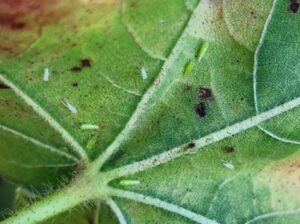
 

Figure 1. Adults and nymphs of  two-spot cotton leafhopper feeding under cotton leaves. 

Both nymphs and adults feed on the underside of cotton leaves by injecting its mouth part in the tissue and consuming plants sap (Figure 2). Feeding can cause the cotton leaves to turn yellow. The detection of two-spot cotton leafhoppers is a concern for cotton production in the southeastern US. In addition to quantifying potential impacts on yield, future research will focus on monitoring two-spot cotton leafhopper populations throughout the season, developing economic thresholds and treatment recommendations to provide management solutions for cotton growers.


Figure 2. Mild (left) and severe (right) injury of two-spot cotton leafhopper in cotton.  
Proactive Pest Management: Addressing Thrips parvispinus, an Emerging Pest of Ornamentals in the United States, with the 2026 Insecticide, Miticide, Fungicide Guide and Targeted Field Diagnostics

In greenhouse, nursery, and ornamental crop production, anticipating pest threats is crucial to protecting plant health, maintaining market access, and ensuring operational efficiency. The 2026 Insecticide, Miticide & Fungicide (IMF) Guide provides an updated, science-based framework for pest management, including chemical class charts, resistance management strategies, and pest-specific recommendations. It reinforces Integrated Pest Management (IPM) principles, accurate identification, consistent monitoring, cultural and biological controls, and strategic chemical rotations to reduce resistance risk, preserve beneficial organisms, and maintain compliance with state and federal regulations.
A complete guide is available here: 2026 Insecticide, Miticide & Fungicide Guide.

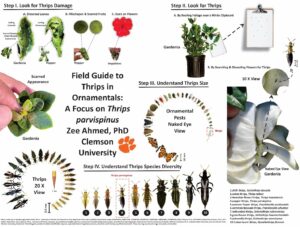
This year, Dr. Zee Ahmed, Assistant Professor of Turf and Ornamental Entomology at Clemson University, took proactive pest management a step further with the release of a specialized field guide on Thrips parvispinus, a pest still under regulatory concern in the United States. Designed for growers, inspectors, and extension agents, the guide equips stakeholders with tools to detect infestations early, before they escalate into costly outbreaks. Early detection not only minimizes unnecessary insecticide applications but also slows the development of resistance and helps avoid potential trade or quarantine complications.

Together, the 2026 IMF Guide and Dr. Ahmed’s field guide form a powerful one-two punch: a comprehensive management framework paired with a targeted diagnostic tool. For stakeholders, this means better decision-making, reduced chemical dependency, and a stronger position in meeting both production and regulatory demands, assuring healthier crops, healthier markets, and a healthier future for the industry.

Figure 1. Field Guide for Thrips parvispinus (Ahmed, 2025): A visual diagnostic reference to aid in proactive detection in ornamental and edible crops.

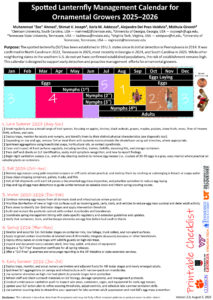
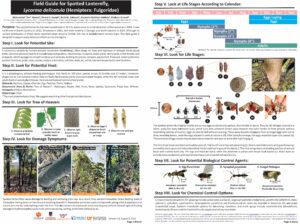
Spotted Lanternfly Management Calendar for Ornamental Growers in the Southeastern U.S.

The spotted lanternfly (SLF) has been established in 19 U.S. states since its first detection in Pennsylvania in 2014. It was confirmed in North Carolina in 2022, Tennessee in 2023, Georgia in 2024 and South Carolina in 2025. While other neighboring states in the southeastern U.S. don’t yet have confirmed established populations, the risk of establishment remains high.

Dr. Zee Ahmed (Clemson University) and his colleagues—Dr.   Shimat Joseph (University of Georgia), Dr. Midhula Gireesh (University of Tennessee), Karla Addesso (Tennessee State University) and Alejandro Del Pozo-Valdivia (Virginia Tech) developed a management calendar to support early detection and proactive control efforts for ornamental growers in the Southeastern U.S. This seasonal framework offers practical guidance to help growers address SLF concerns proactively from late summer 2025 through summer 2026.

Here is the link  Spotted Lanternfly Management Calendar for Ornamental Growers in the Southeastern U.S.