Entomologists at Clemson University have been sampling soybean fields across the state of South Carolina for soybean defoliators, podworms (Helicoverpa zea) and their natural enemies. Common soybean defoliators include the soybean looper, green cloverworm, velvetbean caterpillar, yellow stripped armyworm and the bean leaf beetle (Fig 1). The most predominant natural enemies include big-eyed bugs, assassin bugs, damsel bugs, spined soldier bug, and several lady beetle species. This research has several goals, including quantifying the spatial variability in insect densities and defoliation levels during full bloom and pod-filling stages, associating defoliation levels with defoliator species, and using landscape cropping area around soybean fields and field management information to predict insect densities and defoliations levels. Management of defoliators and podworms is primarily performed by chemical insecticide applications during pod set growth stage (R3). The ultimate goal of this project is to optimize insecticide usage by informing growers of the risk of infestations in their fields.
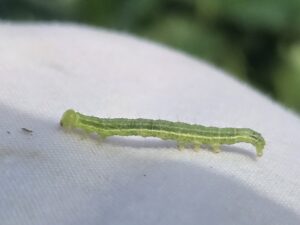
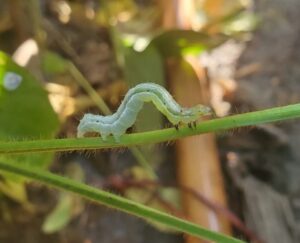
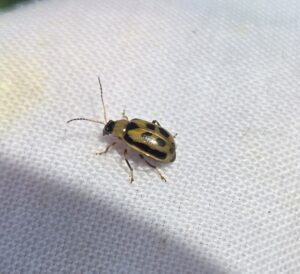
Fig 1:Green cloverworm, soybean looper and bean leaf beetle (from left to right), common soybean defoliators in SC.
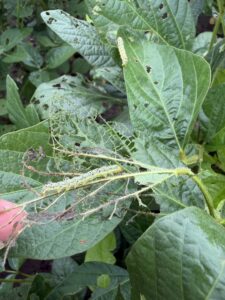
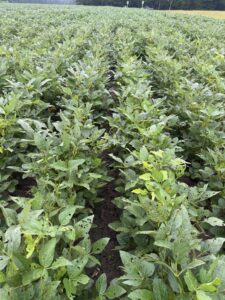
Fig 2 (left): Soybean field defoliated in Marion County. Fig. 3 (right): pod worms present in the same field.
A total of 46 fields were sampled this year. Most fields did not reach the defoliation threshold, but some did for the corn earworm. In most cases, our visual estimates of defoliation levels in a field overestimated actual defoliation levels. This field in Marion County (Fig 2) was estimated to be around 10% defoliation when observing the canopy, and pod worms far exceeded the threshold number of 3 per 10 sweeps (Fig 3). However, when using software to accurately estimate defoliation based on photos of leaves, the field was at 3.4% defoliation only. None of the scouted fields have reached the defoliation threshold level for reproductive stages to date, but more fields remain to be scouted this year.
