Contributing author: Dr. Zee Ahmed.
New and invasive pests can challenge existing pest management programs. When a pest first appears, information about its biology, seasonal activity, natural enemies, and management may still be developing. In these situations, insecticides may become an important management tool, but repeated reliance on the same mode of action can increase resistance risk.
This is where insecticide resistance management fits within integrated pest management (IPM). IPM starts with accurate pest identification and monitoring, then determines whether management is needed and integrates cultural, biological, and chemical tactics when appropriate.
The Insecticide and Miticide Mode of Action Field Guide supports this approach by emphasizing pesticide use when needed, compatibility with cultural and biological control, treatment of susceptible pest life stages, and rotation among different modes of action when repeated treatments are necessary. The Guide represents a collaborative effort among researchers and Extension specialists and was revised and expanded over several years.
The guide is more than a list of insecticides and IRAC numbers. For different mode-of-action groups, it explains how chemistry works within the pest, key target arthropods, what to expect after treatment, interactions with nontarget organisms, and considerations for effective use. It also includes biological options such as Bacillus thuringiensis, baculoviruses, entomopathogenic fungi and nematodes, along with horticultural oils and insecticidal soaps.
Another important IPM consideration is compatibility with beneficial organisms. The guide discusses how different chemistries may affect predators, parasitoids, predatory mites, pollinators, and other nontarget organisms. This information can help pest managers better integrate chemical and biological control within the same IPM program.
The guide also explains why simply changing product names may not provide an effective resistance-management rotation. Different chemical classes can share the same mode of action. The IRAC group number therefore provides an important tool for selecting different modes of action rather than relying only on product or active-ingredient names.
This becomes particularly important for invasive species, where effective management tools may be limited or still being evaluated. The guide includes examples relevant to invasive pest management, including emerald ash borer and imported fire ants, while covering major pest groups such as aphids, beetles, caterpillars, mealybugs, mites, scales, thrips, and whiteflies.
For invasive and established pests, the objective is not only to control the current infestation but also to maintain effective management options for the future. Connecting pest identification, monitoring, cultural and biological control, appropriate insecticide selection, and mode-of-action rotation can make resistance management a practical part of IPM.
Explore the full Insecticide and Miticide Mode of Action Field Guide. For more about the development of the guide and the collaboration behind it, read the Clemson College of Agriculture, Forestry and Life Sciences story: Land-grant universities release new guide for managing insecticide resistance.
Always read and follow the current pesticide label. The label takes precedence over recommendations provided in the guide.
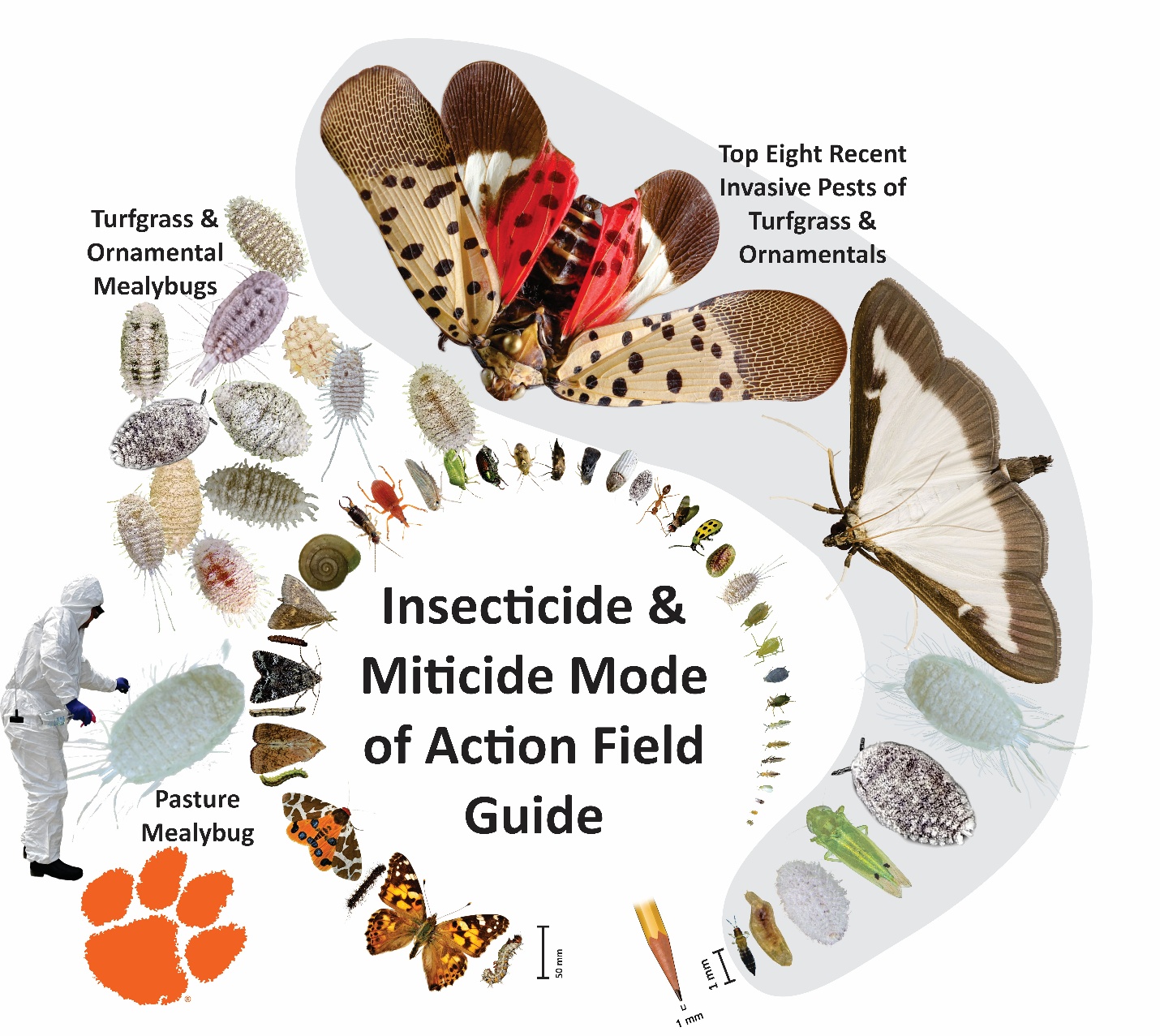
Figure 1. New and invasive pests can increase management challenges in turfgrass and ornamental systems. Integrating pest identification, monitoring, appropriate insecticide selection, and resistance management within IPM can help manage current pest problems while preserving effective management tools for the future. Image credit: Image composition and photographs by Muhammad Z. “Zee” Ahmed, except box tree moth, courtesy of Cosmin Manci, and crape myrtle bark scale, from Xie et al. (2022), Scientific Reports.

