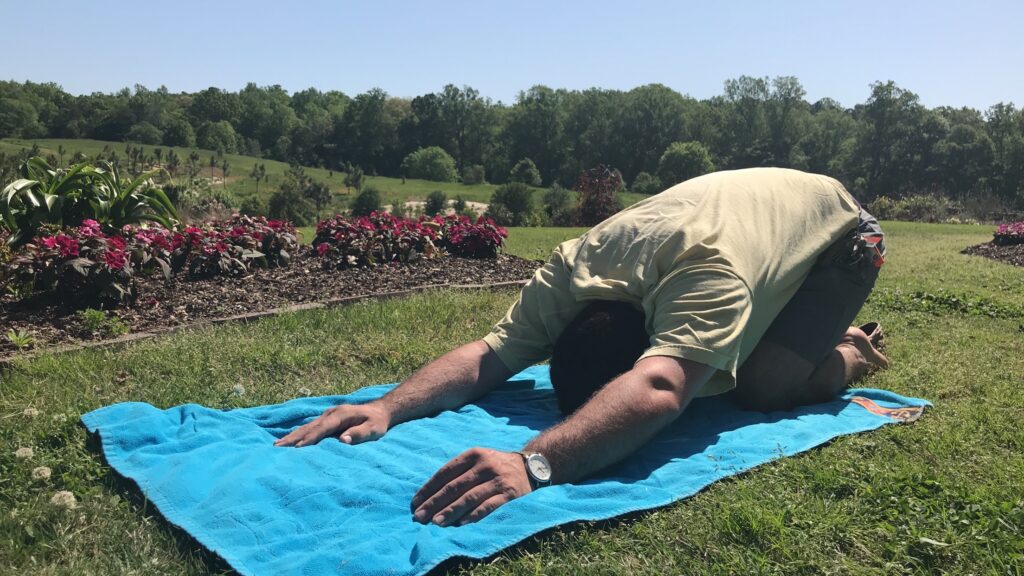
Yoga is an accessible form of balance and flexibility training that can be performed standing, seated in a chair, or on the ground. Image Credit: RHN Team Picture Bank
Physical activity is an essential part of maintaining health, independence, and quality of life, but for individuals with low mobility, traditional exercise advice can often feel discouraging or out of reach. Mobility is defined as the ability to move or walk freely without experiencing pain or discomfort as our joints move through their full range of motion. Someone experiencing low mobility may not be able move as comfortably making exercise much more challenging. The good news is that exercise does not have to look the same for everyone. With the right modifications and approach, physical activity can be safe, effective, and accessible at any mobility level.
What is Low Mobility Exercise?
Low mobility exercise refers to aerobic, strength, and flexibility training that is adapted for individuals who have difficulty with movement. This may be due to age, injury, disability, or chronic conditions. Exercises can be done seated, in water, or with supportive equipment like chairs or resistance bands. Even if you cannot stand for long or walk without assistance, modifying physical activity can help you improve circulation, reduce joint stiffness, boost mental health, and maintain independence.
Benefits of Exercise for People with Low Mobility
- Maintain independence and perform daily tasks more easily
- Improve cardiovascular health and boost energy
- Improve balance and reduce risk of falls
- Manage chronic health conditions such as diabetes or arthritis
- Support brain function and memory
- Improve flexibility and joint health
- Promote better posture and reduce stiffness
- Increase muscle strength and bone density
- Reduce stress, anxiety, and depression
- Support healthy sleep
Physical Activity Recommendations
The Physical Activity Guidelines for Americans recommends that all adults participate in the following weekly activities:
- 150-300 minutes of moderate-intensity or at least 75-150 minutes of vigorous-intensity aerobic/cardiovascular activities
- At least 2 days of muscle-strengthening activities (all major muscle groups)
- Balance and flexibility activities should be done regularly (typically a few days per week), though they are not formally quantified like cardio and strength
These goals can feel overwhelming, especially with limited mobility, but remember, all exercises can be modified to meet your needs.
Cardiovascular Exercise
Cardio, or aerobic, activity raises your heart rate and increases endurance strengthening the lungs. It supports heart health, boosts mood, helps manage weight, and even improves blood sugar control. The heart is a muscle, and just like with any other muscle, can be strengthened. A stronger heart is going to be able to function more efficiently even at rest, meaning your heart does not have to work as hard, therefore, strengthening the heart can increase its longevity and help reduce your risk of cardiovascular issues as you age. Cardio training also supports everyday activities, allowing daily tasks to be performed more efficiently and with less shortness of breath.
Common cardio activities like walking, running, or climbing stairs may be particularly difficult for someone with low mobility. Fortunately, there are numerous modifications or alternative exercises that can be completed to allow someone with low mobility to practice cardio safely and comfortably.
Accessible Cardiovascular Activities:
- Seated Aerobic Movements: Performing activities from a seated position helps alleviate pressure on the lower body especially the knees and ankle joints. Sitting in a comfortable yet sturdy chair, couch, or even in the bed, can allow someone with low mobility to practice cardio where they are able to focus on the movement without being distracted by pain. Several activities can easily be modified to a seated position such as marching in place, jumping jacks or half-jacks, dancing, or boxing. Performing these movements from a seated position does not diminish any of their benefit!
- Swimming and Water Aerobics: Exercising in water is an excellent way to reduce stress and pressure on the joints because the water supports body weight, making movement easier and less painful. This added buoyancy allows individuals to move more comfortably while still being physically active. Swimming provides an effective cardiovascular workout, while the natural resistance of the water also helps build muscle strength at the same time.
- Biking and Elliptical machines: Using a stationary bike or elliptical machine is a great low-impact activity. These are great alternatives to walking or running as the repetitive pounding on the feet, ankles, and knees that occurs while running is removed. This means less force is transmitted through the ankles, knees, hips, and spine making it a less painful experience.
Strength Training
Strength or resistance training helps build muscle by forcing the body to work against some type of resistance like weights, resistance bands, or even just body weight. Strength training has numerous benefits for someone with low mobility; strengthening the muscles surrounding our joints can help reduce joint pain and potentially increase mobility. When muscles are stronger, they can help absorb the ‘shock’ or stress for joints making the joint more stable and less painful to move. Stronger muscles can also impact our ability to complete activities of daily living making them easier and more comfortable to perform; simple activities like moving from sitting to standing can become easier with more strength training. Finally, strength training can increase our bone density making our bones stronger and less susceptible to injury from falls.
Strength training may seem intimating to start but can certainly be performed safely even with low mobility. Starting with low resistance, sometimes just bodyweight, and working on proper form first can help get you more comfortable and reduce your risk for injury. Progression should occur gradually and only when you are comfortable with form and balance.
Accessible Strength Training Activities:
- Seated Strengthening Exercises: Just as with cardio activities, performing activities from a seated position helps alleviate pressure on the lower body especially the knees and ankle joints. Upper body strengthening exercises are usually easily adaptable to a seated position often requiring little to no modifications. For lower body exercises, incorporating a seat for stability can help lower the range of motion required to perform the exercise making it more accessible for someone with knee or lower back pain. The chair can also help someone maintain their balance as they work to build strength in the beginning. Similarly with cardio, performing strength training from a seated position does not diminish the benefits!
- Water-Based Strength Activities: Water will provide a natural resistance for your muscles to work against while alleviating stress and pressure on joints. Joining a water strength training group fitness class can give you access to using water appropriate weights for additional resistance. Pool noodles or other floaties can also be used to provide additional resistance.
- Resistance Band Exercises: Incorporating resistance bands into your strength training routine is a great option for someone with low mobility. Resistance bands provide a smooth even tension throughout the movement that can help reduce joint strain while strengthening the muscles around painful joints.
- Machines: If you have access to a commercial gym or other space that has strength training machines, they can be a great option for someone with low mobility. Most machines will allow you to sit as you move through the exercise and similarly to resistance bands, the tension throughout the movement is smoother than with free weights which can help alleviate stress. The machines will also guide your movement as you work through the exercise making it a great option for beginners and those with limited balance.
Balance and Flexibility Exercises
Flexibility training helps our muscles and joints properly move through their range of motion. Emphasizing flexibility training can help reduce stiffness, improve movement efficiency, and increase postural strength. Balance training helps improve our body’s ability to move through space in an upright, safe, and controlled manner. Increasing our ability to balance can help reduce our risk of falls, improve functional independence as we age, and build confidence in ourselves to perform activities of daily living.
Balance and flexibility training are often two overlooked components to a well-rounded physical activity routine. Both are adaptable to seated or standing positions, and both can be incorporated as a warm-up or cool-down for other activities like cardio or strength.
Accessible Balance and Flexibility Activities:
- Yoga: Yoga is a physical activity practice that combines stretching and balance components. Yoga poses can be easily adaptable to a seated position to reduce joint stress and support balance. Yoga props like blocks, straps, or balls, can also help modify the pose appropriately. Finding a certified yoga instructor in your community or online can help teach you have to modify safely and effectively. Yoga Alliance is a helpful directory to find a yoga instructor with recognized credentials.
- Tai Chi: Tai Chi combines slow, continuous, movement with controlled breathing to support stronger balance and coordination. Tai Chi can also help improve lower-body strength, postural stability, and balance by encouraging smooth body weight shifting and increased body awareness. Practicing Tai Chi is a great option for someone with low mobility as it does not require a high physical strain.
Conclusion
Physical activity is possible and beneficial at every level of mobility. While movement may look different for each individual, engaging in regular aerobic, strength, flexibility, and balance exercises can significantly improve health, independence, and quality of life. Exercise does not require standing, walking long distances, or access to specialized equipment; even small, consistent movements performed safely can lead to meaningful improvements over time. By focusing on what the body can do, rather than its limitations, individuals with low mobility can build strength, improve confidence, and maintain functional independence as they age.
Programs to Support Your Physical Activity
The Clemson Extension Rural Health and Nutrition Team offers free, evidence-based physical activity programs designed to meet participants where they are and provide support every step of the way. Whether you want to build a walking routine with WalkSC, create a balanced movement plan through MoveSC, improve strength and function with Practical Strength, or explore gentle balance and flexibility training through Yoga for Every Body, our programs provide structured guidance, education, and ongoing support from trained fitness and health coaches. Designed for beginners and experienced movers alike, these programs focus on building confidence, consistency, and realistic habits that support long-term health.
Learn more about our physical activity programs and additional resources by visiting the Rural Health and Nutrition Team Website or contacting the Rural Health and Nutrition Team via email at healthextension@clemson.edu.
References:
- Arthritis Foundation. (n.d.). Water exercise benefits for arthritis. https://www.arthritis.org/health-wellness/healthy-living/physical-activity/other-activities/water-exercise-benefits-for-arthritis
- Centers for Disease Control and Prevention. (2022). How much physical activity do older adults need? U.S. Department of Health and Human Services. https://www.cdc.gov/physicalactivity/basics/older_adults/index.htm
- Cleveland Clinic. (2021). 5 best exercises for people with diabetes. https://health.clevelandclinic.org/5-best-exercises-for-people-with-diabetes/
- ConnectAbility Australia. (2022). How to exercise with limited mobility. https://www.connectability.org.au/how-to-exercise-with-limited-mobility/
- Featured Exercises from ACE. (n.d.). Exercise database & library. American Council on Exercise. https://www.acefitness.org/resources/everyone/exercise-library/
- Robinson, L. (2022). How to exercise with limited mobility. HelpGuide.org. https://www.helpguide.org/articles/healthy-living/chair-exercises-and-limited-mobility-fitness.htm
- Senior Lifestyle. (2021). 5 simple and fun water aerobics exercises for seniors. https://www.seniorlifestyle.com/resources/blog/5-best-water-aerobics-exercises-seniors/
- U.S. Department of Health and Human Services. (2020). Maintaining mobility and preventing disability are key to living independently as we age. National Institute on Aging. https://www.nia.nih.gov/news/maintaining-mobility-and-preventing-disability-are-key-living-independently-we-age
- Victoria State Government Department of Health. (n.d.). Resistance training – health benefits. Better Health Channel. https://www.betterhealth.vic.gov.au/health/healthyliving/resistance-training-health-benefits
Authors:
- Marguerite Peterseim, Rural Health and Nutrition Program Assistant, Statewide
- Camden Bryan, Rural Health and Nutrition Extension Agent, Statewide
- Ellie Lane, Extension Associate, Rural Health and Nutrition
Reviewed by:
- Melissa Bales, Extension Associate, Rural Health and Nutrition
