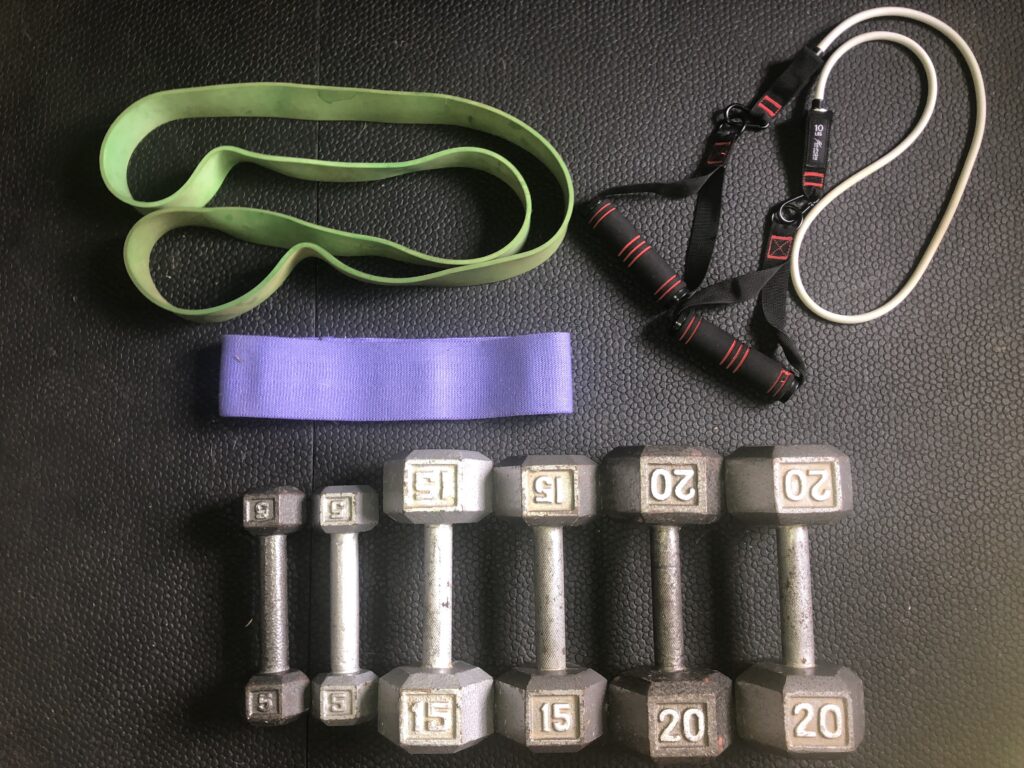
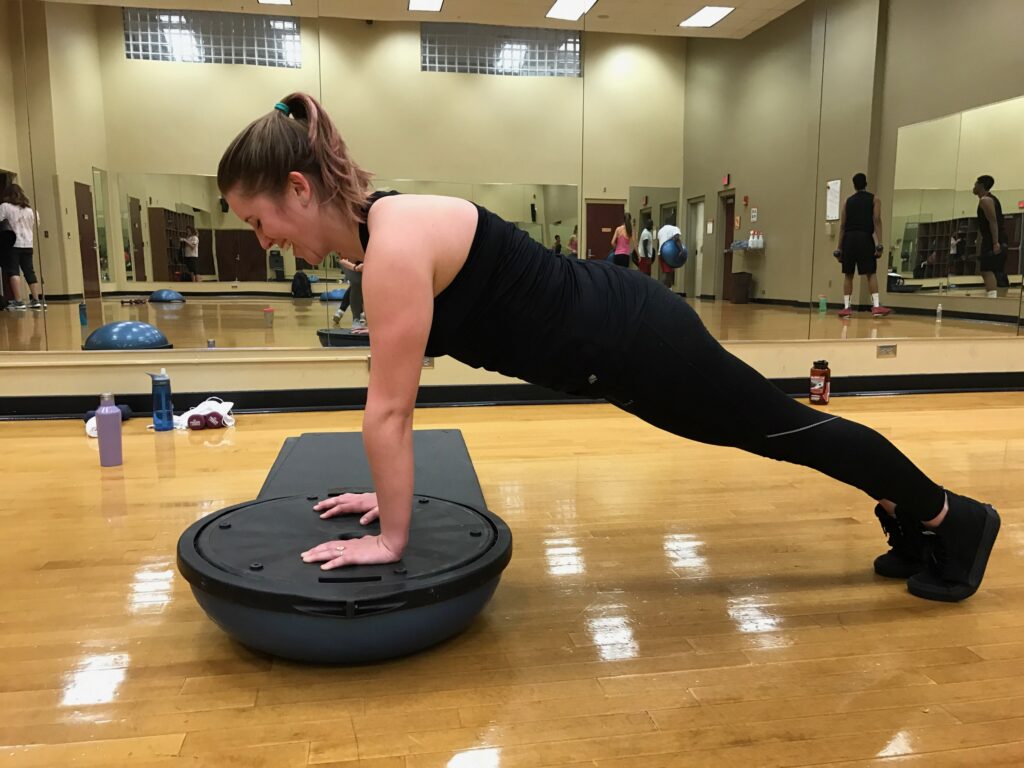
Strength training is not limited to lifting weights. There are many ways to apply resistance against your muscles, including using bodyweight and other types of fitness equipment such as bands, kettlebells, and medicine balls. Working against your own bodyweight is a great strength training option for beginners or those who have not been physically active in a while. Image Credit: RHN Team Picture Bank
What is Strength Training?
Strength training, also called resistance training, is an important part of any exercise program. Strength training is a type of exercise that causes your muscles to contract against outside resistance, such as free weights, machines, resistance bands, medicine balls, or your own body weight. Over time, the muscles adapt by becoming stronger and, depending on the type of training, may also increase in size. Examples of strength training include lifting weights, exercising using body weight or resistance bands, carrying heavy loads, climbing stairs, shoveling snow, and many more activities that challenge the muscles against resistance. Strength training has unique benefits that cannot be achieved through aerobic exercise alone, and some of the benefits of aerobic exercise can be increased with the addition of resistance training. Even though research shows many benefits of strength training, many adults still do not meet the recommended amount of muscle-strengthening activity each week. However, these concerns should not stand in the way of establishing a consistent strength training routine. People of all ages, genders, races, ethnicities, and abilities can reap the benefits of resistance training.
Individuals with chronic medical conditions, recent injuries, or concerns about beginning exercise should consult a healthcare provider before starting a new strength training program.
Benefits of Strength Training
- Increased muscle strength, endurance, and power
- Regular resistance training helps muscles produce more force, sustain effort for longer periods, and generate power more efficiently. These adaptations make it easier to lift, carry, push, pull, and move safely during both exercise and everyday tasks.
- Increased bone, muscle, and connective tissue growth and durability
- Strength training places stress on the muscles and bones, which encourages the body to adapt by building and maintaining lean tissue. Over time, resistance training can help preserve muscle mass, support stronger bones, and improve the durability of tendons and ligaments. These adaptations are especially important for healthy aging and injury prevention.
- Improved mobility, physical functioning, and performance in activities of daily living
- Resistance training improves the ability to stand up, climb stairs, get up from the floor, carry groceries, and complete other daily movements with greater ease. Stronger muscles also help support posture, coordination, and joint control, which can improve overall function and independence.
- Reduced body fat and increased basal metabolic rate
- Strength training can increase or preserve lean muscle mass, which helps the body use energy more efficiently. Because muscle tissue is metabolically active, maintaining more lean mass can support a healthier resting metabolism. When combined with appropriate nutrition, resistance training can also help reduce body fat over time.
- Decreased blood pressure
- Regular resistance training can help lower resting blood pressure and improve cardiovascular health. These benefits are often greatest when strength training is combined with aerobic exercise, healthy eating, adequate sleep, and other heart-healthy habits.
- Improved blood lipid profiles, glucose tolerance, and insulin sensitivity
- Strength training helps muscles use glucose more effectively and can improve the body’s response to insulin. These metabolic adaptations support healthier blood sugar regulation and may also improve blood lipid levels, reducing risk factors linked to chronic disease.
- Increased functional independence
- Building and maintaining strength helps people stay independent for longer by making everyday movement easier and safer. This is especially important for older adults and for anyone recovering from periods of inactivity, illness, or injury.
- Reduced incidence of falls and related complications in older adults
- Strength training helps improve balance, coordination, and lower-body strength, which are important for fall prevention. Stronger muscles also provide better support for joints and help reduce the likelihood of injury when a fall does occur.
- Improved well-being, self-esteem, and mental health
- Regular exercise is linked to better mood, greater confidence, and improved overall well-being. Strength training can also support mental health by giving people a sense of accomplishment, competence, and control over their progress.
- Improved long-term health and healthy aging
- Strength training supports healthy aging by helping preserve muscle mass, mobility, bone health, and physical capacity over time. It is also associated with a lower risk of many chronic health problems and can help people stay active and capable throughout the lifespan.
Recommendations for Strength Training
According to the Physical Activity Guidelines for Americans developed by the U.S. Department of Health and Human Services, adults should participate in muscle-strengthening activities at least 2 days per week. These activities should be performed at a moderate or greater intensity and involve all major muscle groups, including the legs, hips, back, chest, shoulders, arms, and abdomen. Moderate-intensity strength training generally means the exercises feel challenging, and the final repetitions of each set are difficult to complete while still maintaining proper form.
For each exercise, individuals commonly complete a range of repetitions depending on the exercise type and training goal. Moderate-intensity strength training often includes about 8–12 repetitions per set, especially for isolation exercises and general muscular fitness. However, some larger compound exercises may be performed with slightly lower repetition ranges, such as 5–8 repetitions, because these movements involve multiple muscle groups and allow heavier resistance to be used safely and effectively.
Research suggests that 1 set is effective, but completing 2 to 3 sets per exercise may result in greater benefits, especially as training experience increases. Each repetition should be performed in a controlled manner with good technique. The last few repetitions should feel challenging, and weight or resistance should be adjusted over time as the body adapts and grows stronger.
Rest and recovery are also important components of strength training. Individuals commonly rest about 1 to 2 minutes between sets during moderate-intensity strength training, although rest needs may vary depending on the exercise and training goal. It is also generally recommended to allow at least 48 hours of recovery before intensely training the same muscle groups again.
Strength Training Basics
Strength training involves intentionally challenging your muscles so they can adapt and become stronger over time. Building an effective program requires understanding a few foundational principles that help guide safe, sustainable progress.
When planning a strength training routine, consider the following key components:
Frequency
How often will you train?
Training frequency refers to how many strength training sessions you complete each week and how often each muscle group is trained. Your schedule should be realistic and sustainable based on work, school, family responsibilities, energy levels, and recovery needs.
For beginners, 2–3 strength training sessions per week are generally recommended. As experience and tolerance improve, additional sessions may be added if desired.
Exercise Selection
Are you choosing exercises that support your goals?
A balanced strength training program should target all major muscle groups and include a variety of movement patterns. Exercises should be selected based on your current abilities, goals, available equipment, and any physical limitations.
Major Muscle Groups
A balanced strength training program should target all major muscle groups throughout the upper body, core, and lower body. Training all major muscle groups can help improve posture, movement efficiency, joint stability, balance, injury prevention, and performance in daily activities.
Upper Body Muscle Groups
Chest (Pectorals)
The chest muscles help with pushing movements and moving the arms across the body. These muscles are located across the front of the chest.
- Compound exercise examples: push-up, chest press
- Isolation exercise example: chest fly
Upper Back and Lats
The upper back muscles help pull the arms backward while supporting posture and shoulder stability. These muscles are located across the upper and middle back and along the sides of the torso underneath the arms.
- Compound exercise examples: bent-over row, lat pulldown
- Isolation exercise example: straight-arm pulldown
Shoulders (Deltoids)
The shoulder muscles help lift, rotate, and stabilize the arms during movement. The deltoid muscles wrap around the top and sides of the shoulders and help create the rounded shape of the shoulders.
- Compound exercise examples: overhead press, upright row
- Isolation exercise example: lateral raise
Biceps
The biceps help bend the elbow and assist with pulling movements. The biceps are located on the front of the upper arm between the shoulder and elbow.
- Compound exercise examples: inverted row, chin-up
- Isolation exercise example: bicep curl
Triceps
The triceps help straighten the elbow and assist with pushing movements. The triceps are located on the back of the upper arm.
- Compound exercise examples: triceps dip, push-up
- Isolation exercise example: triceps extension
Core Muscle Groups
Abdominals and Obliques
The abdominal muscles help stabilize the spine, support posture, and assist with bending and rotational movements. These muscles are located across the front and sides of the torso.
- Compound exercise examples: woodchopper, bear crawl
- Isolation exercise example: oblique crunch
Lower Back (Erector Spinae)
The lower back muscles help maintain posture and stabilize the spine during movement. These muscles run along both sides of the spine in the lower and middle back.
- Compound exercise examples: deadlift, bent-over row
- Isolation exercise example: back extension
Lower Body Muscle Groups
Glutes
The glute muscles help extend and stabilize the hips during walking, climbing, lifting, and balancing movements. These muscles are located in the buttocks and hips and are some of the strongest muscles in the body.
- Compound exercise examples: squat, hip thrust
- Isolation exercise example: glute bridge
Quadriceps
The quadriceps help straighten the knee and support standing, walking, climbing, and jumping movements. The quadriceps are located on the front of the thigh between the hips and knees.
- Compound exercise examples: goblet squat, step-up
- Isolation exercise example: leg extension
Hamstrings
The hamstrings help bend the knee and extend the hips during walking, running, and lifting movements. These muscles are located on the back of the thigh underneath the glutes.
- Compound exercise examples: deadlift, good morning
- Isolation exercise example: hamstring curl
Hip Abductors and Adductors
These muscles help stabilize the hips and move the legs away from or toward the body. The abductors are located along the outer hips and thighs, while the adductors are located along the inner thighs.
- Compound exercise examples: lateral lunge, curtsy lunge
- Isolation exercise example: hip abduction, hip adduction
Calves and Tibialis Anterior
The calf muscles and tibialis anterior help control movement at the ankle and foot during walking, running, climbing stairs, balancing, and jumping. The calf muscles help lift the heel and push the body forward during movement, while the tibialis anterior helps lift the front of the foot and stabilize the ankle during walking and balance activities. The calves are located on the back of the lower leg, while the tibialis anterior runs along the front of the shin.
- Compound exercise examples: farmer’s carry, stair climb
- Isolation exercise examples: calf raise, toe raise
Opposing Muscle Groups
A well-rounded strength training program should include exercises that strengthen opposing muscle groups throughout the upper body, core, and lower body. Opposing muscle groups work together to create balanced movement and joint stability because when one muscle contracts, the opposing muscle often lengthens or relaxes. Training both sides of these movement patterns can help support posture, movement efficiency, coordination, and injury prevention.
Upper Body
- chest ↔ upper back
- front shoulders ↔ rear shoulders
- biceps ↔ triceps
Core
- abdominals ↔ lower back
- left obliques ↔ right obliques
Lower Body
- hip flexors ↔ glutes
- quadriceps ↔ hamstrings
- inner thighs ↔ outer hips
- calves ↔ tibialis anterior
Planes of Motion
In addition to choosing exercises that target the major muscle groups, it is also helpful to select movements from different planes of motion. The body does not move in only one direction during daily activities or exercise, so training in multiple planes can help improve coordination, balance, movement efficiency, and overall function.
- Sagittal plane: forward and backward movement (squats, lunges, bicep curls)
- Frontal plane: side-to-side movement (side lunges, lateral raises)
- Transverse plane: rotational movement (wood chops, torso rotations)
Compound vs. Isolation Exercises
Many strength training programs include both compound and isolation exercises.
Compound Exercises
Compound exercises involve movement at multiple joints and train several muscle groups at the same time. Examples include squats, deadlifts, presses, rows, push-ups, and pull-ups. Everyday activities such as climbing stairs, carrying groceries, lifting boxes, pushing a lawn mower, or getting up from a chair also rely on compound movement patterns. Because these exercises use more muscle mass and require greater coordination, balance, and energy, they are often more physically demanding on the body. Compound exercises are commonly emphasized because they improve overall strength, support movement patterns used in daily life, and efficiently train multiple muscle groups at once.
Compound exercises are often programmed with slightly lower repetition ranges, such as 5–8 repetitions per set, because they involve multiple muscle groups, require more coordination and stabilization, and typically allow individuals to lift heavier amounts of resistance. Lower repetition ranges can help maintain proper technique and movement quality while managing fatigue during these more physically demanding exercises.
Isolation Exercises
Isolation exercises primarily involve movement at one joint and target a specific muscle group, such as bicep curls, triceps extensions, leg curls, or calf raises. Everyday activities may also rely on specific muscles working independently, such as gripping and carrying lighter objects, stabilizing the ankle while walking, or bending the elbow to pick up and hold items. These exercises are generally less physically demanding because they involve fewer muscles and require less coordination and energy. Isolation exercises can help strengthen specific muscles, improve muscular balance, and support larger compound movements. For example, strengthening the biceps may help support pulling movements such as rows or pull-ups, while strengthening the hamstrings may improve stability and support lower-body exercises like squats or deadlifts.
Isolation exercises are commonly performed with moderate repetition ranges, such as 8–12 repetitions per set, because they target a single muscle group and generally use lighter resistance. Higher repetitions can help increase muscular fatigue and training volume while placing less overall stress on the body and nervous system.
Exercise Order
In what order should exercises be performed?
Exercises that require more coordination, energy, balance, or multiple muscle groups are typically performed first. These are often compound exercises such as squats, deadlifts, presses, and rows. Performing these exercises earlier in a workout allows the body and mind to use higher energy levels and better focus to maintain proper form and movement quality.
Smaller, more targeted isolation exercises are usually performed afterward because they generally require less total energy and coordination. Performing isolation exercises later in a workout can also help strengthen specific muscle groups that support larger movement patterns. For example, someone may perform squats and lunges earlier in a workout before later completing leg extensions, hamstring curls, or calf raises to further target specific lower-body muscles.
Intensity
How challenging is the exercise?
Intensity refers to how difficult the exercise feels for your muscles and body. This is commonly adjusted through the amount of resistance used, exercise complexity, movement speed, or training volume.
Your body must be challenged appropriately in order to adapt, but more intensity is not always better. Volume and intensity should generally have an inverse relationship:
- Higher repetitions and more sets usually require lighter resistance
- Lower repetitions typically require heavier resistance
Volume
How much total work are you performing?
Volume refers to the total amount of work completed during training and is often described using sets and repetitions (reps).
General recommendations include:
- General fitness: 1–3 sets of 8–15 repetitions
- Muscle growth (hypertrophy): 3–6 sets of 6–12 repetitions
- Strength development: 2–6 sets of 1–6 repetitions
These ranges are flexible and may vary based on individual goals, training experience, and recovery ability.
Principles of Strength Training
Start with Movement Quality
Before adding heavy resistance, it is important to learn proper movement patterns and exercise technique. Building body awareness and a strong mind-muscle connection can improve exercise performance and help reduce injury risk.
Many people begin with body weight exercises or light resistance while practicing controlled movement patterns such as squatting, hinging, pushing, pulling, rotating, and balancing.
Gradually Add Resistance
As movement quality and confidence improve, external resistance such as dumbbells, resistance bands, machines, or barbells can be added gradually. The goal is not to use the heaviest weight possible immediately, but rather to challenge the muscles safely and progressively over time.
Progressive Overload
The body adapts to the demands placed upon it. To continue building strength, muscles must gradually experience greater challenges over time. This principle is called progressive overload.
Progressive overload can occur by:
- Increasing resistance or weight
- Performing more repetitions or sets
- Improving exercise technique or range of motion
- Increasing training frequency
- Reducing rest time between sets
Small, gradual increases are often more effective and sustainable than large increases performed too quickly.
Specificity
Your body adapts specifically to the type of training you perform. This principle, called specificity, means that your exercises should reflect your personal goals.
For example:
- Training with heavier weights and lower repetitions is more specific to building maximal strength
- Higher repetitions with lighter resistance may improve muscular endurance
- Exercises that mimic daily activities or sports movements may improve functional performance
Diminishing Returns
Progress is often fastest when beginning a new strength training program. Over time, improvements may occur more slowly as the body adapts and becomes more trained. This concept is known as diminishing returns.
Slower progress does not mean training is no longer effective. Consistency over time remains one of the most important factors for long-term strength, health, and function.
Recovery and Adaptation
Strength improvements occur when the body is given enough time and resources to recover from training. Recovery allows muscles, connective tissues, and energy systems to repair and adapt to the stress placed upon them during exercise. Sleep, hydration, nutrition, stress management, and rest days all play important roles in the recovery process. Without adequate recovery, fatigue may accumulate and increase the risk of poor performance, burnout, or injury. Rest and recovery are important parts of an effective strength training program, not signs of weakness or lack of progress.
Consistency Over Perfection
Strength training progress is rarely perfectly linear. Illness, busy schedules, stress, travel, and life changes may interrupt routines from time to time. Missing workouts occasionally does not erase progress.
Building sustainable habits and returning to training after setbacks is often more important than following a “perfect” program.
Strength Training Considerations for Special Populations
Physical Limitations
Strength training can improve mobility, physical functioning, and performance in activities of daily living. It can help preserve independence, reduce pain, and make it easier to move through life with more confidence. These benefits can assist those with physical limitations throughout day-to-day living. Some special considerations that individuals with physical limitations should be aware of:
- Intensity and duration of exercise should begin at a lower level. Most strength training exercises require a certain degree of mobility to complete. Start slowly and build mobility, coordination, and confidence over time to reduce risk of injury.
- Modify exercises to match your ability, and remember that this can look different from day to day. There are numerous progressions and regressions for many strength training exercises, and individuals can adjust their training plan to fit their ability and range of motion. For example, traditional resistance exercises performed standing may not be realistic for individuals with physical limitations. Exercises can be adapted to a seated position, which can be more attainable for those with limited range of motion. Performing strength training activities from a seated position does not diminish their benefits.
- Discuss your training plan with your healthcare provider, as adjustments to medication or modifications for exercises may be needed. Talk with your doctor and healthcare team about the amounts and types of activity that are appropriate for you.
Older Adults
Resistance training is one of the most important components of improving daily function and promoting independence for older adults. Strength training has numerous benefits that can improve quality of life in older adults, including improved balance, reduced risk of falling, prevention of age-related loss of skeletal muscle, and more. Older adults may have more hesitations toward physical activity, but research has shown that most people, regardless of age, can safely participate. In fact, for frail individuals, strength training may be helpful before more demanding aerobic exercise. Some special considerations for older adults to consider:
- Modify exercises to match your ability, and remember that this can look different from day to day. There are numerous progressions and regressions for many strength training exercises, and individuals can adjust their training plan to be feasible for their ability and range of motion. Lower intensities and alternative movements for certain muscle groups may be required, depending on the individual’s ability. Start slowly and build strength over time.
- Ensure stable footing and balance before performing strength training activities. It can take time for your body to build up the support and awareness needed for good balance. When strength training, make sure you feel stable and supported during each exercise. If you cannot maintain your balance during an exercise and feel like you may fall, stop the exercise and look for a modification that will help you stay balanced. Using a chair or wall for assistance with balance is always a great option.
- Discuss your training plan with your healthcare provider, as adjustments to medication or modifications for exercises may be needed. Talk with your doctor and healthcare team about the amounts and types of activity that are appropriate for you.
Diabetes
Strength training has been shown to decrease visceral fat, reduce HbA1c, decrease blood pressure, and improve insulin sensitivity and glucose tolerance. Generally, physical activity, including strength training, lowers blood glucose levels, but the amount will vary depending on your body, type of diabetes, and any medications you may take to manage blood glucose levels. These benefits can help prevent and reduce risk factors that contribute to the progression of diabetes and can lower comorbidities associated with diabetes, such as hypertension or heart disease. However, individuals with diabetes should keep in mind special considerations when practicing strength training to ensure they are training safely. These special considerations include:
- Check blood glucose levels before engaging in physical activity, especially if you take insulin. Physical activity usually lowers blood glucose levels by using extra glucose in the blood. However, people who take medications that lower blood glucose, like insulin, may be at higher risk for low blood sugar during or after exercise. It is recommended that if blood glucose levels are lower than 100 mg/dL, you may need to eat a small snack with 15 to 30 grams of carbohydrates before exercising to ensure your blood glucose does not fall too low while training. If blood glucose levels are higher than 240 mg/dL, your blood sugar may be too high to safely engage in physical activity. Check with your doctor to determine the safest blood glucose ranges for your individual body before, during, and after physical activity.
- Always have a treatment for low blood glucose levels handy while exercising. Keeping a source of rapid-acting carbohydrates, such as fruit juice or regular soda, nearby while exercising can help you treat low blood sugar if it occurs during or after training.
- Wear cotton socks and athletic shoes that are comfortable when strength training. Your shoes should fit properly and not squeeze your feet too tightly or cause blisters. Your shoes should also allow you to remain stable and balanced throughout the exercises.
- Drink plenty of water during activity to prevent dehydration. Dehydration can cause an increase in blood sugar, so stay hydrated before, during, and after strength training.
- After training, check your blood glucose levels again to see how they were impacted. This is a great way to understand how your body reacts to different activities. For those who are new to strength training or have not been active in a while, it is especially helpful to keep track of blood glucose levels before and after activity. This helps you get to know your body better and can help prevent or treat low blood glucose levels if needed.
- After training, also check your feet and entire body for sores, blisters, irritations, cuts, or other injuries. If injuries are present and do not heal within 2 days, call your healthcare provider. A slow-healing cut or sore could become more serious for someone with diabetes if left untreated.
- Discuss your training plan with your healthcare provider, as adjustments to medication or modifications for exercises may be needed. Talk with your doctor and healthcare team about the amounts and types of activity that are appropriate for you.
Hypertension (High Blood Pressure)
Strength training not only strengthens the muscles throughout the body but also helps support heart and cardiovascular health. Strength training has been shown to decrease blood pressure and cardiovascular demands during exercise, and it may also lower overall cardiovascular risk. While these benefits can be achieved, individuals with hypertension should consider these recommendations to safely strength train:
- Proceed with caution with movements involving lifting very heavy weights, including heavy furniture, boxes, and similar loads outside the gym. Effort that is sudden and intense can cause blood pressure to spike, especially if a person holds their breath while exerting force.
- Breathe steadily as you engage in strength training. Try your best to match each movement with your breath. For example, exhale while you lift, push, or pull, and inhale while you lower or return to the starting position. It may be helpful to count out loud while you lift and lower as a reminder to breathe.
- Begin at a lower resistance, progress slowly, and maintain low to moderate intensity. It can take time for your body and heart to adapt to the physical stress brought on by strength training. Take it slowly and allow your heart time to work, recover, and adapt.
- Discuss your training plans with your healthcare provider, as adjustments to medication or modifications for exercises may be needed. It is important to know how you may need to adjust your activity depending on the medications you take. Your doctor may also recommend modifications if you have cardiovascular complications.
Getting Started with Strength Training
It might be intimidating to begin incorporating strength training into your exercise routine. Whether you have exercised your whole life or are starting physical activity for the first time, you might not know how to get started or what types of exercises to do. Below, we have listed some tips for getting started with strength training so you can feel confident beginning your fitness journey.
Start Slowly and Stay Consistent Over Time
Your muscles need time to adjust to the new demands they are experiencing. It is better to start with lower-intensity workouts and gradually progress over time. Exercises performed by someone just beginning their training will not look the same as exercises performed by someone who has been training for a long time, and that is okay. You should also prioritize consistency over intensity with your strength training. In other words, it is better for your body to strength train at a lower level consistently than at a higher level inconsistently. Staying consistent on a weekly basis will lead to greater long-term benefits and success with your training goals.
Warm Up Before and Cool Down After Each Training Session
A strength training warm-up should include light exercises that use the same muscle groups targeted in your training plan. This ensures that the muscles you will use are adequately prepared for the upcoming activity. For example, if you plan to do a lower-body strength training session focused on the glutes, hips, hamstrings, and calves, your warm-up should include light exercises that engage each of these muscle groups. You may choose to perform the same exercises in your training plan at their lightest intensity for your warm-up, too. A proper warm-up should include dynamic movement or constant activity.
A strength training cool-down is designed to lower your heart rate and blood pressure as you return to your day, relax and stretch the muscles you contracted through training, and help prevent injury. Static movements should be emphasized in a cool-down; static movement involves holding a stretch for 15 to 30 seconds and breathing deeply. You should target the same muscle groups used during training in your cool-down as well.
Use Proper Form and Focus on Controlled Movement Patterns
It is important to ensure that you are performing each exercise with correct form before adding more weight. If you add too much weight too early, your form is more likely to suffer, and this can increase the risk of injury. Try your best to use purposeful, controlled movements that help you establish a mind-body connection to the muscles you are strengthening. Do not swing weights or use momentum to lift the weights; this helps ensure that your muscles are being properly trained and reduces unnecessary injury risk.
Use Your Breath to Support Movement
Proper breathing can help improve stability, movement control, exercise performance, and overall comfort during strength training. Try to practice diaphragmatic breathing, sometimes called belly breathing, which involves breathing deeply into the abdomen rather than taking short, shallow breaths into the chest. The diaphragm is a large muscle located beneath the lungs that plays a major role in breathing. When you breathe deeply in through the nose, the diaphragm contracts and moves downward, allowing the lungs to fill more efficiently with air. During exhalation through the nose or mouth, the diaphragm relaxes and helps push air back out of the lungs. This breathing pattern can improve oxygen delivery throughout the body, help muscles work more efficiently, and support better exercise performance.
As a general guideline, exhale during the phase of the exercise that requires the most effort, such as when pushing, pulling, lifting, squeezing, or contracting the muscles. Inhale during the easier portion of the movement, such as when lowering the weight, lengthening the muscles, resetting, or returning to the starting position. For example, exhale while standing up from a squat or pushing during a chest press, and inhale while lowering back down.
Avoid holding your breath during strength training, especially during challenging movements, because this can cause unnecessary increases in blood pressure and reduce movement efficiency. Matching your breath to your movement can help improve exercise control, body awareness, and overall training effectiveness.
Listen to Your Body
Your body, energy levels, and thought patterns may change from day to day. This means that strength training exercises that felt appropriate in the past may not feel appropriate in the present. Do a quick body scan and self-assessment before, during, and after activity. The ability to listen to your mind and body can be useful in helping you perform your exercises more efficiently, without pain or injury, and even see better results.
For example, you may or may not feel properly energized for your planned workout. Low energy levels may be your cue to eat a nourishing snack packed with high-quality carbohydrates, such as fruit, to regain your energy and successfully complete the workout. Another example would be paying attention to any aches or pains during your warm-up; these sensations may be the result of muscle stiffness or your body’s attempt to signal the onset of injury. Your warm-up may need to be extended, or a section of the workout may need to be skipped or replaced depending on how the area feels.
Mild muscle soreness 24 to 72 hours after exercise can be a normal response to new or challenging activity. However, sharp, shooting, or persistent pain is not normal and may signal injury. Stop immediately whatever you are doing if you feel sharp, shooting, or stabbing pain, then take a few deep breaths and reassess whether you should continue the workout. Sharp pain is not a normal physiological response and may mean the body is signaling that something is wrong.
Find What Feels Comfortable and Accessible
Options for equipment include body weight, free weights or dumbbells, machines with weights or cables, resistance bands, medicine balls, and more. No one option is better than the other. The most important thing is to challenge your muscles to do more work than they normally would. Beginners can also modify exercises by reducing weight, limiting range of motion, slowing down movement speed, or using a chair, wall, or resistance band for extra support. As your strength and confidence improve over time, exercises can gradually be adjusted to become more challenging.
Programs to Support Your Physical Activity
The Clemson Extension Rural Health and Nutrition Team offers free, evidence-based physical activity programs designed to meet participants where they are and provide support every step of the way. Whether you want to build a walking routine with WalkSC, create a balanced movement plan through MoveSC, improve strength and function with Practical Strength, or explore gentle, accessible movement through Yoga for Every Body, our programs provide structured guidance, education, and ongoing support from trained fitness and health coaches. Designed for beginners and experienced movers alike, these programs focus on building confidence, consistency, and realistic habits that support long-term health.
MoveSC is a free Clemson Extension program available to South Carolina residents that provides 11 weeks of group education and support focused on physical activity and healthy movement habits. Participants learn how to apply the Physical Activity Guidelines for Americans recommendations for cardiovascular, strength, and balance and flexibility training to their everyday lives. The program also provides opportunities to meet with two certified personal trainers who help participants develop a personalized physical activity plan based on their goals, abilities, and lifestyle.
Learn more about our physical activity programs and additional resources by visiting our website or contacting the Rural Health and Nutrition Team at healthextension@clemson.edu.
For additional information on safe and effective physical activity and nutrition strategies to support physical activity, review our fact sheets on Cardiovascular Training and Nutrition to Support Physical Activity.
References:
- American College of Sports Medicine. (2026). ACSM publishes updated resistance training guidelines. ACSM. https://www.acsm.org/resistance-training-guidelines-update-2026/
- American Heart Association. (2024). Getting active to control high blood pressure. https://www.heart.org/en/health-topics/high-blood-pressure/changes-you-can-make-to-manage-high-blood-pressure/getting-active-to-control-high-blood-pressure
- American Heart Association. (2023). Resistance exercise training in individuals with and without cardiovascular disease: 2023 update: A scientific statement from the American Heart Association. https://professional.heart.org/en/guidelines-statements/resistance-exercise-training-in-individuals-with-and-without-cardiovascularcir0000000000001189
- American Heart Association. (2024). Strength and resistance training exercise. https://www.heart.org/en/healthy-living/fitness/fitness-basics/strength-and-resistance-training-exercise
- Centers for Disease Control and Prevention. (2023). Adult activity: An overview. https://www.cdc.gov/physical-activity-basics/guidelines/adults.html
- Centers for Disease Control and Prevention. (2025). Older adult activity: An overview. https://www.cdc.gov/physical-activity-basics/guidelines/older-adults.html
- Colberg, S. R., Sigal, R. J., Fernhall, B., Regensteiner, J. G., Blissmer, B. J., Rubin, R. R., Chasan-Taber, L., Albright, A. L., & Braun, B. (2016). Exercise and type 2 diabetes: The American College of Sports Medicine and the American Diabetes Association: Joint position statement. Diabetes Care, 39(11), 2065–2079. https://doi.org/10.2337/dc16-1728
- National Institute on Aging. (2021). How can strength training build healthier bodies as we age? https://www.nia.nih.gov/news/how-can-strength-training-build-healthier-bodies-we-age
- National Institute of Arthritis and Musculoskeletal and Skin Diseases. (2025). Exercise for your bone health. https://www.niams.nih.gov/health-topics/exercise-your-bone-health
- U.S. Department of Health and Human Services. (2018). Physical activity guidelines for Americans (2nd ed.). https://health.gov/paguidelines/second-edition/pdf/Physical_Activity_Guidelines_2nd_edition.pdf
Authors:
- Camden Bryan, Rural Health and Nutrition Extension Agent, Statewide
- Ellie Lane, Extension Associate, Rural Health and Nutrition
Reviewers:
- Michelle Altman, Extension Associate, Rural Health and Nutrition
