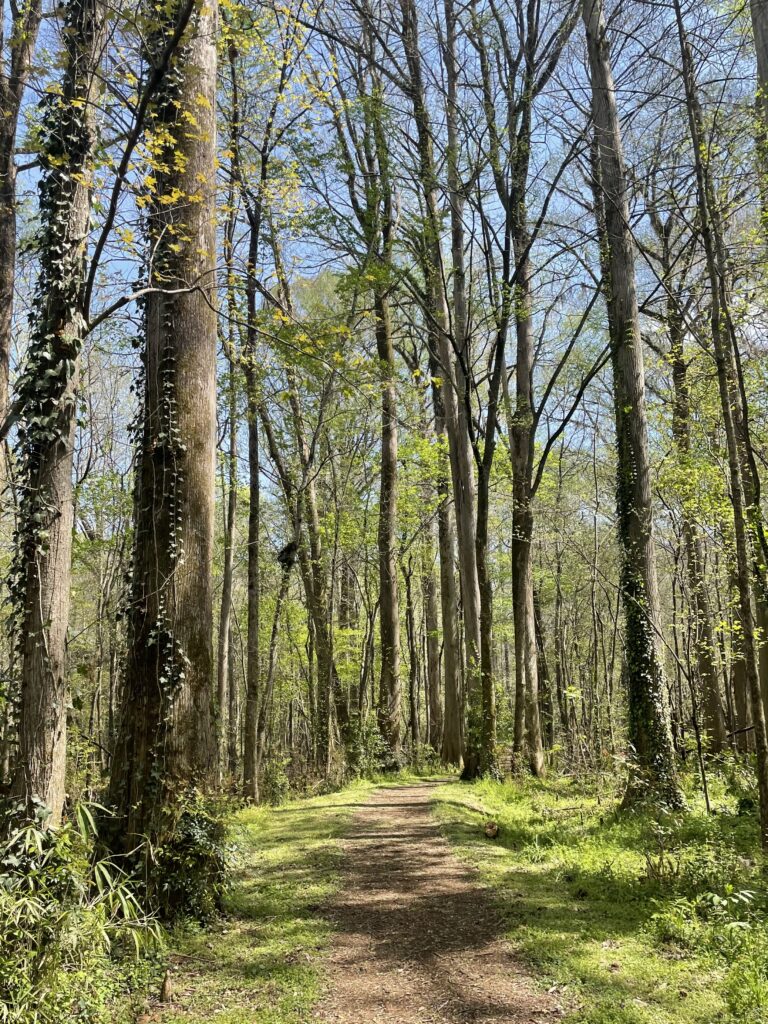
A beautiful walking trail located in Williamson Park in Darlington, South Carolina. Photo Credit: RHN Team Picture Bank
Why We Should Walk
Staying active can look different for everyone, and for many people, walking is one simple and accessible option. In the Pee Dee Region of South Carolina, a broad area in the northeastern part of the state that includes multiple counties, there are many easy-to-access places to get moving. From riverwalks and parks to nearby coastal paths, walking can support heart health, blood sugar management, stress reduction, and overall well-being. Many communities, including Horry and Marion counties, offer accessible parks, trails, and spaces for movement. With a little planning, spending time outdoors can be both safe and enjoyable, even in South Carolina’s warm, humid climate. For more information on walking and physical activity, visit the Clemson Extension Rural Health and Nutrition blog, Cardiovascular Training.
Great Places to Walk in the Pee Dee Region
If you are looking for local, scenic places to walk, these spots offer relatively flat terrain and well-maintained paths that work well for a variety of fitness levels.
• Conway Riverwalk: 2nd Ave, Conway, SC 29526
Conway Riverwalk offers a paved, flat path along the Waccamaw River that is ideal for beginners, strollers, and anyone easing into walking.
• Huntington Beach State Park: 16148 Ocean Hwy, Murrells Inlet, SC 29576
Huntington Beach offers wide, flat walking paths and packed trails with coastal views and frequent breezes that can help you stay cooler during warmer months. For more information on the extensive trails Huntington has to offer, visit the Huntington State Park Website.
• McLean Park: 93 Oak Dr, North Myrtle Beach, SC 29582
McLean Park offers a shaded, paved loop that is popular for shorter walks, and it offers benches for rest breaks. The loop is all flat terrain and designed for easy walking, making it a level and accessible route through the park.
• Little Pee Dee State Park: 1298 State Park Rd, Dillon, SC 29536
Little Pee Dee State Park contains two trails that offer an easy, scenic walk through bottomland hardwoods, former beaver wetlands, and longleaf pine forests rich with wildlife and seasonal blooms. The trail is not completely paved but still offers mainly flat terrain. For more information on the differences between the two trails, visit the Little Pee Dee State Park website.
• Amazing Grace Park: 307 W Dozier St, Marion, SC 29571
Amazing Grace Park offers a quiet option close to Marion County with natural trails for those who enjoy peaceful surroundings and a slower pace. It is considered more of a walking trial than a hiking trail because it is paved and completely flat. This would be the perfect place for an afternoon stroll.
Finding Places to Walk on Your Own
When exploring new places to walk, keep both safety and effectiveness in mind by considering the following:
- Take note of the terrain
- Take note of any extensive elevation
- Make sure to keep the distance reasonable
- Make sure it is a safe area
- Take note of whether it is a loop train, or an out and back trail
The terrain of the trail can make a big difference in how accessible it is for you. Paved trails are much easier to walk and remain steady, whereas a rocky trail would be much harder to manage. It is always good to walk where you know it is comfortable and not have to worry about tripping. If a trail how really big hills, that can be very challenging. Make sure before you start off on a trail that it is relatively flat so that it is not too much for your body to handle. When looking at trails, try to find them between 0.5-2 miles at first. Walking is an amazing way to get exercise; overdoing it can be bad for your health. In addition, make sure to take of whether or not the trail you are looking at is 2 miles to the other side, or 2 miles the entire way. Loop trials can be better because you will always make it back to where you started. Just make sure if it is a one-way trial, not to go so far that you cannot make it all the way back. And as always, make sure you are walking in a safe, public place with help nearby if you were to need it. Always let someone know if you are going out to walk, that way you have someone to check in on you while you do so.
How to Pace Yourself When Walking
Before getting started it is a good idea to talk with your doctor to make sure walking is safe for you and that you are cleared for physical activity.
You do not need to walk fast to see benefits. A helpful guide is the talk test. You should be able to talk comfortably, but not sing, while walking. If you are walking and cannot have a normal paced conversation, that is a sign you should slow down. Getting your heart rate up is a good thing, but if you feel out of breath, slow your pace. Start with shorter walks and gradually increase your time. Even ten minutes at a time counts. If needed, break your walk into intervals using benches, shaded areas, or natural stopping points along the way.
What Shoes Work Best for Walking
Supportive shoes can make a big difference, especially on uneven paths, boardwalks, or sandy areas common in the region.
Look for shoes with:
• Good arch support
• Cushioned soles
• Breathable material
• A secure fit that does not rub or slip
Athletic walking or running shoes are usually best. Sandals and flip flops can increase the risk of blisters and falls, particularly in heat and humidity.
It is also important to talk with your doctor or a podiatrist if needed to make sure you are wearing the right footwear, especially if you have any existing conditions that may require extra support. For more information, visit the Home and Garden Information Center article, Podiatrist Care for Foot Health and Diabetes.
How to Monitor Your Steps and Progress
Tracking movement can be motivating, and it does not need to be complicated.
Options include:
• Using a smartphone step counter
• Wearing a basic fitness tracker or watch
• Tracking time walked instead of steps
There is no perfect step number for everyone. Focus on moving more than you did before and building a routine that fits your schedule and ability. For additional support and motivation, check out these helpful fact sheets from the Home and Garden Information Center, Smartphone Apps for Diabetes Self-Management Support and 5 Ways to Crush Your Fitness Goals!
Staying Hydrated While Walking Outdoors
Warm temperatures and humidity can increase fluid needs, even during short walks.
General tips include:
• Bring water if you are walking longer than twenty minutes
• Sip water before, during, and after your walk
• Drink more if you are sweating heavily
• Walk early in the morning or later in the evening when temperatures are cooler
Listen to your body. Feeling dizzy, overly tired, or lightheaded is a sign to stop, rest, and hydrate. For tips on staying safe in warmer weather, check out the Home and Garden Information Center fact sheet, Hydrate in the Heat.
Make Walking Work for You
Walking should feel enjoyable, not like a chore. Choose places you enjoy in your community, wear comfortable shoes, and walk at a pace that feels right for your body. Whether it is a short stroll or a longer scenic walk, every step supports your health.
If you are managing diabetes, heart health, or simply trying to move more, walking is a simple way to start right where you are.
In addition to walking on your own, structured programs can help you stay consistent and build confidence. Programs like WalkSC offer a guided way to increase your daily steps and stay motivated, while Practical Strength provides live, weekly classes led by certified fitness instructors who focus on building the strength needed for everyday activities like walking.
For even more benefits, make sure to check out The Health Benefits of Nature and learn all about the impact nature can make on all parts of your life.
References:
- Centers for Disease Control and Prevention. (2012). More people walk to better health. CDC VitalSigns. https://archive.cdc.gov/#/details?url=https://www.cdc.gov/vitalsigns/walking/index.html
- Centers for Disease Control and Prevention. (2024). Staying hydrated: Preventing heat‑related illness. CDC. https://www.cdc.gov/heat-health/about/index.html?CDC_AA_refVal=https%3A%2F%2Fwww.cdc.gov%2Fextreme-heat%2Fprevention%2Findex.html
- Centers for Disease Control and Prevention. (2024). Walking: Physical activity. CDC. https://www.cdc.gov/physical-activity/php/about/index.html?CDC_AAref_Val=https://www.cdc.gov/physicalactivity/walking/index.htm
- Clemson Cooperative Extension. (2020). Activity and exercise (HGIC 4375). Home & Garden Information Center, Clemson University. https://hgic.clemson.edu/factsheet/activity-and-exercise/
- Clemson Cooperative Extension. (2020, July 23). Hydrate in the heat (HGIC 4378). Home & Garden Information Center, Clemson University. https://hgic.clemson.edu/factsheet/hydrate-in-the-heat/
- Clemson Cooperative Extension. (2022, October 31). Smartphone apps for diabetes self‑management support (HGIC 3889). Home & Garden Information Center, Clemson University. https://hgic.clemson.edu/factsheet/smartphone-apps-for-diabetes-self-management-support/
- Clemson Cooperative Extension. (2023, February 15). 5 ways to crush your fitness goals! Home & Garden Information Center, Clemson University. https://hgic.clemson.edu/5-ways-to-crush-your-fitness-goals/
- Clemson Cooperative Extension. (2024, July 29). Podiatrist care for foot health and diabetes. Home & Garden Information Center, Clemson University. https://hgic.clemson.edu/podiatrist-care-for-foot-health-and-diabetes/
- Clemson Cooperative Extension. (n.d.). Practical strength training. Clemson University. https://www.clemson.edu/extension/health/programs/wellness/practical-strength.html
- Clemson Cooperative Extension. (n.d.). WalkSC. Home & Garden Information Center, Clemson University. https://hgic.clemson.edu/walksc/
- Clemson Rural Health. (2023, June 21). The health benefits of nature. Clemson University. https://blogs.clemson.edu/ruralhealth/the-health-benefits-of-nature/
- National Institute of Diabetes and Digestive and Kidney Diseases. (n.d.). Staying active at any size. U.S. Department of Health and Human Services, National Institutes of Health. https://www.niddk.nih.gov/health-information/weight-management/staying-active-at-any-size
Authors:
- Bailee Floyd, Rural Health and Nutrition Agent, Horry and Marion Counties
- Bailey Smith, UPIC Intern, Rural Health and Nutrition
Reviewers:
- Melissa Bales, Extension Associate, Rural Health and Nutrition
- Ellie Lane, Extension Associate, Rural Health and Nutrition
