By Katie Gerbasich
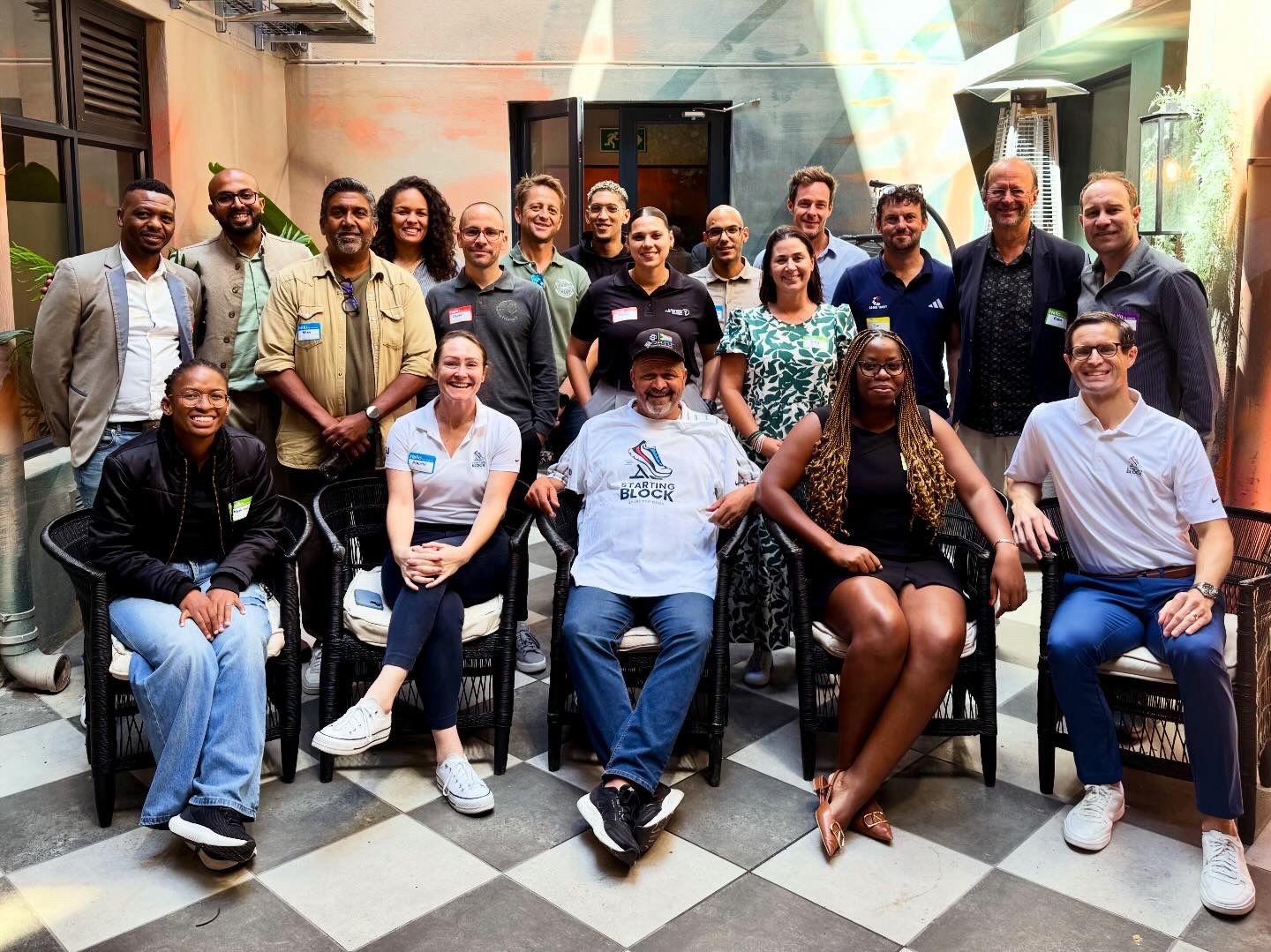
In March, Dr. Ashlyn Hardie, Institute fellow from the Department of Parks, Recreation and Tourism Management, co-led the second cohort of Starting Block Accelerator in Cape Town, South Africa, with Dr. Per Svensson from Louisiana State University. This initiative is the first of its kind, designed to address the research-practice gap in cross-sector work while advancing research in the Sport for Development and Peace (SDP) sector.
Hardie describes this work in the SDP sector as “the intentional use of sport, recreation, play, and physical activity as a tool to achieve broader societal-level development goals. Often, those programmatic goals align with the United Nations Sustainable Development Goals (known as the UN SDGs), and sport offers an alternative platform to tackle community issues.”
According to the UN General Assembly and the UN Action Plan governing bodies, sport is viewed as a powerful tool for addressing key issues such as social integration, physical health and wellness, gender equality, peacebuilding, crime prevention and the development of sustainable communities.
The Starting Block Accelerator is an initiative designed and implemented by Hardie and colleagues as a week-long capacity-building business accelerator program for sport-based nonprofits. Five leaders from organizations worldwide were invited to participate, each working directly with beneficiaries in their countries to tackle issues aligned with the UN SDGs.
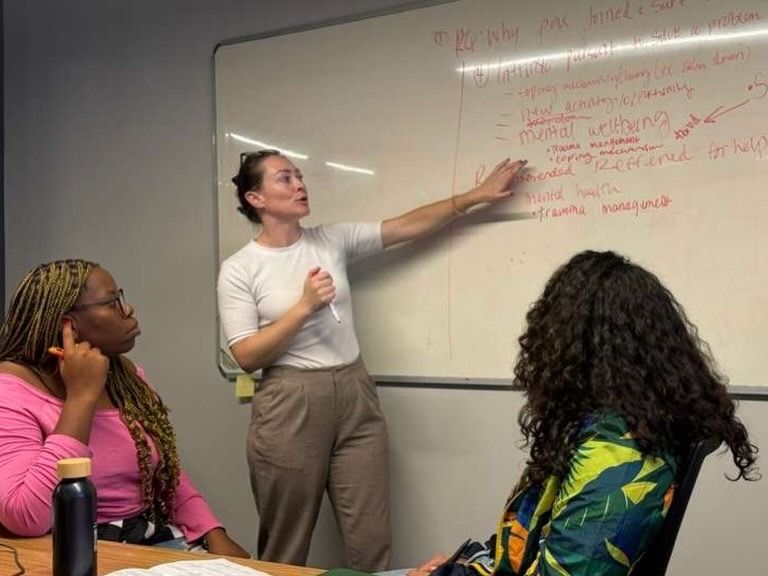
“We try very intentionally to have a really diverse group of participants in each cohort because we want them to speak to their experience with different types of funders, recreational tools and their experience navigating challenges in different countries on different continents, so they are not just learning from us but also from each other,” Hardie said.
The Robert H. Brooks Sports Science Institute provided the initial seed funding in 2024 for the first-ever Starting Block Accelerator in London, England, enabling the team to gather preliminary data on the program’s effectiveness and secure support for this second round in Cape Town, South Africa.
This year’s cohort included organizations that utilize a variety of sports, including soccer, ultimate frisbee, mountain biking, wrestling and rugby, with participants representing those organizations from Brazil, Botswana, South Africa, the Czech Republic and India. Two of the five participants were female founders. One was recently named Vice President of the African Women in Sports Initiative, and the other was a former Brazilian Olympic wrestler.
The first three days of the Accelerator are curriculum-based, drawing on decades of sport-for-development research to create evidence-based pathways for management practices. For several reasons, research is challenging for practitioners to access and use. The objective of the Starting Block Accelerator is to support organizations through a research-backed curriculum that debunks misconceptions, provides networking opportunities and creates a collaborative learning environment.
“In the nonprofit world, people often rely on trial and error because they lack access to information, which can be expensive and time-consuming,” Hardie said. “We try to give them evidence-based strategies so they don’t have to just guess and repeat—research shows what is most likely to work.”

On the final day of the workshop, participants attended a networking session where they practiced pitching their organizations to well-known stakeholders in the SDP sector. Cape Town is an established, global hub for SDP work. This location provided strong access to a network of established leaders in the sport-for-development space, offering valuable connections and feedback to the emerging organizations in this cohort.
Hardie spoke about the impact of the first Starting Block in London, just one year ago, stating: “We’ve had major milestones for last year’s participants either from the connections that they made out of the networking day last year or skills that they implemented from the training of the workshop. For example, multiple London participants have found new funding success over the last year, linking back to our grant writing workshop or networking day.”
Cape Town’s proximity to Mozambique also allowed Hardie to visit Lwandi Surf, a participant from the 2025 London cohort, where she gathered insights on the program’s long-term impact and next steps.
“We want to just keep empowering these organizations to really optimize whatever they’re trying to do for the people they’re trying to serve, with more financial sustainability and safety than they’re doing before.”
Hardie is also the Founder and Executive Director of the New Way Sport Fund, which provides unrestricted funding, alongside consultancy-supported funding, to selected organizations working toward sustainable solutions to organizational challenges.
“We’re not just going to buy soccer balls because they get lost or pop, “Hardie said. “But if you want to invest in something like solar panels, to solve an ongoing power issue, that’s a sustainable solution we want to help with, which a lot of funding mechanisms won’t allow.”
NWSF is funded for a 2nd cycle, with applications expected to open in mid-May of this year.
April 6 recently marked the International Day of Sport for Development and Peace. Learn more about the role sport plays in driving social change here.
