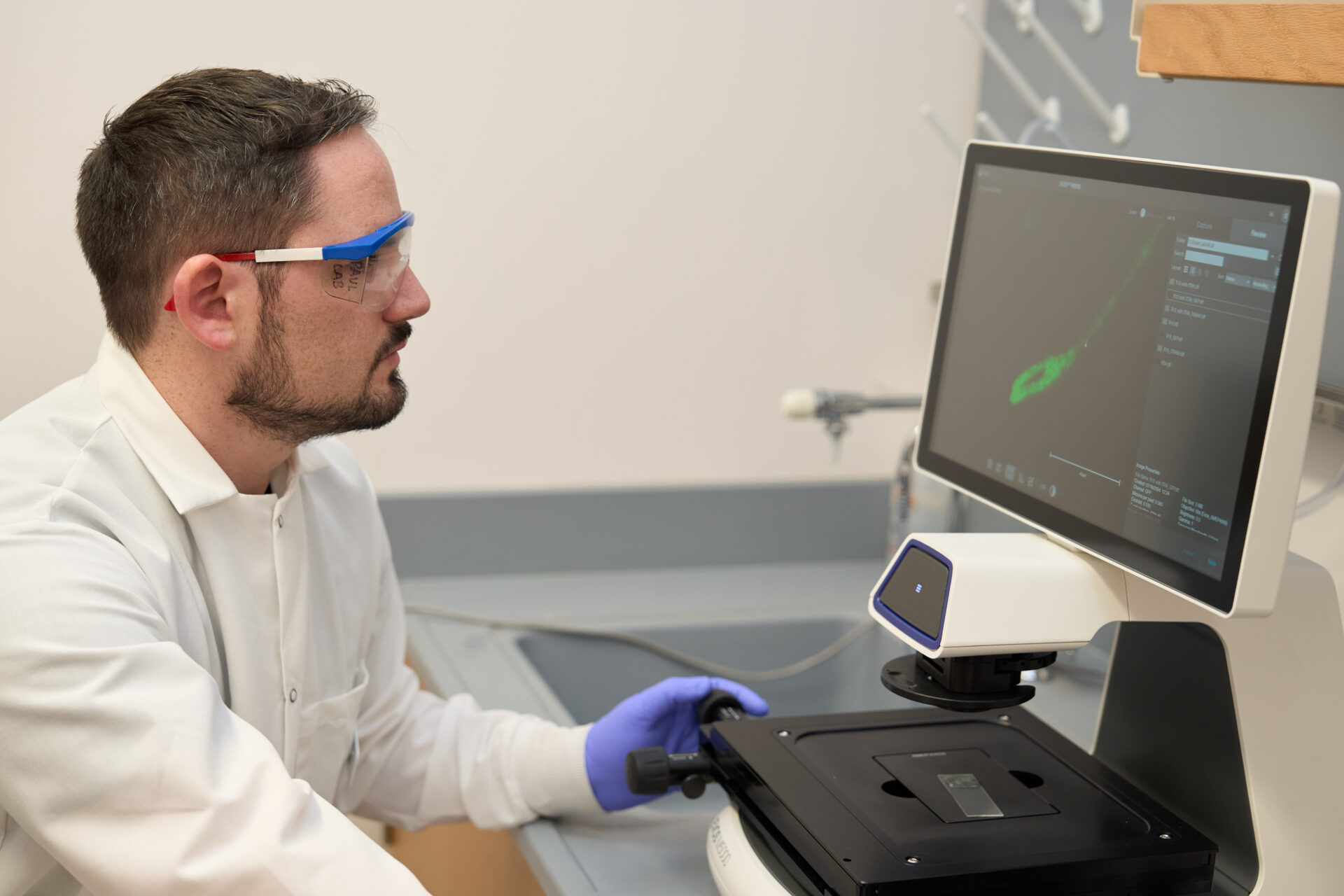
Dr. Stephen Dolan has joined forces with molecular biologist Gustavo Goldman at the University of São Paulo in Brazil to understand how dangerous fungi survive their own poisons and how that could be turned into a new antifungal drug.
Dr. Robert Anholt is part of a new initiative at Clemson aimed at bringing researchers together across disciplines to study how life changes and persists in a rapidly shifting world. The ecology and evolution initiative, led by faculty from multiple departments and colleges, seeks to connect scientists who have historically worked in separate spaces despite overlapping interests.
EPIC, which is one of Clemson’s largest research centers, has joined with partners from around the world to form EPICON, the Eukaryotic Pathogens International Consortium. The consortium founding members include the University of Sao Paulo (USP) in Brazil, the University of Ghana and Pontificia Universidad Catolica del Ecuador (PUCE), which complement and supplement the research done by EPIC’s 24 faculty members, who represent three colleges and eight departments.
Clemson University senior double majoring in biochemistry and psychology Yashvi Patel spent the past summer at the Mayo Clinic in Jacksonville, Florida completing a clinical research internship focused on stroke treatment, analyzing how soon patients can begin physical movement such as sitting on the edge of the bed, standing or walking after having a stroke and receiving a certain drug.
Aging leaves a chemical signature on DNA, statistical models known as epigenetic clocks estimating a person’s age with relatively high accuracy. However, new research by assistant professor and member of the Institute of Human Genetics Dr. Shyamalika Gopalan and collaborators from France show many of these clocks do not tell time well for some populations.
