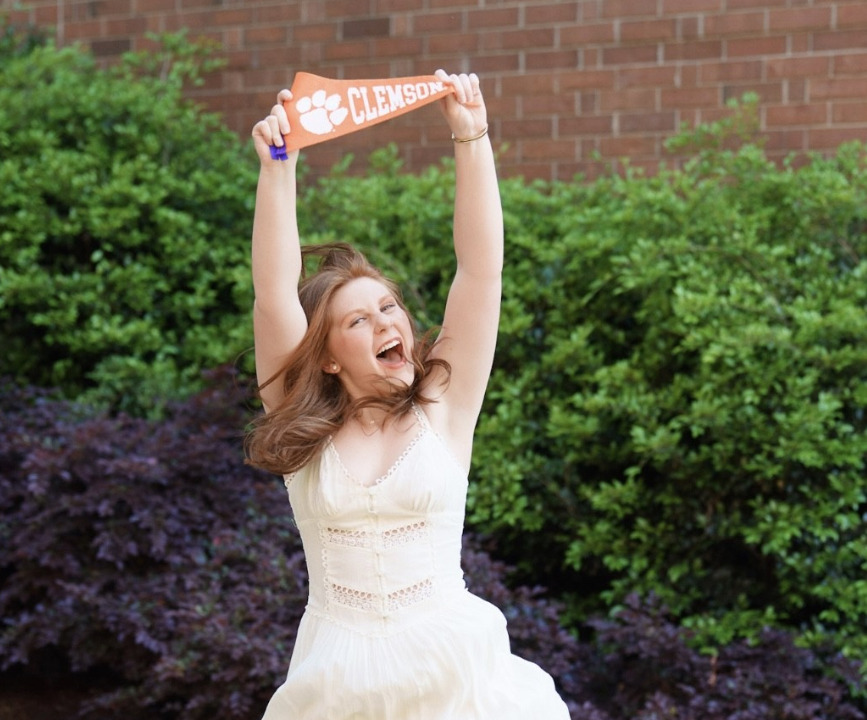
This fall, Clemson welcomed its newest class of National and Breakthrough Scholars, highlighting students whose talents, curiosity and leadership reflect the university’s commitment to academic excellence. Both programs aim to recruit exceptional students from South Carolina, across the nation and around the world while providing scholars with access to research, mentorship and experiences that broaden their perspectives, deepen their interests and open new avenues for discovery and growth.
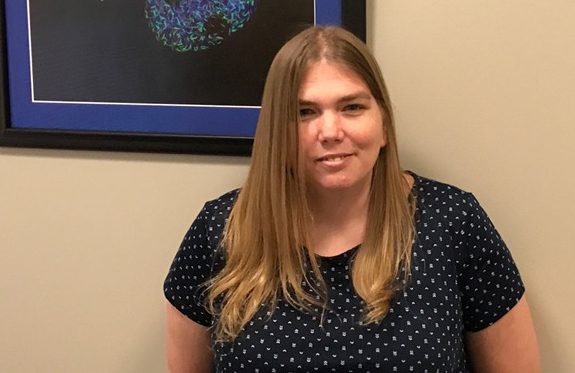
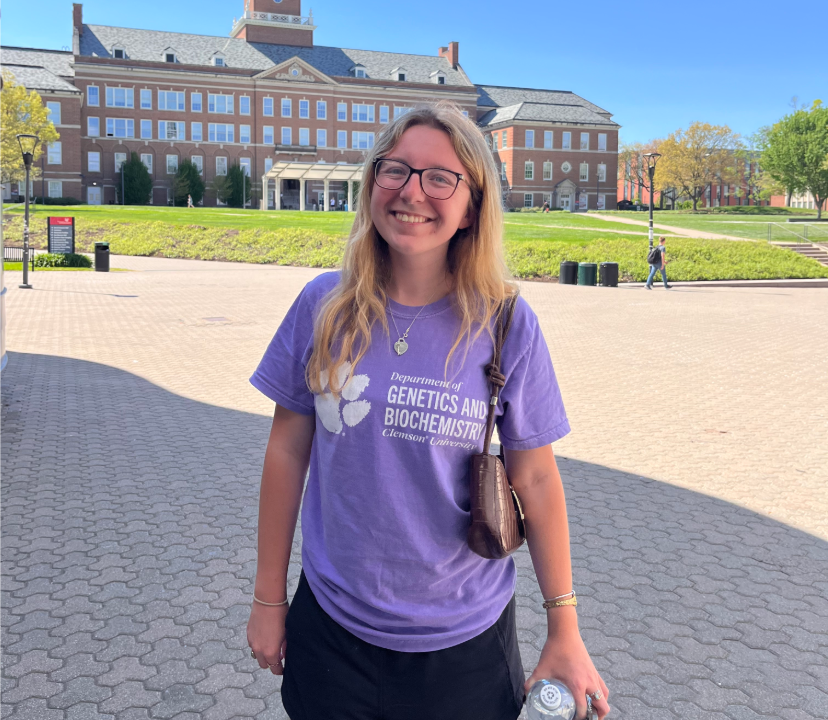
The Department of Genetics and Biochemistry had one student selected for each program. Freshman biochemistry student Zoey Bergeron was named a National Scholar, while sophomore genetics student Caroline Clayton was named a Breakthrough Scholar.
Clemson University’s National Scholars Program is its most prestigious and selective undergraduate scholarship, recognizing a small cohort of first-year students for their academic excellence, intellectual curiosity, leadership and potential for impact.
“Being named a National Scholar is an incredible honor, and I am so grateful for this opportunity,” says Zoey Bergeron. “I am excited to be surrounded by other motivated students who share my passion for learning and for making tangible differences within our communities. I know that the National Scholars Program will challenge me academically, encourage me to deepen my interests in medicine and research, and help me build a strong foundation for my future and my career.”
Clemson’s Breakthrough Scholars Program supports students who have demonstrated the potential to make an impact in their fields, communities and beyond. Scholars receive opportunities to connect with faculty mentors, research labs and professionals in science, engineering and health.
“I am very honored and excited to begin my first semester at Clemson as a Breakthrough Scholar! I was initially interested in the program because it will allow me to focus on STEM and research,” says Caroline Clayton. “I believe the scholarship will be beneficial towards my goals of medicine and clinical research. I have already enjoyed the program very much, specifically the opportunity to conduct research over the summer through the EUREKA! program. I am excited to see what the next four years bring!”
August 2026 G&B graduate Stephanie Toft would tell you she had the best of both worlds during her undergraduate career – experiencing all things college and Clemson while fulfilling her dream of working in aviation for the National Guard.
While on campus, Stephanie participated in Tigers on Track, a cohort-based internship preparation program for first-generation and Pell/Federal undergraduate students at Clemson. This program is designed to equip students with the knowledge they need to secure and succeed in an internship.
“Tigers on Track taught me about professional development and gave me valuable information on connections, interviews, and platforms like LinkedIn.”
In addition, Stephanie was involved in undergraduate research by taking part in a Creative Inquiry for Dr. Michael Sehorn’s lab from the Fall of 2024 to spring of 2026.
“It was so rewarding to be involved in such cool lab work with Dr. Sehorn’s Lab and also able to have a fulfilling military career.”
Stephanie has been in the National Guard for nine years as of July and works full-time as a Flight Operations Specialist at a Flight Facility in Greenville. Her unit is involved in a lot of state aid, including helping with Hurricane Helene, the Table Rock forest fires that happened this past fall and rescuing stranded hikers and their pets in state.
“With the devastation that Hurricane Helene has caused the Carolinas, the need for assistance [was] dire and that is one of the many reasons I chose to be in the military – to aid my state in moments of need.”
Stephanie will miss the simple days when she grabbed coffee and strolled around campus taking in the scenery, which was one of the first things that attracted her to Clemson in the first place.
“I was grateful to just be able to walk around [campus] every day and sit outside the library or around the reflecting pond and take it all in…Being at Clemson has been some of the most transformative years of my life and an enriching experience overall.”
Stephanie’s post-graduation plans are to continue her aviation work full-time and also pursue a master’s degree in genetic counseling after taking a gap year to gain clinical experience and shadow genetic counselors.
Assistant professor Jennifer Mason has received the 2026 Samuel H. Wilson Award from the Environmental Mutagenesis and Genomics Society.
This award was created in honor of Samuel H. Wilson, who made seminal contributions to the field of DNA repair and who served for decades as a leader at the National Institutes of Health. The Samuel H. Wilson Award is given annually to provide career advancement opportunities for the next generation of environmental health scientists.
Everyone join us in welcoming Dr. Glauco Vieira Miranda, a professor at the Federal University of Technology–Paraná (UTFPR) in Santa Helena, Brazil, who has joined Dr. Shahid Mukhtar’s lab as a sabbatical professor for the academic year.
Glauco Vieira Miranda, Ph.D., is an agronomist with extensive experience in plant breeding, quantitative genetics, genomics and crop cultivar development, particularly in maize and soybean. His current research focuses on plant breeding and the integration of genetics, genomics, phenotyping, and artificial intelligence, integrating conventional breeding with genomic tools, high-throughput phenotyping, data science and artificial intelligence to improve crop productivity and resilience. Miranda’s lab works primarily with soybean, studying complex traits such as yield, drought and heat tolerance and adaptation to different environments.
During his time at Clemson, Miranda hopes to both establish long-term collaborations between Clemson University, UTFPR, and other Brazilian research institutions and strengthen his expertise in genomics, bioinformatics and artificial intelligence in an effort to apply these approaches to crop improvement.
“I am particularly interested in developing collaborative research that integrates genomic and multi-omics data with computational approaches to better understand complex traits and identify genes and biological mechanisms associated with stress tolerance.”
Despite having more than three decades of experience in plant breeding, Miranda is always excited embracing the opportunity to learn something entirely new.
“Recently, I have been diving deeper into artificial intelligence, data science, and bioinformatics—which sometimes means spending as much time working with Python and genomic data as I do thinking about plants in the field!”
Dr. Rajandeep Sekhon leads the Clemson University team participating in a four-year, $6 million National Science Foundation collaborative grant for the project “Collaborative Research: FEC: Converging AI, Biomechanics, and Genomics to Engineer Lodging Resilient Field Crops.”
Dr. James Morris is part of a team that was awarded a NIH grant, “Optimization of N. fowleri inhibitors for rodent efficacy and validation of target.”
Dr. Hong Luo received the Society for In Vitro Biology (SIVB) 2026 Distinguished Service Award for his contribution in fundraising and service as member of the SIVB Board of Directors.
Senior genetics and Honors College student Jennifer Covel was chosen to represent Clemson University at the 20th annual ACC Meeting of the Minds Undergraduate Research Conference.
Four Department of Genetics and Biochemistry faculty members were promoted at the beginning of the Fall 2026 semester: Lindsey Beebe to senior lecturer and Miriam Konkel, Lela Lackey and Fabio Morgante to associate professor with tenure.
Genetics and Biochemistry students Elizabeth Polatty and Addison Vondersaar have been selected to explore global policy issues through the Honors College’s selective Dixon Global Policy Scholars program.
Graduate students Alp Ummet, Fengge Chang, Vijay Shankar, Xiaotong (Stone) Chen, Zhaohui (Charlie) Chen, Ryan Watts and Ming Liu attended national and international conferences presenting posters and giving oral presentations.
Alexandra Harrington, an Honors College student and biochemistry and genetics double major with minors in Spanish studies and microbiology was selected for a Fulbright teaching assistantship in Galicia, Spain.
Ph.D. student Xiaotong (Stone) Chen received the Society for In Vitro Biology 2026 Philip R. White Memorial Award for his outstanding research.
Few students squeeze as much into four years as May 2026 biochemistry graduate Kristen Gulbrandsen. From leading student organizations and mentoring classmates to conducting nationally recognized research, she embraced every opportunity Clemson had to offer.
Taking significant advantage of Google Calendar, Kristen was able to balance an impressive list of campus involvements, serving as Public Relations Officer and later President of the Genetics and Biochemistry Club, representing the College of Science as a Student Ambassador, serving on the University’s Academic Integrity Committee, working as an Athletics Tutor in biology and chemistry, and participating as a sister of Alpha Omega Epsilon (AΩE).
“I like to make myself busy…These organizations provided me with a lovely support system when I have made lifelong friendships, especially through AΩE and the Genetics and Biochemistry Club.“
In addition to campus involvement, Kristen participated in extensive research during her undergraduate years via two different Creative Inquiries (CIs), the K-12 math competitions with Dr. Jason Brown from Physics and Astronomy and gut microbiota research with Dr. Anna Seekatz from Biological Sciences.
“Through Dr. Brown’s CI, I learnt skills in interdisciplinary collaboration and how to inspire the future in STEM! Dr. Seekatz provided me with a supportive space on how to conduct science in a responsible and inquisitive way. She helped develop my technical skills, along with teaching me how to think like a scientist…She gave me a plethora of opportunities to present my work locally, as well as nationally.”
Kristen came into Clemson “All In!” and one of the most valuable lessons Kristen learned at Clemson was that there is no single correct path through college. After feeling overwhelmed by the endless opportunities during her first semester, she realized that success comes from creating your own path.
“I figured out that there is not one “right” way, but infinite correct ways. As long as you enjoy what you are doing, you are gaining from the experience.”
Starting July 1st, Kristen will be attending a Ph.D. program in Immunology at Cincinnati Children’s Hospital Medical Center and University of Cincinnati.
“I am ecstatic to join their program, as their work there deeply inspires me.”
In this CI, students participate in tissue sectioning, advanced microscopy and histological analysis to assess plant anatomy and analyze how drought and other stressors alter plant tissues, helping them gain a better understanding of how environmental pressures affect agricultural systems.
“Dr. Mukhtar is as enthusiastic about working with undergraduates as he is about his own research,” wrote one student nominator for the Phil and Mary Bradley Faculty Award. “Even from my first conversation with him, I could tell he’s incredibly passionate about what he does and that he’s excited about including new students. He makes sure I know that he believes in me as a scientist … I’ve learned many important research skills, and I feel more confident in the lab because of him.”
Dr. Mukhtar says that the Carr Family Endowed Fund, which was established with a gift from Chalmers and Lori Anne Carr, owners and operators of Titan Farms, provides support for CI projects related to fruit and vegetable crop production, agriculture industries and rural economic development. will help provide students with a more immersive research experience and expand access to research technology to tackle real world agricultural challenges.
Phil and Mary Bradley helped launch the CI program in 2005 with a gift of $100,000. Since that time, they have continued to support CI by endowing the faculty award since 2006. The Bradleys’ generous gift allows each recipient to receive a plaque and salary supplement.
Having always valued being part of something bigger than herself, incoming genetics freshman Niyah Haywood is ready to embrace life as a Clemson Tiger this fall.
Niyah is from Columbia, South Carolina, and graduated from Spring Valley High School, where she ranked eighth in a class of 492 while staying actively involved in cheerleading, track and field, Student Council, HOSA, and the Science, Spanish, Social Studies, and National Honor Societies.
“I was founder and president of my school’s Student Athlete Leadership Team (SALT for short). My favorite achievement sports-wise was becoming president of the South Carolina High School League’s Student Athlete Advisory Council, where I was able to showcase my leadership and influence high school athletics across the state… I’ve also completed independent research projects and presented at the Science and Engineering Fair and South Carolina Junior Academy of Science.”
For Niyah, Clemson offered the perfect balance of strong academics, school spirit, leadership opportunities and a campus culture that felt supportive and connected. But the biggest draw was the chance to study genetics — a field that truly interests her — at the only university in South Carolina with a genetics major.
“Clemson felt like the best place for me to grow personally, academically, and professionally. The plethora of research opportunities and opportunities given through the HRC definitely put a check in the pro column as well. Overall, Clemson felt like a place where I could challenge myself while still building community and preparing for a future in research and healthcare.”
Niyah’s interest in genetics comes from the curiosity to understand not just what happens, but why it happens, drawn to how small changes at the molecular level can create larger effects in health and biology.
“I enjoy connecting research with real-world impact. Genetics combines my interests in discovery, problem-solving and improving people’s lives through science and medicine.”
After arriving on campus this fall, Niyah is looking forward to game days, joining a few science-related clubs, being accepted into and graduating from the Honors College, lake days with friends, gaining a sense of independence and becoming a Clemson Tiger.
“Being a Clemson Tiger means being part of something bigger than myself. It’s a community that values excellence, tradition, leadership and connection. To me, it represents the opportunity to challenge myself academically, grow as a person and pursue my goals while creating lifelong memories and relationships. It means showing school spirit, embracing new experiences and leaving Clemson having made a meaningful impact on the people and places around me.”
SARAH SPRATLIN BULLOCK
Growing up in a devoted University of Georgia family, incoming genetics freshman Sarah Spratlin Bullock — “SS” to her friends — spent countless weekends cheering on the Bulldogs, following in the footsteps of her father and grandfather, both former Georgia baseball players. She could see her higher education path pretty clearly, until two years ago when her brother, Truman, chose Clemson.
“It flipped my world upside down. I wanted somewhere that everyone was obsessed with. I wanted somewhere that people got involved and stayed involved, somewhere that people loved for their whole lives. Because of my brother and the Clemson friends we made along the way, I knew Clemson was my place too.”
From Greenville, SC, Sarah attended Christ Church Episcopal School from kindergarden to her senior year where she was involved in all things performing: cheer, theatre and choir.
“I cheered in the London New Year’s Day Parade as a UCA All American this year, and it was one of the most special experiences of my life! I acted in two shows a year at school and am an assistant director for the middle school every year.”
In addition, Sarah serves on the Youth Leadership Team at Buncombe Street Methodist Church, a camp counselor for Vacation Bible School, was a school ambassador and a member of the prom committee.
Sarah has always had a particular interest in biology, her physician dad being her biggest inspiration to go into the science field, planning to go into premed just like him. As she moved up in school and started taking more challenging biology courses, she became interested in genetics.
“I’ve developed a particular interest in genetics thanks to my AP Bio teacher, Mrs. Unger, who arranged us a trip to the Greenwood Genetics Center. I think people are wonderful, and I would love nothing more than to learn more about how we are all so uniquely us.”
So excited to get to campus in the Fall, Sarah plans on being very active in clubs and organizations across campus, taking in the full Clemson experience. She plans to join ‘everything [she] can,’ such as Greek life, the sailing and line-dancing clubs, choir, FCA and Central Spirit.
“I am excited for the people and experiences. College is a time to grow as a person, shape others, and be shaped in return, so I am excited for those new friends, swims in the lake, study dates over coffee, worship nights, dances, and beyond. I am excited to see who I will become and who I will meet along the way!”