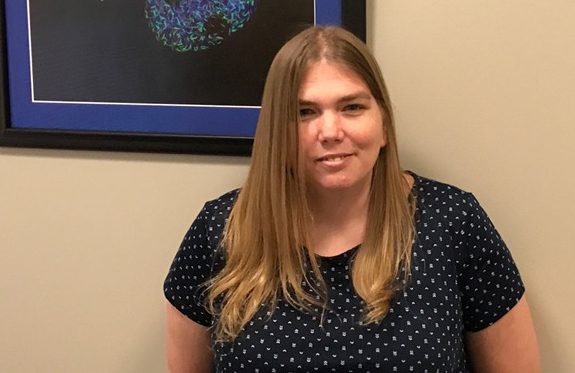
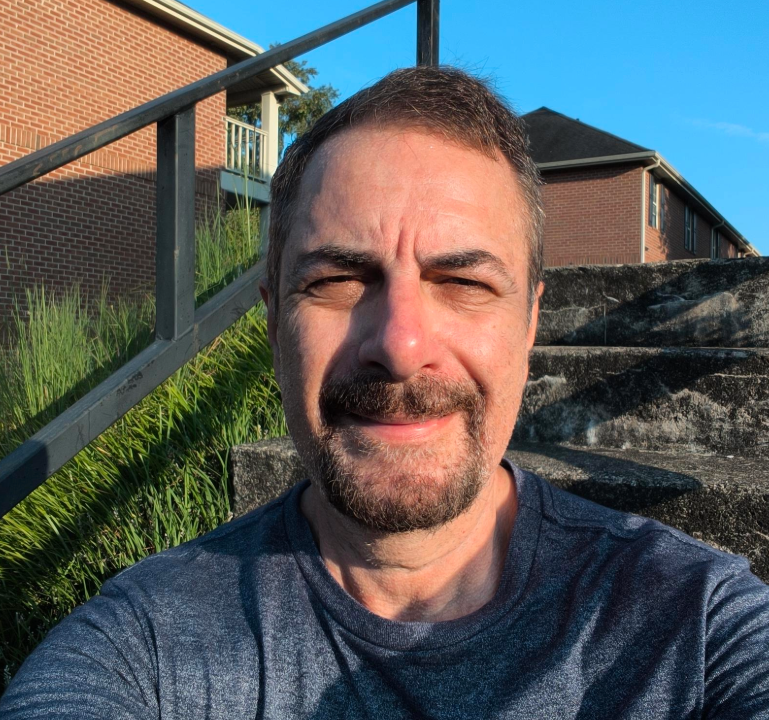
The award is given annually to a researcher deemed to be presenting the best mycological science at one of each Society’s main scientific meetings.
“I’m very grateful to receive the Tony Trinci Award from the British Mycological Society and the Microbiology Society,” says Dolan. “It is a real honor to be recognized in the name of Professor Trinci, whose work helped shape our understanding of fungal growth by linking underlying cellular processes to complex biological behavior.
Shafi Mondal is currently pursuing a PhD in Stephen Dolan’s lab where is research focuses on polymicrobial interactions involving the human pathogenic fungus Aspergillus fumigatus.
“In particular, I investigate how A. fumigatus remodels its transcriptional landscape in the presence of bacterial species commonly found in the cystic fibrosis lung, and how these changes contribute to tolerance against clinically and environmentally relevant stressors,” says Mondal.
Mondal sees receiving the Trinci award as an encouraging step as he continues to develop as a researcher in mycology, hoping to improve understanding of fungal pathogens and the challenges they pose to human health.
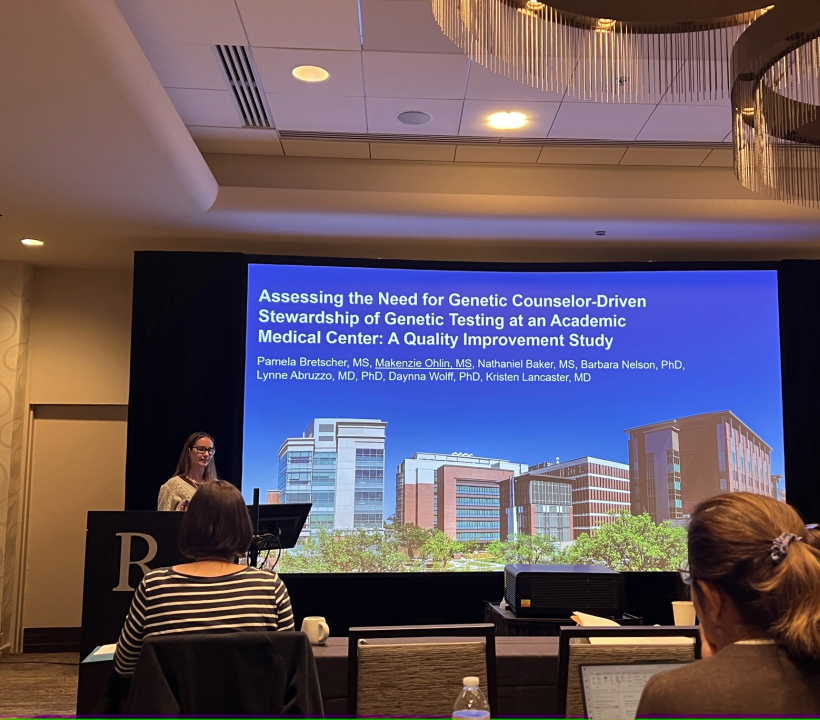
In mid-April Dolan and Mondal travelled to the UK to present their award presentations at Microbiology Society’s annual conference. Mondal’s presentation was titled “Cross-Kingdom Microbial Interactions Reveal Genes Driving Stress Tolerance in Aspergillus fumigatus” and Dolan’s was titled “Interkingdom Cross-Talk Between Aspergillus fumigatus and Pseudomonas aeruginosa in an In Vitro Model of Respiratory Co-infection.”
Over the last year and a half, a group of seven students have been part of a Creative Inquiry led by Dr. Heidi Anderson to develop interactive tools to aid in learning biochemistry content.
From this group, a web-based application called ‘Aminole’ (based off of the New York Times game ‘Wordle’) was developed to aid students in learning the twenty common amino acids. The game has been used by Clemson students in introductory biochemistry courses and was well-received as a fun and engaging way to aid in the learning process.
In April, four of the students along with Dr. Anderson traveled to Anaheim, CA to present a poster about the game at the National Science Teacher Association conference.
“I am so proud of the team of students who have dedicated time and creativity to make this idea come to life,” says Dr. Anderson. “Seeing Aminole presented at a national conference and being so well-received was encouraging to the students and myself.
The Clemson University College of Science recognized some of its most outstanding undergraduate and graduate students during an awards ceremony on April 9.
The following G&B students were recognized.
Ryan Mehlem: Outstanding Undergraduate in Discovery Award
Ryan Mehlem, an Honors College student with a biochemistry major with minors in cluster engineering and business administration, has built an outstanding research record across multiple labs, spending more than four years studying thermal adaptation, azole tolerance and gene expression in Aspergillus fumigatus.
This award is given to a graduating senior who has performed outstanding original research in the sciences.
Katie Barfield: Blue Key Academic and Leadership Award
A genetics and sociology major with a minor in gender, sexuality and women’s studies, Katie Barfield has worked in Miriam Konkel’s lab, participated in research at Johns Hopkins University and has conducted a greenhouse assay at the Institute of Subtropical and Mediterranean Horticulture in Malaga, Spain.
The Blue Key Academic and Leadership Award recognizes one student in each of the colleges at Clemson who has distinguished themselves in academic scholarship and campus leadership.
Jerry (Rui) Che: Outstanding Graduate in Discovery
Jerry (Rui) Che is a Ph.D. candidate in genetics and during his graduate studies, Che helped create a new research method that made it possible to study how certain molecules inside cells are controlled, leading to the identification of important pathways involved in how cells process nuclear RNA. He also discovered two human genes, which he named RMP24 and RMP64 and helped develop an E.-coli-free cloning method and a way to build much larger DNA libraries for genetic research. The new cloning method was patented.
This award honors doctoral students in the College of Science who have made distinctive and discernable contributions to their field.
Ava McKee: SciSAB Outstanding Board Member
Ava McKee has been a member of Science Student Advisory Board for three years, most recently serving as grant officer and will step into the role of vice president for outreach next year. As grant officer, she led the coordination of SciSAB’s grant in aid of research award program, applications increasing by 91%, and helping award $6,200 in funding. Her plans as vice president for outreach next year are to increase volunteering opportunities and strengthen the partnership with the Science Outreach Center.
Senior Katie Barfield and alum Søren Spina were recognized by the National Science Foundation Graduate Research Fellowship Program (GRFP), a highly competitive award that supports outstanding graduate students in science, technology, engineering and mathematics (STEM) fields.
Katie, a genetics and sociology double major and Breakthrough Scholar studies the questions at the intersection of genetics, genomics and human health. Her research has explored transposable elements and translational regulation while also examining how science can better serve diverse communities. Søren is studying at Ohio State University.
The GRFP recognizes early-career scientists and engineers who demonstrate exceptional promises for leadership and innovation and provides three years of financial support over five years, including a $37,000 annual stipend and a $16,000 cost-of-education allowance to the institution.
It will be strange not to see Gabbie Gardiner around the teaching labs in Poole anymore. Gabbie is graduating this May with dual degrees in genetics and biochemistry, along with a minor in Spanish, after serving as a student laboratory assistant.
“I have worked as a student laboratory assistant for the G&B [Poole] teaching labs for the past four years.”
Gabbie Gardiner has always kept busy, whether serving as an academic mentor and Assistant VP of Intellectual Development for the Theta Lambda Chapter of Alpha Chi Omega, acting as a Health Professions Advising Ambassador, or leading as Community Outreach Chair for The Period Project on campus. She has also been involved in organizations ranging from Beta Beta Beta Biological Honor Society to the Spanish Club and Hablemos Club.
Some of Gabbie’s extracurriculars were academic in nature as well, having worked in research labs aside from the teaching labs.
“I was a part of Dr. Métris’ Creative Inquiry exploring environmental DNA and RNA and Dr. Boccuto’s Health Genetics lab exploring Phelan-McDermid Syndrome.”
Gabbie has made many memories during her tenure at Clemson. However, when asked what her favorites are, a few come to mind.
“When we made it to the Elite 8 last year in basketball. I prefer watching basketball over football (sorry). An honorable mention for another favorite memory was winning Cribb Floor 5’s Resident of the Month for October 2022.”
Gabbie has gained a confidence over the last four years and has learned not to be afraid to speak up and talk to your peers and professors.
“Many of my opportunities have come from simply asking and not being afraid of being denied.”
After graduation, Gabbie plans to take the MCAT and work as a medical assistant until she moves to Spain to teach English in October as a gap year.
Wanting to escape the cold of her hometown of Huntley, Illinois, junior biochemistry student Adrianna Crespo knew once she graduated from high school, she had her sights set on the south – and set on Clemson, committing to the university the day she was accepted.
“I often get asked why I chose Clemson, and I never have a really good answer, as a part of me just always knew that this is where I belonged. From my research, and before I had even toured, I decided that Clemson would be the school for me. The sense of community and academic rigor ultimately drew me into Clemson.”
Also drew to our biochemistry program, and Adrianna was not disappointed. Our G&B department has provided some amazing and supportive friends and professors.
“My best friend Olivia Palmieri and I met in our Biol 1011 lab our freshman year. I am extremely grateful for our friendship.”
Adrianna’s professors have supported her both inside and outside the classroom, challenging her academically while also investing time in mentoring her growth as a student and an emerging scientist.
“My professors have given me invaluable professional development advice and opportunities that have helped me tremendously, from encouraging me to pursue research to helping me think about my future career in science. Their guidance, encouragement, and willingness to invest in their students have made a lasting impact on my college experience.”
Adrianna participates in a couple of different academic-based extracurricular activities on campus, including serving as an Academic Success Center Tutor for General and Organic Chemistry and also acting as a Tutor Mentor where she has the opportunity to train the other tutors at the Academic Success Center. In addition, Adrianna contributes as the ROAR Leader, where she coordinates and plans the ROAR review sessions for Chemistry I and II that occur before the exams.
“Tutoring has been a rewarding experience because it allows me to help other students work through challenging concepts and build confidence in subjects that can often feel overwhelming. I am given the chance to mentor students and help foster independence for their future college endeavors.”
Another academic campus involvement that Adrianna is involved in is her research in inorganic chemistry in Dr. Tran Dominy’s Lab, where she works closely with Dr. Xudong Huai in their work with polycrystalline structures by solid state and flux reactions. Adrianna’s research is part of a departmental honors.
“For the departmental honors distinction in chemistry, I will write a thesis and defend it in front of a board. Dr. Huai and I are currently in the works of writing an entirely different paper for publication at the end of this year!”
Adrianna has also served as the Scholarships Chair for the Alpha Lambda Gamma Honors Society, is a part of the panhellenic sorority Alpha Phi, a member of Order of the Omega, a COSMIC mentor and Student Science Ambassador.
“However, one of my most meaningful leadership roles has been my involvement as Campus Outreach Coordinator for American Medical Women’s Association. I have watched the club grow and become an amazing experience for so many students.”
Illinois does not have mountains, so in her free time, Adrianna loves hiking the trails in North and South Carolina with her rescue dog, Bronco. Bronco came into Adrianna’s life shortly before Hurricane Helene, as the Oconee Humane Society (OHS) was searching for fosters before the storm.
“He is my best friend, and it has been one of my favorite college experiences to be his mom and he really is my entire world. I now volunteer at OHS whenever I can!”
Particularly interested in drug research and development, Adrianna hopes one day to contribute to the discovery and production of new medications that can improve patient outcomes. After graduation, she plans to attend graduate school to pursue a Ph.D. in either medicinal chemistry or pharmacology.
“In the long term, I would also like to work in academia, where I can continue conducting research while teaching at the university level. Being able to mentor students and share my passion for chemistry and drug discovery would allow me to contribute to both scientific advancement and the education of future scientists.”Just like her professors did for her.
P.S. The last question we ask everyone in these interviews is “Anything else you want to add?” Most of the time that question is left blank. Adrianna’s wasn’t.
“[Speaking on her parents] I just want to thank them for supporting me from so far away and that I truly owe my experience to them and their undying support. Their belief in me has played a huge role in where I am today.”
Assistant professor in Genetics and Biochemistry Dr. Stephen Dolan, who is also a part of the Eukaryotic Pathogens Innovation Center (EPIC), has joined forces with molecular biologist Gustavo Goldman at the University of São Paulo in Brazil to understand how dangerous fungi survive their own poisons and how that could be turned into a new antifungal drug.
The two researchers work on the fungi Aspergillus fumigatus, a common mold that can cause life-threatening lung infections in people with weakened immune systems. A. fumigatus produces a potent toxin called gliotoxin that enables the fungus to cause disease and outcompete other microbes, but it is also so toxic that it can poison the fungus itself. To survive, the fungus has developed protective systems that neutralize gliotoxin.
With Dolan specializing in creating mutant strains of fungi and analyzing the resulting data to see which genes matter most for survival and Goldman’s strengths in fungal genetics and biochemistry, the team was able to connect molecular mechanisms to big-picture questions about how fungi cause disease.
Together they discovered that mitochondria are a key weak spot for gliotoxin. The toxin disrupts mitochondrial function, and when defenses fail, the fungus’s energy systems collapse, leading to cell death. The results reveal new details about how fungi defend themselves against their own toxins and highlight mitochondria as a possible target for future antifungal treatments, which is important because drug resistance is on the rise and current treatments for fungal infections can be toxic or ineffective.
Dolan has actually been working with Goldman since his Ph.D. and they have published two papers together, with more forthcoming and they’ve started participating in virtual joint lab meetings once a month. Dolan believes that collaboration in research is essential for impactful work.
“The mindset of working independently without engaging other labs is disappearing,” Dolan says.
“Science isn’t done in isolation. Labs must collaborate with others to move science forward. That’s just the nature of science…” says Dr. Kerry Smith, a professor in the Clemson Department of Genetics and Biochemistry and director of Eukaryotic Pathogens Innovation Center (EPIC).
This ideology is part of what prompted EPIC, which is one of Clemson’s largest research centers, to join with partners from around the world to form EPICON, the Eukaryotic Pathogens International Consortium. Dr. Smith now serves as EPICON’s first board chair.
“We realized that to tackle a serious global problem, we would need global partners,” said Bruce Rafert, the founding executive director of EPICON. “A new consortium made a lot of sense.”
Our partners are spectacular. USP is a top 100 global institution, and Ghana and Ecuador bring front-line experience with the very pathogens we study. The consortium essentially blankets the area where the global impacts of our pathogens are most severe and cause the biggest problems.” Rafert said.
The consortium was built on existing collaborations at the scientific level such as Stephen Dolan, an assistant professor in the Clemson Department of Genetics and Biochemistry, and Gustavo Goldman, a professor at USP, who have a close working relationship. Dolan began visiting Goldman’s lab while working toward his Ph.D. in Ireland and he and two of his graduate students traveled to Sao Paulo and Goldman’s lab. Goldman even visited Clemson last summer. They’ve published two scientific papers together.
Stephen Dolan, an assistant professor in the Department of Genetics and Biochemistry at Clemson University, does research focused on understanding the molecular interactions between bacteria and fungi which infect the lungs of people with cystic fibrosis. He found what he believes to be a new mechanism of how bacteria see and respond to fungal toxins during polymicrobial infection.
“When you combine the knowledge of many groups, it could give a better understanding of the whole problem,” Goldman said.
Fun Fact: Junior biochemistry student Olivia (Liv) Palmieri’s high school in Galloway, New Jersey sat right on the beach. Even so, knowing that medicine was the end goal, she was drawn down south to Clemson University for her undergraduate experience. Clemson was an easy choice for Liv because of our strong sense of community, robust biochemistry program and the wide-ranging number of opportunities for both academic and personal growth.
“I chose biochemistry as my major because it combines my passion for science with my interest in medicine, allowing me to build a strong foundation for a future in healthcare. Being in the Genetics and Biochemistry Department has been a supportive community I am blessed to be a part of. The department allows students to gain hands-on learning opportunities and explore future career paths.”
Having psychology and cluster life science minors, Liv has loved learning campus and getting involved in all the extracurriculars and research opportunities that she can throughout her time at Clemson thus far. One of these is a research opportunity participating in a Creative Inquiry with Dr. Robin Kowalski in the Department of Psychology.
“Since my sophomore year, I have worked with Dr. Kowalski as a member of her Social Psychology Creative Inquiry team, gaining insight into research design and analysis. Our projects focus on perceptions and their impact on behavior. We have presented our work at multiple forums over the past two years, and one of our papers was recently published!”
Liv has even recently begun a Departmental Honors with Dr. Kowalski, which means that she will complete a thesis of a major research project. Departmental Honors provides Honors students a unique opportunity to do advanced, in-depth study and research within an academic discipline.
Additionally, Liv is a member of the Honors College, where she serves as both a Peer Mentor and an Honors Ambassador. Within the College of Science, she also serves on the Student Advisory Board and as a COSMIC mentor.
“Both roles that allow me to support students and foster growth.”
“I am also an active member of the Kappa Delta sorority and PhiDE, the pre-medical fraternity on campus. In my free time, I enjoy staying active and volunteering locally!”
While Liv stays deeply involved on campus, embracing the opportunities she hoped for when she first arrived, she still reflects on her future goals and the ambitions that brought her here in the first place.
“After I graduate, I plan to attend medical school and pursue a career in healthcare. I am interested in both neurology and surgery!”
Dr. Meredith Morris has been awarded a Fulbright Specialist grant to strengthen international research and training partnerships between the Institute of Parasitology in the Czech Republic and the Eukaryotic Pathogens Innovation Center (EPIC) at Clemson University. This project brings together two globally recognized centers focused on understanding parasites that impact human and animal health.
The Fulbright award will support scientific exchange, collaborative research and shared training opportunities for students and early-career researchers. By building a sustainable bridge between the two institutions, the partnership between EPIC and the Institute of Parasitology will expand international opportunities, foster innovation and strengthen global networks in infectious disease research.
Beyond advancing laboratory science, this collaboration emphasizes professional development, cross-cultural engagement and preparing the next generation of scientists to work across borders to address complex global health challenges.