Genetics and Biochemistry News

Dolan collaborates with Brazilian researcher

Scientist in lac coat and goggles looking into a microscopic computer.

Assistant professor in Genetics and Biochemistry Dr. Stephen Dolan, who is also a part of the Eukaryotic Pathogens Innovation Center (EPIC), has joined forces with molecular biologist Gustavo Goldman at the University of São Paulo in Brazil to understand how dangerous fungi survive their own poisons and how that could be turned into a new antifungal drug.

The two researchers work on the fungi Aspergillus fumigatus, a common mold that can cause life-threatening lung infections in people with weakened immune systems. A. fumigatus produces a potent toxin called gliotoxin that enables the fungus to cause disease and outcompete other microbes, but it is also so toxic that it can poison the fungus itself. To survive, the fungus has developed protective systems that neutralize gliotoxin.

With Dolan specializing in creating mutant strains of fungi and analyzing the resulting data to see which genes matter most for survival and Goldman’s strengths in fungal genetics and biochemistry, the team was able to connect molecular mechanisms to big-picture questions about how fungi cause disease.

petri dish with fungi in it.

Together they discovered that mitochondria are a key weak spot for gliotoxin. The toxin disrupts mitochondrial function, and when defenses fail, the fungus’s energy systems collapse, leading to cell death. The results reveal new details about how fungi defend themselves against their own toxins and highlight mitochondria as a possible target for future antifungal treatments, which is important because drug resistance is on the rise and current treatments for fungal infections can be toxic or ineffective.

Dolan has actually been working with Goldman since his Ph.D. and they have published two papers together, with more forthcoming and they’ve started participating in virtual joint lab meetings once a month. Dolan believes that collaboration in research is essential for impactful work.

“The mindset of working independently without engaging other labs is disappearing,” Dolan says. 

Read more in the Clemson News article.

From the beach to Bowman – Olivia Palmieri ’27

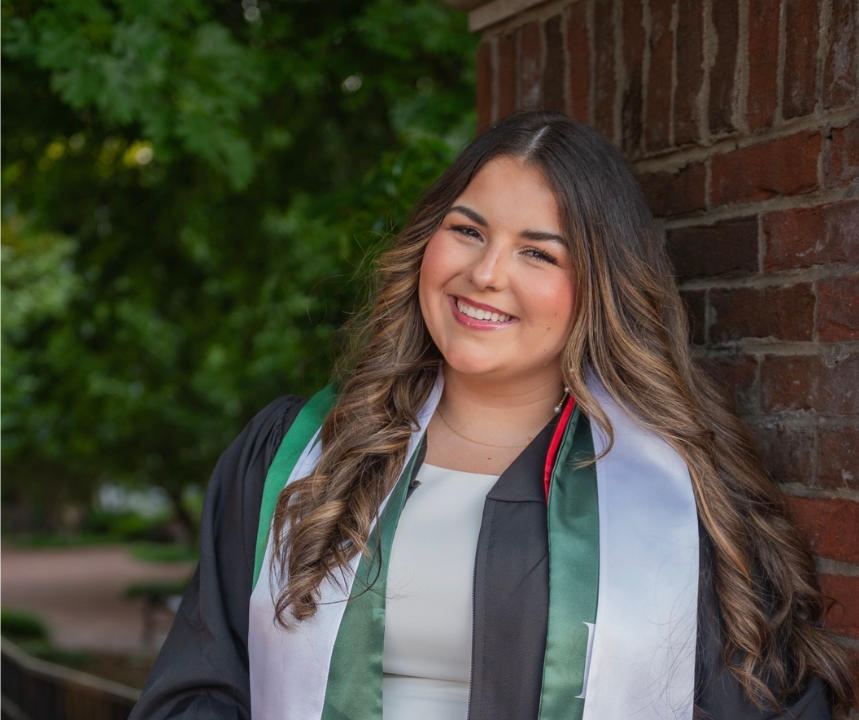
headshot of girl with brunette curly long hair in front of red brick building.

Fun Fact: Junior biochemistry student Olivia (Liv) Palmieri’s high school in Galloway, New Jersey sat right on the beach. Even so, knowing that medicine was the end goal, she was drawn down south to Clemson University for her undergraduate experience. Clemson was an easy choice for Liv because of our strong sense of community, robust biochemistry program and the wide-ranging number of opportunities for both academic and personal growth.

group of grils in front of a purple banner.

“I chose biochemistry as my major because it combines my passion for science with my interest in medicine, allowing me to build a strong foundation for a future in healthcare. Being in the Genetics and Biochemistry Department has been a supportive community I am blessed to be a part of. The department allows students to gain hands-on learning opportunities and explore future career paths.”

Having psychology and cluster life science minors, Liv has loved learning campus and getting involved in all the extracurriculars and research opportunities that she can throughout her time at Clemson thus far. One of these is a research opportunity participating in a Creative Inquiry with Dr. Robin Kowalski in the Department of Psychology.   

two grils taking a selfie with lab coats and lab goggles on.

“Since my sophomore year, I have worked with Dr. Kowalski as a member of her Social Psychology Creative Inquiry team, gaining insight into research design and analysis. Our projects focus on perceptions and their impact on behavior. We have presented our work at multiple forums over the past two years, and one of our papers was recently published!”

Liv has even recently begun a Departmental Honors with Dr. Kowalski, which means that she will complete a thesis of a major research project. Departmental Honors provides Honors students a unique opportunity to do advanced, in-depth study and research within an academic discipline.

5 girls smiling in front of a podium.

Additionally, Liv is a member of the Honors College, where she serves as both a Peer Mentor and an Honors Ambassador. Within the College of Science, she also serves on the Student Advisory Board and as a COSMIC mentor.

“Both roles that allow me to support students and foster growth.”

Liv also acts as the Vice President of Omicron Delta Kappa, Vice President of Membership of Order of Omega and serves as the Event Coordinator for the American Medical Women’s Association.

group of girls smiling in front of a landscaped bricked building.

“I am also an active member of the Kappa Delta sorority and PhiDE, the pre-medical fraternity on campus. In my free time, I enjoy staying active and volunteering locally!”

While Liv stays deeply involved on campus, embracing the opportunities she hoped for when she first arrived, she still reflects on her future goals and the ambitions that brought her here in the first place.

three girls smiling dressed up like at a dance.

“After I graduate, I plan to attend medical school and pursue a career in healthcare. I am interested in both neurology and surgery!”

The language of biochemistry – Elizabeth Polatty ’29

Freshman Elizabeth Polatty’s upbringing in a multicultural home, along with minor health challenges in childhood, drew her not only to Clemson, but also to science and biochemistry.

“I grew up in a multicultural Ukrainian-American family, which shaped how I see the world and why I’m drawn to science that serves people, especially across language and access barriers…I’ve always been repping orange and purple and cheering on the Tigers from my living room or from Memorial Stadium.”

Growing up in a Clemson family definitely steered Elizabeth when she was looking at colleges, however, when she was admitted into the National Scholars Program (NSP), it really sealed the deal for her.

“What made it a definite yes was being accepted into the National Scholars Program in the Clemson Honors College last spring. NSP has already made Clemson feel smaller in the best way! It’s given me an incredible community, pushed me to grow, and helped me plug into opportunities that match what I care about.”

Curiosity is truly what led Elizabeth to biochemistry — a desire to understand what unfolds at the molecular level and how that insight can translate into stronger prevention and more thoughtful care. Elizabeth is fascinated by how science connects to real-life health. This curiosity stems from personal health experiences, including numerous ENT appointments for hearing issues during her early childhood.

“The smell of sterile hallways takes me right back to childhood. I spent a lot of time in doctors’ offices and hospitals, and I still remember how much a calm voice, steady hands, and clear explanations could change an overwhelming moment into one that felt manageable. Those experiences didn’t just make me admire medicine; they made me curious about the science underneath it.”

As a freshman she was able to explore that curiosity by joining Dr. Michael Sehorn’s lab studying DNA repair, specifically homologous recombination (HR), and how the proteins RAD51 and DMC1 are regulated.

“The research looks at how cells keep their genomes stable by fixing DNA double-strand breaks (DSBs) that can happen from radiation, chemicals, or problems during DNA replication. It is exciting to be a part of the team and contribute to a bigger question. It’s made me feel like I belong in the scientific community here, even as a first-year student.”

In addition, Elizabeth has joined organizations that combine science with service, acting as the Chief Outreach Officer for Advancing Rural Communities through STEM Education (ARCS-Ed), a 501(c)(3) nonprofit that travels to rural and underserved middle schools to share about and make STEM feel exciting and accessible.

“We provide hands-on activities and lessons that help students actually do science, not just hear about it. I love it because it reminds me why representation and early exposure matter. I came from a rural community and a Title 1 school where STEM opportunities were limited. Thus, it’s been really meaningful to help students see themselves in STEM and leave with the confidence that they belong in those spaces, too.”

This winter break Elizabeth also had the opportunity to shadow Dr. Kevin Rust and Dr. Thomas Valenti at the Greenwood ENT Clinic during their office visits and surgeries at an ENT clinic.

“Their precision and calmness in surgery, and the way they communicate with patients during appointments, showed me how much trust a physician builds through their presence.”

Growing up in a multicultural home, science and medicine are not Elizabeth’s only interests. Additionally, she is deeply interested in discourse and rhetoric.

“I really enjoy learning languages and engaging with different cultures, which was sparked by my mom, who immigrated here from Ukraine, where the rest of my family still lives. Growing up around multiple languages and environments made me naturally curious about how people communicate.”

This interest has shaped how Elizabeth spends her time at Clemson outside of the classroom and lab – one of these ways is participating with Every Campus a Refuge (ECAR).

“…[ECAR] has been especially meaningful to me because it allows me to serve refugee families as they acclimate and resettle in the Clemson community. This semester, I joined a Creative Inquiry team that works directly with resettled families and helps teach ESL classes for English learners.”

Being part of ECAR has helped Elizabeth connect service with biochemistry and motivated her to think about a future that combines medicine with international and community-based work.

“After I graduate, I plan to attend medical school and pursue a career as a physician. The moments that have meant the most to me are when someone feels seen, heard and cared for, especially when language or cultural barriers could have made them feel invisible. Long-term, I hope to practice medicine and combine science with compassion, communication, and advocacy.”

Walker on the Move

man with red hair outside in front of brick building.

It’s true that even your toughest STEM students aren’t huge fans of organic chemistry – that’s not the case for junior Honor College student Walker Hussey. The subject even inspiring him to switch up his college path.

“I applied to Clemson as a biology major, however after taking Organic Chemistry I, I wanted to switch to biochemistry to learn more about the molecular interactions which lead to life. I am very happy I made that decision.”

Sophomore year, Walker started his role as a Peer Assister Learning (PAL) Leader on campus for Organic Chemistry I, where he can express and share his knowledge about organic chemistry by giving back to the Clemson community and supporting other students as they navigate this difficult subject.

However, if he had to pick a favorite class so far, it wouldn’t be organic chemistry. Instead, it has been Physical Approach to Biochemistry with Dr. Geoff Ford.

“I enjoyed the deep dive into the relationship between structure and function.”

three men posing together for a photo.

Academically driven, what pushed Walker to Clemson was not only our beautiful campus and culture, but our scholarly environment as well.

“The first time I visited Clemson I fell in love with the campus. As well I felt a sense of academic community between students who supported and pushed each other.”

After switching from biology into biochemistry and getting into his core classes, Walker began to see and feel a small community forming all the way from his lectures to his labs to the hallways.

“The best part of being in the Genetics and Biochemistry Department is the helpful culture and tight knit group of students. As I began to take more major specific classes, I continued to see the same faces in lectures and labs which led to a familiar environment and a strong network of study partners and friends.”

Academically, aside from supporting students as a PAL Leader in organic chemistry, this semester, Walker joined the Department of Bioengineering’s Dr. Peng’s lab.

red headed man with mask on doing a science experiment.

“I began a Creative Inquiry in Dr. Congyue Peng’s lab under Ph.D. student Madison Sexton, to study dental pulp stem cells (DPSCs) and gene expression using exosomes.”

Walker additionally participates in Greek Life on campus, joining Sigma Nu fraternity as a freshman. He has since taken on roles on the executive board, first serving as the risk manager and currently as the philanthropy chair.

While not busy on campus, Walker volunteers at the Golden Corner Food Pantry in Seneca, spends time in nature and with his friends.

“A fun fact about me is during the summers I work at a sailing camp where I teach kids 6-15-years-old how to sail.”

Walker has had future plans since high school, knowing that he eventually wanted to be a dentist and when he got to Clemson, he found out that our biochemistry program was the perfect place to start that journey.

“After I graduate Clemson, I plan to attend dental school and work toward becoming a periodontist or general dentist the down the line opening my own practice.”

red headed man and blonde woman standing in front of brick building smiling.

Advocating for answers

Passion for Research

When freshman biochemistry student Sarah Neighbor started to experience unusual symptoms in her senior year of high school, such as tightening of the throat and chest pain, she wondered if it was her severe peanut allergy.

“My throat started to tighten more frequently when I would go out to eat, which was such an uncomfortable feeling. Every time this occurred I was convinced I was having an allergic reaction.”

After an ER and a GI visit Sarah had an endoscopy and was diagnosed with Eosinophilic Esophagitis (EOE). At the GI doctor Sarah said he knew right away she had symptoms of EOE.

“Essentially the disease occurs when a large amount of white blood cells (or eosinophils) enters the esophagus and initiate an immune response, telling my body that something is going on. That is what causes the throat tightness, trouble swallowing and acid reflux.”

Sarah notes that people who have food/seasonal allergies, asthma or a genetic condition are more likely to develop the disease since they have an “allergic esophagus.”

Still managing her EOE to this day with medication, Sarah says, “This allowed me to experience first-hand what it is like to go through trial and error within the medical system and feel lost during a diagnosis. It is truly the most isolating feeling.”

Choosing Clemson

This experience with EOE gave Sarah a passion for research, which weighed heavily while searching for colleges.

“Everyone deserves an answer like the one I got, and that starts with scientific research.”

Sarah chose Clemson because of our strong STEM and undergraduate research programs, school spirit and beautiful campus. Biochemistry seemed to be the perfect fit for Sarah, in her own words, “combining biology and chemistry and offering flexibility.”

“Biochemistry allows me to be exposed to a diverse range of research areas and disciplines and to understand life at the molecular level which I find thrilling.”

Sarah recently joined Dr. Congyue Peng from the Department of Bioengineering’s Creative Inquiry Program. Sarah’s research in Dr. Peng’s lab focuses on early biomarker detection that is associated with the prognosis of triple negative breast cancer.

“I will be utilizing many techniques throughout this project, such as qPCR and cell culture. I am so excited to be back in the lab!”

Nationwide Children’s Hospital

After her junior year of high school, up until coming to Clemson, Sarah was a paid intern at the Nationwide Children’s Hospital in Columbus, Ohio, working in the Lynch Laboratory.

“During my time there, I worked on characterizing MHC class I and II molecules in laboratory ferrets, which are an important model for human lung disease and transplant rejection due to their similar immune responses and lung structure. Because many ferret MHC molecules are uncharacterized in the reference genome, there is a gap in understanding MHC variability and haplotypes, limiting transplant research.”

Sarah identified conserved and variable regions within MHC genes and designed PCR primers to amplify these variable regions. The primer design was successfully validated through gel electrophoresis, demonstrating an effective method to characterize unannotated MHC molecules and expand knowledge of the ferret genome for future transplant and immunological studies.

“This experience was probably the coolest thing I have ever done. I presented my research at the Ohio Junior Science and Humanities Symposium in March 2025 and won first place in the poster presentation category.”

Sarah also had the opportunity to present at the end of July 2025, which showcased the more recent research she conducted throughout the summer.

“I am so grateful to the Lynch Lab for mentoring me throughout high school and showing me what a passion for research truly looks like.”

Engagement on Campus

Besides Dr. Peng’s lab, Sarah has joined the Opinion Column for The Tiger Newspaper on campus. She just finished writing her first article. Take a look!

As a member of Pi Beta Phi, Sarah was recently elected to be the chapter’s Sunshine Chair for the next two semesters. Within this role she will be working alongside the Director of Lifelong Membership and Vice President of Member Experience to create programming that promotes mental health and sisterhood.

“I am excited to become more active in this position because I believe prioritizing mental health is so important. It is essential to create an environment where sisters can feel comfortable being honest about how they are doing, knowing that support is accessible without judgement.”

Looking Ahead

After graduating, Sarah plans on entering a graduate program and going into research that focuses on neuroscience, cancer and uncommon or under-researched diseases. Sarah has always been passionate about research and the opportunities it brings to change lives. However, after being diagnosed with Eosinophilic Esophagitis, her interest in uncommon diseases grew.

“I do not know anyone personally with this disease [EOE], so when I was initially struggling with it, I felt very alone. Over time, I realized that research in uncommon areas is more than important, because it advocates for those who felt alone like I once did. Everyone deserves answers and a cure, so I hope to be that for someone when I progress in my career.”

Two G&B students in first ever Action Scholars cohort

Alayna Khoja, genetics major, and Kristen Evans, biochemistry major have been inducted into the new Honors College initiative, the Action Scholars Program.

This new program brings together a group of first- and second-year Honors students to research, build and implement plans to address community needs or challenges, furthering the University’s land grant mission by building future leaders who are making a difference in communities throughout the state.

“This program brings 10 of those students together each year to share ideas, learn together and support each other as they pay it forward in their communities,” said Kristine Vernon, associate dean of curriculum and faculty affairs at the Honors College.

Action Scholars receive ongoing mentorship, identify community needs to build their projects, participate in events to finalize plans, build a portfolio of achievements and receive coaching to apply for major fellowships such as the Rhodes, Marshall or Truman.

ASBMB re-accredits biochemistry program

The Biochemistry Bachelor of Science program at Clemson University has been fully re-accredited by The American Society for Biochemistry and Molecular Biology (ASBMB) for another 7-year cycle.

The website notes that ASBMB accreditation is a national, independent, outcomes-based evaluation system that recognizes excellence in B.S. or B.A. degree programs in biochemistry and molecular biology. A committee of experts from academia and the private sector judge three program areas: curriculum, faculty and infrastructure.

The benefits to an ASBMB accreditation can include recognition for upholding the highest standards of education, leverage in gaining outside resources and advantages in recruiting students.

The society noted our outstanding faculty, strong curriculum and continuous strides to improve the program.

Biochemistry student researches stroke care

Girl in lab in green sweater.

Clemson University senior double majoring in biochemistry and psychology Yashvi Patel spent the past summer at the Mayo Clinic in Jacksonville, Florida completing a clinical research internship focused on stroke treatment.

Thrombolytics, which are administered when someone suffers a stroke, are clot-busting drugs used to restore blood flow to the brain. Though we know to provide thrombolytics as treatment for a stroke, many questions still remain about the drugs.

At the Mayo Clinic, under the guidance of Dr. William Freema, Yashvi reviewed patient data in neurocritical care to analyze patterns related to stroke treatment. Her main project for the summer focused on how a particular thrombolytic affects patients who have suffered from a stroke, analyzing how soon patients can begin physical movement such as sitting on the edge of the bed, standing or walking after having a stroke and receiving the drug.

Woman in lab working with a machine.

In addition to her main project, Yashvi was able to experience other features the Mayo Clinic had to offer, shadowing other departments such as neuropsychological testing, a double-liver heart transplant, radiation oncology, cutting-edge MRI and radiation therapy machines, and ion therapy

“It’s such a different environment and the caliber of research is incredible,” she said.

Woman in green sweater sitting outside smiling.

Read more about Yashvi and her past summer internship, involvement on campus and DNA repair research in Dr. Michael Sehorn’s lab in the Clemson News article “Clemson student’s research journey spans DNA repair to stroke care.”

The Simmons Story

In 2015, when Aliyah Simmons switched her major to biochemistry as a freshman, she had no idea that she had just begun a domino effect in her family.

Aliyah ’19, Chasity ’22 and Lauren Simmon’s ’25 parents raised them to always support one another. Whether in school or through life challenges, each sister knew they could rely on each other.

“As I’ve gotten older, our bond has only grown stronger, and I’m deeply grateful for the relationship we share,” Lauren says. “I truly love and appreciate my sisters, and I consider it a blessing to have them in my life.”

Lauren Simmons

Each sister has gone through and graduated from the Department of Genetics and Biochemistry at Clemson University. Aliyah and Chasity studied biochemistry and Lauren studied genetics.

“I always wanted to major in biochemistry since eighth grade due to my love for both biology and chemistry,” says Chasity.

However, it was Aliyah who was first to attend Clemson, coming in as a bioengineering major but soon found out engineering didn’t align with her future goals. She quickly switched to biochemistry and the others followed as they entered as freshman.

“When they [her sisters] shared their academic interests with me, I encouraged them to explore the G&B department because I knew it would be a great fit,” says Aliyah. “Throughout their time in school, I was always available to answer questions, help with course planning and offer guidance and support.”

Aliyah Simmons

For Lauren, choosing Clemson and our department was mainly family influence, but partly due to the exclusivity of our genetics program.

“When I learned that Clemson was one of the few universities offering genetics as a dedicated major, it immediately stood out to me,” says Lauren. “The combination of my family’s connection, my own visits and the opportunity to study genetics made Clemson the clear choice for me.”

Aside from their shared interest in the sciences of genetics and biochemistry, all three sisters also studied Spanish and were a part of the study abroad program with Aliyah and Chasity studying in Córdoba, Argentina and Lauren traveling to Santiago De Compostela, Spain.

“While there I did a surgical internship at the local hospital and many other activities. It was one of the best experiences of my life,” says Lauren, while Aliyah says, “I studied abroad in Córdoba, Argentina in Spring 2018, and it was an incredible experience. I’m still in touch with my host family to this day.”

Additionally, the Simmons sisters were noticeably active on campus during their undergrads, particularly in the Clemson University Student Government, which all three had some involvement. In addition to Student Government Aliyah, Casity and Lauren were involved in other extracurricular activities.

“I participated in the Minority Association of Pre-Medical Students, Undergraduate Pediatric Society, Association of Minority Psychology Students, was a Clemson Tour Guide and played intermural soccer and basketball,” says Chasity.

Chasity Simmons

After graduating, Aliyah, now a married mother of two boys, attended medical school at MUSC and is now at Rutgers Robert Wood Johnson in her anesthesia residency. For Chasity, she worked as a clinical assistant and translator at a pediatric clinic and is currently in medical school scheduled to graduate in 2028. Lauren, who just graduated a few months ago is pursuing medical school like her sisters.

All three sisters contribute some of their medical school successes to the faculty, peers and curriculum of the G&B department.

“Altogether, that sense of connection—with both peers and professors—has shaped my future by strengthening my study habits, collaboration skills and confidence, which I know will carry me forward in my medical journey,” says Lauren, while Aliyah says, “G&B taught me the importance of teamwork—something that’s essential in medicine, where collaboration across healthcare disciplines is critical.”

G&B recieve grants – Fall 2025

Associate professor Rajan Sekhon along with a team of researchers at Clemson University and partner organizations have received a $2.4 million, four-year grant to map genes that control leaf senescence in corn. Funded by the National Science Foundation through both the Plant Genome Research Program and the Cross-Directorate Activities program, this project aims to sustain photosynthesis longer, improve yield stability and support smarter on-farm nitrogen use.