Researchers at Clemson University are investigating the distribution of two-spot cotton leafhopper (a.k.a. ‘cotton jassid’) in cotton fields in South Carolina. This species is native to Southeast Asia and was detected in the U.S. (Florida) during 2024 and in South Carolina during July 2025, reaching high population levels in some cotton fields. Research trials at the Pee Dee and Edisto Research and Education Centers and growers’ fields will be conducted to characterize distributions of the two-spot cotton leafhopper in cotton over the growing season, aiming to optimize IPM strategies for this pest. Although the species has not been reported in the U.S. during 2026, populations of the insect are likely to infest cotton fields later in the season; researchers will then initiate weekly grid sampling in cotton fields to describe within-field patterns of distribution for nymphs and adults (Figure 1). This will help develop a sampling plan for research on thresholds for two-spot cotton leafhopper in the U.S. and ultimately assist cotton growers with control decisions.
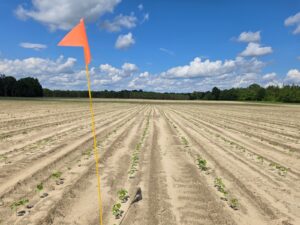
Figure 1: Cotton field ready for sampling two-spot cotton leafhopper during the 2026 field season.
Two-spot cotton leafhopper Extension handout
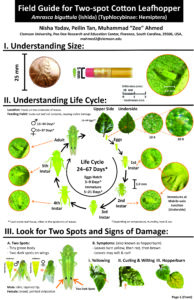
An Extension handout was developed by the Clemson Cotton IPM team to illustrate and summarize current information about the two-spot cotton leafhopper. The handout contains information on the insect’s life cycle and identification, injury to cotton, sampling, and the preliminary threshold based on data collected in 2025. The handout is free and available through THIS LINK. More information on two-spot cotton leafhopper can also be found in the MyIPM for Row Crops app!