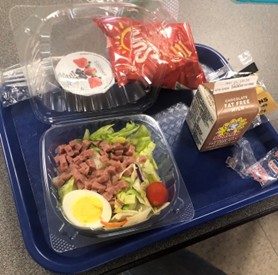
Smart Snacks help schools support student health, improve focus, and promote lifelong healthy eating habits. Image Credit: RHN Team Picture Bank
Why Smart Snacks Matter
Students spend about seven hours a day at school and can get up to half of their daily calories during the school day. That means small changes in snack choices can make a big difference in their overall health and learning. For schools, this makes snack and beverage choices an important part of creating a healthy learning environment. Schools set the tone for what is offered, what is encouraged, and what becomes routine for students.
Smart Snacks are foods that provide good nutrition and steady energy without being too high in calories, sugar, or fat. Understanding these standards helps schools make choices that support focus and behavior, reduce energy crashes, and keep students ready to learn throughout the day. When schools follow the USDA Smart Snack Standards, they often see stronger participation in meal programs, more consistent messaging across the school community, and improvements in overall student wellness.
These guidelines give schools quick, simple directions they can use right away. They help staff understand what counts as a Smart Snack, how to choose options that fit the standards, and how healthier choices support a positive school culture.
Understanding Smart Snack Standards
The USDA Smart Snacks in School regulation applies to all foods sold during the school day, including items in vending machines, snack bars, and fundraisers.
To qualify as a Smart Snack, foods must:
- Be a grain product containing 50 percent or more whole grains by weight, or have a fruit, vegetable, dairy, or protein food as the first ingredient.
- Be a combination food that includes at least one-fourth cup of fruit or vegetables if neither of the above applies.
- Meet nutrient limits for calories, sodium, total fat, saturated fat, and sugars.
Tip: Use the Alliance for a Healthier Generation Smart Snack Calculator to determine if a food meets USDA Smart Snack standards: https://foodplanner.healthiergeneration.org/calculator/
Did You Know?
Students who eat snacks high in fat, sugar, and salt are less likely to perform well academically. Students who eat breakfast daily and include fruits and vegetables in their diet are significantly more likely to earn A’s in school. These habits give students steady energy, better focus, and a stronger ability to stay engaged throughout the day.
- 42% of these students eat breakfast daily
- 62% of these students eat fruit
- 66% of these students eat vegetables
Healthy eating habits can make a big difference in the classroom. This data shows that many students still miss key nutrients that support learning, and schools can play an important role in helping students build these habits during the school day.
Healthy Snack Ideas
Packing and planning snacks can be simple with these grab-and-go options that store well in a backpack or lunchbox:
- Fresh fruit cups or veggie bags
- Low-fat yogurt or cheese sticks
- Trail mix with unsalted nuts, dried fruit, and whole-grain cereal
- Baked chips or popcorn
- 100-percent fruit juice boxes or flavored water
DIY Snack Mix Idea: Combine whole-grain cereal, pretzels, and raisins—or mix and match your own ingredients to suit student preferences.
See the Green Light Snack List infographic below for quick, student-approved snack options that meet Smart Snack Standards.
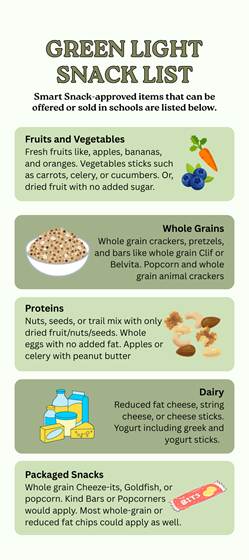
Green Light Snack List created by Bailee Floyd and Phoebe Covode in Canva
Engaging Students in the Process
Involving students in healthy choices builds excitement and lasting habits. Strategies to try to include:
- Taste Test Tuesday: Let students sample new snacks and vote for their favorites.
- Student-Led Marketing: Create posters, announcements, or social media posts promoting Smart Snacks.
- Snack Name Challenge: Encourage creativity with names like Power Popcorn or Brain Boost Trail Mix.
Keeping the Momentum
Keep Smart Snacking fresh and exciting throughout the year.
- Review options each semester with the School Wellness Committee and update choices as needed.
- Invite teachers and parents to suggest new items so everyone feels included in the process.
- Celebrate milestones with a Snack of the Month board, morning announcement shoutouts, or simple classroom challenges that highlight healthier choices.
- Add student engagement activities such as taste tests, voting on favorite items, or creating posters for the cafeteria to build buy-in and keep interest strong.
- Create a simple Smart Snack station for meetings or after-school events so staff model the same choices students see.
Making Smart Snacking a Habit
By making healthy choices easy and fun, schools can help students build lifelong habits that support learning and wellbeing. Smart Snacking becomes part of the school culture when students see it modeled and reinforced in different ways. Healthy choices should feel easy, familiar, and encouraged. Offering consistent options across classrooms and common areas helps students build routines that support learning and wellbeing. Schools can also weave Smart Snack messages into classroom lessons, morning announcements, or special events to help students connect the habits they build at school with healthier choices at home. Smart Snacks are a simple way to make that difference one bite at a time.
For more tips and resources, visit the Extension Rural Health and Nutrition Blog at https://blogs.clemson.edu/ruralhealth/.
References:
- Alliance for a Healthier Generation. (2025). Smart Snacks Product Calculator [Web tool]. https://foodplanner.healthiergeneration.org/calculator/
- Centers for Disease Control and Prevention. (2024). Dietary behavior and academic grades. U.S. Department of Health and Human Services. https://www.cdc.gov/healthy-schools/health-academics/diet-grades.html
- Correa-Burrows, P., Burrows, R., Orellana, Y., & Ivanovic, D. (2015). The relationship between unhealthy snacking at school and academic outcomes: A population study in Chilean schoolchildren. Public Health Nutrition, 18(11), 2022–2030. https://doi.org/10.1017/S1368980014002602
- U.S. Department of Agriculture, Food & Nutrition Service. (2024). Smart Snacks in Schools. https://www.fns.usda.gov/school-meals/nutrition-standards/smartsnacks
Authors:
- Bailee Floyd, Rural Health and Nutrition, Horry and Marion Counties
- Phoebe Covode, UPIC Intern, Rural Health and Nutrition
