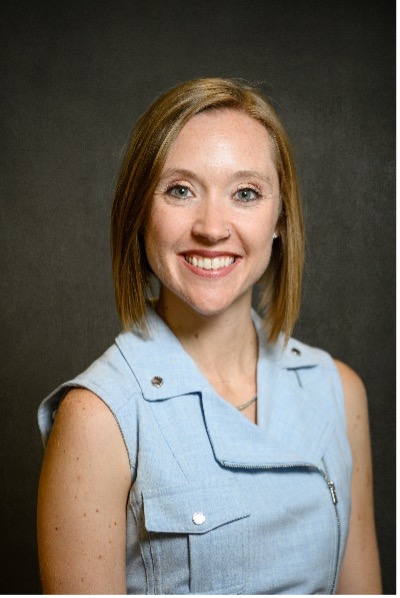
In today’s newsletter, Staff Senate President Stacey Miller provides her latest report. Plus, the upcoming events from the South Carolina Botanical Garden, this month’s Clemson Champion, Ombuds report and more!
In today’s newsletter, Staff Senate President Stacey Miller provides her latest report. Plus, the Staff Senate Golf Tournament is back for another round, the latest Ombuds Report, First Aid/CPR classes from Campus Recreation and more!
Interested in advancing your career with a Clemson MBA? Discover Clemson University’s flexible MBA options and learn more about the ETAP benefits available exclusively to Clemson employees. Attend our upcoming Information Session on Tuesday, March 10, schedule a one-on-one meeting with our Admissions Team at a time that works best for you or email mbaprogram@clemson.edu to explore additional options. Those interested may access the admission application.
It’s the second month of the new year. Did you set New Year’s resolutions this year? Did you keep them? I do not set resolutions every year, but I have successfully set and kept them in the past. However, none of my resolutions were achieved without the accompanying shame and anxiety about how I would feel if I were to join the millions of others who abandon their resolutions by the second Friday in January. In other words, I have kept resolutions when the achievement was not the resolution itself but only the avoidance of failure.
When lamenting this tension recently, a friend told me she doesn’t count her January productivity toward her work or life projects at all. She does what she needs to do to get her job done, but if she has broader goals, such as “learn a language,” “write a novel,” or “lose weight,” she gives herself the month of January to be okay with her status quo, rather than striving for more. She looks at other months for productivity and achievement.
I was intrigued. My friend’s decision to only begin “counting” her productivity on February 1 made me think about seasons when we just need to sit back and survive. Staff at Clemson have been through a lot lately: leadership changes, ERP improvements, political shifts, financial mayhem, to name only a few. Maintaining our productivity and professionalism while handling so much change is an achievement in itself.
My No.1 strength in StrengthsFinder is “Achiever,” which I often find to be a burden, pushing me to strive more and rest never. Because of this “strength,” if I decide to call it that, I’m one of those people who need to have tiered goals: A big one that will take years, then something that will take this year, this semester, this month, this week, this day. Right now, my big goal is working on my PhD. But rather than a year-long or semester-long goal, what if I give myself permission to just get by?
I’m not advocating that we spurn productivity or stop trying. Caring about this place and pouring our hearts into our work is what makes this university run. But I found my productivity to be somewhat counterintuitive: When I gave myself permission to take a little break from the achievement grind, I was more productive than ever, without the fear or shame I’m used to. I actually made a personal breakthrough and started working on a project I had dreamed about for years and kept putting off, waiting until there was a lull in everything else in my life. That lull is not coming! I needed to create it for myself.
I’ve also started putting important but easily ignored things on my weekly to-do list: figure out what self-care I need, take a walk outside, spend uninterrupted time with my kids, have a conversation with my husband that does not involve logistics of feeding and housing and transporting these children. As someone guided by lists, when there is a place for a checkmark by these, I’m much more likely to see them as something to achieve and find fulfillment in.
So let me just say this: You’re doing fine. I’m doing fine. We’ll get through these seasons of change, and that can be our big achievement for 2026.
Box No.1:
What is the Ombuds Office?
The Ombuds Office is a confidential, independent, neutral, and informal space for staff to process concerns, get information, and develop options for how to move forward in a difficult situation. I can provide education, conflict coaching, mediation, and facilitation as well as referrals to other resources across Clemson. If you are unsure how to move forward in any way, I can help you work through it.
Good Morning! In today’s newsletter, Staff Senate President Stacey Miller provides her latest report, Fike Recreation Center introduces a new training class, Ombuds Tessa Byer provides the latest insights from the Ombuds Office and more.
Good afternoon! In today’s newsletter, Open Enrollment and Annual Required Training are underway, Ombuds Tessa Byer provides the latest insights from the Ombuds Office, Compliance and Ethics Week starts October 20-24, and more.
Are you a Clemson staff or faculty member who is also a graduate student? Would you like to connect to others in the same boat? Join fellow Clemson graduate students who are also faculty/staff for an afternoon of connection at Kite Hill Brewery. This event is designed for those balancing both roles — graduate study and CU employment — to meet, share experiences, and strengthen our Clemson community.
This year’s Annual Required Training launched September 30 and covers two essential areas:
Information Security Awareness (ISA)
Conflict of Interest (COI), including disclosure if applicable
The 2025 annual required training modules are accessible through Tiger Training on September 30, 2025, with a due date of November 18, 2025. The COI and ISA modules will again feature shorter versions for those employees who previously completed training. Faculty and staff will be presented with a knowledge check in both modules. If they pass the knowledge check, they will not be required to take the remaining course content.
Additional resources are available to support your training:
Clemson is celebrating its annual Compliance & Ethics Week (CEW) on October 20–24 and we’re excited to celebrate integrity, accountability, and professional growth across our community. Check out the lineup of events for CEW:
The annual insurance open enrollment period is now underway through October 31! During open enrollment, eligible employees can enroll in or make changes to insurance coverage to take effect January 1, 2026.
The Open Enrollment deadline is October 31, 2025, at 11:59 p.m.
The South Carolina Public Employee Benefit Authority (PEBA) is the state agency responsible for administering and managing the state’s insurance programs for South Carolina’s public workforce. PEBA’s 2026 Insurance Summary (PDF) is a helpful resource for detailed information about open enrollment options.
Where to Begin
Eligible faculty and staff should review their insurance elections and benefit deductions annually, even if they don’t plan to make changes.
Use PEBA’s Open Enrollment Worksheet (PDF) to review and plan your coverage. Find more information about election options on the 2025 Open Enrollment webpage.
Verify current benefit deductions by accessing your paycheck through Employee Self-Service.
If you are satisfied with your current insurance elections and want them to continue in 2026, you don’t need to make any changes during Open Enrollment, unless you wish to continue your MoneyPlus flexible spending account. Medical Spending Account (MSA), Limited Medical Spending Account (LMSA) and Dependent Care Spending Account (DCSA) participants must re-enroll each year using the instructions below.
More information about insurance options and how to make open enrollment elections is available on the 2025 Open Enrollment Webpage.