Clemson Extension Upstate District

Upcoming 2026 Horticulture Programming!

By: Andrew Jeffers, Greenville County Horticulture Agent

In 2026, Horticulture Agent Drew Jeffers is lining up a full slate of practical programs that meet learners where they are—on jobsites, in community spaces, and online. We open the year with a Tree Workshop on January 22 in Greer, a half-day deep dive designed for crews and managers who want fewer callbacks and healthier canopies. Sessions move from tree ID challenges to invasive species awareness, then into “plant this, not that” alternatives and the soil/site realities that make-or-break urban trees—each talk aimed at decisions you’ll make the next day.

February stacks training options for every audience. Growers and land managers can earn credentials at the Private Applicator session on February 3 (Greenville DHEC training room). Home gardeners get a focused, myth-busting Hydrangeas webinar on February 18. And turf professionals can spend February 26 in an Advanced Turf IPM Workshop that walks through communication with clients and crews, cultural practices that strengthen IPM, insect and disease ID, scouting and thresholds, and advanced weed management—seven hours that connect diagnosis to action, start to finish.

Looking ahead to fall, the Master Gardener main course runs August 4–November 17, bringing a new cohort into research-based horticulture with plenty of hands-on problem-solving. We’ll also gather the industry at the IPM Symposium on October 22 (Canon Centre, Greer) to compare notes, sharpen scouting and decision-making, and leave with steps that improve outcomes across the Upstate. A second Private Applicator date follows on November 5 for those needing certification before year’s end.

Along the way, Drew will share tailored talks with local garden clubs and appear at regional and national meetings—including ASHS (August), the EMG Conference (August), and iLandscape (February)—to keep our programs aligned with current science and the real-world questions people bring to the table. It’s a year built around one goal: practical learning that turns into better decisions, healthier landscapes, and confident clients across Greenville County and beyond.

Soon-To-Be SC Extension Master Gardener Volunteers

By: Andrew Jeffers, Greenville County Horticulture Agent

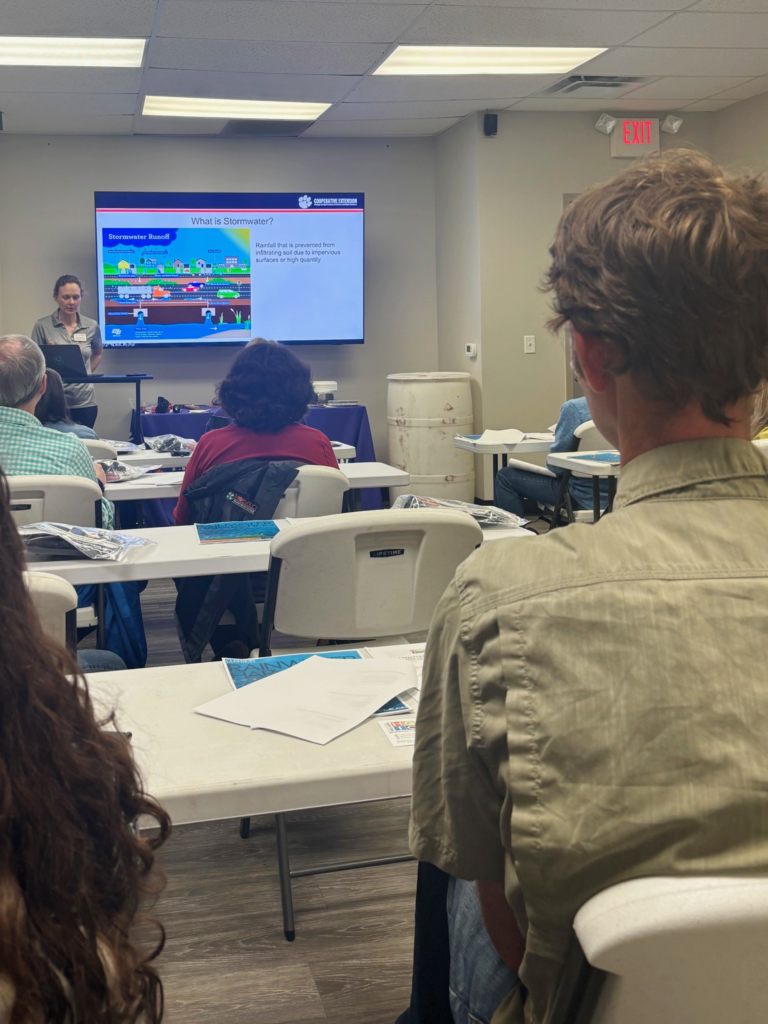
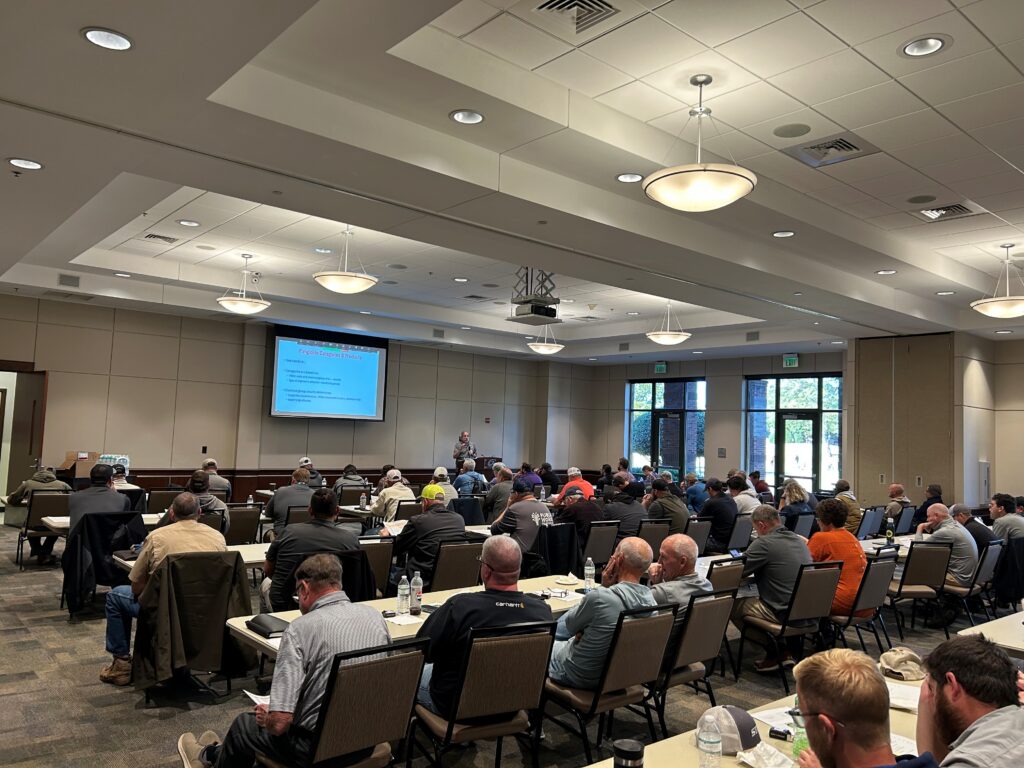
Picture shows the 2025 Master Gardener class listening to a lecture

The 2025 Master Gardener class brought together 28 participants for a fall season of hands-on, research-based learning focused on real problems from Upstate yards and landscapes. Each Tuesday, the cohort moved from fundamentals to field application—building a shared language around soils and plant nutrition, plant physiology, integrated pest management, plant pathology, nuisance wildlife, and diagnosing plant problems.

Learning didn’t stay in the classroom. The group practiced sample collection and diagnosis, compared notes on “look-alike” issues, and took targeted site visits that connected teaching to practice—so what they learned in the morning showed up in better decisions that afternoon. A simple capstone kept it practical: every participant chose a real landscape issue, used credible (.edu) sources to identify causes, and outlined a step-by-step solution to share with the class.

By graduation, the cohort had what they came for: confidence to identify before treating, clearer judgment about when (and when not) to use pesticides, and a toolkit for communicating recommendations to neighbors, clients, and community groups. The next step is service—bringing those skills to help desks, demonstration gardens, and local outreach events across Greenville County.

Diagnose First, Decide Better: Insights from the IPM Symposium

By: Andrew Jeffers, Greenville County Horticulture Agent

The IPM Symposium has grown into a place where pros compare notes, sharpen their diagnosis, and leave with steps they can use the next morning. That momentum has been building—237 attendees at the 6th annual event underscored the demand for practical, field-tested guidance, and last fall’s 7th Annual IPM Symposium kept the focus on decision-making with sessions like “Will Consumers Purchase a Landscape Scouting Program?” that translated research into service design for real clients.

This year, Horticulture Agent Drew Jeffers is taking the next step. The 8th Annual IPM Symposium will be simulcast to extend access to teams who can’t travel—municipal crews, small shops, and out-of-area professionals—so more people can engage with the duplicate evidence-based content that’s guided the series, including insights from our work on consumer IPM knowledge. The goal is simple: reach more practitioners, keep the conversations grounded in data, and help crews make better choices that protect people and landscapes across the state.

Spotlight: What Consumers Know About IPM

By: Andrew Jeffers, Greenville County Horticulture Agent

This spring, Horticulture Agent Drew Jeffers published “Estimating Consumer Integrated Pest Management (IPM) Knowledge” in HortTechnology—a data-driven look at what homeowners actually understand about IPM. Coauthored with colleagues Behe, Vassalos, Bridges, and White, the article (March 3, 2025) provides a clear reference point we can use to tailor education, outreach, and industry communication.

Jeffers has already put these insights to work. In February, he led a pesticide-credit webinar for professionals—“Professional Pest Scouting Programs: Using Consumer IPM Knowledge for Pest Management Decisions”—to translate the research into tighter scouting routines and clearer client messaging (31 attendees). Master Gardener audiences engaged the public-facing side of this work in sessions on navigating consumer recommendations. In contrast, industry audiences explored how to use consumer IPM knowledge to market plants (125 attendees).

This paper also complements his earlier HortTechnology study on whether customers would purchase a landscape scouting program. It gives practitioners both what clients know and how they might buy. Together, these findings help to design services and education that meet people where they are—leading to better decisions and healthier landscapes.

SC Certified Landscape Professional Program Expands and Renews

By: Andrew Jeffers, Greenville County Horticulture Agent

The South Carolina Certified Landscape Professional (SCCLP) program took a big step forward this year by moving statewide training online through Clemson’s Canvas platform. Built for working professionals who need flexible, competency-based learning, the on-demand format lets crews and managers build skills on their schedule while preparing for certification. Now in its fifth year—with nearly 600 participants to date—SCCLP is also entering a new phase: the first renewals are underway, marking a significant milestone for the credential’s staying power and value across the industry. The current cycle runs September 1, 2024, through August 31, 2025, and remains accessible statewide, giving companies a consistent, scalable way to onboard and upskill staff without pulling them off jobsites.

SCCLP is also getting an update. Jeffers is currently refreshing content and assessments, streamlining navigation, and aligning modules more tightly with current best practices and regulations so that what learners study online translates directly to safer, higher-quality work in the field. As we move into the next cycle, the focus stays the same: keep SCCLP practical, flexible, and closely tuned to what landscape professionals need day-to-day—so the skills learned online show up as better results on the ground.

On-Demand to On-Site: A Year of Pesticide Education That Works

By: Andrew Jeffers, Greenville County Horticulture Agent

Over the past year, Horticulture Agent Drew Jeffers’ pesticide education and safety work has centered on three simple goals: equip professionals to make compliant, effective decisions; give homeowners clear, confidence-building guidance; and keep practical training available whenever people have time to learn. That meant building durable on-demand options while continuing live, credit-bearing programs that meet people where they are.

On the asynchronous side, he expanded two self-paced courses that anchor our outreach: Commercial Pesticide Applicator: Core & Category 3 (Ornamental & Turf) and Pesticide Safety for Homeowners. As of August 31, 2025, 13 learners had enrolled in the Core/Category 3 course and 15 in the homeowner course, using modules on reading the label, PPE, application timing, and recordkeeping to translate regulation into day-to-day practice.

Live programs rounded out that foundation, offering recertification webinars that moved from diagnosis to action—like Managing Diseases in Ornamental Landscapes (November 13, 2024; 45 attendees) and Professional Pest Scouting Programs: Using Consumer IPM Knowledge for Pest Management Decisions (February 26, 2025; 31 attendees)—each designed to reduce misuse, align products with label language, and slow resistance through better timing and selection.

To maintain a clear pathway into legal, safe use for growers, we hosted Initial Private Applicator Training & Exam twice at the county office (June 7 and November 8, 2024; five participants each). Beyond test prep, these sessions emphasize storage, mixing and loading, spill response, and documentation—habits that protect people and places.

For homeowners, he ran a three-part Ornamental Pest Management series in spring of 2025 that kept IPM front-and-center: Insects (March 5, 2025; 48 attendees), Diseases (April 2, 2025; 21), and Weeds (April 30, 2025; 33). Each webinar walked through correct identification, non-chemical tactics, and, when necessary, how to choose and apply a pesticide responsibly—always by the label.

He also took these messages to where professionals gather. At the 7th Annual IPM Symposium (October 10, 2024; 87 attendees), we explored how consumer IPM knowledge can sharpen scouting and treatment decisions, and at the Urban Tree Health Workshop (June 13, 2024; 85 attendees), we connected diagnosis, calibration, and risk reduction for crews working at scale. At Cultivate 2024 (July 14, 2024; 168 attendees), our session on Pesticide Label Interpretations used real labels to build fluency in the parts that most often trip up compliance.

Finally, he compared how different Extension systems coach the public by sharing Navigating Differences on Pesticide Recommendations for Consumers with Master Gardener audiences in Florida (February 14, 2025; 21 attendees) and Ohio (December 10, 2025; 38), clarifying a common theme: start with identification, select the least-risk option that can realistically work, follow the label, and document the result.

Threaded through everything is the same approach—teach people to slow down, diagnose first, and let the label lead. By combining flexible, self-paced learning with targeted live sessions and field-tested examples, we’re helping professionals and homeowners make safer, more effective decisions that protect their families, clients, and landscapes.

Growing Community Impact

Nicole Goodman
Horticulture Agent
Spartanburg County

Nicole Goodman has fully stepped into her role as the Urban Horticulture Agent in our county. In addition to offering regular workshops on gardening topics (announced through our Facebook Page) and assisting residents daily, Nicole is dedicated to fostering broader community impact through the work of the local Master Gardener Volunteers.

One project particularly close to her heart is the Teaching Garden at St. Luke’s Free Medical Clinic in Downtown Spartanburg. This initiative is designed to educate the community on growing nutritious food, practicing safe food handling, and promoting both mental and physical well-being.

Through collaboration with the clinic’s dietitian, JuliSu, and director Ms. Smith, the garden has become a thriving partnership. Monthly volunteer workdays continue to transform the property into a fully functioning edible and teaching garden.

Project Highlight
This season’s major milestone has been the beginning of terracing the steep east hillside of the property. Thanks to the enthusiasm of this year’s Master Gardener Volunteer students, the project is progressing smoothly. Volunteers—both experienced gardeners and community members new to the field—are not only learning about plants, but also about safe building practices that turn unusable slopes into productive spaces.

While tremendous progress has been made, the garden still requires the removal of several large trees to improve sunlight access and support the continued success of edible plantings.
For ongoing updates, follow the Teaching Garden’s Facebook page: Teaching Garden of St. Luke’s Free Medical Clinic (green logo with three hands).

Farm Gate

Over the past three years, the Clemson Cooperative Extension food crop team has been collecting data for specialty crop production areas and their value to the economy. The pilot scheme began in 2022 with 6 crops. This year marks the repeat of the initial crops and data capture for the remaining 14 crops

Based on the figures for 2024, commercial horticulture in Fairfield County indicates that specialty crops account for $23,310 in revenue. This is based on two years of data, with the final crops to be added this year.

Researchers within the team utilize the data to justify grant proposals; we in Extension can utilize the data to justify our impacts on the state. If you believe or know of any people producing specialty crops in the county, please reach out to me, and I will be happy to collect the information. All information is treated with the strictest confidence.

Rob Last, Commercial Horticulture Agent: rlast@clemson.edu | 803-359-8515 

Urban Horticulture in Fairfield County

Pots of Possibilities

Urban Horticulture Agent Jackie Jordan teamed up with Fairfield County 4-H agent, Martina Wicker to offer Pots of Possibilities. The spring Pots of Possibilities workshop offered participants a chance to make their own edible container garden. Participants combined Malabar spinach, cucumber and tomato plants in pots and learned how to care for the plants. The goal of Pots and Possibilities is to provide citizens of Fairfield County with the tools to grow their own nutritious food.

Master Gardener Training Classes

Jackie Jordan, the Fairfield County Urban Horticulture Agent and Master Gardener Coordinator will offer two Master Gardener Training Classes this fall starting in September. The Kershaw County class will be held on Tuesdays and the Richland County class will be offered on Thursdays through November.

The Master Gardener Training Class trains, selects, and utilizes knowledgeable volunteers to facilitate the educational work of the local Horticulture Agent by delivering research-based information to the citizens of the state.

Jackie Jordan: 803-722-1196 | jkopack@clemson.edu

Big, Beautiful, and a Little Bit Ugly: York County’s Best Tomatoes of 2025

The stage was set. All summer long, York County 4-H’ers had been tending to their tomato plants—watering, staking, pruning, and hoping for the perfect harvest. They all started the same way, with six small tomato plants—this year’s chosen varieties were Celebrity and Sun Gold—handed out at the start of summer. Each young grower transplanted their plants into a garden or container, then spent weeks battling weather, pests, and the unknowns of plant growth.

Yesterday, it all came down to one thing: the York County Tomato Judging Contest. Six titles were up for grabs. Ribbons, bragging rights, and a summer’s worth of work were on the line. The York County Master Gardeners stepped in as judges, inspecting each tomato with care, weighing entries to the gram, and debating over shapes, colors, and, yes… even the “worst” looking fruit.

Finally, the results were in:

2025 Winners

  • Heaviest OpenCaroline Huffstetler – 355 g
  • Heaviest ProjectMorgan Webbie – 319 g
  • Best TomatoNatalie Estes
  • Best Plate of 3Katelyn Huffstettler
  • Worst Looking TomatoEvie Martell
  • Green TomatoRaelynn Harris

Some tomatoes impressed with size, others with perfect form—and some, well, made everyone laugh. But every entry told a story of patience, learning, and determination.

This project isn’t just about who grows the biggest or the prettiest tomato. It’s about watching something you’ve nurtured from seedling to harvest, learning through trial and error, and discovering that sometimes the journey is just as rewarding as the ribbon.

A huge thank-you to the York County Master Gardeners for judging this year’s contest, and to the families and volunteers who made the Tomato Project possible. We can’t wait to see what grows in 2026!