Andy Rollins
Upstate Commercial Horticulture Agent
Cherokee, Greenville, Spartanburg, Union, & York
In Upstate SC, I set up four on-farm tomato demonstrations with varieties coming out of Dr. Dilip Panthee’s NCSU tomato breeding program. Wayne Morgan, a research technician in the program, has been instrumental in getting Dr. Panthee’s varieties into growers’ hands for these demonstrations. The first two plantings in York County were unsuccessful. More than 50% of the plants died within the first two weeks. The extreme heat under which they were planted is believed to be the cause of their failure. The second two, planted approximately 4 weeks later in Spartanburg County and Greenville County, have done well.
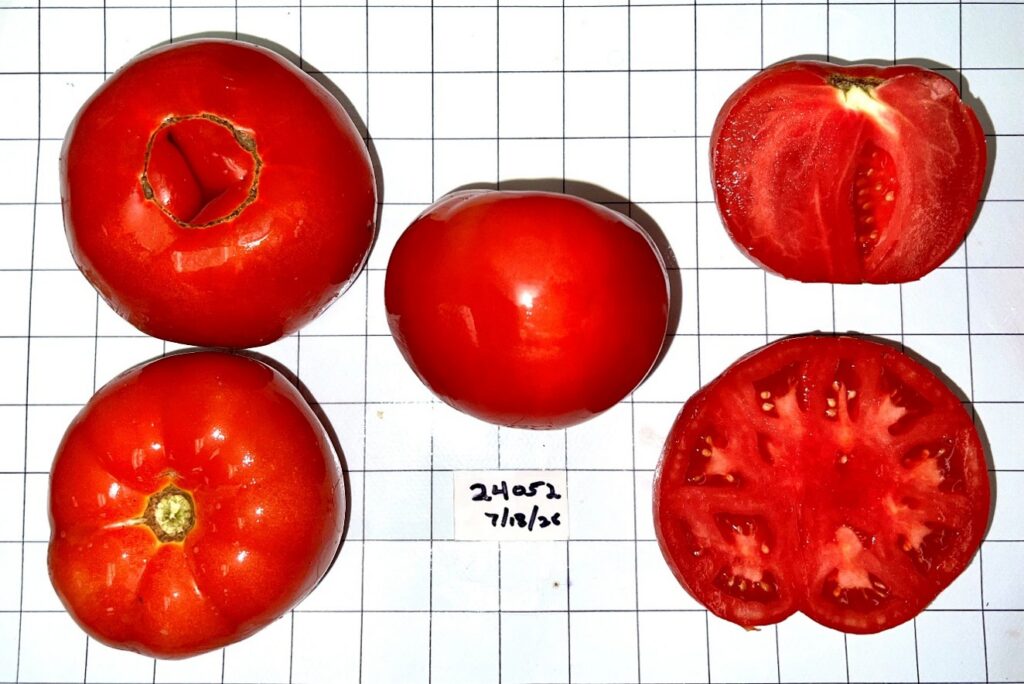
On September 14th, we harvested our first demonstration at the Estrada Farm. We primarily took yield weights for each variety in the field at that time. We also kept ten representative fruit for further evaluation. After refrigeration, I took the best 6 of the 10 and measured size, weight, pressure, and sugar content for each. Then, a representative picture is taken of each variety from multiple angles (top, bottom, and side) and also sliced horizontally and vertically to see internal characteristics. More extensive evaluations are done at the Mountain Horticultural Research Center in Mills River, NC.
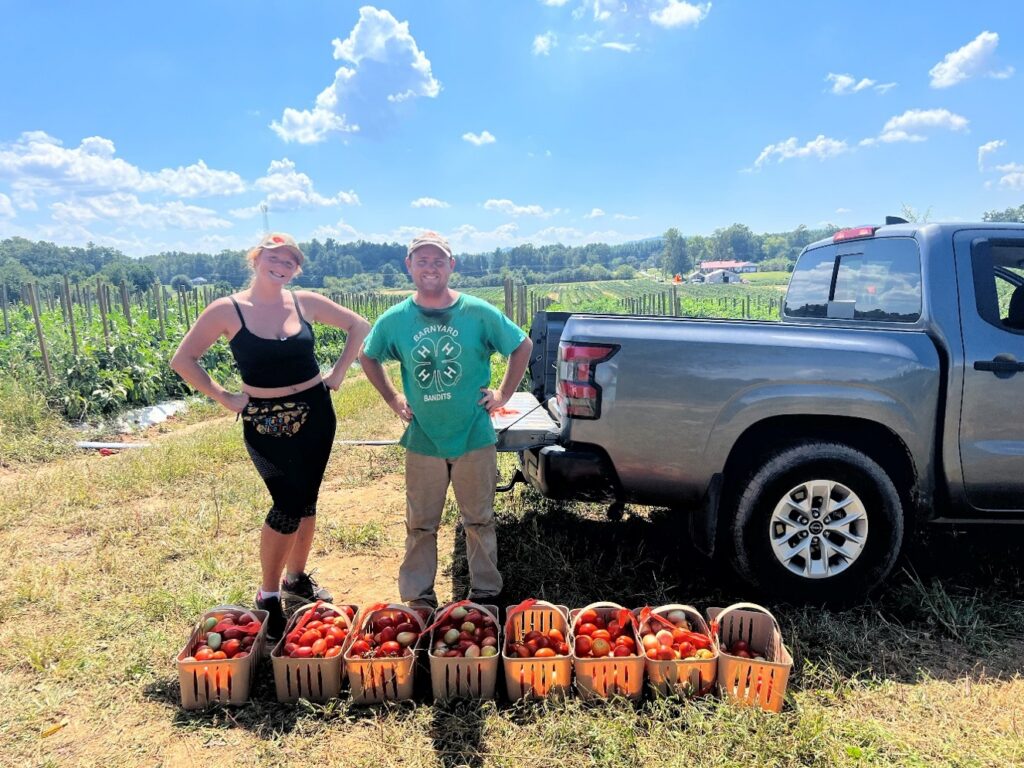
There are two replications of nine large, fruited varieties and nine plum type varieties on each farm. There are common varieties, such as Mountain Fresh Plus (standard) that are compared to newer varieties, such as Mountain Defender and Mountain Ruby. Crown is a standard plum type we are comparing to other plum types. We are also looking at many advanced selections in both tomato types. Many of the newer varieties have a heat set gene and seem to have less white tissue spread from the stem ends. These varieties have handled this hot summer better than others. Many of the new varieties also have a deeper red internal color as well as being meatier than older varieties in general.
Moving into early fall, I will continue to harvest and evaluate the rest of the demonstrations we have left.