Andy Rollins Commercial Horticulture Agent Spartanburg County
I am currently planning a replicated on-farm herbicide trial on jalapeño peppers at the farm of Ignacio Estrada Jr in Greenville County. The trial will evaluate the viability of Spartan herbicide as a weed control option. This project is being coordinated with Dr. Mathew Cutulle, a Clemson University specialist based at the Coastal Research and Education Center in Charleston, SC.
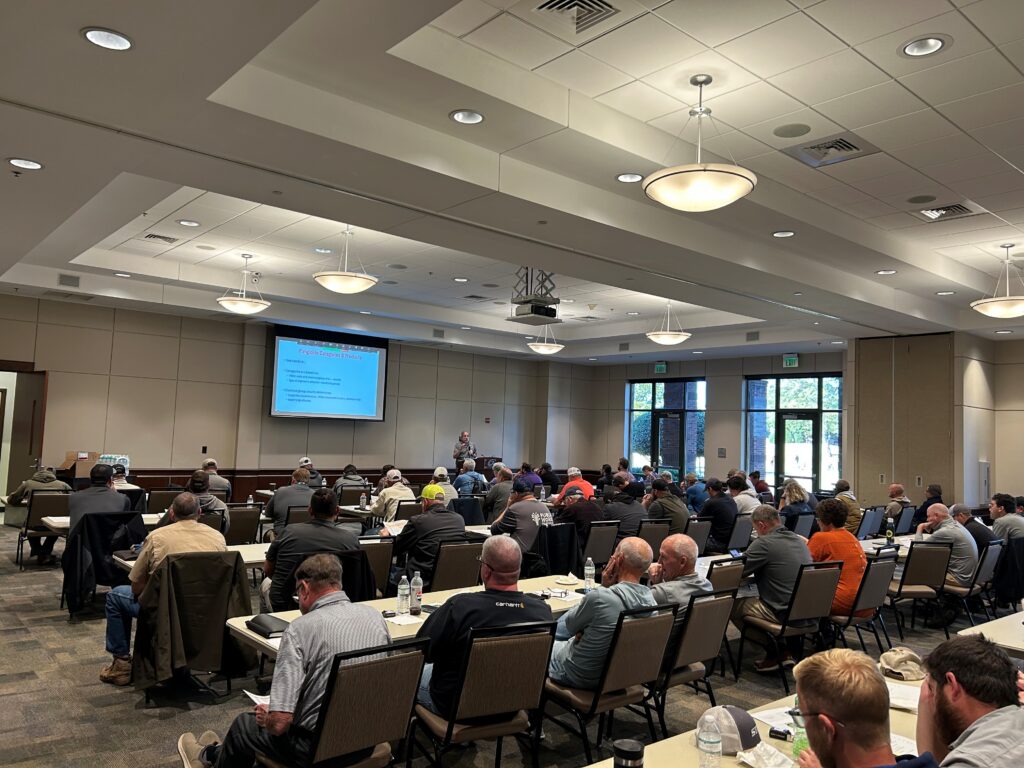
I recently completed the Upstate Strawberry Production Meeting at the Spartanburg Community College Cherokee Campus “Institute for Innovation,” a new venue for me. The meeting attracted growers from at least four counties across South Carolina, as well as two farms from North Carolina.
I will also continue my work on thinning peaches using Ethylene. I have experienced difficulty thinning varieties such as Scarlet Prince and July Prince. To address this, I will use a two-pronged approach: thinning during bloom with Ammonium Thiosulfate (ATS), followed by thinning at the fruitlet stage with Ethephon 2 SL. Peach growers currently rely on hand thinning, which is the most expensive labor input in peach production. This makes the development of effective chemical thinning strategies especially important for peach growers in the Upstate of South Carolina.
My final spring training for Upstate vegetable growers will be held on March 12.
By: Andrew Jeffers, Greenville County Horticulture Agent
Greenville County Extension is excited to announce a new partnership with the Greenville State Farmers Market, strengthening opportunities for agricultural education, horticulture outreach, and community engagement in Greenville County.
This partnership creates a shared space where Extension programming and the Farmers Market’s mission intersect—connecting residents with practical, research-based information while supporting local agriculture and green industry professionals.
Through this collaboration, Drew Jeffers, Horticulture Agent for Greenville County, will work with market leadership to deliver educational workshops, demonstrations, and trainings that serve homeowners, Master Gardeners, landscapers, growers, and the general public. Planned programming will focus on topics such as urban tree care, sustainable landscaping, pest management, seasonal gardening practices, and homeowner horticulture education.
In addition, Amie Mabe, 4-H Agent for Greenville County, is actively planning youth-focused programs at the Farmers Market that will support agricultural literacy, hands-on learning, and community engagement. These efforts will expand opportunities for young people to connect with food systems, horticulture, and environmental stewardship in a highly visible public setting.
Other Greenville County Extension agents are also exploring the possibility of scheduling future programs and workshops at the Farmers Market, reflecting a broader interest in using the site as a hub for Extension education across program areas.
The Greenville State Farmers Market provides an accessible, high-traffic location that attracts a diverse audience—from experienced growers to first-time gardeners. Hosting Extension programs at the market allows education to meet people where they already gather, reinforcing Extension’s role as a trusted source of science-based information.
By combining Extension expertise with the Farmers Market’s strong community presence, this partnership enhances Greenville County’s capacity to promote sustainable practices, informed decision-making, and long-term stewardship of landscapes and natural resources.
Details on upcoming programs and events hosted through this partnership will be announced in future newsletters and through Greenville County Extension communication channels.
For more information on Extension programs and educational opportunities, contact Greenville County Extension.
By: Andrew Jeffers, Greenville County Horticulture Agent
Urban trees are more than landscape features—they provide shade, reduce stormwater runoff, improve air quality, and add long-term value to our communities. To help homeowners, landscapers, and Master Gardeners better understand how to establish and care for trees in developed environments, Greenville County Extension recently hosted an Urban Tree Workshop led by Drew Jeffers, Horticulture Agent for Greenville County.
The workshop attracted 42 participants from across the county and focused on practical, research-based strategies for improving tree survival and long-term performance in urban and suburban landscapes.
One of the primary topics covered was proper tree planting techniques, including correct planting depth, identifying the root flare, and the importance of wide, shallow planting holes. Participants learned that many common tree problems begin at planting and that improper installation can shorten a tree’s lifespan by decades. Common issues such as girdling roots, buried root flares, and compacted soils were discussed, along with methods for correcting or preventing them.
The workshop also addressed mulching and watering practices, areas where well-meaning maintenance often causes unintended harm. Participants learned how excessive mulch can damage tree trunks and restrict oxygen to roots, as well as why consistent, moderate watering is more effective than infrequent heavy irrigation. Proper mulch placement and irrigation timing were emphasized as simple, low-cost practices that significantly improve tree establishment.
Another key focus was urban tree stress. Trees growing in developed environments face unique challenges, including limited rooting space, reflected heat, soil compaction, and mechanical injury. Understanding these stressors helps explain why trees in landscapes often decline prematurely and highlights the importance of proactive management rather than reactive treatments.
The workshop concluded with a discussion on long-term tree care, including structural pruning, monitoring for pests and diseases, and recognizing when professional arborist services may be needed. Participants were encouraged to view tree care as a long-term investment that benefits both individual properties and the broader community.
Educational programs like this Urban Tree Workshop support Greenville County’s commitment to healthy landscapes, resilient urban forests, and informed environmental stewardship. By improving how trees are selected, planted, and maintained, residents can help ensure Greenville County’s trees thrive for generations to come.
For information on upcoming Extension programs and educational opportunities, contact Greenville County Extension.
By: Andrew Jeffers, Greenville County Horticulture Agent
Clemson Extension recently hosted the 8th Annual Integrated Pest Management (IPM) Symposium in Greer, bringing together professionals from across the region for a full day of applied, research-based education.
The symposium attracted 93 participants, including landscapers, nursery and greenhouse professionals, pesticide applicators, Extension personnel, and industry representatives. The event focused on practical IPM strategies designed to improve pest control outcomes while reducing unnecessary pesticide use and minimizing environmental and economic risk.
Sessions emphasized the core principles of IPM, including accurate pest identification, monitoring and threshold-based decision making, resistance management, and the integration of cultural, mechanical, biological, and chemical control tools. Speakers highlighted how improper timing, overreliance on single modes of action, and reactive management approaches can contribute to control failures and resistance development.
Participants also received updates on current pest issues affecting ornamental landscapes and production systems, along with guidance on selecting appropriate control options based on site conditions, plant material, and pest pressure. Emphasis was placed on making informed management decisions that protect both plant health and applicator safety.
The symposium provided an opportunity for professionals to earn pesticide recertification credits while engaging directly with Extension specialists and peers. Attendees were encouraged to take information from the program back to their operations to improve long-term pest management efficiency and sustainability.
Educational events like the IPM Symposium reflect Clemson Extension’s commitment to supporting South Carolina’s green industry through science-based training and professional development. By promoting IPM principles, Extension helps ensure that pest management practices remain effective, economical, and environmentally responsible.
Information on future IPM programs and educational opportunities will be shared through Clemson Extension and Greenville County Extension communication channels.
For more information, contact Greenville County Extension.
By: Camilla Herndon, Rural Health and Nutrition Agent
According to a 2024 South Carolina Department of Public Health Report, 20.3% of South Carolina adults eat less than one serving of vegetables per day. In addition, approximately 6 in 10 adults in South Carolina have a chronic disease, such as heart disease, cancer, or diabetes. Substantial evidence affirms that diets rich in fruit and vegetables reduce the risk of chronic diseases. Furthermore, research suggests that gardening improves fruit and vegetable consumption by increasing access to fresh produce and fostering positive attitudes for eating fruits and vegetables.
In an effort to address nutrition through gardening, Greenville County Clemson Extension hosted three Growing Health classes during the spring, summer, and fall growing seasons in 2025. The Growing Health program, jointly facilitated by the county Horticulture Agent and Rural Health Agent, provided gardening and nutrition education to beginner gardeners at no cost. Each class focused on one of three vegetables: tomatoes, leafy greens, and broccoli. During the class, participants learned about the vegetable’s planting dates, fertilization practices, pest and disease management, how to harvest the vegetable, and recipes for cooking with the vegetable.
Participants left the class with a booklet on the vegetable, a 5-gallon grow bag, seedlings or transplants of the vegetable, and a kitchen measuring cup to aid their gardening and nutrition efforts at home.
Harvard School of Public Health’s Healthy Eating Plate visually communicates evidence-based nutrition information. To create healthy, balanced meals at home, consider using the plate method:
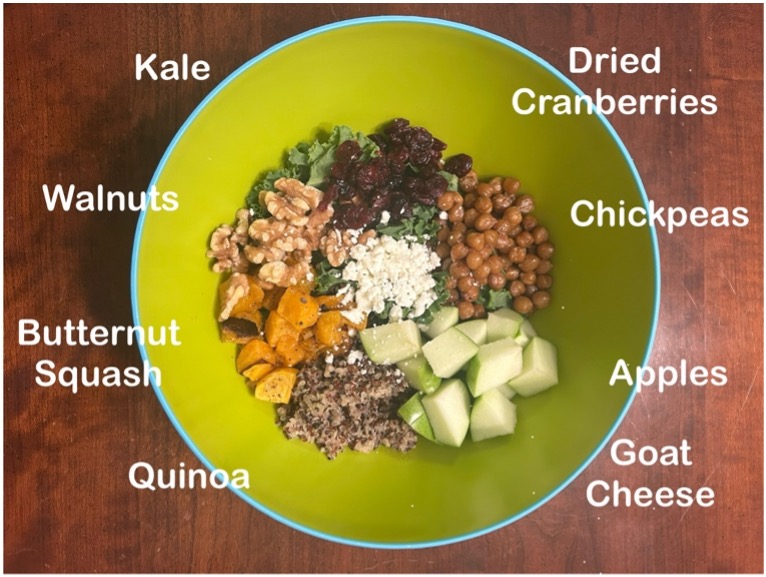
Fill ½ of your plate with colorful vegetables and fruits: leafy greens, bell peppers, broccoli, asparagus, berries, apples, peaches
Fill ¼ of your plate with whole grains: brown rice, quinoa, oats, whole wheat pasta or bread
Fill ¼ of your plate with lean proteins: fish, poultry, chickpeas, or beans
Use oils in moderation: vegetable oil, olive oil, canola oil, and others
Drink water and avoid sugary beverages
If you’d like to participate in the 2026 Growing Health classes, sign up on Eventbrite here.
By: Andrew Jeffers, Greenville County Horticulture Agent
Greenville County Clemson Extension is pleased to announce the launch of the Growing Health series, a new educational program developed through a partnership between Drew Jeffers, Horticulture Agent, and Camilla Herndon, Rural Health Agent.
The Growing Health series is designed to connect horticulture, food systems, and community health by exploring how gardening, plants, and local food production support physical, mental, and environmental well-being. The program reflects Extension’s integrated approach to addressing both landscape sustainability and human health outcomes.
Sessions will be held throughout spring and summer 2026 and are open to the public at no cost. Each program will focus on practical, accessible topics that link plant-based education with healthy living, making the series relevant for homeowners, gardeners, families, and community members interested in wellness and sustainability.
Scheduled dates for the Growing Health series include:
Friday, March 6, 2026 – 2:00 PM
Friday, April 17, 2026 – 2:00 PM
Friday, May 29, 2026 – 2:00 PM
Friday, July 24, 2026 – 2:00 PM
The partnership between horticulture and rural health programming highlights Clemson Extension’s commitment to collaborative, interdisciplinary education that meets community needs. By combining plant science expertise with public health perspectives, the Growing Health series encourages participants to view gardens and landscapes as tools for improving quality of life.
Registration is limited for each session to allow for interaction and discussion, and advance registration is encouraged.
More details about individual session topics and registration information will be shared through Greenville County Extension communication channels.
For additional information on the Growing Health series or other Extension programs, contact Greenville County Clemson Extension.
This past fall introduced a new 4-H tradition in Greenville County. Fall Contests were hosted at the Greenville Extension office on December 11th, 2025, with three exhibits- Table Setting, Brown Bag Lunch, and Presentations.
Table Setting is open to 4-H members of any age to design a stunning place setting for one, using any theme they can dream up, from garden parties to patriotic holidays. With judging done interview-style, they get to share their inspiration, menu, and design choices face-to-face. The Brown Bag Contest blends nutrition and creativity in an exciting challenge open to all 4-H members. Participants bring a homemade meal packed in a classic brown bag or lunch bag that follows MyPlate guidelines, with just one store-bought item allowed. 4-H’ers present their meal while sharing its nutritional value and why it’s a balanced choice.
Lastly, the Presentation contest enables members to share their passion through an illustrated talk or demonstration on a topic from any 4-H project area- like agriculture, STEM, healthy living, or leadership.
Each contest had 7 youth participants, aged 5 to 18. With a wide age range also came a wide range of styles and topics. These contests ask youth to flex their knowledge, creativity, and decision-making skills, making each entry unique while exhibiting the National 4-H Beyond Ready theme. Judging for these contests was a collaborative effort among several community partners, including Lauren Couchois from School Food Rocks, Dorien Dickey from Launch GVL, and Rushawnda Olden from the SC 4-H Pinckney Leadership program.
Before the Fall Contests, Greenville 4-H hosted a clinic day to instruct in each exhibit area and gave members a place to practice these skills before deciding to register. Attending the clinic also granted free registration to the Fall Contest. But for those who specifically participated in the presentation contest, this also meant free registration to the regional presentation contest. For Junior 4-H member Juliette Johnson, her participation in Greenville’s Fall Contests led her to receive 2nd place in the Upstate Regional 4-H Presentation Contest. It later led her to compete at the state competition in Columbia, her first state contest of what she hopes to be many.
Those interested in participating in the future should subscribe to the Greenville 4-H newsletter and follow the Greenville 4-H Facebook page to get the latest news on upcoming 4-H youth programming.
By: Heather Nix, Upstate Regional Water Resource Agent
Water Quality Issues: Last year, harmful algal blooms (HABs) were plentiful and had a record long season, with SCDES identifying blooms in major reservoirs from 4/30/25 (Lake Hartwell) to 11/24/25 (J. Strom Thurmond Reservoir). We responded to many related complaints, including one that involved the deaths of 24 adult cows on a farm with cyanotoxin-producing HABs. In response, we are working to have new tools and materials available to improve and streamline responses later this year. Existing tools include several fact sheets, articles, manuals, a pocket field guide, and an online class – all available online at https://www.clemson.edu/extension/hab/materials.html
Drought Status: Reports of low water levels in ponds are increasing across the Upstate. As of 2/10/26, all of Greenville County is experiencing some level of drought (see map), including D3 Extreme (southern 30% of County), D2 Severe (middle ~50%), and D1 Moderate (northwestern 20%).
As we begin a new 4-H year in Greenville County, members have an exciting opportunity to showcase their growth and achievements through updated 4-H portfolios. These portfolios not only serve as a valuable record for future college applications but also offer a chance to earn county awards and prepare for the State Portfolio submission. An interview component will be held in the spring, required for senior members and optional for juniors. Cloverbuds are encouraged to participate by reciting the 4-H pledge alongside their submission. Portfolio guidelines for junior and senior members are available on the Greenville County 4-H website, where they can be downloaded or requested as a printed copy. Start your 4-H story today and make this year one to remember!
By: Camilla Herndon, Rural Health and Nutrition Agent
Health Extension for Diabetes has resumed in Greenville County! The first in-person cohort since 2019 kicked off in June 2025 with 7 participants. Health Extension for Diabetes (HED) is a free diabetes education and support program recognized by the American Diabetes Association as a practice-tested program. The goal of HED is to improve participants’ management of their diabetes to prevent or delay complications.
During this 4-month-long program, participants learn the necessary skills to successfully manage their diabetes across 8 education sessions. The HED curriculum covers the foundations of diabetes, creating balanced meals to stabilize one’s blood sugar, the role of physical activity in diabetes management, medications, problem-solving with diabetes, and connections to local resources for further support.
Eligible participants must be at least 18 years old, a South Carolina resident, and have a diagnosis of type 1 or type 2 diabetes. Folks interested in joining an HED cohort can sign up here or email Camilla at herndo3@clemson.edu. The program is also offered online and available for those whose primary language is Spanish.