Clemson Extension Upstate District

Tomato Variety Demos in Upstate SC

Andy Rollins
Upstate Commercial Horticulture Agent
Cherokee, Greenville, Spartanburg, Union, & York
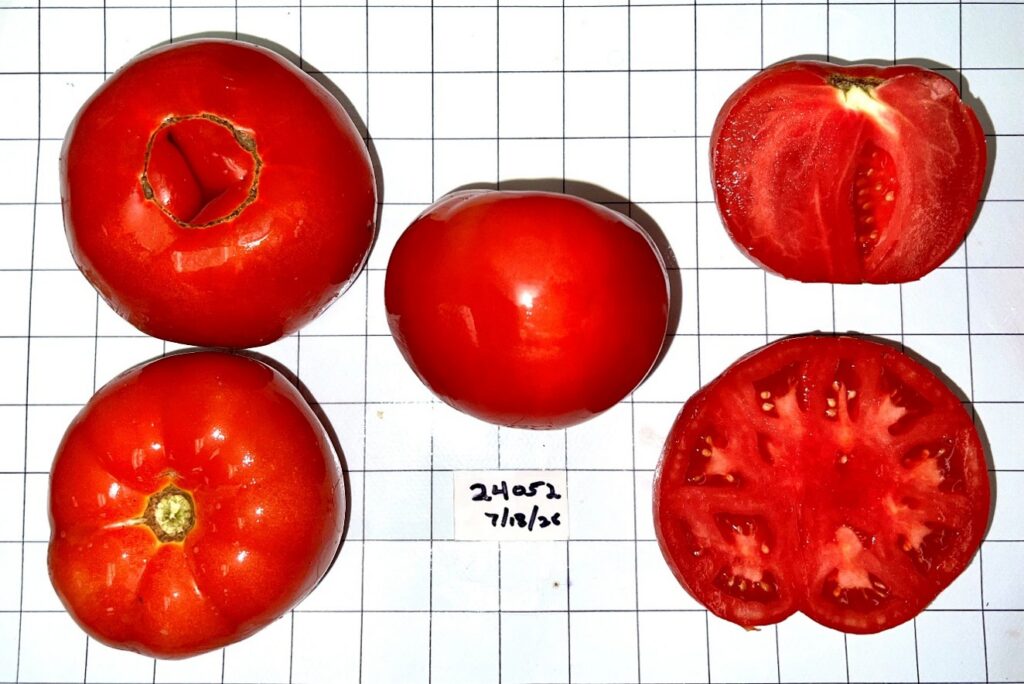
One advance selection variety that stood out with a slightly higher brix content than other varieties.

In Upstate SC, I set up four on-farm tomato demonstrations with varieties coming out of Dr. Dilip Panthee’s NCSU tomato breeding program. Wayne Morgan, a research technician in the program, has been instrumental in getting Dr. Panthee’s varieties into growers’ hands for these demonstrations. The first two plantings in York County were unsuccessful.  More than 50% of the plants died within the first two weeks.  The extreme heat under which they were planted is believed to be the cause of their failure.  The second two, planted approximately 4 weeks later in Spartanburg County and Greenville County, have done well.

On September 14th, we harvested our first demonstration at the Estrada Farm.  We primarily took yield weights for each variety in the field at that time. We also kept ten representative fruit for further evaluation.  After refrigeration, I took the best 6 of the 10 and measured size, weight, pressure, and sugar content for each.  Then, a representative picture is taken of each variety from multiple angles (top, bottom, and side) and also sliced horizontally and vertically to see internal characteristics.  More extensive evaluations are done at the Mountain Horticultural Research Center in Mills River, NC.
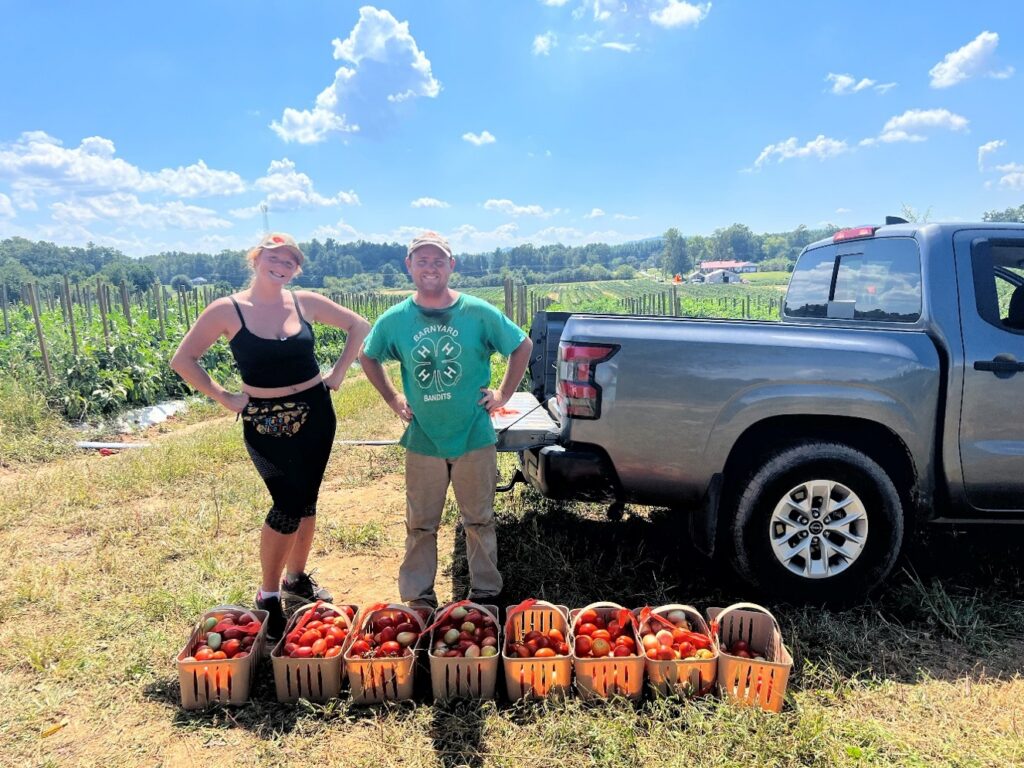
Wayne Morgan and Hope Rollins, my daughter, helped with the harvest.

There are two replications of nine large, fruited varieties and nine plum type varieties on each farm. There are common varieties, such as Mountain Fresh Plus (standard) that are compared to newer varieties, such as Mountain Defender and Mountain Ruby. Crown is a standard plum type we are comparing to other plum types. We are also looking at many advanced selections in both tomato types. Many of the newer varieties have a heat set gene and seem to have less white tissue spread from the stem ends. These varieties have handled this hot summer better than others.  Many of the new varieties also have a deeper red internal color as well as being meatier than older varieties in general.

Moving into early fall, I will continue to harvest and evaluate the rest of the demonstrations we have left.
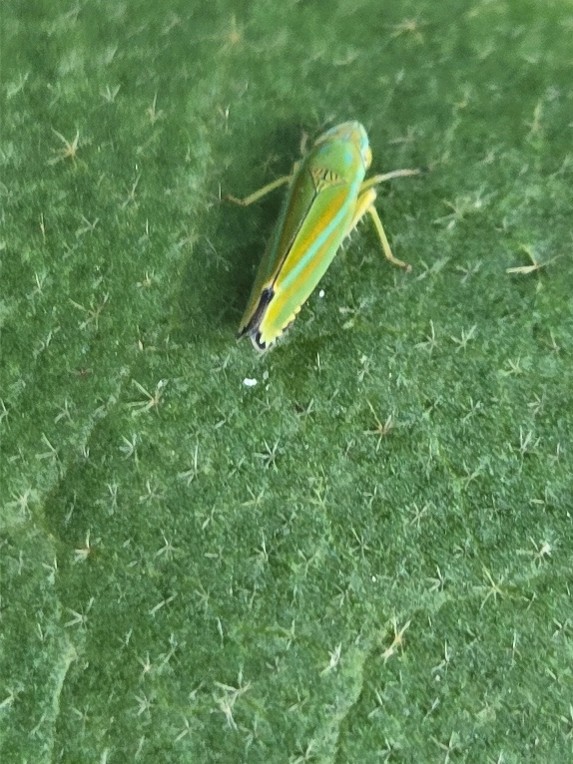
Two-Spotted Cotton Leafhopper

Keeping an eye on The South Carolina Grower blog, written by Clemson Extension food crop agents, provides timely suggestions for pest and disease management and potential issues being seen in the state. In addition, the resources tab provides up-to-date information on meetings of interest around the state with the opportunity to earn private applicator CEUs.

Leafhopper found on an eggplant leaf.
Two-spotted cotton leafhopper.

The two-spotted cotton leafhopper was observed again in August, initially in Charleston. The pest does not appear to be overwintering in South Carolina at present. The favored hosts are in the mallow family, including cotton, hibiscus and okra. In addition, it is known to be found on sunflowers and eggplant. If you find the insect, please report it to Extension. The adults are visible to the naked eye, but using a phone camera provides magnification, bringing the spots into clearer focus.

For more information, contact Commercial Horticulture Agent 
Rob Last 
at rlast@clemson.edu or (803) 359-8515. 

Spring Field Trials and Grower Outreach Efforts in Upstate South Carolina

Andy Rollins
Commercial Horticulture Agent
Spartanburg County

Andy Rollins presenting at the Upstate Strawberry Meeting

I am currently planning a replicated on-farm herbicide trial on jalapeño peppers at the farm of Ignacio Estrada Jr in Greenville County. The trial will evaluate the viability of Spartan herbicide as a weed control option. This project is being coordinated with Dr. Mathew Cutulle, a Clemson University specialist based at the Coastal Research and Education Center in Charleston, SC.

I recently completed the Upstate Strawberry Production Meeting at the Spartanburg Community College Cherokee Campus “Institute for Innovation,” a new venue for me. The meeting attracted growers from at least four counties across South Carolina, as well as two farms from North Carolina.

I will also continue my work on thinning peaches using Ethylene. I have experienced difficulty thinning varieties such as Scarlet Prince and July Prince. To address this, I will use a two-pronged approach: thinning during bloom with Ammonium Thiosulfate (ATS), followed by thinning at the fruitlet stage with Ethephon 2 SL. Peach growers currently rely on hand thinning, which is the most expensive labor input in peach production. This makes the development of effective chemical thinning strategies especially important for peach growers in the Upstate of South Carolina.

My final spring training for Upstate vegetable growers will be held on March 12.

Midlands Vegetable Growers

The Midlands Vegetable growers meeting, hosted in Pelion on February 11, was well attended, with 28 producers and growers of various sizes, representing multiple counties in the Midlands. 100 % of the attendees reported that they had learnt new material, and 78% of those have identified areas of their own operations where adjustments to practices can be made to improve both crop and economic sustainability.

As we move into Spring, I urge producers to check the Upcoming Events page of the South Carolina Grower Blog for a complete list of events in the state. A couple of examples are the statewide pea and bean meeting on March 4, March 12 sees the Midlands Strawberry meeting, and March 27 sees the commercial lavender growers meeting.

Please reach out if I can be of any assistance: Rob Last – rlast@clemson.edu | 803-359-8515 .

Advancements in Peach Thinning and Soil Fumigation Techniques

Andy Rollins
Commercial Horticulture Agent
Spartanburg County

Andy Rollins has made significant progress in chemically thinning peaches using ethylene. Ethylene is a naturally occurring gas that increases as many fruits ripen. A common example of its use is placing a ripe banana peel in a paper bag with an unripe tomato, which helps accelerate the tomato’s ripening process.

In commercial peach production, thinning is typically done by hand after the risk of the last frost has passed—generally around April 15th, although this can vary. However, the rapidly rising cost of legal H2A labor, combined with widespread inflation across other farm inputs, has severely eroded profit margins. Many farms are now uncertain whether they can remain operational even for another year.

Rollins has applied ethylene in liquid form to young peach flowers and fruit, which causes the trees to naturally abort a portion of the developing fruit. This spring, he was able to thin 50–60% of the fruit from multiple peach varieties at a cost of just $1.67 per acre (approximately 150 trees), excluding labor for application. In contrast, traditional hand thinning can cost $8–10 per tree. While he encountered some challenges thinning certain varieties, he plans to continue refining the process next year, believing it to be a critical step forward for the future of peach production.

In addition to his work with ethylene, Rollins is also exploring the use of a new biological fumigant applied through an innovative method. Fumigants are essential in commercial agriculture to combat soil-borne diseases, weeds, and pests that can severely damage crops. These substances are highly dangerous, but by using inline injection through irrigation drip tape, exposure to harmful gases is reduced and the fumigant remains concentrated in the soil, where it can effectively target plant pathogens and pests.

This method has gained popularity since Rollins began working with it. He is scheduled to demonstrate the technique at the NC Strawberry Growers Association meeting on November 11, 2025. During the demonstration, he will use blue dye through the irrigation system to simulate the fumigant, highlighting the importance of saturating the entire root zone to ensure maximum efficacy.

Further educational meetings on these practices are currently being planned for early next year.

Farm Gate

Over the past three years, the Clemson Cooperative Extension food crop team has been collecting data for specialty crop production areas and their value to the economy. The pilot scheme began in 2022 with 6 crops. This year marks the repeat of the initial crops and data capture for the remaining 14 crops

Based on the figures for 2024, commercial horticulture in Fairfield County indicates that specialty crops account for $23,310 in revenue. This is based on two years of data, with the final crops to be added this year.

Researchers within the team utilize the data to justify grant proposals; we in Extension can utilize the data to justify our impacts on the state. If you believe or know of any people producing specialty crops in the county, please reach out to me, and I will be happy to collect the information. All information is treated with the strictest confidence.

Rob Last, Commercial Horticulture Agent: rlast@clemson.edu | 803-359-8515 

Spring is in the Air

Rob Last Commercial Horticulture

The days are beginning to warm up with increasing daylight levels to dispel the depths of winter. With the changes in the year, our thoughts as commercial growers or as home gardeners turn to thoughts for the upcoming year.

From either perspective, February is a great time to start vegetable transplants or to sow more cold, hardy crops directly. Of course, while browsing the glossy seed catalogs, it is a good time to review crop rotations and where we had successes or failures.

Commercial Horticulture Resources
A little taste of Spring.
R. Last 2024

For home gardeners, The HGIC factsheet, Planning a Garden, can be a valuable resource for crop rotations, planting times, and depth of planting for seeds.

The South Eastern 2025 Vegetable Crop Handbook is available electronically only.

Some useful commercial fruit and vegetable resources:

MyIpm Apps for both fruit and vegetables are available free of charge from Google Play and the Apple Store.

Also, look into the South Carolina Grower blog and Podcasts where there are a large number of resources, including fruit and vegetable meetings.

Fumigating Strawberries Safely and Effectively

Fumigation lines being run throughout a strawberry field.

Andy Rollins, the Commercial Horticulture Agent for the Upstate, has been working on a project to help growers fumigate the soil more safely and effectively.  This process will help treat and prevent soil-borne diseases and nematodes. In the past growers have used shank type fumigation that involves pulling a plastic bedding machine that has injection shanks in the middle of the bed.  The fumigant is carried on the tractor also and is run through shanks.  Using this method the machine is picked up and put down at the end of every row and lifted in the air.  Workers on the ground assisting are often exposed to fumigant vapors from dripping lines.  Andy is showing growers how to put the gas into the drip system to allow the water to distribute it more efficiently.  This is a closed system with much less exposure for all. Andy has done on-farm demonstrations three times already this year and has three more planned. At Andy’s last demonstration meeting in August growers from at least three states gathered to learn this technique.

Protecting Peaches from Frost & Harvesting Muscadines

Andy Rollins
Upstate Commercial Fruit & Vegetable Agent
Cherokee, Greenville, Spartanburg, Union, & York Counties

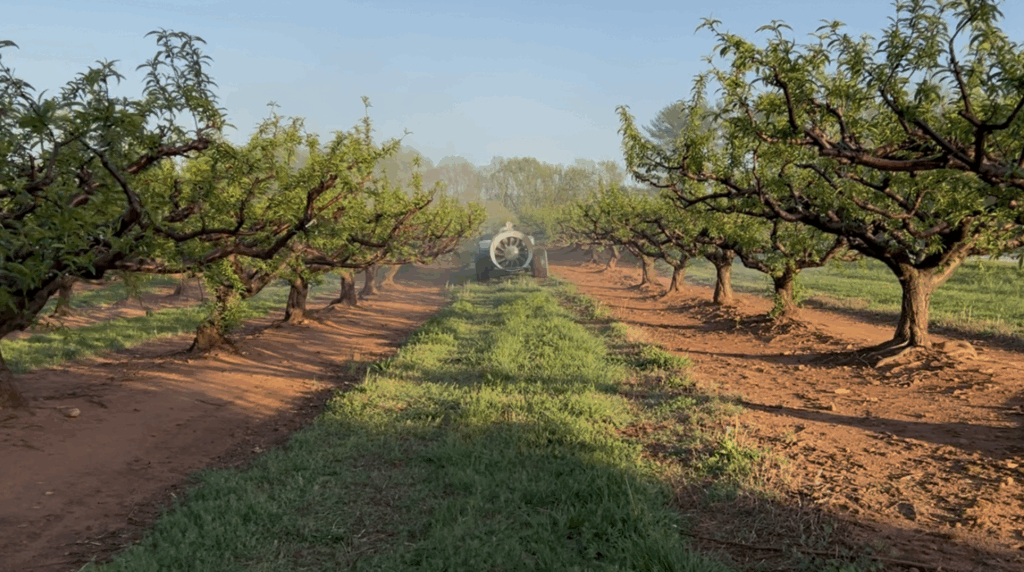
Peach Trees
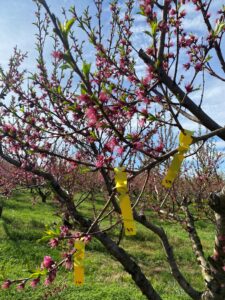
Peach Trees

At the beginning of this year, I continued work with a cellulose nanocrystal particle to verify its ability to frost-protect peach. It was successful but has yet to be commercially available. I spent an inordinate amount of time looking at peach farms devastated by freezing temperatures and writing insurance letters to help support them. I helped start the SCSFGA- South Carolina Small Fruit Growers Association with many farms statewide. This group has formally asked Clemson administrators for Ph.D. assistance with growing small fruits. At this point, asking for funding will go to the state legislature this coming year. This project is excellent for Clemson to participate in, and I look forward to seeing that position develop.

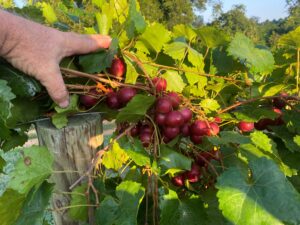
Grapes
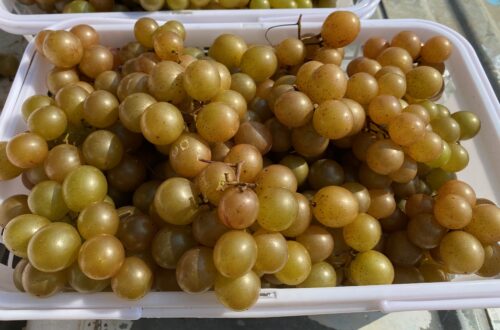
Grapes

I am currently harvesting many grape varieties I have planted and maintained. This demonstration aims to expose this farm to newer varieties, which will assist him. We have some wonderful hybrid grape varieties that are smaller than his muscadine. Still, these are seedless and have very high sugar content and thinner skin. One selection of muscadine is Paulk. It will serve as a better pollinator for Supreme, a female muscadine. We have in the past used Granny Val, which is a bronze grape that comes in very late. I want the grower to see the timing of Paulk and how it compares to Supreme. He is looking to involve it in his next planting of Supreme. Lastly, I worked with one farm on a different form of fumigation that is much safer than the traditional method. We will distribute the collected information to all growers at our production meetings and demonstrate it to the NC Strawberry Growers Association in person. I tested the injection method with a donated product and pulled nematode samples from treated and control areas for comparison.

My work with the cellulose nanocrystal particle and grape and muscadine varieties were out-of-the-ordinary projects I worked on this year. I also held production meetings and problem-solved at on-farm visits, as always. I am honored to serve the farmers, growers, and producers of the Upstate.

Upstate Commercial Fruit and Vegetable Updates

Andy Rollins
Upstate Commercial Fruit and Vegetable Agent

Currently, I’m holding all of my yearly production meetings.  At my peach meeting, we had 81 in attendance, with 61 different farms represented.

Along with another agent, we hosted the first meeting of the SC Small Fruit Growers Association.  I assisted Bob Hall in helping to establish the group with representation from across the state.   The production meeting featured a blueberry specialist from out of state, with 50 growers in attendance.

The strawberry production meeting is coming up at the end of February, and the vegetable meeting will be in March.

I will be working on a bloom-thinning product again this year for an on-farm demonstration and I also plan to showcase my on-farm grape work this fall.