Clemson Extension Upstate District

The Laurens County Dog Project

Lauren Smith
4-H Youth Development Agent
Laurens

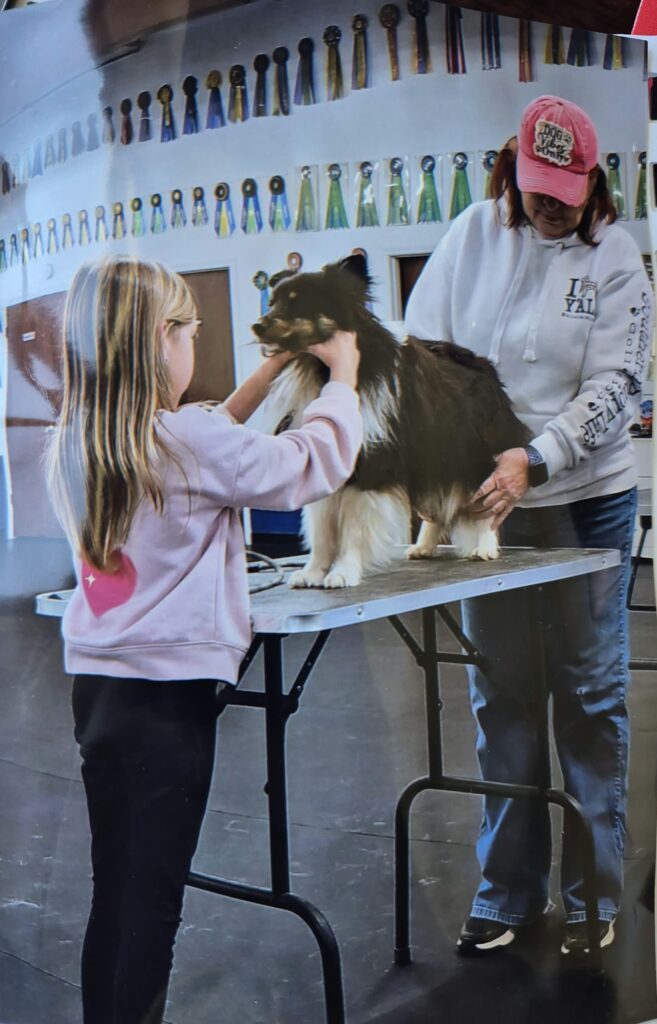
Hannah and Gracie Lou

Hope, Ty, and Gracie Lou are just a few of the dogs from the Laurens County Dog Project helping their young humans learn responsibility, gain confidence, and develop new skills. Youth in the project explore topics such as dog care, grooming, nutrition, health, safety, behavior, and responsible pet ownership. As they work with their dogs, members learn how to set goals, practice new skills, solve problems, and celebrate progress along the way.

Three 4-H members were excited to share their story about their work with the Dog Project.

Ruthie

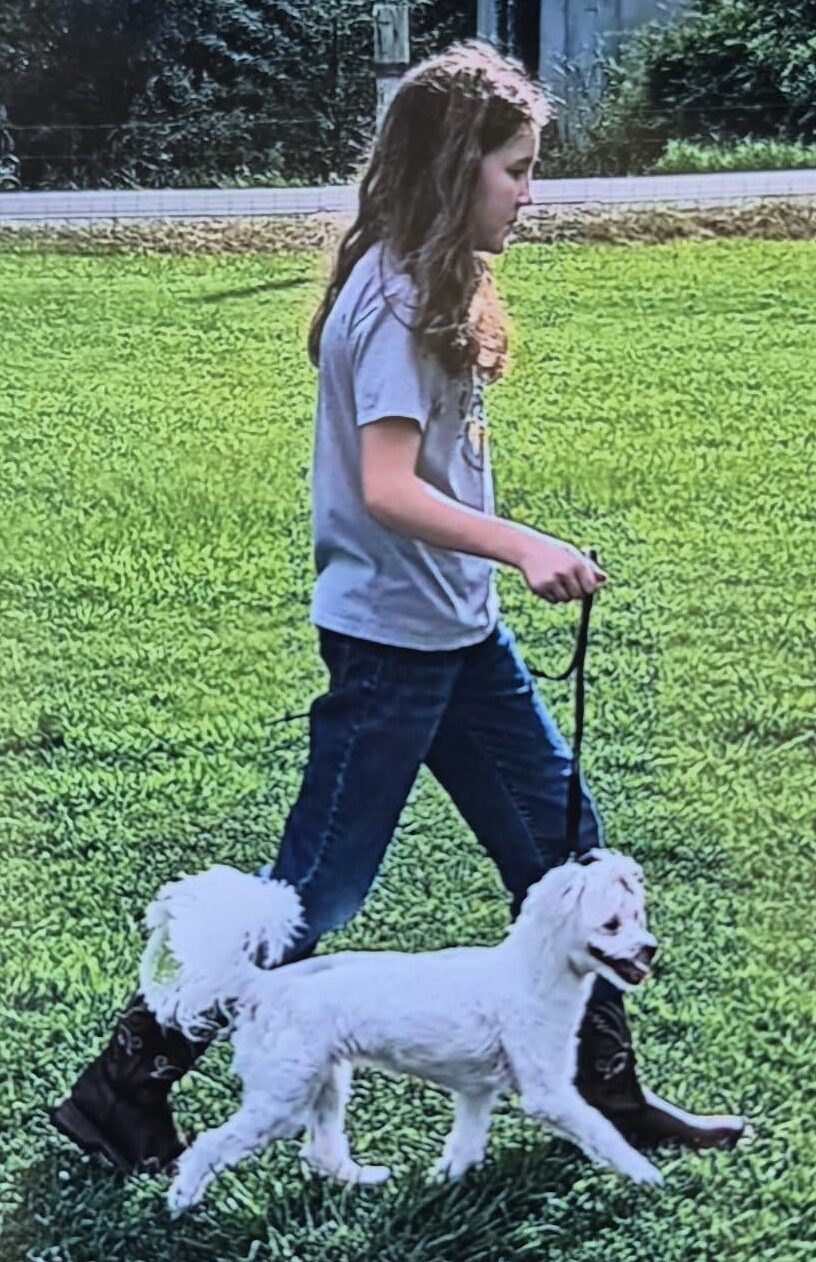
Hannah, from Saluda, wrote about her dedication to doing her best at her first show. She prepared for the Laurens County Youth DogShow by watching reference showmanship videos and practicing daily with her Pomapoo, Gracie Lou. Hannah’s learning didn’t stop at the show ring. Through the 4-H Dog Project Activity Book, the youth also spent time learning about different dog breeds and expanding her knowledge of dogs.

John
John

One Laurens County 4-H member, Ruthie, had the opportunity to take her dog to a local school event and share what she has learned through the 4-H Dog Project. The youth talked with students about responsible dog ownership and the importance of properly caring for their pets.

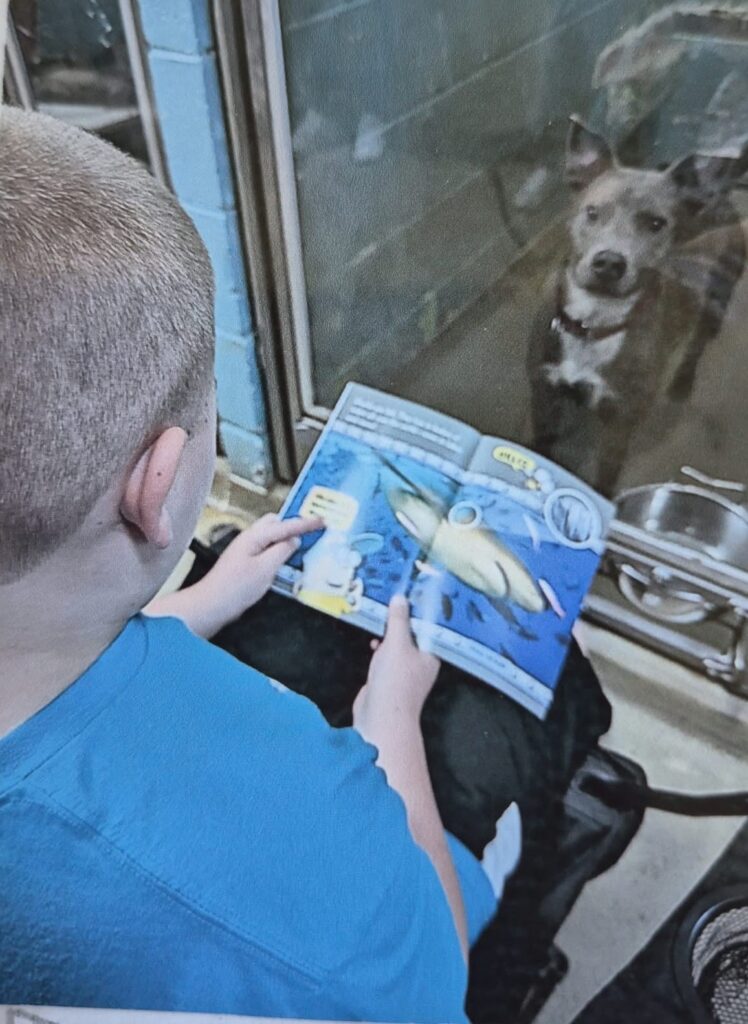
Then finally Abbeville 4-H member, John, taught his dog to sit, stay, and lie down. John later competed at a local dog show and, although he was nervous, he had a great time. He gave back to this community by spending time at the dogshelter reading to dogs needing some love and attention. He now aspires to learn about hunting dogs and teach his dog to track.

Through experiences like this, the 4-H Dog Project gives youth opportunities to learn by doing, share their knowledge, and make a difference in their community.

The Laurens County 4-H Dog Project runs from March through August, making it a great summer project for young people. The project gives members a fun and meaningful way to spend their out-of-school time learning about dogs, practicing new skills, and building a stronger bond with their pets.

Laurens County Hosts a Hybrid Master Gardener Course

Bryan Smith
Area Extension Agent – Agricultural Engineer

Laurens

The Laurens County Extension Office is currently hosting a hybrid Master Gardener course.  The Master Gardener course began on August 11, 2026 and will meet each Tuesday through December 1.  This year’s course has 21 students.

Master Gardener logo

Students in the course will complete 16 three-hour classes on subjects including lawn care, vegetable gardening, urban tree care, soils and plant nutrition, tree fruits and small fruits, and many more.  Each class is presented by an Extension Agent or a Master Gardener graduate that has experience in the subject matter, which allows them to provide practical experience along with research-based information.

This year’s course is once again a hybrid model, which includes 12 in-person presentations and 9 presentations by video (21 presentations in total will be presented over the 16 week course).  The hybrid model is an attempt to provide the same training to Master Gardener students across the State so they will all have the same base knowledge in the “Core” subjects.  The in-person classes allow coordinators to tailor the course for each county’s needs by offering local topics most useful to their students.

After completing the course the students will provide 40 hours of community service over the next 12 months to become Certified Master Gardeners.

For more information about the program visit https://www.clemson.edu/extension/mg/ .

New Laurens Agricultural Center and Laurens County Extension Office

Bryan Smith
Area Extension Agent – Agricultural Engineer

Laurens

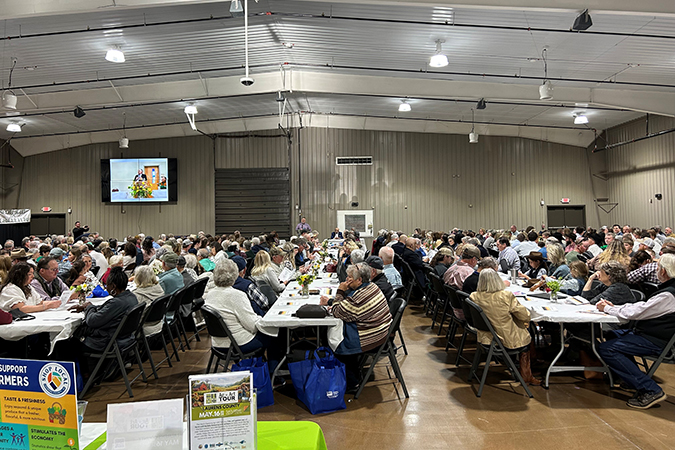
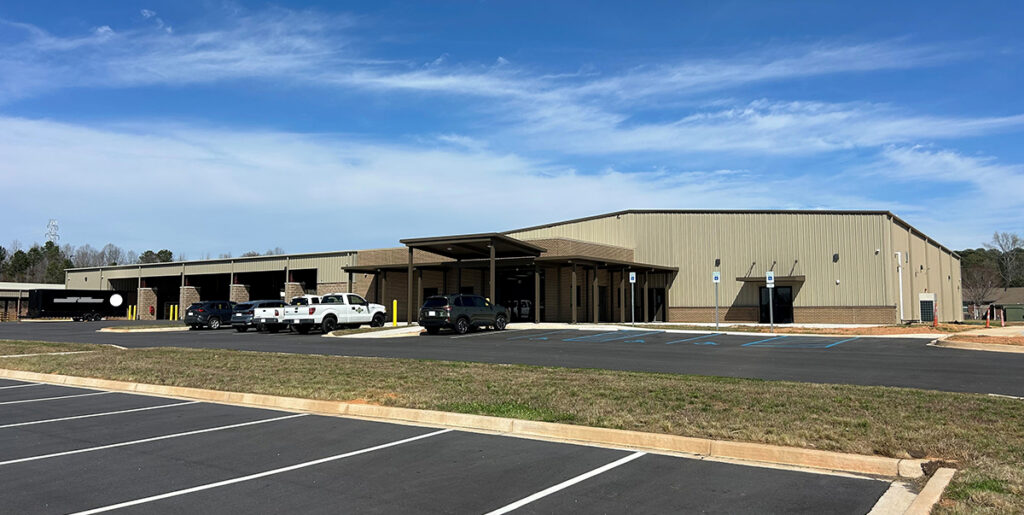
The Laurens Spotlight on Agriculture Awards banquet held in the new Laurens Ag Center in March 2026.  Over 400 attended the banquet.
The Laurens Spotlight on Agriculture Awards banquet held in the new Laurens Ag Center in March 2026.  Over 400 attended the banquet.

Laurens County residents voted to approve a 1 cent sales tax increase for a number or projects in Laurens County.  One of those projects included an Agricultural Center and a new Extension Office.  Both of these facilities were built on the old Laurens Fairgrounds property (behind Aldi’s and Ingles in Laurens).

The new Laurens Ag Center has been open since the fall of 2025 and has been busy hosting youth livestock shows and other Ag events.  The Laurens County Youth Livestock Show utilized the facility in both 2025 and again in 2026.  The Laurens County Spotlight on Agriculture awards banquet was held there in March of 2026 and had over 400 in attendance.  It is an excellent facility that includes a climate-controlled main area, an attached pole barn for livestock staging, livestock wash racks, and more.  A separate horse arena is under construction and nearing completion.

Laurens Ag Center
The new Laurens County Ag Center
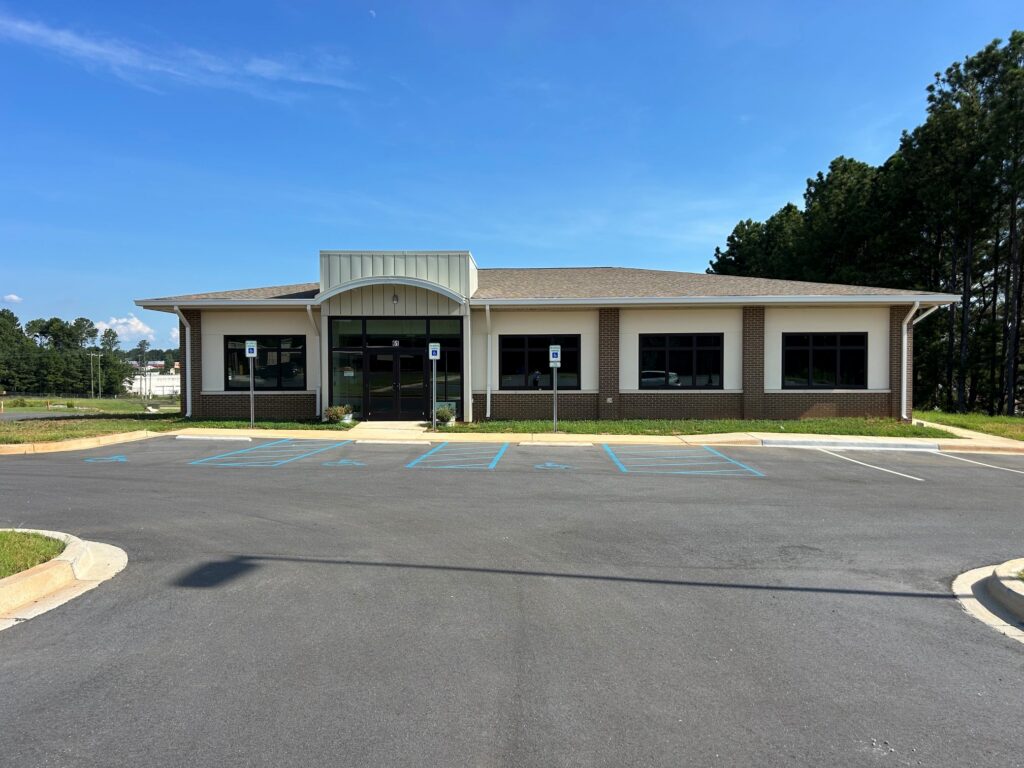
The new Laurens Extension Office building, 61 Ag Center Drive, Laurens.

The new Laurens Extension office is located right beside the Laurens Ag Center at 61 Ag Center Drive, Laurens.  The Laurens Extension staff began moving into the new building on June 15, 2026.  The move took quite a bit of time and effort, moving accumulated knowledge resources and materials collected over decades of service to the county.  The Extension Office was open for business in the new location on June 16 and the move was completed over the next two months.

The new office is a beautiful facility including a large meeting room, offices, a break room, and a storage area.  The Laurens Extension staff will host an Open House for the building on Thursday, October 1 form 10:00 am – 4:00 pm.  Stop in and see the new office!

Adventures From the Area Forestry and Natural Resource Agent, Jeff Fellers

Portable Sawmill

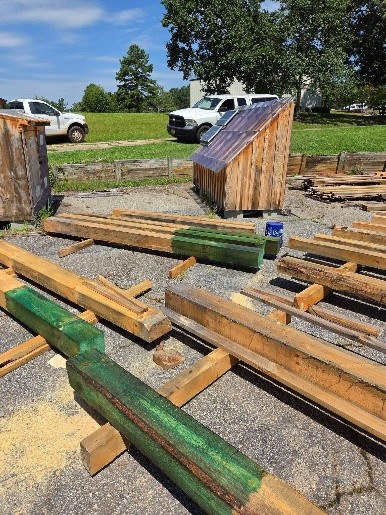
The past year I have been helping Dr. Patrick Hiesl with Chainsaw Safety Workshops, Tree Felling Workshops, and Portable Sawmill Workshops.  This summer we started building a sawmill shed that will house our portable sawmill.  This project takes the tree, from standing, all the way to a finished product of the shed. We felled white pines in the spring of 2026 and have been milling the trees into dimensional lumber/timbers during the summer.  In August, we had enough lumber/timbers to begin the frame.  We will be cutting some more trees in the fall to mill so that we can finish the sawmill shed this winter/spring.  The sawmill shed will provide an example of what landowners can do with portable sawmills.  We have also made picnic tables and storage boxes with the wood we have milled off the Clemson Forest.  Our plan is to expand the program and offer more courses to landowners.

August meeting of the Newberry Forestry Association
August meeting of the Newberry Forestry Association.

Newberry Forestry Association

  • May 12, 2026 – Jon Carter presented on Utilization of Agricultural Spray Drones in Forestry. 
  • August 11, 2026 – Lew Merchant with Helena Chemical presented on Herbicides for Forestry Management.  The Newberry Forestry Association also presented a student with a $500 scholarship. 

Laurens Forest Landowners Association

  • May 26, 2026 – Lance Beecher presented on pond management.
  • August 25, 2026 – 1st SGT Dan Bridges from SC DNR presented on new regulations and game laws.

Upcoming Events

For other Forestry and Wildlife related programs, be sure to visit our Eventbrite page at: https://www.eventbrite.com/o/clemson-extension-forestry-wildlife-75733679603

Clemson Livestock and Forage Foundations Course

Bryan Smith
Area Extension Agent – Agricultural Engineer

Laurens

Livestock and Forage Foundations Logo

There are many new farmers that contact Clemson Extension each year, asking how to get started in livestock farming.  Many of these people have little to no previous experience with growing livestock.  Extension agents are always glad to help them get started, but the Livestock and Forages team recognized that an online, on-demand course may be a good first step to help new farmers learn the in’s-and-out’s of growing livestock and give them a very basic baseline knowledge. 

Livestock and Forage Foundations is an asynchronous course designed for beginning farmers that want to learn basic livestock and forage concepts. This course includes video lessons and on-farm fieldwork which allow course participants the opportunity to learn about concepts such as soil health and fertility, animal production and management, forage production and management, farm infrastructure and farm business while showing how Clemson Extension can support their farming journey.  Course topics include:

  • Soil Basics (Module 1): Sampling your soil  
  • Soil Fertility and Health (Module 2): Tighty-Whities Test 
  • Forage Basics (Module 3): Submit a forage sample 
  • Grazing Practices (Module 4): Develop a grazing plan 
  • Livestock Selection (Module 5): 10 questions to ask when starting a livestock operation 
  • Livestock Handling and Management (Module 6): Develop a record-keeping system 
  • Backyard Poultry Handling And Management (Module 7)
  • Fencing (Module 8): Know your farm layout 
  • Equipment and Tools (Module 9): Maintenance and Calibration 
  • Farm Safety (Module 10): Creating a farm safety and emergency plan 
  • NRCS Programs (Module 11)
  • Agribusiness and Marketing (Module 12): Starting your Ag business

More information and a registration link may be found at https://cpe.clemson.edu/browse/extension/livestockandforages/courses/livestock-and-forage-foundations .

Expanding Access to Obesity Care and Treatment in the Upstate

Camilla Herndon
Rural Health & Nutrition Agent
Greenville & Laurens Counties
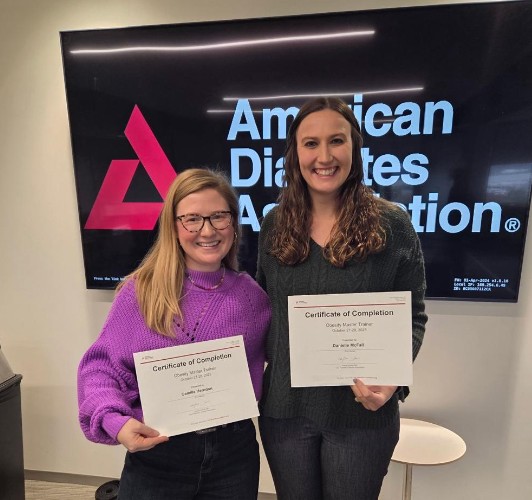
RHN Agent, Camilla Herndon, and RHN Associate, Danielle MCFall, with their training certificates at the American Diabetes Association in Arlington, Virginia.

In October 2025, the American Diabetes Association® (ADA) invited the Clemson Extension Rural Health and Nutrition (RHN) team to participate in a pilot program to address obesity care and treatment. The Clemson Extension Rural Health and Nutrition team was one of 10 selected organizations for the obesity care program.

Obesity is a prevalent condition. In 2024, approximately 2 in 5 adults in the United States had obesity. In previous years, 1 in 4 U.S. adults had obesity, indicating an increase in new cases. While some believe that obesity is caused by a lack of willpower, poor eating habits, or a lack of physical activity, these beliefs are an inaccurate generalization. There are several factors outside of a person’s control that contribute to obesity, such as genetics, stress, grief, and trauma, medications, sedentary jobs, lack of access to healthcare, food deserts, and lack of safe spaces for recreation.

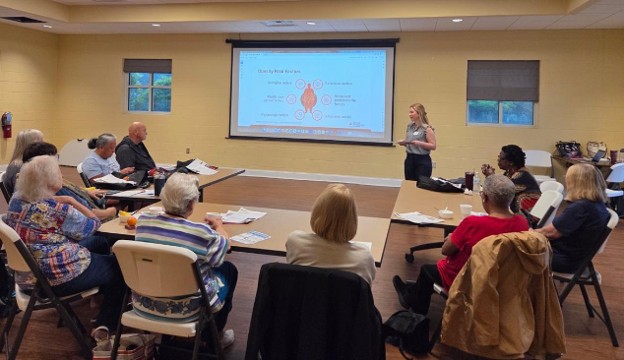
RHN Agent, Camilla Herndon, facilitating the Understanding Obesity as a Chronic Disease program with a group in Fountain Inn, SC.

The Understanding Obesity as a Chronic Disease program, outreach of the Obesity Association™, a division of the ADA, focuses on understanding obesity as a chronic disease, addressing stigma, roadblocks to care, and evidence-based strategies for prevention and management. The program emphasizes why obesity treatments involve more than just an eating plan and physical activity. As of August 2026, Clemson Extension’s RHN Agent, Camilla Herndon, and RHN Associate, Danielle McFall, had facilitated 6 program sessions for communities across the Upstate.

If you or your organization is interested in the Understanding Obesity as a Chronic Disease program, check Eventbrite for upcoming sessions or email Camilla at herndo3@clemson.edu to schedule.

Water Chats, Drought, & El Niño

Heather Nix
Upstate Regional Water Resources Agent
Abbeville, Anderson, Cherokee, Greenville, Greenwood, Laurens, McCormick, Oconee, Pickens, & Spartanburg

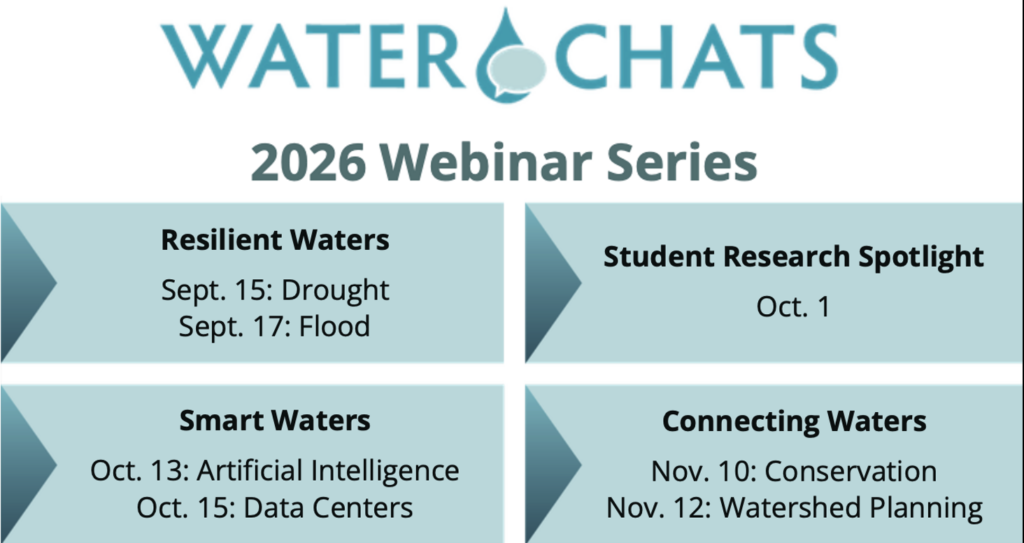
Water Chats Webinar Series

The 2026 Water Chats webinar series is happening this fall! The webinars are free and focus on relevant, timely water related topics. Register in advance for each of the upcoming webinars: Water Chats Webinar Registrations. Upcoming topics include Smart Waters: AI & Data Centers and Connected Waters: Conservation & Watershed Planning.

Water Chats: Webinar Series
Dates

Drought & El Niño

Considering that the past year in SC is the driest September to August in 130 years (since SC started keeping records!), it’s not a surprise that we continue to have low water levels in ponds and reservoirs. The dry weather, accompanied by the prolonged heat has resulted in many people seeing extremely low water levels in ponds. See the recent “Why Are Some Ponds So Low?” blogpost for more information.

While conditions can vary significantly between locations and timing, in the past, strong El Ninos often bring average or above average precipitation to South Carolina over the winter. So hopefully our water supplies will gradually recover this winter. See the State Climatology Office’s El Nino/Southern Oscillation website for more information.

Why Are Some Ponds Still So Low?

Christopher LeMaster, Livestock and Forage Agent, Clemson Extension
Heather Nix, Water Resources Agent, Clemson Extension

It’s hard to believe we’re still talking about drought when you drive around and see lush, green pastures. While we’ve been very fortunate to receive some recent rainfall, you can still see quite a few nearly dry ponds across the landscape. 

Many livestock producers rely on groundwater-fed ponds to provide drinking water for their animals. Several producers have contacted us with concerns that their ponds remain unseasonably dry despite the rain. Some of the recent groundwater maps from the South Carolina Drought Response Committee—including the groundwater drought monitor for August 15–21, 2026—suggest that groundwater levels may still be declining in some parts of the state. 

One possible explanation is that rainfall and groundwater conditions are not always telling the same story. 

This distinction matters because a heavy rainstorm can produce plenty of runoff without fully replenishing groundwater. If the soil is dry or compacted, or if rainfall arrives in a rapid, intense event, much of that water may move quickly into ditches and flow swiftly downstream. It may not soak deeply enough to restore groundwater supplies, which maintain the steady seeps and springs that support healthy ponds and normal streamflow. 

Our rapidly developing areas may also be a contributing factor. As vegetated areas are replaced by roads, rooftops, parking areas, and other impervious surfaces, more rainfall runs off the ground surface and less water can infiltrate into the soil. Over time, that can significantly reduce groundwater recharge and change how water moves through a watershed. 

Many ponds also began the summer below normal after an exceptionally dry fall and winter. High temperatures then increased evaporation rates, accelerating declining water levels further than expected during typical droughts. So even though the landscape looks green again, some water resources are still recovering from the earlier deficit. 

Of course, drought is not the only possible explanation for a low pond. The following questions may help pond owners identify some possible causes: 

  • Is there a visible problem with the dam? 
  • Are pipes, spillways, and other outfall structures functioning properly? 
  • Have any inflowing streams or drainage areas been redirected?
  • Has the pond recently been dredged, reshaped, or otherwise disturbed? 
  • Has the pond reached similar levels during previous droughts?
  • Are there new withdrawals for irrigation, livestock, or other uses? 

What if livestock depend on the pond? 

Low water levels deserve extra attention when livestock rely on a pond, creek, spring, or well. The main considerations are reliability: Is enough clean water available to support a healthy livestock herd? And how long is the water supply likely to last if hot, dry weather returns? Now is a good time to have a backup plan, whether that means supplementing the existing water source or being prepared to move animals to a more reliable source. Keep a close eye on water levels as the season continues. 

Clemson Extension’s publication Livestock Ponds in South Carolina provides additional information about pond water quantity, water quality, and management practices for livestock ponds. 

Livestock need clean water, and water quality is impacted by weather. As a pond becomes smaller and shallower, the water may become warmer and more stagnant. Sediment, nutrients, and other contaminants may also become more concentrated. Livestock traffic around the remaining water can add manure, stir up sediment, and increase erosion. These conditions may increase the risk of problematic algae, including harmful algal blooms. 

For more information about harmful algal blooms and the risks they can pose, see our recent article, “Protecting Your Herd: Managing Harmful Algal Blooms (HABs).” 

If the pond develops an unusual odor or color, surface scum, a heavy algae bloom, dead fish, or other noticeable changes, livestock should be kept away until the water can be evaluated. 

Recent rain is good news, and green pastures are encouraging. But rainfall does not always immediately restore groundwater levels or pond levels. For livestock producers, this is a good reminder to pay attention to both the quantity and quality of the water available to their animals. 

In our next newsletter, we’ll discuss ways to improve groundwater infiltration in pastures—and how livestock can be part of the solution rather than the problem. 
Getting Established: A Look at My First Four Months as a Livestock and Forages Agent

Sydney Rentz

Over the past four months, I have been getting established in my role as the Clemson Extension Area Livestock and Forages Agent, focusing on building relationships with producers, assessing local needs, and identifying opportunities to strengthen livestock and forage systems across Newberry, Laurens, and Greenwood Counties. This initial period has been spent meeting with farmers, visiting operations, and working to better understand the challenges and goals of our livestock community. These early efforts are laying the groundwork for future programming, on-farm support, and educational resources aimed at improving forage management, animal performance, and overall farm sustainability.

So far, some of my time has been invested in attending Cattlemen’s Association meetings in my coverage area, regional bull sales, and professional development conferences to stay connected with both producers and industry trends. These events have provided me with valuable insight into current cattle markets, soil and forage health and fertility, and management practices to share with my local producers. Participation in fellow Extension agents’ programs has also offered opportunities to observe successful programming efforts, gather new ideas, and strengthen collaborative relationships across counties. Together, these experiences are helping shape future livestock and forage programming to better serve local producers and support informed decision-making on their operations.

Looking ahead to 2026, I look forward to continuing to work alongside our livestock producers and supporting the growth and success of operations across Newberry, Laurens, and Greenwood Counties. Strengthening relationships, providing research-based information, and developing practical programming that meets local needs will remain a top priority of mine. Whether through on-farm visits, educational meetings, or collaborative events, my goal is to ensure producers have access to the tools and resources needed to improve their operations. I am excited for the opportunities ahead and appreciate the continued support and engagement from our livestock community. 

Adventures From the Area Forestry and Natural Resource Agent: Jeff Fellers, Agent

Enviroscape Lesson (September 15) – Provided a lesson to Richard Winn Academy using the enviroscape to illustrate point source pollution and non-point source pollution in our waters.

Silvopasture Field Day (September 17) – Assisted in setting up the demonstration plots for the Silvopasture Field Day that was hosted on September 17 at Clemson’s Edisto Research and Experimental Station.  This field day was free and showed cased forest stands that have been thinned and open areas that have been planted with longleaf pine at different spacing.

Newberry Soil and Water Mobile Lab Gardening Program (September 25) – Provided a lesson on soil health and how to interpret a soil sample analysis for their Winter Gardens and Soil Health Workshop.

Chainsaw Safety Workshops – The Clemson Extension Forestry and Natural Resource Team is offering Chainsaw Safety and Handling Workshops along with Tree Felling. These workshops teach participants about safe chainsaw handling, proper protection equipment, basic saw cuts on downed trees and techniques to safely fell a tree.

  • September 25, 2025 – Chainsaw Safety Workshop at Clemson, SC.
  • November 7, 2025 – Chainsaw Safety Workshop at Clemson, SC
  • January 16, 2026 – Tree Felling Workshop at Sandhill Research and Education Center

Union Agricultural Fair (October 13-18) – Clemson Extension is heavily involved in the Union County Agricultural Fair. Each year we oversee agricultural products, home economics, poultry, display animals in the barn, and the livestock shows. During the month of October, you will find us fully involved in the Union County Agricultural Fair.

5K Day (October 16) – Each year we host the all the 5-year-old Kindergarten students in the Union County School Districts. They move the barn in stations to learn about Beef cattle, dairy cattle, pigs, goats, horses, rabbits, chickens, bees, and crops, all of which are part of Union County’s history. For this program I plant the crops sections for the display during the fair and the presentations for the 5-K Day.

Chainsaw Safety Train the Trainer (October 27-29) – conducted a train the trainer with Forestry Mutual Insurance to train 5 Agents on chainsaw safety.  This training will help provide more instructors for our chainsaw safety program. 

Newberry Career Center Interviews (November 19) – Newberry County Career Center invited me to sit in on mock interviews for their students who were interested in a agricultural related careers.  Had the opportunity to interview 5 students. 

Champion Tree (November 24) – Visited with John Cely at the Congaree National Park to measure 2 potential national champion trees.  They are currently state champions.  We measured a Loblolly pine and a cherry bark oak. 

Learn to Burn (December 11) – Assisted the South Carolina Forestry Commission in hosting a learn to burn to promote the Broad River Fire Cooperative. 

Portable Sawmill (January 7 & 12, 2026) – We are currently in process of planning a portable sawmill workshop for March 11, 2026.  For this program we have been milling logs and collecting data that would pertain to landowners who maybe interested  in purchasing a portable sawmill.  Through these work days we have milled numerous pine logs for the lumber and will in turn use that lumber to  make products displayed at the workshop. 

Judge 4-H Food Plots (January 14, 2026) – Always one of my favorite activities.  Mark and I judged a 4-H’ers food plot in Union.  This is a great project where the 4-H’er, plants the plots, monitors the plot, and then completes a record book.  We visit the site and then judge plot based on a set of criteria. 

Newberry Forestry Association

  • November 11, 2026 – Buddy Lominack with Big Pine Logging, Inc. gave the association a loggers perspective in the current market.
  • February 2026 – Dr. Patrick Hiesl with Clemson University will present on the Economics of Portable Sawmills.

Laurens Forest Landowners Association

  • November 25, 2026 – Jon Carter presented on Utilization of Agricultural Spray Drones in Forestry
  • February 24, 2026 – Colton Webb with the South Carolina Forestry Commission will present on Prescribe Fire and any changes that maybe coming in the next year.

4-H Shooting Sports Trailer
The 4-H Shooting Sports Trailer has been busy the last few months. We use the trailer to raise funds for our 4-H Shooting Sports Program. We have been fortunate to raise enough funds to purchase and maintain our supplies, so the participants do not have to pay any extra fees for the clubs.

  • Union County Fair – October 14 – 18, 2025
    • Grand American (Orangeburg, SC) – January 2-3,
      2026
  • Walker Days (Union, SC) – February 27-28, 2026

Upcoming Events:

Chainsaw Safety Workshop

Tree Felling

Portable Sawmill Workshop

Newberry Forestry Association

  • May 12, 2026 – Jon Carter will present on Utilization of Agricultural Spray Drones in Forestry

Laurens Forestry Association

  • May 26, 2026 – Lance Beecher will present on pond management