Assistant professor Stephen Dolan has been awarded a Major Research Instrumentation (MRI) grant to acquire the university’s first hyperspectral snapshot imaging (HSI) system, a transformative technology poised to revolutionize pathogen research. This system will provide unparalleled spectral and spatial imaging capabilities, allowing researchers to enhance phenotypic profiling of eukaryotic pathogens that impact human health.
The title of the grant is “CU-MRI: Next-Generation Hyperspectral Snapshot Imaging for Enhanced Phenotypic Profiling of Eukaryotic Pathogens Impacting Human Health.”
The grant supports the acquisition of Ximea snapshot imagers, which leverage cutting-edge CCD technology to capture high-resolution spectral data across 57 bands in the visible spectrum. Unlike traditional hyperspectral imaging approaches that require slow, labor-intensive scanning, this new system operates in snapshot mode, capturing full spectral datasets at speeds of up to 300 frames per second. These capabilities will enable Clemson scientists to study dynamic biological processes in real time, advancing research in pathogen detection, host-pathogen interactions, and microbial physiology.
Three Genetics and Biochemistry undergraduate students, Kaitlyn Anderson, Berkeley Cannon and Brittain Gainesran a G&B sponsored table at the Be A T.I.G.E.R. Field Day, an event for children that was before the Spring Football Game.
Biochemistry student Mary Grace Flowers represented Clemson University and the department at the 2025 Meeting of the Minds conference, a prestigious undergraduate research and creative inquiry conference that brings students from all 18 ACC member institutions together. Mary presented her research “Examining the Role of Sex in Bone Remodeling using Differential Feeding Stresses.”
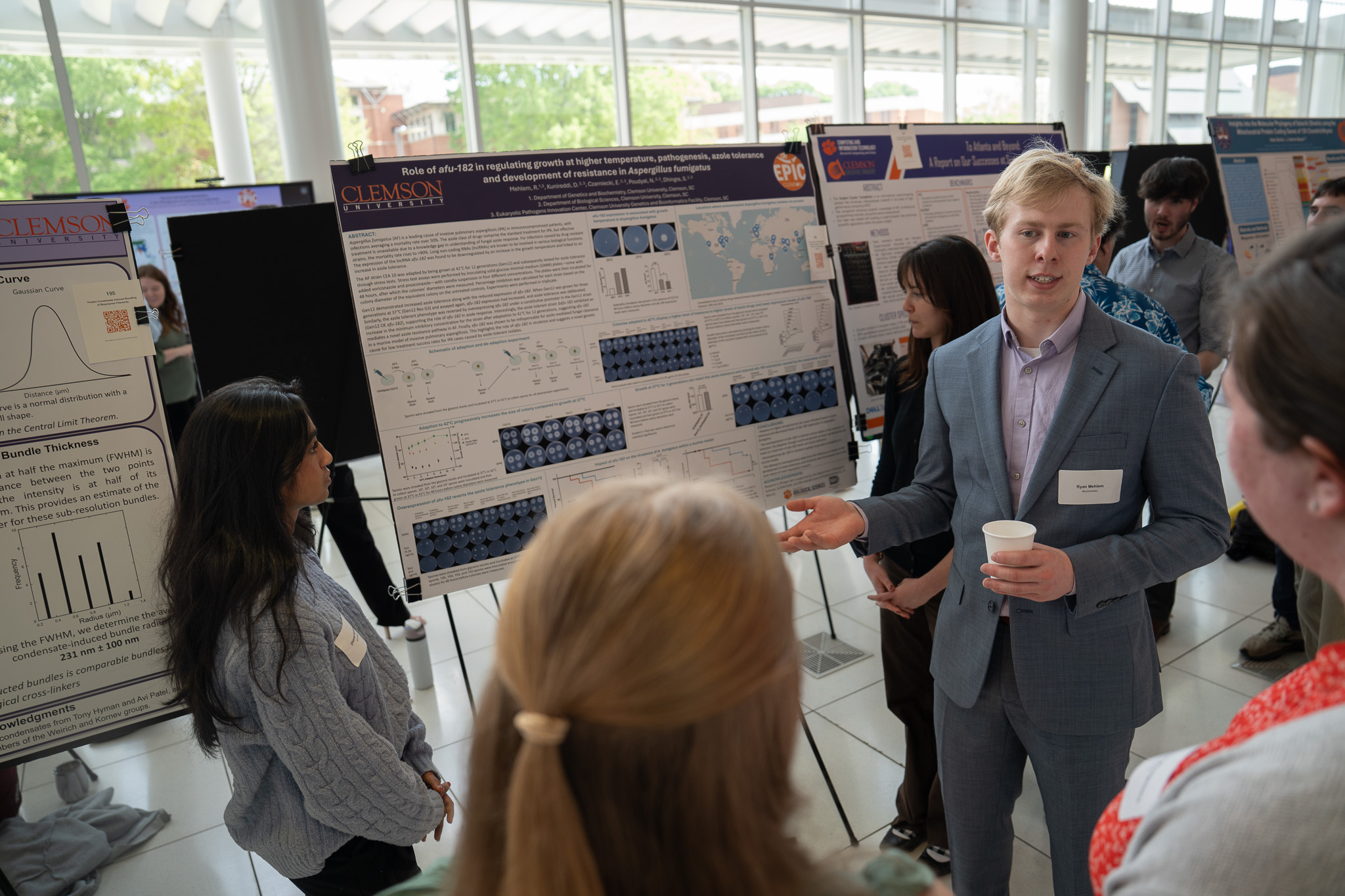
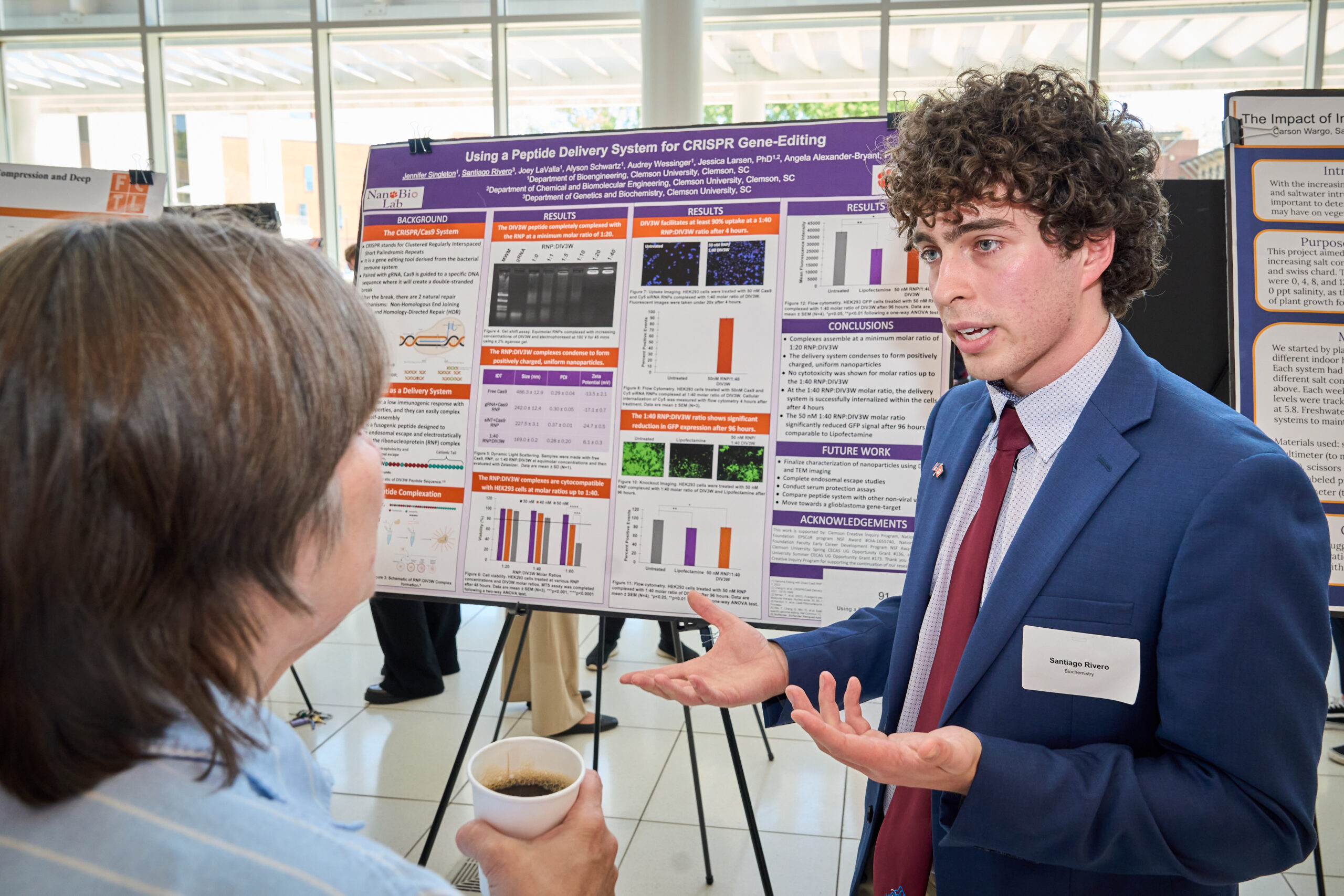
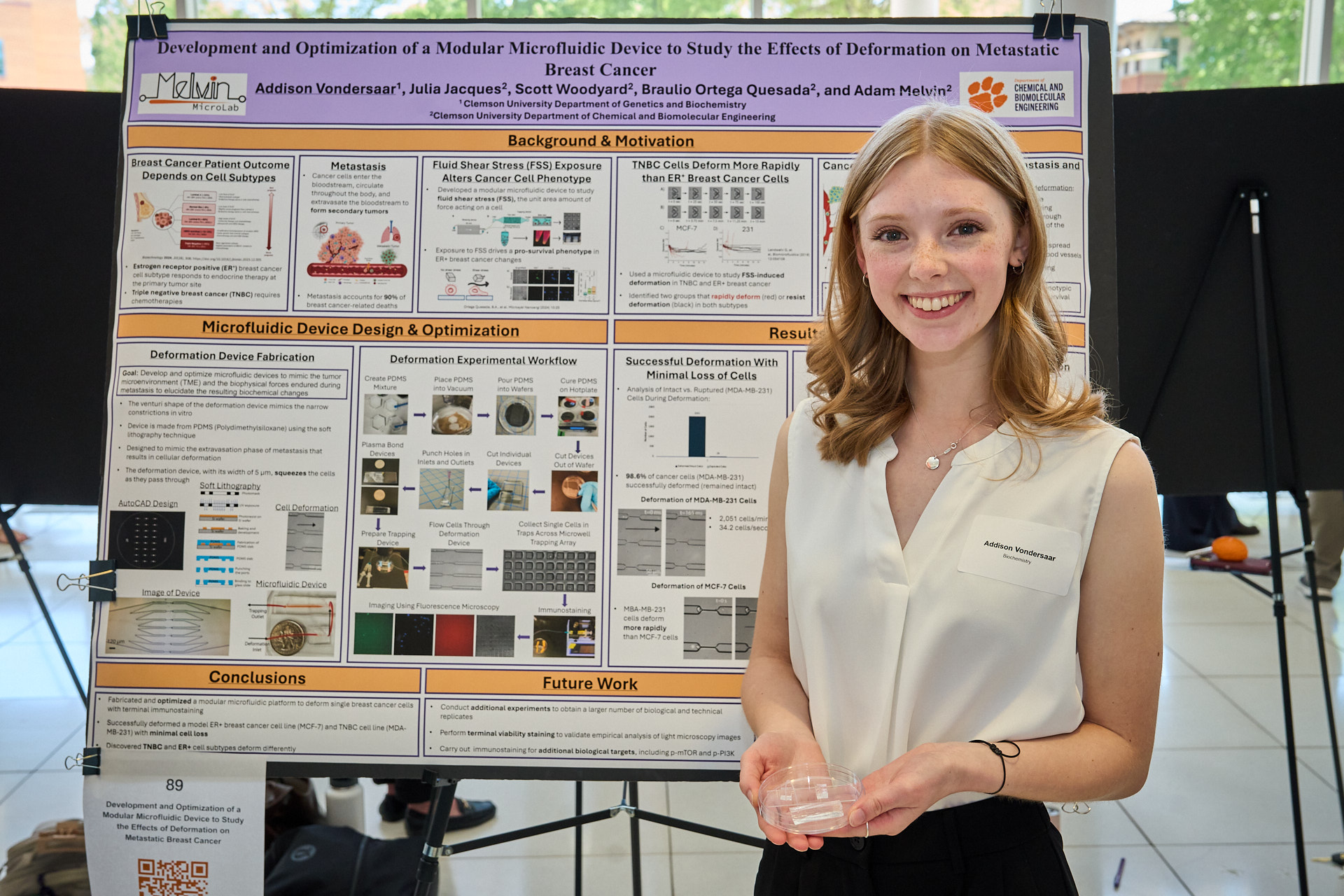
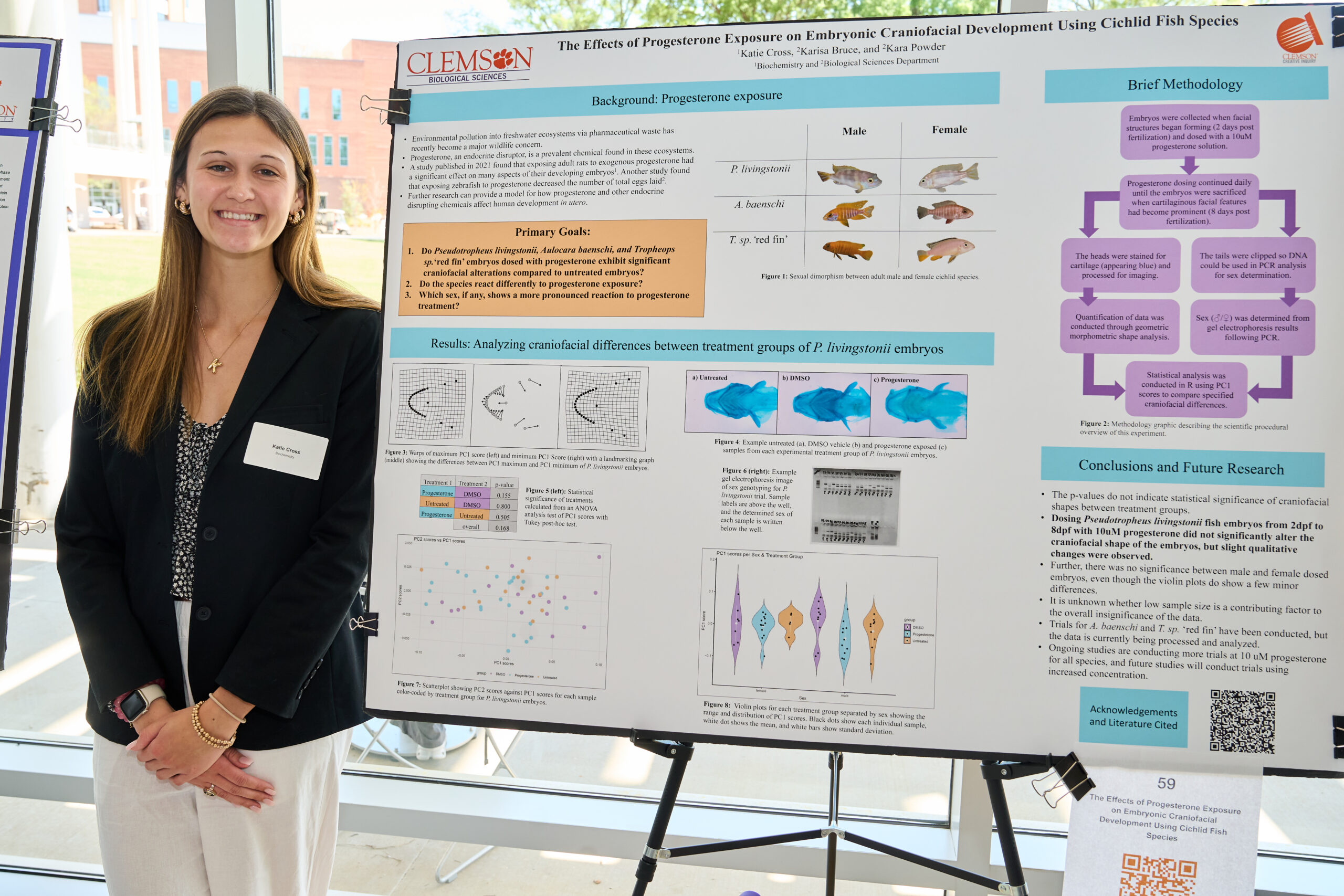
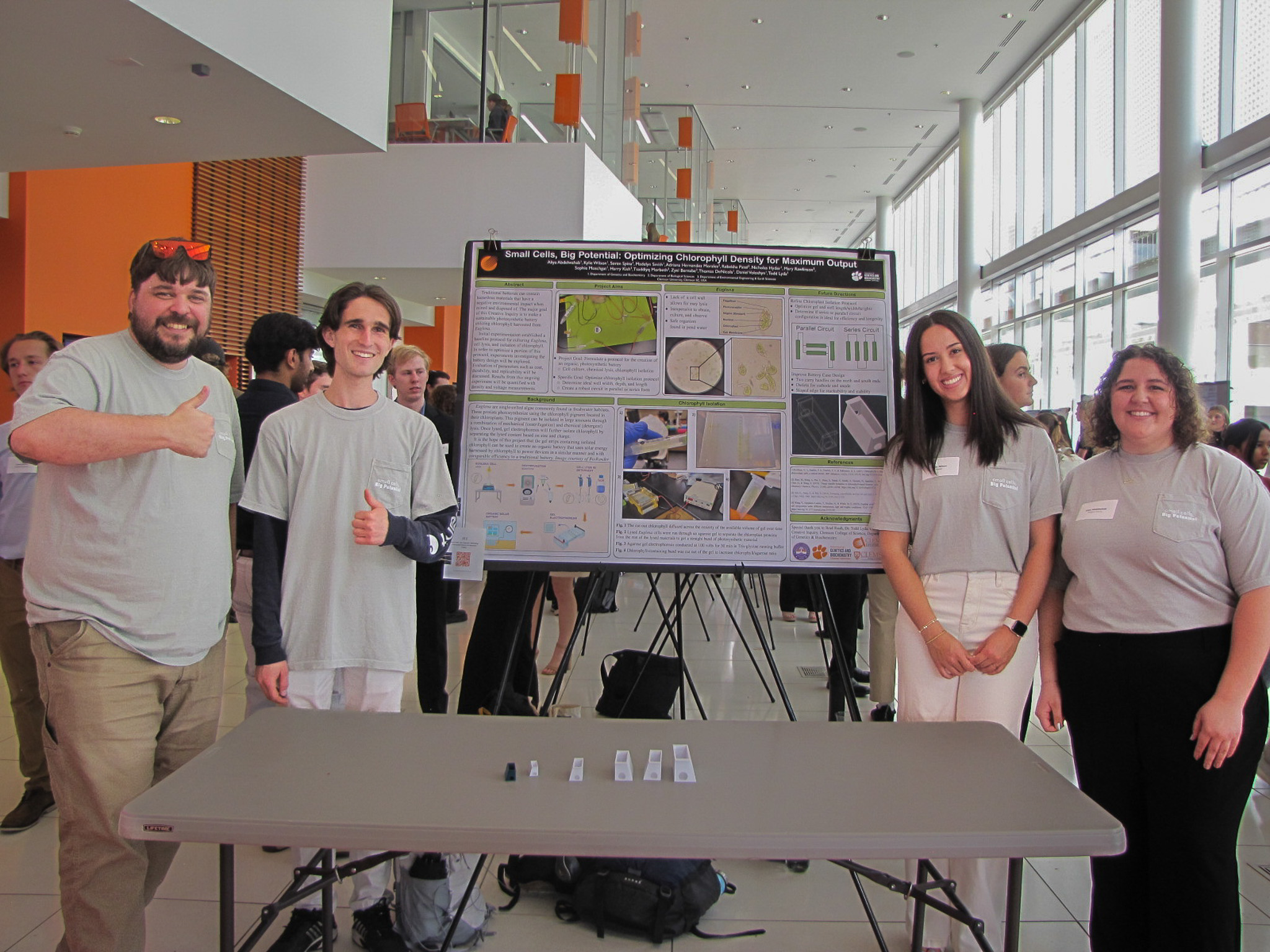
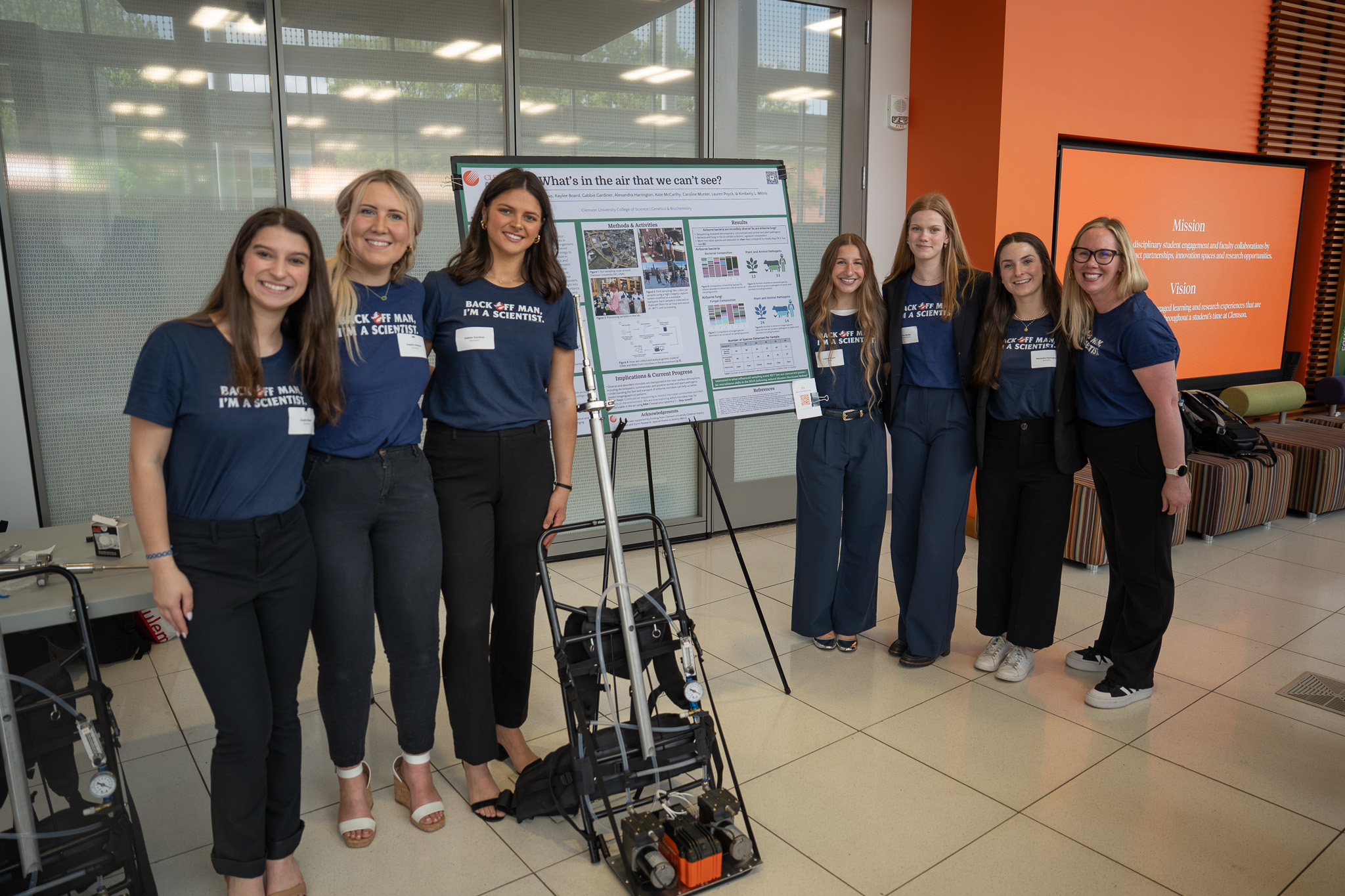
Many G&B studentsparticipated in presenting their research at the 20th Annual Focus on Creative Inquiry (FoCI) event, Clemson’s university-wide poster forum that showcases undergraduate research, service-learning and other experiential learning activities supported by the CI program.
In April Dr. Haiying Laing’s lab participated in an outreach event at the Hemlock Festival in Mountain Rest, SC, where they engaged with the public, providing educational information on American chestnut trees and the restoration efforts. The lab also volunteered with The American Chestnut Foundation at a Chestnut Return Farm. They inoculated American chestnut trees with blight fungus Cryphonectria parasitica for resistance screening. Students involved include Jay Liu, Sky Lu, Roger Zhang and Stone Chen.
Dr.Trudy Mackay, the director of the Clemson University Center for Human Genetics, was honored by the Linnean Society of London with the Darwin-Wallace Medal, one of the top international prizes in evolutionary biology.
Dr. Robert Anholt was named as a 2025 Member of the Advisory Board of the Blackland Charity Initiative in Ghana.
Biochemistry student Gabbie Gardiner was recogniozed with an award certificate for submitting a DAAD RISE Intrenship application in the 2024-25 academic year.
Biochemistry Honors student Elizabeth Caldwell received the Norris Medal, Clemson’s highest undergraduate student honor for best all-around graduating senior.
Associate professor Michael Sehorn was awarded the Ted G. Westmoreland Faculty Excellence Award, which honors a faculty member who has made outstanding contributions in the area of undergraduate student success.
Genetics graduate student Adeyemi Akinade received a scholarship to attend a summer course in statistical genetics in Atlanta.
Senior biochemistry major Albash Kahan recieved first place in the 2025 J.T. Barton Jr. Memorial Ethics Award, which recognizes outstanding students who show exceptional ethical leadership and a commitment to advancing good decision-making on campus.
Bibhu Simkhada, Ph.D. student under Drs. Trudy Mackay and Robert Anholt, came in 2nd place at the iGrads competion with his talk titled “Genetic architecture of variation in senescence.” In addition, Bibhu won the people’s choice award by popular vote from the iGrads audience members and recieved the Graduate Award for Scientific Communication from the RNA Society of South Carolina.
Alumni Dr. Phyllis MacGilvray ’96, a family medicine practitioner of over 20 years, has been named dean of The University of South Carolina School of Medicine Greenville.
Undergraduate researcher in Dr. Stephen Dolan’s lab Mallory Murphy, a microbiology major and psychology minor, has been selected for the prestigious Blue Key Academic and Leadership Award, which honors one student from each college at Clemson for excellence in academics and leadership.
On Thursday, May 1, the College of Science celebrated its faculty and staff with awards and recognition at its annual awards ceremony. Many genetics and biochemistry departmental members were honored with nominations and awards.
Dean’s Distinguished Lecturer Award : Dr. Alison Starr-Moss
Dean’s Distinguished Professor Award: Dr. James Morris
Excellence in Teaching Award: Dr. Heidi Anderson
Outstanding Staff Member Award: Rick Moseley
Oustanding Team Award: G&B Advising and Registration Services Team – Britney Maston, Alyssa Taylor and Kimi Brown
The Greenville Journal released an article highlighting genetics doctoral student Sriya Pothapragada’s love for both her studies and skydiving.
Each year, the Department of Genetics and Biochemistry give out departmental awards to someof their most exectional students. Below are the awards for the 2024-25 academic year.
Dr. William Marcotte Outstanding Undergraduate Research Award: Elizabeth Caldwell
Outstanding Junior in Biochemistry: Yashvi Patel
Outstanding Junior in Genetics: Brooke Dillingham
Outstanding Senior in Biochemistry: Griffin Thomas
Outstanding Senior in Genetics: Elizabeth Caldwell
Outstanding Undergraduate in Discovery, Biochemistry: Adam Gatch
Outstanding Undergraduate in Discovery, Genetics: Dylan Carroll
Outstanding Graduate Student in Teaching: Jiayin Liu
Outstanding Graduate Student in Discovery: Bharath Khunduru
Senior biochemistry major Kaylee Board was selected to write an “IfYou’reReadingThis” Letter to the Clemson University community.
Albash Khan was part of the team that came in 3rd place at this year’s College of Science Catalyst Competition for their self-heating and cooling lunchbox, ThermaChill.
Jessica Aycock (second year Ph.D. student) received Best Graduate Student Poster Prize for her presentation, “Pseudomonas aeruginosa activates a novel defense cascade in response to fungal toxins”
Muhammad Shafiul Alam Mondal (first year Ph.D. student) was awarded the Best Graduate Student Talk Prize for his talk, “Aspergillus fumigatus demonstrates species-dependent physiological modulation in polymicrobial biofilms”
Cameron Kennedy (freshman) earned Best Undergraduate Student Poster Prize for her work, “Parallel Evolution of Pseudomonas aeruginosa in Polymicrobial Interactions with Fungi and Chronic Lung Infections”
Senior biochemistry major Kristen Gulbrandsen placed 1st at the 20th annual Focus on Creative Inquiry (FoCI) event, which is Clemson’s university-wide poster forum that showcases undergraduate research, service-learning and other experiential learning activities supported by the Creative Inquiry program. Kristen’s poster presentation was titled “Enterococcus faecalis Inhibits Clostridium innocuum In Vitro Under Multiple Conditions.”
Senior biochemistry major Kristen Gulbrandsen placed 1st at the 20th annual Focus on Creative Inquiry (FoCI) event, which is Clemson’s university-wide poster forum that showcases undergraduate research, service-learning and other experiential learning activities supported by the Creative Inquiry program. Kristen’s poster presentation was titled “Enterococcus faecalis Inhibits Clostridium innocuum In Vitro Under Multiple Conditions.”
Many other G&B students presented their research at FoCI as well.
The Creative Inquiry poster session in the Watt Family Innovation Center on April 9, 2025.The Creative Inquiry poster session in the Watt Family Innovation Center on April 9, 2025.The Creative Inquiry poster session in the Watt Family Innovation Center on April 9, 2025.The Creative Inquiry poster session in the Watt Family Innovation Center on April 9, 2025.The Creative Inquiry poster session in the Watt Family Innovation Center on April 9, 2025.The Creative Inquiry poster session in the Watt Family Innovation Center on April 9, 2025.The Creative Inquiry poster session in the Watt Family Innovation Center on April 9, 2025.The Creative Inquiry poster session in the Watt Family Innovation Center on April 9, 2025.
Every year Clemson University College of Science recognizes some of its most outstanding undergraduate and graduate students during an awards ceremony in the Spring. Three genetics and biochemistry students were honored for their work, dedication and accomplishments at this year’s ceremony.
Brooke Dillingham: Outstanding Junior in Science
This award recognizes the best overall junior in the College of Science based on scholarship and character.
As a member of the Honors College, Dillingham started her research in Michael Sehorn’s laboratory as a Eureka! participant during the summer before her first year at Clemson. Her work involves evaluating DNA repair and genome stability through investigation of the BRCA2 novel binding sites. She has received research grants during her first and sophomore years.
Sehorn writes, “One of her strongest attributes is her passion and focus. These are attributes that demonstrate personal growth and maturity.”
Dillingham has participated in a cultural exchange in Germany and when she is not doing science, she is helping to promote it through writing articles for the Clemson News page and as a member of the Science Student Advisory Board. In addition, she is a mentor with the ClemsonLIFE program and a member of the Pre-Law Society. She enjoys fostering and training dogs from shelters, learning new recipes, reading, traveling and, of course, Clemson Football.
Dillingham plans to attend law school and work an as attorney in either health care, intellectual property or biotechnology.
Elizabeth Caldwell: Outstanding Senior in Science
This award recognizes the best overall graduating senior in the College of Science based on scholarship and character.
Caldwell is an active researcher in Sehorn’s lab, where she estimates she’s spent over 1,000 hours since arriving at Clemson. She is also one of 15 students chosen to participate in a special research project at Prisma Health that studied the role of surgical approach on cholecystectomy outcomes.
She received one of four National Scholars Program scholarships at Clemson and, as a part of this elite program, studied abroad in South Africa. Caldwell has also been named a Truman Scholar.
Alison Starr-Moss said of Caldwell, “She truly embodies the spirit of the Outstanding Senior, with demonstrable impact in every activity she pursues.”
Caldwell is the co-founder and president of Tigers for Accessibility, which serves to address accessibility barriers at Clemson. She is also the student representative of the University’s Accessibility Commission and serves as an Academic Success Center peer tutor and as the Inclusion Chair for the Phi Delta Epsilon South Carolina Beta Club. This fall alone, she has given four public presentations, including a TEDx Clemson talk.
Caldwell volunteers her time at the Clemson Free Clinic and as a hospice volunteer. In her free time, she enjoys hiking the national parks. She has visited 58 out of 63 of them. She also likes writing, baking new gluten-free recipes and watching science fiction.
After spending this summer as an intern in Washington, D.C., as part of the Truman Summer Institute program, she will pursue an M.D./Ph.D. in public health, which she will use to continue to bridge the gap between patient care, disability advocacy and scientific discovery.
Adam Gatch: Outstanding Undergraduate in Discovery
This award is given to a graduating senior who has performed outstanding original research in the sciences. Adam Gatch is a biochemistry major with minors in physics and chemistry with a 4.0 GPA over 158 earned credits.
Gatch has been involved in the research group of Feng Ding, where he uses methods from computational physics to study molecular interactions between proteins relevant to Alzheimer’s disease and other neurodegenerative diseases. This research has resulted in five peer-reviewed publications, including two first-author publications, and five poster presentations.
“What sets Adam apart is his growing ability to independently formulate new research problems — an essential trait for a future scientist,” Ding said.
Gatch has also performed summer research at the Medical University of South Carolina using neuroimaging analysis to find predictive markers of response to drug therapy in Parkinson’s disease.
His body of work has already been recognized outside of Clemson. He is a Goldwater Scholarship recipient and recently became Clemson’s third Churchill Scholar and one of 16 nationally.
Outside of the lab, Adam serves as a tutor at the Academic Success Center, is a member of the debate team, works as an emergency medical technician and volunteers at the Paw Pantry.
After graduation, Gatch will complete a master’s in philosophy at the University of Cambridge before returning to the United States to complete an M.D./Ph.D.
On Saturday, April 5th, three Genetics and Biochemistry undergraduate students ran a G&B sponsored table at the Be A T.I.G.E.R. Field Day. Be A T.I.G.E.R Field Day went from 9 a.m. – 12 p.m. prior to the Clemson Football Spring Game on the Littlejohn Lawn and was open to children grades kindergarten through sixth grade.
This event focused on games and activities teaching the T.I.G.E.R. character traits. Each letter in the word ‘TIGER’ stands for a character trait that is important for young children to understand and practice in their everyday lives:
The G& B table was run by sophomore biochemistry major Kaitlyn Anderson, senior biochemistry major Berkeley Cannon and sophomore biochemistry major Brittain Gaines. There were three major activities for the children at our table.
For the first activity there was a microscope and various plants sealed in petri dishes for the children to look at them under the microscope. The second activity included a mini centrifuge and a few test tubes with different mixtures.
“The kids could place the mixtures in the centrifuge and separate or mix the solutions,” says Gaines. “Some solutions we made were oil and water and colored water with glitter.”
The last activity on the table was coloring with micropipettes. After the children drew a picture with a sharpie on wax paper, they used micropipettes with the G&B students’ assistance to pipette colored water to color their drawings.
“Overall, everything turned out great and the kids really loved the activities!” says Gaines.
Kate Doran pictured in the middle holding the flag.
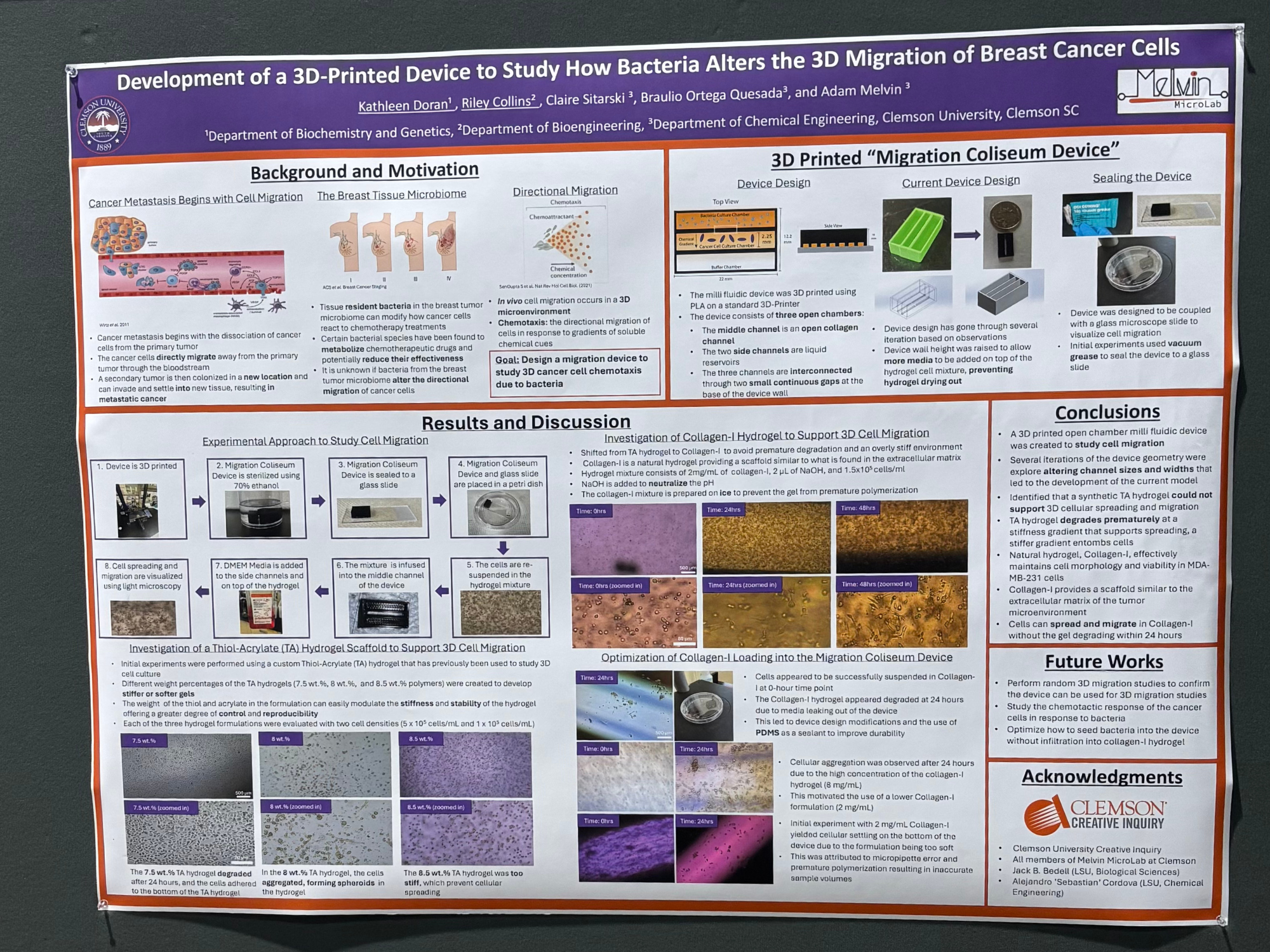
Junior biochemistry student Kate Doran recently attended the 2025 Annual American Chemical Society (ASC) meeting in San Diego, CA to present a poster of her research work.
The Annual ASC meeting is a function where individuals can get together and share their passion for chemistry, connect with one of the world’s largest scientific societies and advance scientific career opportunities.
“It was an absolute pleasure presenting at this year’s American Chemical Society meeting. The opportunity to travel to San Diego and present at such a large conference was an incredible addition to my Clemson experience.”
Kate worked with Riley Collins, a senior biomedical engineering student on her poster presentation. The title of the presentation was “Development of a 3D-Printed Device to Study How Bacteria Alters the 3D Migration of Breast Cancer Cells.”
“The goal of this work is to analyze cancer cell chemotaxis due to the presence of bacteria through the development of a 3D printed millifluidic device. The millifluidic device was designed in SOLIDWORKS and printed using PLA filament on an Ender3 Series 3D printer.”
The research is ongoing and is focused on hydrogels like collagen-I, to support the 3D migration.
Senior biochemistry major Albash Khan was part of the team that invented ThermaChill, which came in 3rd place at this year’s College of Science Catalyst Competition. The third-place position comes with a $500 prize.
ThermaChill is a self-heating and cooling lunchbox, highlighting the student’s innovation and entrepreneurship for creativity and sustainability. The ThermaChill team also included senior financial management major Karthik Beeraka, junior biochemistry major Maxwell BeGole and junior physics and computer science major Eli Skoglund.
The Catalyst Competition, which launched in 2021, is a two-semester program. Participating student teams receive support from professional consultants and faculty advisers. It is an entrepreneurship challenge that seeks to support students in developing their innovative business ideas in the areas of science and technology, where each spring, student teams present their ideas to a panel of judges in a culminating pitch competition for a chance to win cash prizes.
Senior biochemistry student David Hess has been booed by 40,000 people at Fenway Park in Boston – he was pitching a bad game. This is nothing compared to the years of chemo and radiation therapy.
After David was drafted in 2014 by the Baltimore Orioles, he made his major league debut in 2018. He signed with the Tampa Bay Rays as a free agent, and when he was traded to the Miami Marlins, David and his wife moved down to Miami. David was having a good season when he gradually started to feel a bit off in 2021.
“I started having shortness of breath, my ribs were popping out of place, I had to see a chiropractor on a regular basis. I thought it could be stress or COVID.”
He started to get worse, his game started to suffer and one morning, he coughed up blood, sending him to the ER. David’s blood pressure was extremely high, so they admitted him, originally thinking the culprit was stress but still wanting to run some tests.
A Diagnosis
“They performed an x-ray and came into the room. They said ‘Do you see that big shadow over your lungs? That’s not supposed to be there.”
There was a pineapple-sized, germ cell tumor on David’s lungs. The tumor was pushing his organs around and his windpipe was at 15% capacity. The doctors were amazed that David had been playing major league baseball.
Germ cell tumors are rare. As a fetus develops, cells form in eggs in the ovaries or sperm in the testicles. Rarely, these cells travel to other parts of the body and grow into germ cell tumors. The survival rate is over 90%. However, there is a chance that there may be something lurking under the tumor that is unseen and unknown.
Nine Lives
David went through nine weeks of chemotherapy and responded well.
“I went through the treatment and the good thing about this is that germ cell tumors shrink down quickly. It went from a pineapple-sized tumor down to a baseball or softball sized-tumor quickly.”
In the winter of 2022 David went in for a follow-up scan and the tumor had grown – he feared he was falling into that 5 – 10%. They started him on a rigorous 12-week treatment plan. David stayed optimistic.
“Here we go – round 2. It’s not ideal, but let’s do this.”
On the last day of David’s 12-week chemo and radiation treatment, he suffered a seizure in the doctor’s office and stopped breathing for a short time.
“I guess I am using up some of my nine lives here,” David says laughing.
When the scans came back after the round two treatment in spring of 2023, the tumor was still present. David’s oncologist sent around the scans and biopsies to different specialists around the country and one came back with some terrible news.
“The specialist called back and said, ‘I hate to do this, but this is not a germ cell tumor – this is clear and definitive angiosarcoma,’ which is a much worse diagnosis. Where we were looking at a 95% success rate, angiosarcoma is basically the opposite.”
Angiosarcoma of the lung is a rare, aggressive tumor that usually spreads from another part of the body and originates in the vascular or lymphatic system. The specialist that diagnosed David with angiosarcoma did not have any positive feedback.
“He told me to basically get my affairs in order, it was that bad. But my oncologist and my team at Greenville did not accept that.”
Staying Strong
David truly leaned on his faith, his competitive and passionate nature and his family, particularly his wife, Devin, during these times to give him strength and hope. He also always knew the end goal was to live and to live playing baseball again.
“The idea of this beating me did not cross my mind. I am also a huge Star Wars fan so through this process I felt like Hans Solo. Never tell me the odds.”
The oncologist planned to perform a lung surgery to remove as much of the cancer as possible, then David would go on to treatment with the ultimate goal of an open-heart chest surgery to extract the chest mass out.
Since David knew he was going to be home during the treatment after the surgery, he began to get back into the groove of things. He started coaching a travel baseball team and in summer of 2023, he enrolled in the biochemistry program at Clemson University and took Physics I and II online over the summer.
“The lung surgery went really well. In fall 2023, I started in person classes at Clemson while I was still doing chemo and coaching a travel ball team – I guess I just don’t know how to not do things.”
A Miracle Scan
The chest surgery was planned for right before Thanksgiving. A few days before the surgery, David and his wife went in for the pre-operative appointment so the doctor could get scans of his chest to map out the surgery.
“He came in and he said, ‘I don’t know what to tell you, we don’t need to do the surgery. The treatment wasn’t supposed to work the way it did, and something has happened in the last week since your last scan.”
The tumor in David’s chest had shrunk enough to where they surgery’s risks outweighed the benefits, so he went straight into chemo and radiation therapy again. By the spring of 2024, David’s lungs had stayed clear, and his chest was stable. However, by finals week, he had spots on his lungs again. David’s new treatment plan was six months of rigorous chemo and radiation therapy.
“A whole summer of treatment into the fall – I ended up having to take the fall semester off. I was down for the count. We get to the end of the treatment and my chest had stayed stable and my lungs were looking good. We thought this might have just been a Hail Mary.”
Third Time’s a Charm
David had his first post-treatment scan in October it was looking like the treatment had worked. However, it takes three scans to be certain that the medicine is out of your system to know it’s not a false positive.
David’s December scan came back good.
“Well, you get one more and that’s called a streak!”
In spring 2025 David enrolled back into courses as a biochemistry major at Clemson. His passion resonates over to his academics and beyond. After his grandfather died of cancer, David has been interested in working in the medical field, giving back. He was so excited to be back in the classroom.
“My passion is not just about performing well in the classroom but also helping the people around me just as much as my own personal growth.”
The last week of February 2025 David went in for his third scan and though they still have to keep an eye on it, the scan comes back with no evidence of disease.
“As of this moment I can say that I am cancer-free! It’s been a wild ride.”
David lives in Greenville, SC with his wife, Devin and their two cats, Stripes and Penny. He is currently enrolled in the biochemistry program at Clemson University, coaching a travel ball team, running a podcast with his wife called The 41 Life, is actively training to get back on the baseball field and is living his beautiful cancer-free life, constantly looking for ways he can help others.