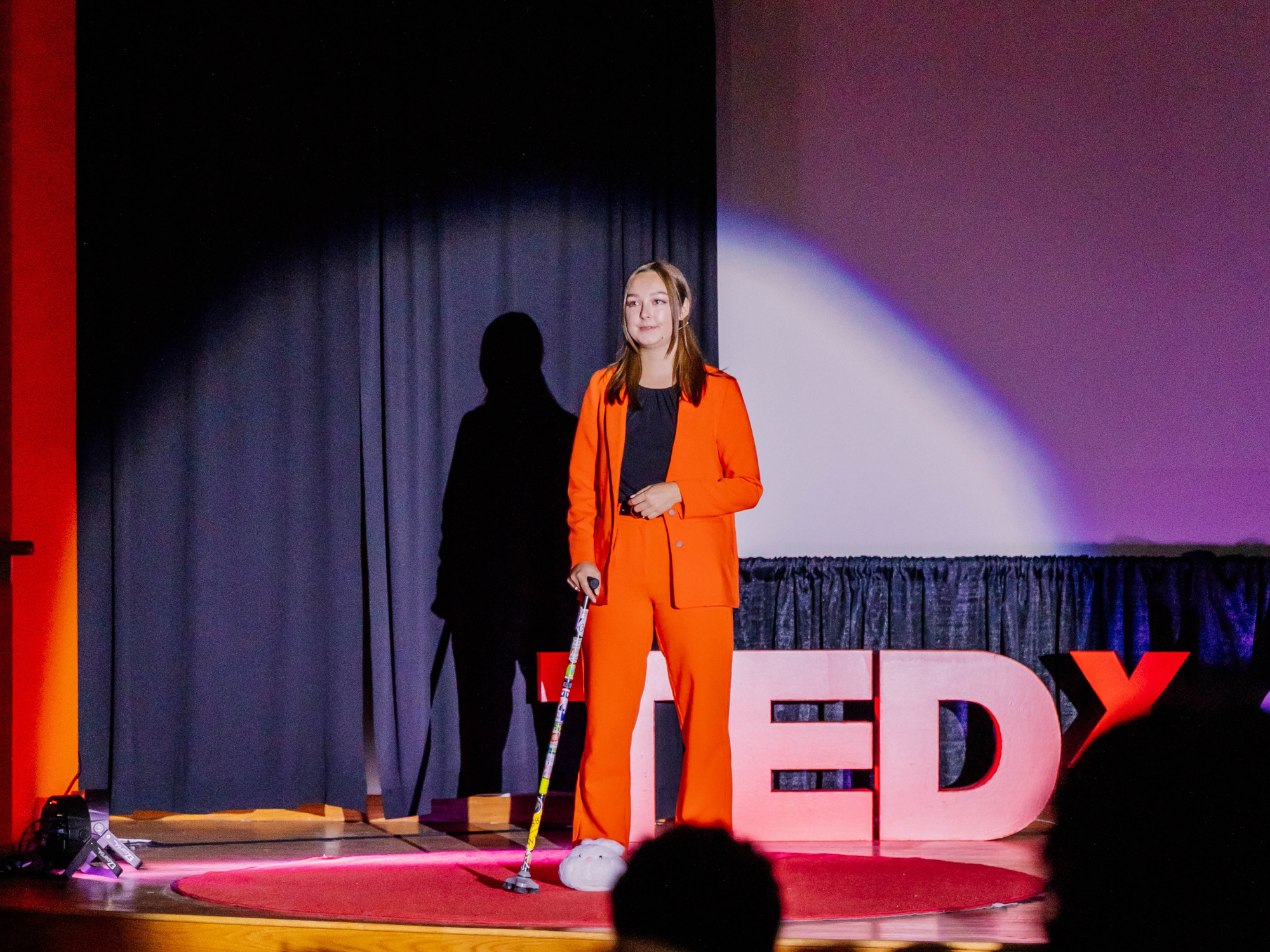
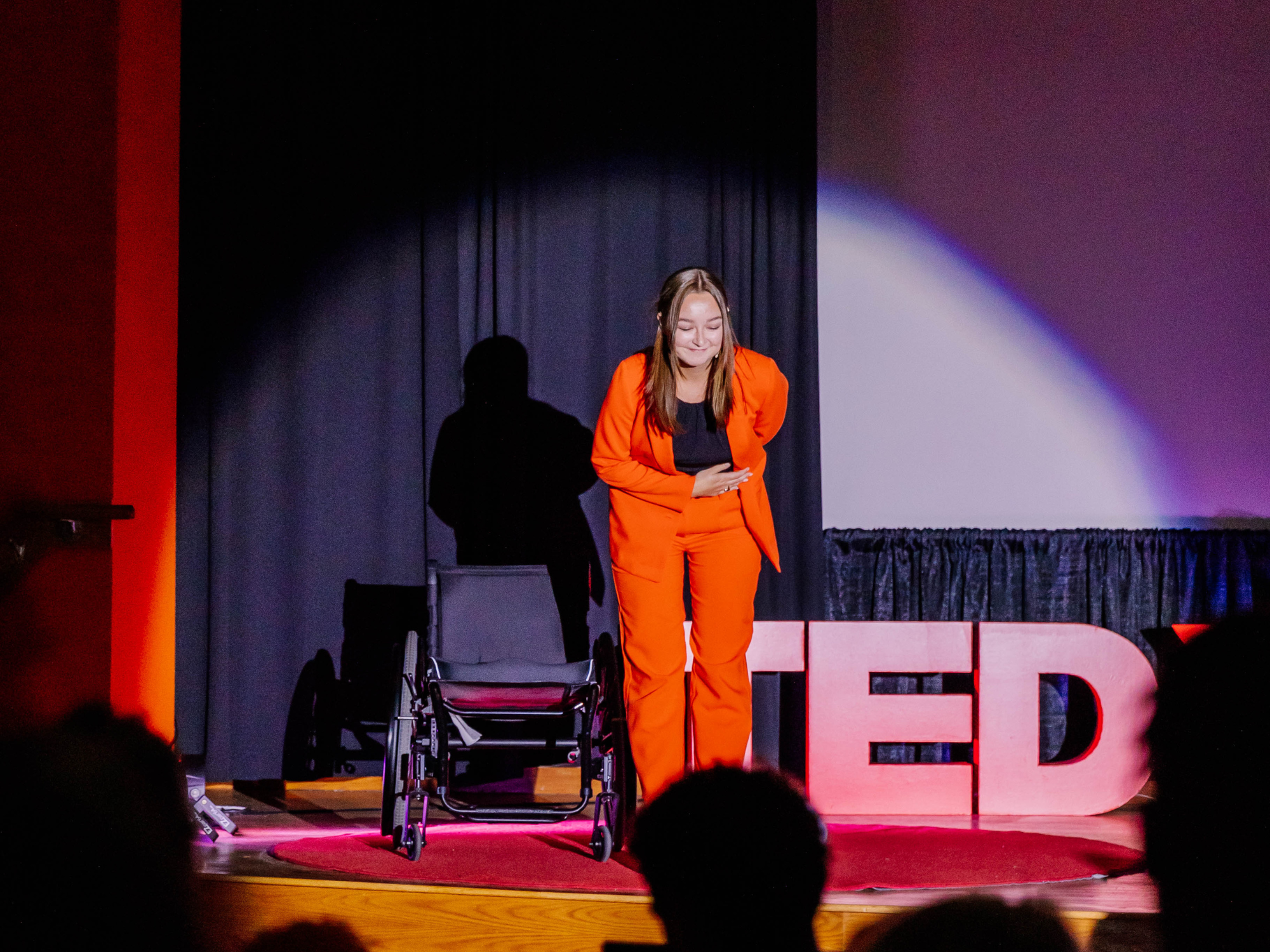
Senior genetics major, Truman and National Scholar Elizabeth Caldwell was invited to give a Ted Talk at TEDxClemsonU’s Innovate to Elevate event on August 24, 2024.
TEDxClemsonU’s Innovate to Elevate event aimed to catalyze a culture of innovation, collaboration, and positive change within the university community, empowering individuals to elevate their ideas, aspirations, and impact on the world.
“Most often my cane is the first thing people notice about me. And once strangers see me with a cane, they immediately begin making assumptions.”
Elizabeth’s talk resonates with both people with and without disabilities. She encourages those listening to rethink the way we view those with disabilities.
“I believe its time to innovate the way we think about disabilities so that we can elevate the entire disability community and make the world more accessible for all.”
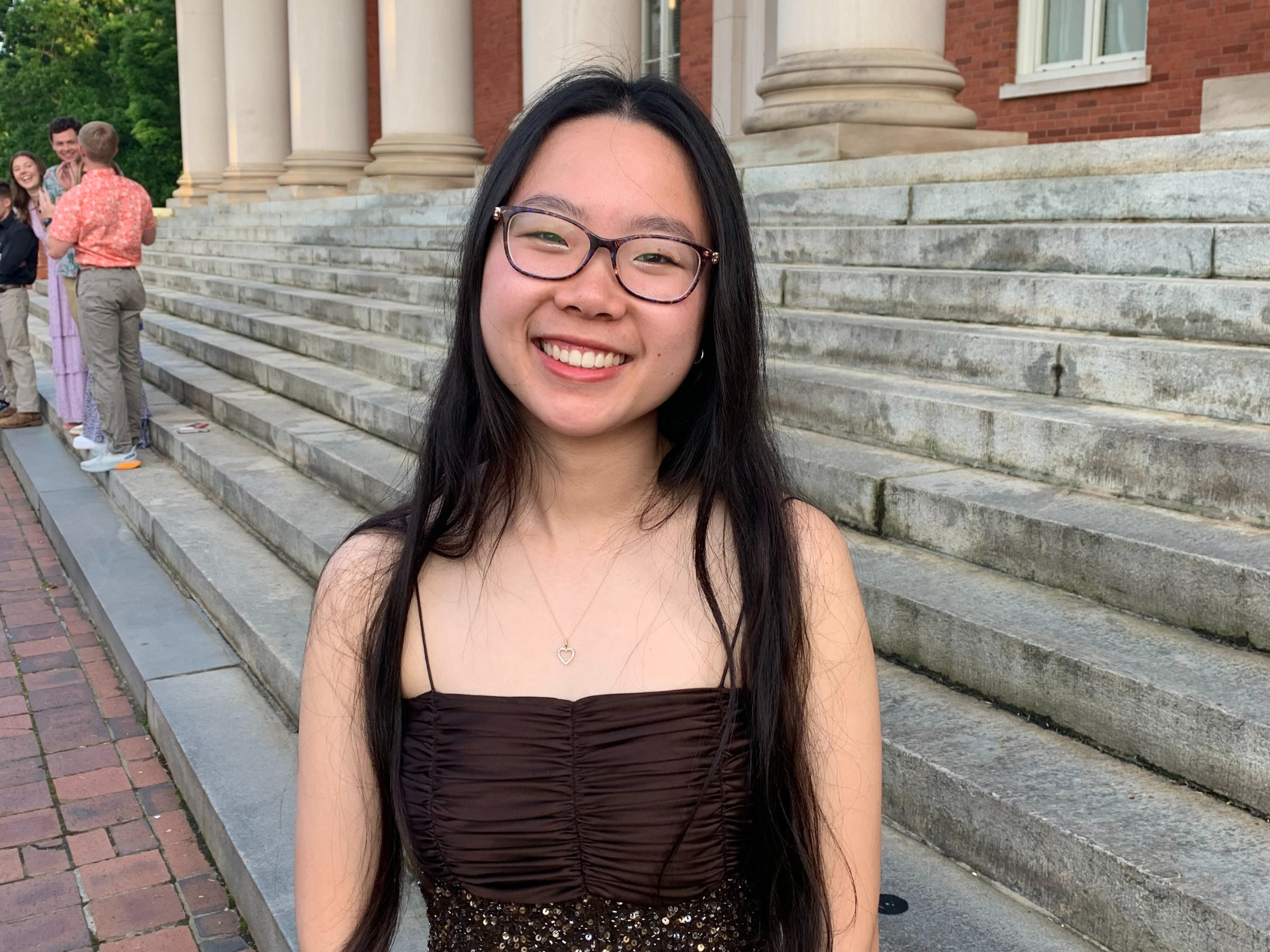
When senior biochemistry major Ruxi Xia was shopping for colleges, she began to get worried that she wouldn’t find the place for her because she wasn’t connecting at any of the campuses she toured at. That all changed when she visited Clemson.
“Clemson felt like home as soon as I stepped on the campus.”
Ruxi is an international student from Wuhan, China that came to the US in high school and lived with a host family. After high school Ruxi was excited to learn that Clemson had a robust biochemistry program.
“I wanted a strong biochemistry program to set me up for success in cancer research as it has been my career choice since one of my family members passed from cancer.”
Now that Ruxi is here, she is grateful to have been exposed to many foundational science courses that she says will set her up for success.
“I enjoy my upper-level professors, who are really passionate about science and have made me a much stronger student.”
Ruxi is not only involved in her routine academics on campus; she is a part of many different extracurricular activities including the Clemson Light Imaging Facility (CLIF).
“I have worked on many independent immunofluorescence staining projects, learned to operate wide-field and confocal microscopes, and coordinated an imaging contest that receives entries from all over the world for that past three years.”
Ruxi also works in a bioengineering lab characterizing peptides to deliver siRNA for RNA interference applications in ovarian cancer, as well as using a 3D spheroid model to better study the tumor and has presented her research at five national conferences.
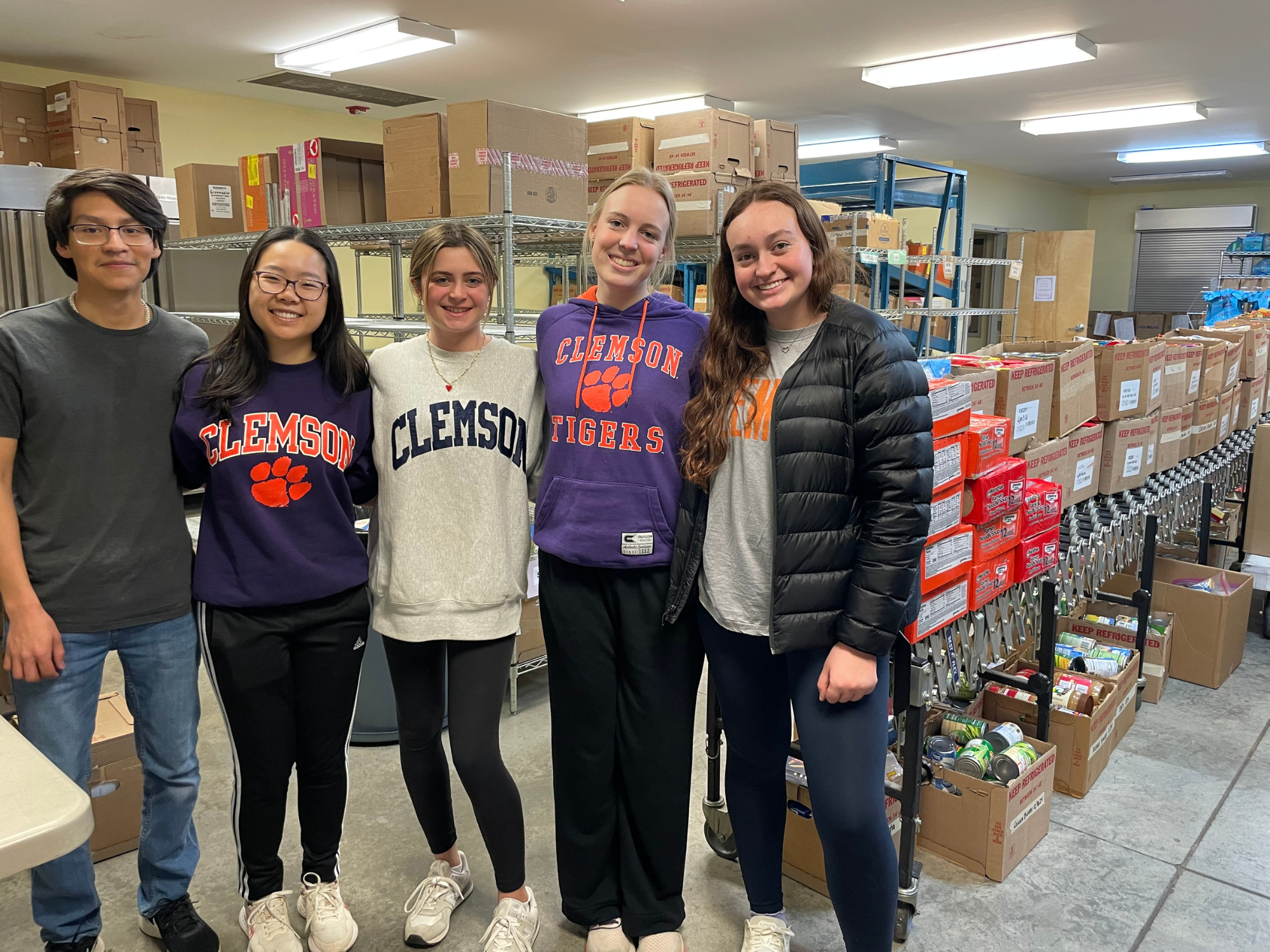
As a co-director for Clemson Paw Pantry since Spring 2023, Ruxi has enjoyed leading the executive team and spreading awareness for the initiative, tripling both the usage of the pantry and the number of volunteers. Ruxi is also a student tutor at the Academic Success Center and mentor for the Clemson College of Science Mentoring and Inclusion Collaborative (COSMIC).
In addition, Ruxi serves as an active member in student government, as the volunteer/community service coordinator for the Clemson Rotaract Club and as the president of the Clemson Chinese Students and Scholars Association (CSSA).
“I have really enjoyed getting to help out the community whether that is helping at the Clemson Community Care, local farms, and other shelters in the community.”
Ruxi went to high school in Virginia and enjoys baking, cooking and spending time with her friends trying new restaurants and coffee shops. After graduation, Ruxi plans to either pursue a Ph.D. in biomedical engineering or pharmaceutical sciences.
How long ago the bond between dog and man was first formed is something scientists haven’t been able to ascertain.
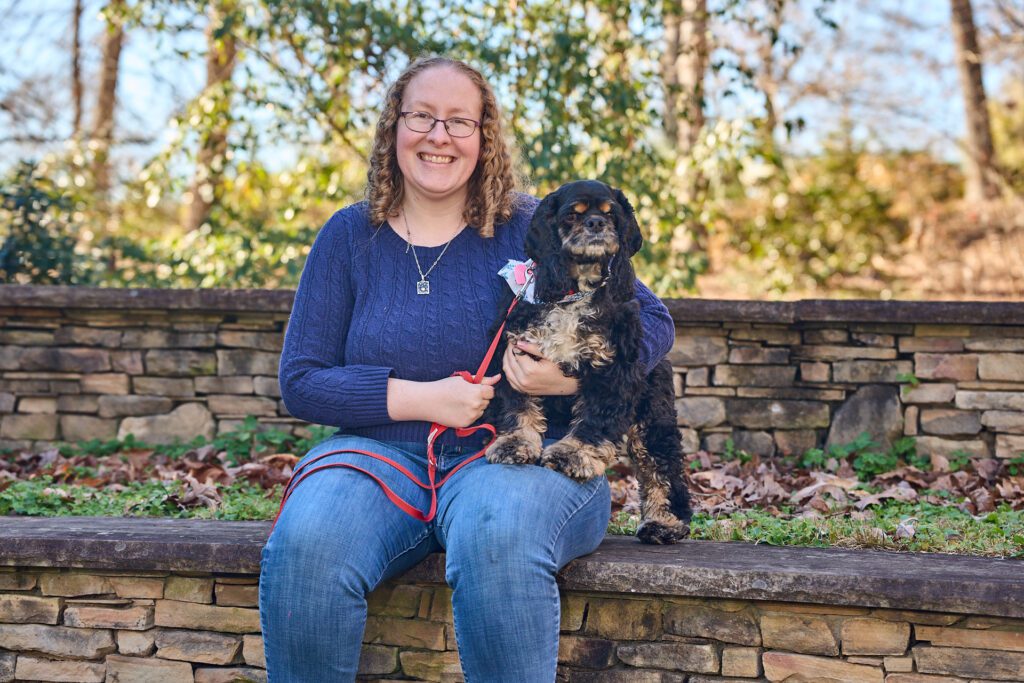
New research involving Kelsey Witt Dillon, an assistant professor in the Clemson University Department of Genetics and Biochemistry and the Center for Human Genetics, is part of new research that now suggests indigenous people in interior Alaska had formed relationships with the ancestors of today’s dogs near the end of the Ice Age — a time at least 2,000 years earlier than previously thought.
“Dogs were the first animal to be domesticated, but it was so long ago that we don’t really know the details of when and how,” said Witt Dillon, a computational biologist and population geneticist whose research focuses on the history of dogs in the Americas. “Any time we come across archeological samples of canids — dogs, wolves or coyotes — we’re interested in learning more about them and their relationship with humans to try to shed light on that.”
The researchers used a database of 111 large canid specimens. Included was the tibia of an adult canine about 12,000 years old and an 8,100-year-old canine jawbone excavated. The scientists determined that the canines from which these two bones came from had regularly eaten salmon, a diet choice that wasn’t typical of canine, who typically hunted land animals for food. Researchers say these dogs likely were fed by humans or scavenged salmon left by humans.
“We have evidence that sometimes people had a very loose association with dogs, where the dogs would be around, but they didn’t have owners and they weren’t being actively managed in any way,” she said. “It was a relationship where the humans had some benefit from the dogs being around, maybe some protection from wolves, and the dogs got food and a bit of safety, too. The pet idea is newer and the breeds as we know them are newer.”
Witt Dillon said the goal of the project was to consider different lines of evidence at once to try get a picture of what human-dog and human-wolf interactions were like.
“We see a lot of evidence of people feeding dogs and taking care of them, and we see this through time. People have valued dogs for thousands of years. I think it’s a cool thing to see that we’ve had this very long, lasting relationship,” she said.
Considering the world’s growing population and less land being available for farming, it’s becoming more important than ever to increase nutritional quality and crop yield of food crops. One way to achieve this is by genetically modifying a plant by introducing a foreign gene (called a transgene) from another organism, essentially giving the plant a new trait not naturally present in its genome.
This often enhances a plant’s resistance to pests, diseases and environmental stresses, improves its nutritional value. Plant’s traits can also be improved by modifying the genes they already have through gene-editing technology.
However, when foreign genes are introduced into target crops using the transgenic approach or by manipulating endogenous gene expression in target crops using genome editing for trait modification, some unneeded DNA may end up permanently residing in the host genomes of the final transgenic products, which raises questions of potential hazards or adverse effects to the host, environment and human health. Professor Hong Luo and his lab have been studying this genome editing in crops.
“The unnecessary DNA that gets into the transgenic plants with the target gene need to be removed,” says professor Hong Luo.
One way to remove them is by using site-specific DNA recombinases. Site-specific recombinases recognize specific DNA sequences by flanking the desirable gene with target sequences that the recombinase can recognize and excise.
Professor Luo has received a $650,000 grant from the U.S. Department of Agriculture to study these unintended consequences of three site-specific DNA recombination systems commonly used to genetically engineer target crops.
In this study, Luo will study three different recombinase genes — Cre, FLP and PhiC31 — in plants creeping bentgrass and Arabidopsis by investigating whether there are unintended off-target effects to host genomes, epigenomes and phenotypes and whether they negatively or positively affect plant traits and present hazards to the environment.
“This will give us an idea about what aspects those recombinases impact in which particular plant species,” he said.
When choosing a college, STEM opportunities were important for December genetics graduate Olivia Eierman ’24. Originally from Long Island, NY, Olivia came a long way to make Clemson her home.
“I chose Clemson because of its many opportunities in STEM related fields as well as hometown feel.”
With cluster engineering and biological sciences as her minors, Olivia’s favorite class while she was a student was Engineering Analysis of Physiological Processes (BIOE 3100) with Professor Dr. Heather Dunn. Olivia’s interest in engineering shined through her years at Clemson.
“Throughout Clemson I was involved in Engineers for developing communities where I was the project manager of the Cange Hospital Optimization team.”
In addition, Olivia served as the treasurer of Chaarg a health and wellness organization for girls at Clemson and was a member in Delta Zeta sorority. Chaarg, which stands for Changing Health, Attitudes + Actions to Recreate Girls, provides a holistically healthy + safe community for girls. Olivia also spent a summer studying abroad in Europe.
“My favorite Clemson memory was studying abroad in the summer of 2023 on a faculty directed trip with the bioengineering department watching the Eiffel tower twinkle on the last night of our trip!”
After graduation Olivia plans to go back to Long Island and work in a neuropathology lab and hopes to pursue a master’s or apply for PA school in the future. In her free time, Olivia enjoys taking her puppy on walks at the dykes, enjoying football games with friends and cooking.
On Monday, December 16th, the Department of Genetics and Biochemistry held its semi-annual Research in Progress (RIP) Symposium, where graduate students give a 20-minute presentation on their research. This year’s presenters included Sabrina Pizzaro, Xiaotong Chen, Amara Onoh and Chia-Lun (Allen) Wu.
Titles of Presentations
Sabrina Pizzaro: Putative Sodium/Proton Exchangers in Trypanosoma brucei
Xiaotong Chen: How miR164 fine tuning plant growth to balance abiotic stress response and potential off target activity in DNA recombinase
Amara Onoh: Biochemical Characterization of MEILB2/HSF2BP as a Key Factor in Meiotic Homologous Recombination
Chia-Lun (Allen) Wu: Abnormal Trafficking and Processing of Multiple Matrix Metalloproteinases Drives Cartilage Defects in PMM2-CDG
Dr. Hong Luo has received a $650,000 grant from the U.S. Department of Agriculture to study the unintended consequences of three site-specific DNA recombination systems commonly used to genetically engineer target crops.
Drs. Trudy Mackay and Robert Anholt have been awarded a $170,000 grant from the Cure Sanfilippo Foundation. The grant will be used to utilize Drosophila models of Sanfilippo A and B (also called mucopolysaccharidosis (MPS) IIIA and IIIB) to screen FDA-approved drugs that may ameliorate the symptoms and disease progression of these devastating pediatric diseases, also called “Childhood Alzheimers.”
Director of the Eukaryotic Pathogens Innovations Center (EPIC) and professor of Genetics and Biochemistry Dr. Kerry Smithhas taken a role with the Clemson University School of Health Research (CUSHR) as campus research director for the Prisma Health Education and Research Institute (PHERI).
Dr. Robert Anholt served on NIGMS COBRE Phase 1 reviews – Special Emphasis Panel/Scientific Review Group 2024/10 ZGM1 RCB-T (C1).
Ph.D. student in Dr. Jim Morris’ lab Sabrina Pizarro has been awarded an EPIC Graduate Translational Research Assistantship.
Dr. Alex Feltus was interviewed by WYFF4 about artificial intelligence and using it in the classroom and beyond.
Authority Magazine recently highlighted Professor Shahid Mukhtar’s work and career journey in science in the article, “AgTech: Shahid Mukhtar of Clemson University on The New Technologies That Are Revolutionizing Agriculture.”
At the American Society of Microbiology Joint Branch Meeting of South Carolina, biochemistry and molecular biology master’s student Bryson Woodard received an Honorable Mention for his poster presentation titled, “Construction and Characterization of Transgenic Cell Lines for the Analysis of Glycosome Heterogeneity in Trypanosoma brucei“.
At the Clemson vs Virgina game on October 19th, Dr. Trudy Mackay was featured as professor of game.
Dr. Robert Anholt was invited to deliver a virtual scientific presentation skills workshop for the University of Chile in Santiago. In addition, he has been appointed a guest professor, in the Master in Genetics Program and Program of Human Genetics at the Institute of Biomedical Sciences within the Department of Neuroscience at the University of Chile.
Elizabeth Caldwell, senior genetics major, was selected as a finalist for the Rhodes Scholarship, one of the most prestigious and selective major fellowships available to American college students.
At the American Society of Microbiology Joint Branch Meeting of South Carolina, biochemistry undergraduate Hayeon Cho received an Honorable Mention for her poster presentation titled, “Determination of the role of one cathepsin C-like protease, TgCPC2, in Toxoplasma gondii infection.”
Dr. Alex Feltus and Ph.D. candidate Xusheng Ai released open-source generative AI software called GEMDiff that can “deep fake” gene expression in diseased tissue to look like gene expression in normal tissue.
Clemson News featured an article spotlighting Drs. Trudy Mackay and Robert Anholt’s research of how fruit flies could help find treatment for “childhood Alzheimer’s.”
If you’re in the sciences, odds are you’ve crossed paths with Kate Doran. Maybe in your genetics or biochemistry or anthropology or engineering or chemistry or biology courses. Kate seems to be a jack of all trades in the College of Science.
Originally from Stephentown, New York, Kate is a junior double majoring in genetics and biochemistry with minors in social sciences, biological sciences, engineering and chemistry. Kate chose Clemson because when she toured “it felt like home” with it being a big school but with a small school environment.
Research being a significant part of Kate’s academic career, she has been involved in the Creative Inquiry + Undergraduate Research Program, Clemson University’s unique combination of undergraduate research, experiential learning and cross-disciplinary interactions.
“The opportunities available were unmatched, specifically the creative inquiry program which allows undergraduate students to do research.”
The title of Kate’s Creative Inquiry project is “Development of a 3D-Printed Millifluidic Device to Study How Bacteria Alters the 3D Migration of Breast Cancer Cells.” The goal of this project was to look at the chemotactic response due to soluble factors released by bacteria in the breast tumor microenvironment and investigate this through the development of a 3D printed millifluidic device to analyze cancer cell chemotaxis.
In addition to the Creative Inquiry Program, Kate participates in Dr. Adam Melvin’s chemical engineering lab, focusing on the 3-Dimensional migration of breast cancer cells within a 3D printed device.
“Prior to Clemson, I did not anticipate working or participating in an engineering environment, however the opportunities presented to undergraduates are unmatched across all fields.”
The research she has participated in at Clemson led her to obtain a position as a summer intern at the National Institutes of Health last summer. The National Institutes of Health (NIH), a part of the U.S. Department of Health and Human Services, is the nation’s medical research agency — making important discoveries that improve health and save lives.
Kate notes some of her academic success to the people she is surrounded by here at Clemson, whether that be academic advisors, professors or other students.
“As I move forward in my degree, each semester I meet more people within the department, and the community that biochemistry and genetics majors have is truly special.”
After graduation, Kate plans to pursue an M.D. or a Ph.D.
“Medical school has been a long-term goal of mine, and following the introduction to biochemistry and research, it was apparent the original plan could be expanded in order to better help others in the long run.”