Genetics and Biochemistry News

The Simmons Story

In 2015, when Aliyah Simmons switched her major to biochemistry as a freshman, she had no idea that she had just begun a domino effect in her family.

Aliyah ’19, Chasity ’22 and Lauren Simmon’s ’25 parents raised them to always support one another. Whether in school or through life challenges, each sister knew they could rely on each other.

“As I’ve gotten older, our bond has only grown stronger, and I’m deeply grateful for the relationship we share,” Lauren says. “I truly love and appreciate my sisters, and I consider it a blessing to have them in my life.”

Lauren Simmons

Each sister has gone through and graduated from the Department of Genetics and Biochemistry at Clemson University. Aliyah and Chasity studied biochemistry and Lauren studied genetics.

“I always wanted to major in biochemistry since eighth grade due to my love for both biology and chemistry,” says Chasity.

However, it was Aliyah who was first to attend Clemson, coming in as a bioengineering major but soon found out engineering didn’t align with her future goals. She quickly switched to biochemistry and the others followed as they entered as freshman.

“When they [her sisters] shared their academic interests with me, I encouraged them to explore the G&B department because I knew it would be a great fit,” says Aliyah. “Throughout their time in school, I was always available to answer questions, help with course planning and offer guidance and support.”

Aliyah Simmons

For Lauren, choosing Clemson and our department was mainly family influence, but partly due to the exclusivity of our genetics program.

“When I learned that Clemson was one of the few universities offering genetics as a dedicated major, it immediately stood out to me,” says Lauren. “The combination of my family’s connection, my own visits and the opportunity to study genetics made Clemson the clear choice for me.”

Aside from their shared interest in the sciences of genetics and biochemistry, all three sisters also studied Spanish and were a part of the study abroad program with Aliyah and Chasity studying in Córdoba, Argentina and Lauren traveling to Santiago De Compostela, Spain.

“While there I did a surgical internship at the local hospital and many other activities. It was one of the best experiences of my life,” says Lauren, while Aliyah says, “I studied abroad in Córdoba, Argentina in Spring 2018, and it was an incredible experience. I’m still in touch with my host family to this day.”

Additionally, the Simmons sisters were noticeably active on campus during their undergrads, particularly in the Clemson University Student Government, which all three had some involvement. In addition to Student Government Aliyah, Casity and Lauren were involved in other extracurricular activities.

“I participated in the Minority Association of Pre-Medical Students, Undergraduate Pediatric Society, Association of Minority Psychology Students, was a Clemson Tour Guide and played intermural soccer and basketball,” says Chasity.

Chasity Simmons

After graduating, Aliyah, now a married mother of two boys, attended medical school at MUSC and is now at Rutgers Robert Wood Johnson in her anesthesia residency. For Chasity, she worked as a clinical assistant and translator at a pediatric clinic and is currently in medical school scheduled to graduate in 2028. Lauren, who just graduated a few months ago is pursuing medical school like her sisters.

All three sisters contribute some of their medical school successes to the faculty, peers and curriculum of the G&B department.

“Altogether, that sense of connection—with both peers and professors—has shaped my future by strengthening my study habits, collaboration skills and confidence, which I know will carry me forward in my medical journey,” says Lauren, while Aliyah says, “G&B taught me the importance of teamwork—something that’s essential in medicine, where collaboration across healthcare disciplines is critical.”

G&B recieve grants – Fall 2025

Associate professor Rajan Sekhon along with a team of researchers at Clemson University and partner organizations have received a $2.4 million, four-year grant to map genes that control leaf senescence in corn. Funded by the National Science Foundation through both the Plant Genome Research Program and the Cross-Directorate Activities program, this project aims to sustain photosynthesis longer, improve yield stability and support smarter on-farm nitrogen use.

G&B recieve honors – Fall 2025

Trudy Mackay was inducted into the National Academy of Medicine.

The Board of Trustees recently approved the elevation of the Center for Human Genetics (CHG) to the Institute for Human Genetics (IHG).

Kim Paul celebrated 20 years of service at Clemson University!

Postdoctoral fellow Joshua Turner received a travel award from the Environmental Mutagenesis and Genomic Society to attend their annual meeting,

For International Microorganism Day Clemson News highlighted G&B’s Manuel Fierro and his research with the cell biology of the microorganism that causes malaria.

Three G&B lecturers were recently promoted to senior lecturer including Heidi Anderson, Michael Harris and Todd Lyda.

Caroline Palmentiero won best talk at the 20th International Free Living Amoeba Meeting in Puerto Morelos, Mexico.

Graduate students Sky Lu and Roger Zhang gave poster presentations on their dissertation research at the North Carolina Chestnut Festival, where Sky won first prize for her presentation.

G&B invited for events – Fall 2025

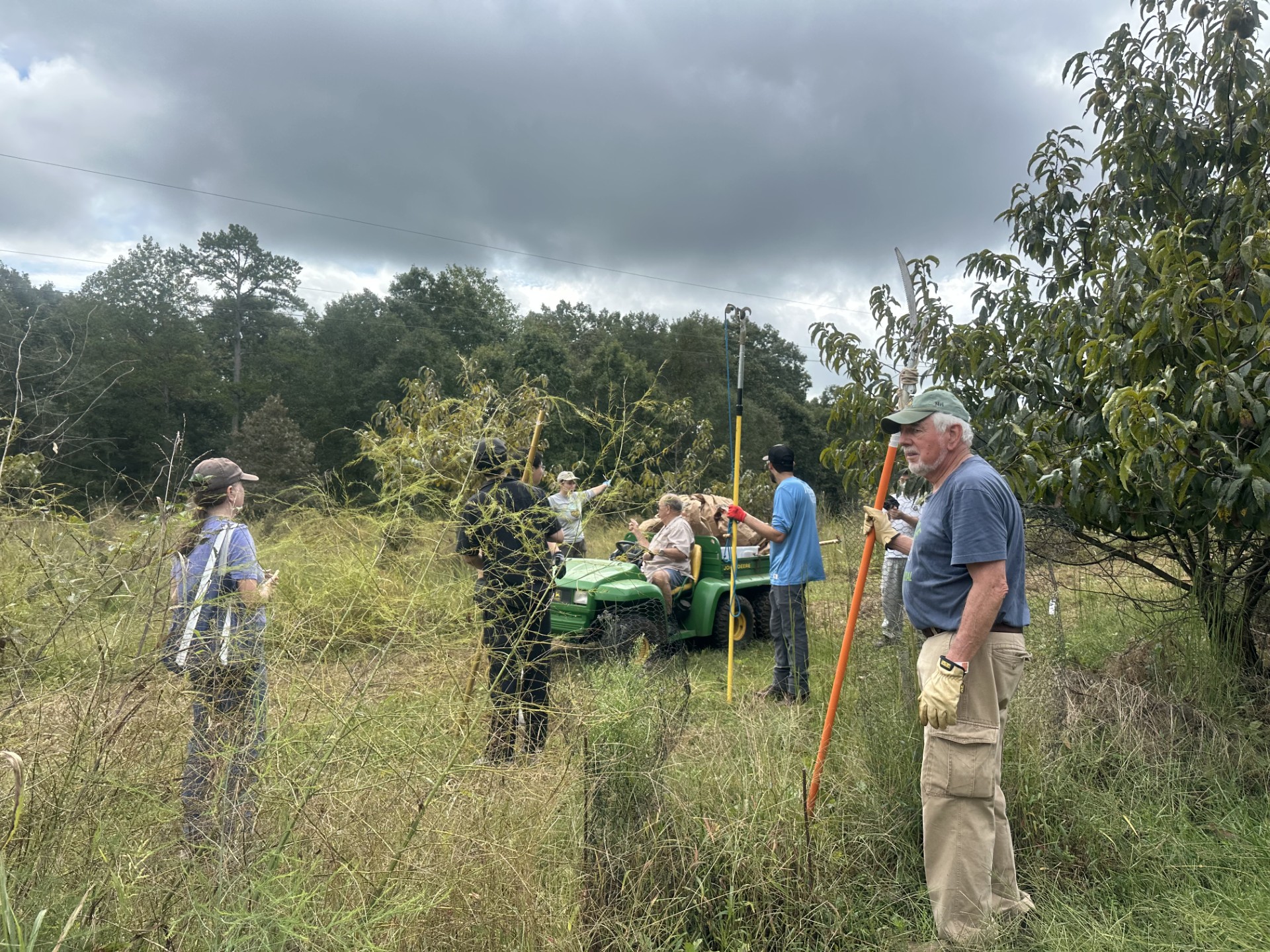
Recently Haiying Liang and her lab assisted at the Chestnut Return Farm in Seneca, SC and the North Carolina Chestnut Festival in Asheville, NC

Tara Doucet-O’Hare was invited to give a seminar to the Department of Biology at UNC Asheville. The title was “Diving into the dark genome: endogenous retroviruses in human health and disease.”

G&B publish articles – Fall 2025

The Witt Dillon lab published “The MUC19 gene: An evolutionary history of recurrent introgression and natural selection” in Science.

Trudy Mackay and Robert Anholt published “Angiotensin-Converting Enzyme Inhibitors and Metabolic Aging: A Drosophila Perspective” in Biomolecules.

Tara Doucet-O’Hare’s lab published two textbook chapters for the book “Transposable Elements in Human Health and Disease” that is being published by Springer Nature. The titles of the chapters published are “The Role of Transposable Elements in Development” written by Doucet-O’Hare and John R. McCoy and “The Role of Transposable Elements in Therapeutics,” written by Doucet-O’Hare and Kathryn Howe.

“A Quest to Root Chestnut Cuttings” was published by Haiying Laing in the Chestnut magazine, a publication of the American Chestnut Foundation.

Graduate student Ashley Kirby, along with assistant professor Miriam Konkel, published “Structural and transduction patterns of human-specific polymorphic SVA insertions” in Mobile DNA.

Jennifer Mason and her lab published “Overexpression of NEK8 inhibits homologous recombination” in DNA Repair.

Alumni Stories: Sydney Clark ’25

Pursuing a Ph.D. wasn’t always the plan for biochemistry alum Sydney Clark ’25, who is currently a first year Ph.D. student in the Healthcare Genetics and Genomics Laboratory under the School of Nursing at Clemson University.

“Although I had strong grades, I didn’t imagine I would be accepted into a PhD program right out of undergrad. I was told I needed to have a very clear trajectory for why I wanted to pursue graduate school and where I wanted to end up after I received a graduate degree. While I still do not have a perfectly defined path for my future, I know this was the best next step I could have taken.”

Originally from Charleston, SC, Sydney came to Clemson for undergraduate studies, graduating in May 2025 with a degree in biochemistry with minors in microbiology and biological sciences. Sydney first joined the Healthcare Genetics and Genomics Lab during her junior year and later applied to continue the Ph.D. research with the help of her mentor, Dr. Aubrey Mattingly.

“I am now working as a Graduate TA/RA for the HCG Lab, where I help train undergrad students in various aspects of cancer research.”

Sydney’s dissertation work focuses on the use of natural pharmaceutical extracts to treat breast cancer in a zebrafish model organism. Specifically, she studies how these herbal extracts influence the regulation of key anti-cancer genes involved in apoptosis, proliferation, migration, and other processes.

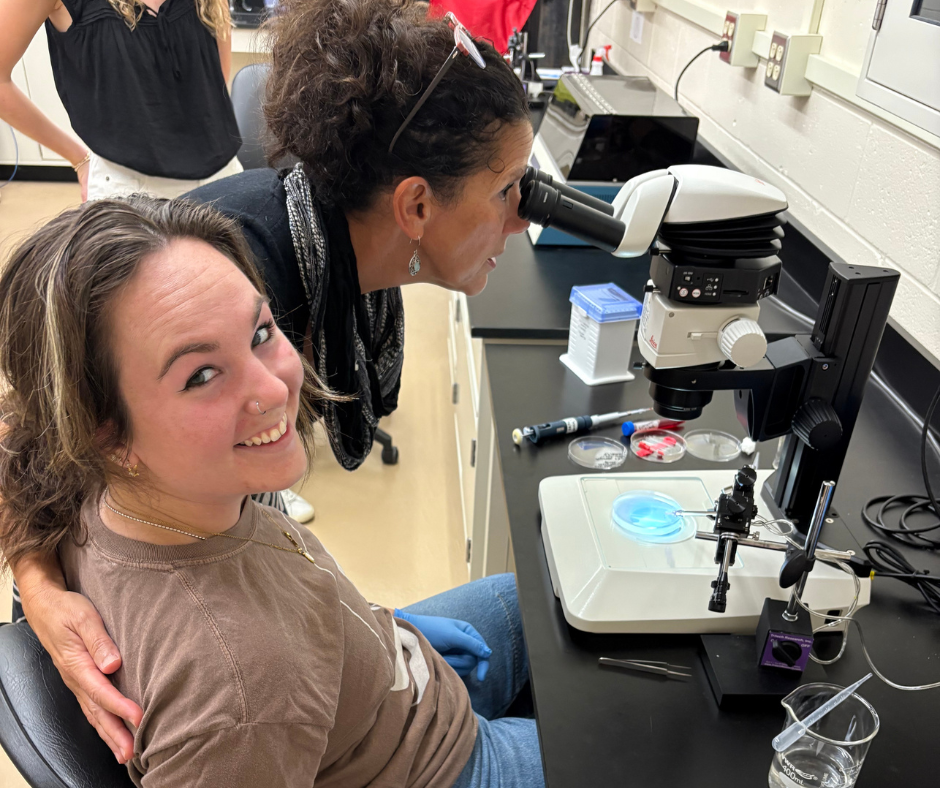
“This program has already allowed me to gain hands-on experience with a wide range of laboratory techniques, including culturing, fluorescent tagging, metabolomics, embryo microinjections and fluorescent microscopy, among others. More importantly, it has given me the freedom to explore, experiment and teach others the “why” behind what we do in research.”

Jackson Miller ’29: from the Paint Line to the dentist chair

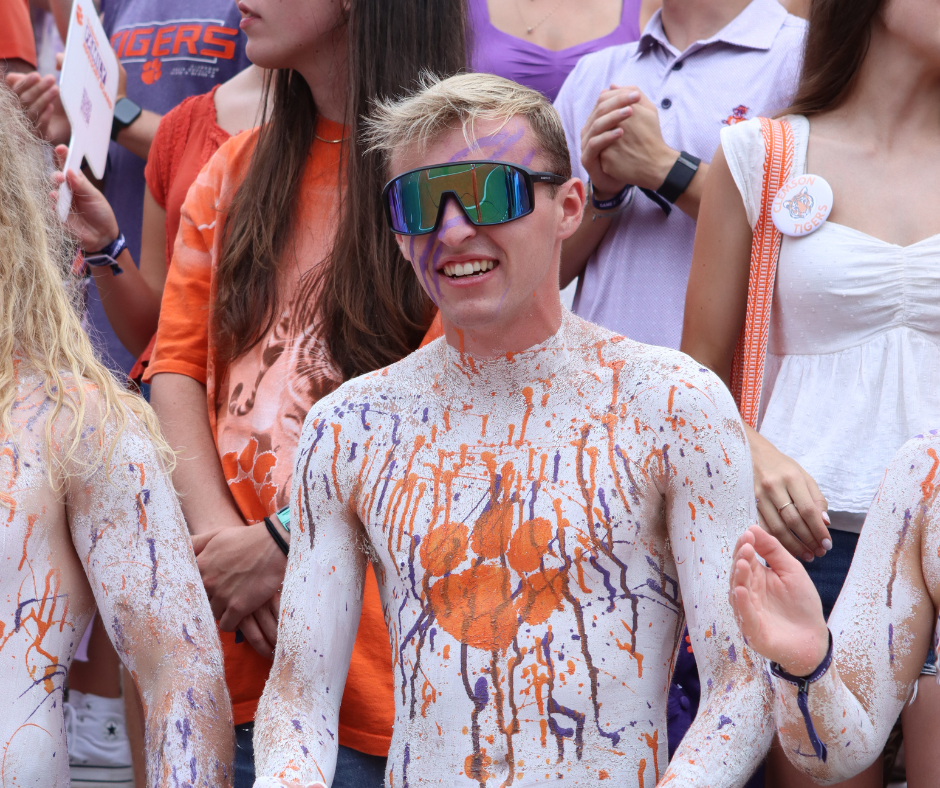
If you haven’t already, you’ll probably spot freshman biochemistry student Jackson Miller on the paint line at Clemson games, whether it’s on the jumbotron or even on ESPN. Jackson is passionate about all things Clemson, Disney, sports, family and his future dentistry career.

“Originally from the small town of Lake Wylie, SC located just outside of Charlotte, NC, I come from a small family of four that brings me constant joy and laughter. We are probably the biggest Disney fans on the face of Earth. This Christmas I will be making my 24th trip and I couldn’t be more excited since I will be there on Christmas day for the first time.”

Jackson attended a small private Christian school called Gaston Christian School with only 1,000 students from kindergarten through 12th grade. This small, tight-knight community is what led him to Clemson.

“That is what played a huge role in my college search. I wanted to find a college that gave me that same feeling as my school back home, family. Clemson was just that for me. As soon as I walked on campus, I could feel the love and family.”

Since being on campus for a few months, he has found everyone to be friendly and loves the people and connections made so far from in the Shoeboxes to Central Spirit, which is the club that Jackson has gotten most involved in.

“Central Spirit is such a great and tight community where we are constantly having fun. That being from yelling at games in hopes of helping our Tigers to victory or goofing off while at flag practice. The community has welcomed me so quickly and it has been such a blessing to have these people in my life.”

As an aspiring orthodontist, the biochemistry department seemed like a perfect fit for Jackson, providing the perfect blend of chemistry and biology. It is also a huge plus that our program is an excellent preparer for the DAT.

“I have met so many dentists and orthodontists telling me how it is a great program here at Clemson and a great way to be prepared for a dental school wherever I end up. The hope is to be able to help other kids like my sister feel more confident with their smiles and less scared of the people behind the mask at the dentist office.”

Now almost halfway through his first semester, Jackson is enjoying college life, getting involved in organizations and immersing himself in his studies.

“It is a true blessing to be at the school I wanted to be at more than anywhere else.”

Update on May 2025 Alum: Griffin Thomas at Lenox Hill

Biochemistry alum Griffin Thomas ’25 plans to attend medical school but took a year to get his feet wet in industry conducting research with the Department of Neurosurgery at Lenox Hill Hospital in NYC.

Lenox Hill Neurosurgery is a top destination for advanced cranial and spinal care, consistently ranking among the best hospitals in the world for neurosurgery by annual rankings in U.S. News & World Report.

Griffin is not new to research. While an undergraduate he performed research in Dr. James Morris’ lab where he studied the metabolism of T. brucei and Nagleria Fowleri.

This also isn’t Griffin’s first time at Lenox Hill. One summer, he had the opportunity to shadow in the Department of Neurosurgery at Lenox Hill Hospital – the very same department he works in now.

“This experience affirmed my passion to pursue a career in medicine and my interest in neurosurgery.”

Griffin is using his time at Lenox Hill to hone in on and perfect his research skills before applying to medical school and is finding his time valuable.

“It’s going great! I’ve really enjoyed learning how to use clinical research and technology to optimize patient care. I’ve spent a lot of time exploring ways to incorporate AI into neurosurgical practice.”

Congrats and continued good luck to recent graduate Griffin!

Two G&B students selected for 2025 NSP

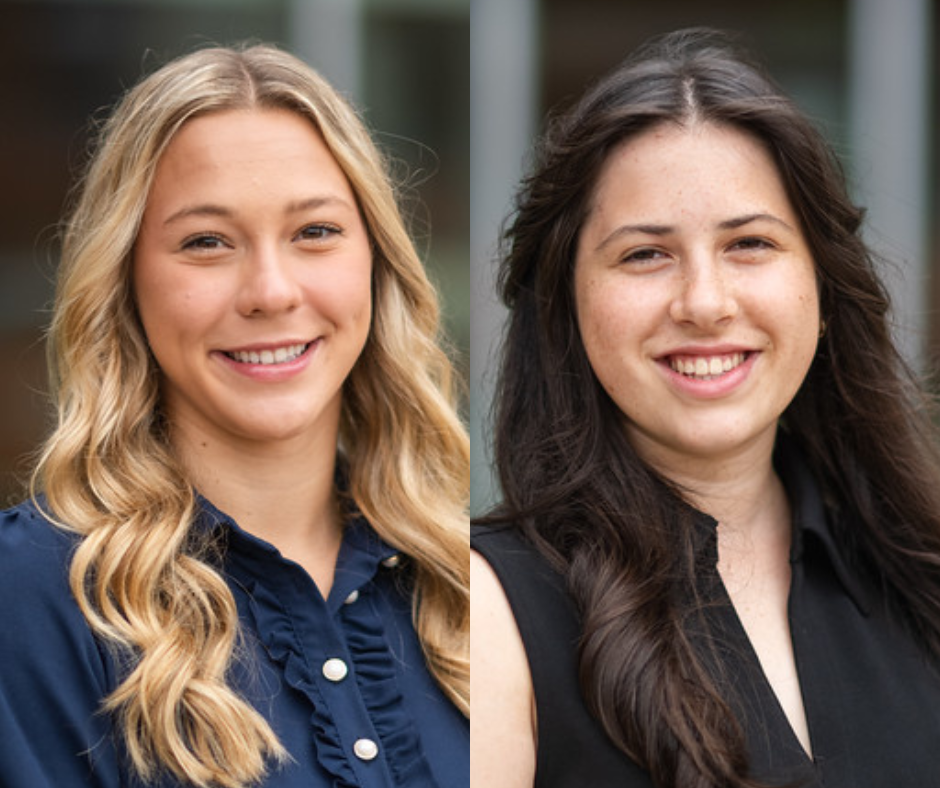
Elizabeth Polatty (left) and Evgenia Zheltov (right).

Two students from the Department of Genetics and Biochemistry joined the National Scholars Program(NSP), which serves students from all majors who demonstrate a unique combination of academic excellence, intellectual curiosity, leadership ability and demonstrated impact on their local and global communities.

Both Elizabeth Polatty and Evgenia Zheltov are sophomore biochemistry majors.

Scholars were chosen from more than 6,000 applications to the Honors College. They receive personalized support to develop their leadership skills and deepen their academic experience, equipping them to excel in the classroom and beyond. Many National Scholars go on to earn major University awards and nationally competitive fellowships.

The National Scholars Program strives to create a transformative community offering life-changing experiences and developing thoughtful scholar-leaders who listen, critically examine their place in the world, and use their talents to serve.

Summer Internships 2025

GABBIE GARDINER

Senior genetics and biochemistry student Gabbie Gardiner spent her summer in Charleston, South Carolina participating in the Summer Undergraduate Research Program at the Medical University of South Carolina (MUSC) researching a protein called PTP1B with Dr. Lalima Katyayani Madan.

“This summer, I conducted research at the Medical University of South Carolina focused on developing more precise cancer therapies by studying a protein called PTP1B (Protein Tyrosine Phosphatase 1B).”

PTP1B plays a critical role in cellular signaling and has been linked to diseases like breast cancer, diabetes, and Alzheimer’s. However, designing drugs that target it specifically has been extremely difficult due to similarities it shares with other proteins.

“My project aimed to overcome this challenge by exploring how PTP1B can be inhibited allosterically – meaning, by targeting areas outside the active site that control the protein’s shape and function.”

By combining lab-based protein purification and activity testing with computational analysis of over 250 crystal structures, we can begin to understand how the protein shifts between different conformations. This research led to findings that will lay the groundwork for creating highly specific inhibitors that could one day be used in targeted cancer treatments.

While not in the lab, Gabbie took in all that Charleston had to offer: the beach, amazing restaurants, yoga, Pilates and more!

“I love going to the beach; my favorite beach is Sullivan’s Island Beach. I’ve also loved trying a ton of restaurants in the area. I can’t pick a favorite; they are all so good.”

This summer at MUSC was invaluable to Gabbie, reiterating her passions for research and science.

“This summer really opened my eyes to what research is all about. I learned how to work with proteins in the lab, analyze data, and think through problems when things didn’t go as planned. Being part of a project that could actually help lead to new treatments for cancer made the work feel really meaningful. It confirmed for me that I want to keep doing this kind of work in the future as a doctor and scientist.”

HELEN LARKIN

Senior biochemistry student Helen Larkin spent the summer on the University of Michigan’s campus in Ann Arbor, MI researching how circulating tumor cells can cause inflammatory effects in a patient.

“I participated in the Cancer Research Summer Internship Program (CaRSIP) through the Rogel Cancer Center and the University of Michigan Medical School. I worked in Dr. Sunitha Nagrath’s lab, which is in the Department of Chemical Engineering.”

Helen found this internship on the program’s website. When looking for internships, she would go through the websites of graduate schools that she was interested in and see the summer research internship positions available.

In the Nagrath lab, Helen worked on researching the effect of glioblastoma extracellular vesicles (EVs) on neutrophils. In other words, Helen looked at how circulating tumor cells can cause inflammatory effects in a patient and potentially contribute to malignancies.

“This project has involved cell culture, flow cytometry, and different types of assays. I have learned a lot about new techniques and experiments from being there. This has been an incredibly valuable experience. I feel more prepared to apply to graduate school this fall and I have a better understanding of what life in graduate school will be like.”