Genetics and Biochemistry News

Two G&B students in first ever Action Scholars cohort

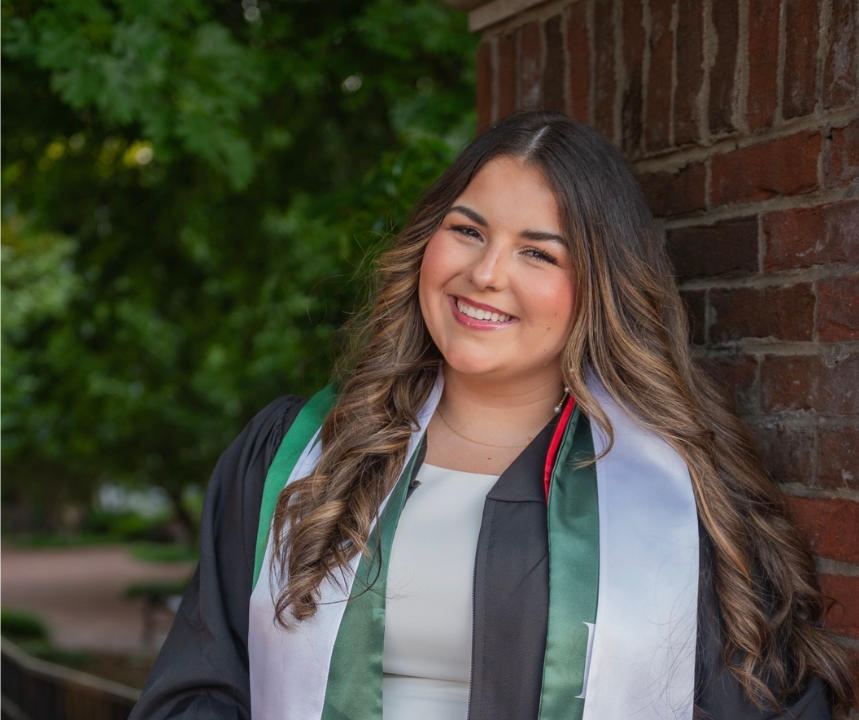
Alayna Khoja, genetics major, and Kristen Evans, biochemistry major have been inducted into the new Honors College initiative, the Action Scholars Program.

This new program brings together a group of first- and second-year Honors students to research, build and implement plans to address community needs or challenges, furthering the University’s land grant mission by building future leaders who are making a difference in communities throughout the state.

“This program brings 10 of those students together each year to share ideas, learn together and support each other as they pay it forward in their communities,” said Kristine Vernon, associate dean of curriculum and faculty affairs at the Honors College.

Action Scholars receive ongoing mentorship, identify community needs to build their projects, participate in events to finalize plans, build a portfolio of achievements and receive coaching to apply for major fellowships such as the Rhodes, Marshall or Truman.

Gopalan researches DNA aging

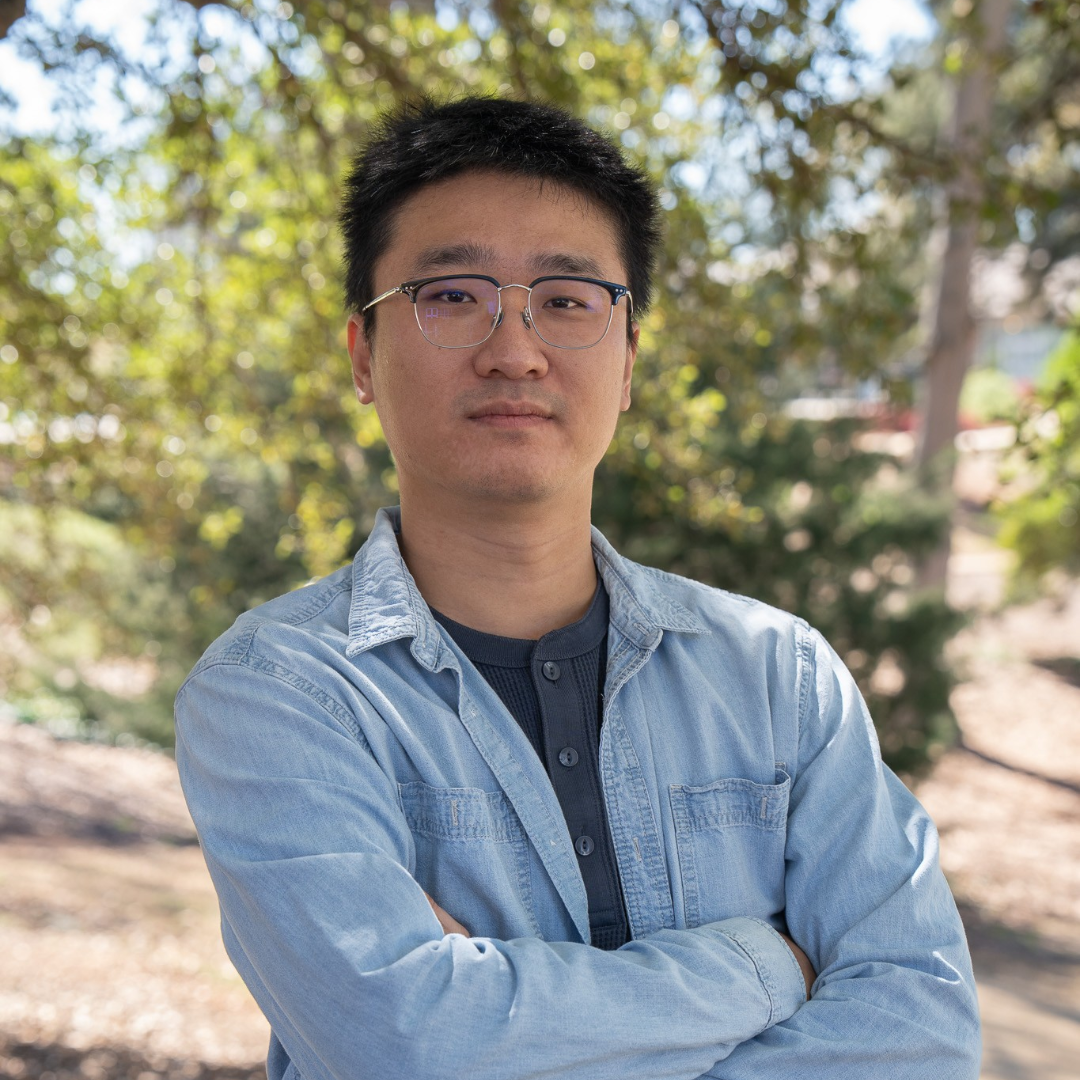
Aging leaves a chemical signature on DNA, statistical models known as epigenetic clocks estimating a person’s age with relatively high accuracy. However, new research by assistant professor and member of the Institute of Human Genetics Dr. Shyamalika Gopalan and collaborators from France show many of these clocks do not tell time well for some populations.

“None of these clocks are perfect. None of them are going to be,” Gopalan said. “But for some people, they can be way off because of genetic variation.”

 Most of the research and the clocks were built around European ancestry. The recently published work, “Common DNA sequence variation influences epigenetic aging in African populations,” found that these clocks show differences in accuracy when applied to different populations from around the world.

“Human genetics is very biased toward Western European ancestry samples. It is data from those populations that is the most widely available and mostly widely used,” Gopalan said. “African populations have more genetic diversity than the majority of populations that we tend to study in human genetics. Our hypothesis was that genetic variation can bias these predictive models in ways that haven’t been accounted for,” she said.  “It essentially means that the same level of DNA methylation can translate to a very different age prediction depending on your genotype.”

The researchers instead studied clocks to the African populations, which mostly showed significantly higher errors compared to publicly available DNA data from European and Hispanic/Latino individuals. When the researchers found this difference, they were able to reduce the error in the African cohorts while maintaining accuracy in the European and Hispanic/Latino samples.

“This study shows that we can’t necessarily take a model that was developed in one population and just apply it to another population and expect it to produce similar results,” Gopalan said. “Ideally, we would have better representation of global populations in our datasets so that we could build and train epigenetic clocks that perform better on everyone.”

The Simmons Story

In 2015, when Aliyah Simmons switched her major to biochemistry as a freshman, she had no idea that she had just begun a domino effect in her family.

Aliyah ’19, Chasity ’22 and Lauren Simmon’s ’25 parents raised them to always support one another. Whether in school or through life challenges, each sister knew they could rely on each other.

“As I’ve gotten older, our bond has only grown stronger, and I’m deeply grateful for the relationship we share,” Lauren says. “I truly love and appreciate my sisters, and I consider it a blessing to have them in my life.”

Lauren Simmons

Each sister has gone through and graduated from the Department of Genetics and Biochemistry at Clemson University. Aliyah and Chasity studied biochemistry and Lauren studied genetics.

“I always wanted to major in biochemistry since eighth grade due to my love for both biology and chemistry,” says Chasity.

However, it was Aliyah who was first to attend Clemson, coming in as a bioengineering major but soon found out engineering didn’t align with her future goals. She quickly switched to biochemistry and the others followed as they entered as freshman.

“When they [her sisters] shared their academic interests with me, I encouraged them to explore the G&B department because I knew it would be a great fit,” says Aliyah. “Throughout their time in school, I was always available to answer questions, help with course planning and offer guidance and support.”

Aliyah Simmons

For Lauren, choosing Clemson and our department was mainly family influence, but partly due to the exclusivity of our genetics program.

“When I learned that Clemson was one of the few universities offering genetics as a dedicated major, it immediately stood out to me,” says Lauren. “The combination of my family’s connection, my own visits and the opportunity to study genetics made Clemson the clear choice for me.”

Aside from their shared interest in the sciences of genetics and biochemistry, all three sisters also studied Spanish and were a part of the study abroad program with Aliyah and Chasity studying in Córdoba, Argentina and Lauren traveling to Santiago De Compostela, Spain.

“While there I did a surgical internship at the local hospital and many other activities. It was one of the best experiences of my life,” says Lauren, while Aliyah says, “I studied abroad in Córdoba, Argentina in Spring 2018, and it was an incredible experience. I’m still in touch with my host family to this day.”

Additionally, the Simmons sisters were noticeably active on campus during their undergrads, particularly in the Clemson University Student Government, which all three had some involvement. In addition to Student Government Aliyah, Casity and Lauren were involved in other extracurricular activities.

“I participated in the Minority Association of Pre-Medical Students, Undergraduate Pediatric Society, Association of Minority Psychology Students, was a Clemson Tour Guide and played intermural soccer and basketball,” says Chasity.

Chasity Simmons

After graduating, Aliyah, now a married mother of two boys, attended medical school at MUSC and is now at Rutgers Robert Wood Johnson in her anesthesia residency. For Chasity, she worked as a clinical assistant and translator at a pediatric clinic and is currently in medical school scheduled to graduate in 2028. Lauren, who just graduated a few months ago is pursuing medical school like her sisters.

All three sisters contribute some of their medical school successes to the faculty, peers and curriculum of the G&B department.

“Altogether, that sense of connection—with both peers and professors—has shaped my future by strengthening my study habits, collaboration skills and confidence, which I know will carry me forward in my medical journey,” says Lauren, while Aliyah says, “G&B taught me the importance of teamwork—something that’s essential in medicine, where collaboration across healthcare disciplines is critical.”

G&B recieve grants – Fall 2025

Associate professor Rajan Sekhon along with a team of researchers at Clemson University and partner organizations have received a $2.4 million, four-year grant to map genes that control leaf senescence in corn. Funded by the National Science Foundation through both the Plant Genome Research Program and the Cross-Directorate Activities program, this project aims to sustain photosynthesis longer, improve yield stability and support smarter on-farm nitrogen use.

G&B recieve honors – Fall 2025

Trudy Mackay was inducted into the National Academy of Medicine.

The Board of Trustees recently approved the elevation of the Center for Human Genetics (CHG) to the Institute for Human Genetics (IHG).

Kim Paul celebrated 20 years of service at Clemson University!

Postdoctoral fellow Joshua Turner received a travel award from the Environmental Mutagenesis and Genomic Society to attend their annual meeting,

For International Microorganism Day Clemson News highlighted G&B’s Manuel Fierro and his research with the cell biology of the microorganism that causes malaria.

Three G&B lecturers were recently promoted to senior lecturer including Heidi Anderson, Michael Harris and Todd Lyda.

Caroline Palmentiero won best talk at the 20th International Free Living Amoeba Meeting in Puerto Morelos, Mexico.

Graduate students Sky Lu and Roger Zhang gave poster presentations on their dissertation research at the North Carolina Chestnut Festival, where Sky won first prize for her presentation.

G&B invited for events – Fall 2025

Recently Haiying Liang and her lab assisted at the Chestnut Return Farm in Seneca, SC and the North Carolina Chestnut Festival in Asheville, NC

Tara Doucet-O’Hare was invited to give a seminar to the Department of Biology at UNC Asheville. The title was “Diving into the dark genome: endogenous retroviruses in human health and disease.”

G&B publish articles – Fall 2025

The Witt Dillon lab published “The MUC19 gene: An evolutionary history of recurrent introgression and natural selection” in Science.

Trudy Mackay and Robert Anholt published “Angiotensin-Converting Enzyme Inhibitors and Metabolic Aging: A Drosophila Perspective” in Biomolecules.

Tara Doucet-O’Hare’s lab published two textbook chapters for the book “Transposable Elements in Human Health and Disease” that is being published by Springer Nature. The titles of the chapters published are “The Role of Transposable Elements in Development” written by Doucet-O’Hare and John R. McCoy and “The Role of Transposable Elements in Therapeutics,” written by Doucet-O’Hare and Kathryn Howe.

“A Quest to Root Chestnut Cuttings” was published by Haiying Laing in the Chestnut magazine, a publication of the American Chestnut Foundation.

Graduate student Ashley Kirby, along with assistant professor Miriam Konkel, published “Structural and transduction patterns of human-specific polymorphic SVA insertions” in Mobile DNA.

Jennifer Mason and her lab published “Overexpression of NEK8 inhibits homologous recombination” in DNA Repair.

G&B Graduate Students: Sabrina Pizzaro

When graduating Ph.D. student Sabrina Pizzaro was an undergraduate biology major at North Greenville University, she participated in the Biology National Science Foundation – Research Experience for Undergraduates (NSF-REU) here at Clemson working with G&B’s Dr. Hong Luo. Though Luo’s specialty – plants – might not have sparked Sabrina’s interest, Clemson, the department and the Eukaryotic Pathogens Innovations Center (EPIC) did!

“It was a great experience! I loved the environment of the campus and knew I wanted to come back. I knew I was interested in some of the EPIC labs, so I got to meet with a handful of professors I was interested in working with, including Dr. Jim Morris. There was research that interested me, and I would be within an hour of both mine and my husband’s families; it seemed like a perfect fit!”

Sabrina arrived on campus in Fall 2019 and began courses, research and TA work.

“I taught in the teaching labs for three years! Getting to interact with our undergraduate students was truly an honor; we have amazing students in our program.”

Sabrina’s Ph.D. research in EPIC focuses on Trypanosome brucei, the parasite that causes African Sleeping Sickness. In these parasites, glycolysis occurs within specialized peroxisomes, called glycosomes, rather than in the cytosol, and the bloodstream form of the parasite is completely reliant on glycolysis for ATP production.

“Our lab focuses on how to target the glycolytic pathway. I’ve worked on two main projects; one where I have studied using peroxisomal targeting sequences to traffic drugs into the glycosome where they can inhibit glycolytic enzymes and the other where I studied two putative proton transporters involved in regulating the pH of the glycosome.”

Something other than coursework and research that has been a prevalent part of Sabrina’s time at Clemson is the Genetics and Biochemistry Graduate Student Association (GBGSA).

“For the past few years, I’ve served on the leadership team for the GBGSA. The main goal of GBGSA is to foster community within our graduate student body, and that goal really resonates with me. I think that community is incredibly important in every aspect of life, and grad school is far from an exception to that rule.”

When not on campus, Sabrina loves to bake sourdough, watch Clemson Women’s gymnastics, rock climb, lead worship at church, grow carnivorous plants, crochet amigurumi and design nail art.

On October 22nd, Sabrina presented her Ph.D. defense titled Exploring Glycosomes as Therapeutic Targets for Trypanosome brucei and will graduate this December.

World CRISPR Day – G&B faculty highlighted

Today, October 20 is World CRISPR day, the day CRISPR was first used to edit a human genome — was established to celebrate its transformative impact on science, medicine and biotechnology.

CRISPR, which is short for Clustered Regularly Interspaced Short Palindromic Repeats, is a powerful gene-editing technology that research scientists use to selectively modify the DNA of living organisms so they can study gene function in disease, develop diagnostic tests and identify novel treatments. 

CRISPR was discovered in bacterial immune systems and works by acting when a virus attacks, save tiny pieces of the viral bacterial DNA. The next time the virus appears, the bacteria use CRISPR and a protein called Cas9 to locate and destroy the invader’s DNA.

For World CRISPR Day Clemson News highlighted two of the department’s faculty who use CRISPR in their research to advance human health.

Stephen Dolan

Dr. Stephen Dolan’s lab focuses on Aspergillus fumigatus, a fungal pathogen responsible for serious infections, particularly in immunocompromised individuals. By generating and studying fungal mutant strains using CRISPR, Dolan’s team investigates how Aspergillus responds to infection-relevant stressors and antifungal treatments.

“CRISPR has allowed us to move beyond the well-adapted lab strains we used to rely on. Now we can edit genes in pathogens taken directly from patients or the environment to better understand how they survive and cause disease,” he said.

Jennifer Mason

Dr. Jennifer Mason works on DNA damage and repair, studying how cells respond to DNA damage, including damage caused by sunlight exposure. 

Mason obtains cancerous and non-cancerous cell lines from human patients and predicts the genes essential for that DNA repair. She then uses CRISPR-Cas9, an enzyme, to knock the gene out. Once the gene is knocked out, she monitors a mutant or knockout cell line to see if the cell can still repair DNA damage. 

Before CRISPR, many DNA repair experiments that make specific changes or knockouts would not have been feasible due to cost and time. 

“I got my Ph.D. in human genetics in 2010, and we were limited to the availability of patient cell lines where patients with these disorders consent to having skin biopsies taken,” Mason says. 

Read more in the Clemson News article.

Dr. Rajan Sekhon and team lead to 2.4 million NFS grant

Associate professor Rajan Sekhon along with a team of researchers at Clemson University and partner organizations have received a $2.4 million, four-year grant to map genes that control leaf senescence in corn. Funded by the National Science Foundation through both the Plant Genome Research Program and the Cross-Directorate Activities program, this project aims to sustain photosynthesis longer, improve yield stability and support smarter on-farm nitrogen use.

“Our goal is to set the timing of leaf senescence so plants stay productive when it counts and still finish cleanly for harvest, which can also help keep more nitrogen working on the farm,” Sekhon said.

This project will determine when senescence, which is the aging process where plants recycle nutrients, begins and how quickly it proceeds. Sekhon’s group will map the genes and regulatory switches that control senescence by using a systems genetics approach that integrates physiology, metabolomics, transcriptomes, chromatin accessibility and single cell RNA sequencing. Artificial intelligence, primarily large language models (LLMs) and machine learning, along with advanced statistical methods, will combine these data to pinpoint genes and regulatory switches that set senescence timing in corn and possibly other crops.

“While we’re focused on the process of senescence, we are developing methods and datasets that can translate to other traits and crops,” he said.

Nitrogen is essential for protein formation in corn because it is a fundamental component of amino acids, the building blocks of all proteins.

“Most kernel protein is storage protein with limited amino acid balance, so lowering total kernel protein does not automatically reduce nutritional value. If we get the timing of leaf senescence right, we can keep yield steady and, over time, help more nitrogen remain on the farm.”

Read more in the Clemson News article.