A team of Clemson researchers from the Nanomaterials Center may have found a way to improve the range of electric cars. Read the article in the Anderson Independent.
Clemson study may help solar energy
October 3, 2016
October 3, 2016
A team of Clemson researchers from the Nanomaterials Center may have found a way to improve the range of electric cars. Read the article in the Anderson Independent.
September 30, 2016
August 30, 2016
Research from the laboratories of Dr. Ramakrishna Podila and Dr. Apparao Rao was recently featured in the Nanowerk Nanotechnology Spotlight. The spotlight summarizes their journal article entitled, “Defect-Engineered Graphene for High-Energy- and High-Power-Density Supercapacitor Devices,” published in Advanced Materials this past June. Read the full text of the spotlight here.
August 19, 2016
Congratulations to our very own Dr. Marco Ajello for being featured in the NASA story, NASA’s Fermi Mission Expands its Search for Dark Matter. Dr. Ajello and his collaborators from NASA’s Fermi Mission utilized data from the Large Area Telescope (LAT) to analyze possible sources of the extragalactic gamma-ray background (EGB). In a paper published in the April 14 issue of Physical Review Letters, Dr. Ajello and his colleague Mattia Di Mauro at SLAC National Accelerator Laboratory in California concluded that nearly all of the EGB could be accounted for by blazars and other discrete sources of gamma-rays. This has relevance to dark matter research as it places limits on how much of the EGB could be be a result of dark matter interactions.
August 2, 2016
The Department of Physics and Astronomy at Clemson University seeks candidates to fill two faculty positions in Astrophysics and Experimental Condensed Matter or Materials Physics at the tenure-track Assistant Professor or higher level to begin August 15, 2017.
The successful candidate will be expected to establish a vigorous externally funded research program and teach at both the undergraduate and graduate level. Required qualifications include a Ph.D. in Physics, Astronomy, Materials Science or closely related fields. The candidate should exhibit a record of substantive research and a commitment to excellence in teaching at both the undergraduate and graduate level.
For more information regarding the opening in Astrophysics, see the Astrophysics Job Listing.
For more information regarding the opening in Experiment Condensed Matter Physics, see the Experimental Condensed Matter Job Listing.
Clemson University is an Affirmative Action/Equal Opportunity employer and does not discriminate against any individual or group of individuals on the basis of age, color, disability, gender, national origin, race, religion, sexual orientation, veteran status or genetic information.
July 12, 2016
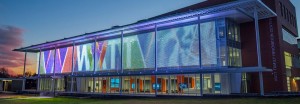
The Physics and Astronomy Graduate Student body is excited to announce that this year’s 5th annual Symposium for the Introduction to Research in Physics and Astronomy (SIRPA) will feature key-note speaker, Dr. Mildred Dresselhaus! SIRPA 2016, scheduled for Monday, August 15th, will be held in the new Watt Family Innovation Center. Physics graduate students and faculty members will highlight the department’s research activities through poster presentations and brief talks.
June 24, 2016
Congratulations to Dr. Emil Alexov for receiving a $1.5M R01 grant from the National Institutes of Health (NIH) to maintain and further develop DelPhi, the popular method for modeling electrostatics in molecular biology. The new development includes (a) modeling non-electrostatic quantities as temperature, ion and particle flux, just to name a few; (b) expanding DelPhi capabilities to model large objects as molecular machineries, cellular organelles and large macromolecular complexes; and (c) to make DelPhi highly computationally efficient by utilizing GPU, OpenMP and MPI. You can read more about Dr. Alexov’s research at the Computational Biophysics & Bioinformatics reseach group website.
Dr. Alexov also recently became the editor-in-chief of the Journal of Theoretical and Computational Chemistry.
March 8, 2016
Dr. Feng Ding, Assistant Professor, is awarded an National Science Foundation’s Faculty Early Career Development grant for his work in nano-bio interactions. His award was featured in a post on the Clemson Newstand. Learn more about Dr. Ding’s research.
May 1, 2015
The Spring 2013 issue of Schrödinger’s Tiger described the Department’s participation in the newly awarded NASA sounding rocket experiment “MTeX,” led by the University of Alaska to study turbulence in the mesosphere-lower thermosphere region. During the holiday break of 2014/2015 I was fortunate enough to travel with Clemson coinvestigator Dr. Gerald Lehmacher to Fairbanks for a one-week period to see firsthand the preparation for the launch of two sounding rockets with MTeX science payloads at the Poker Flat Research Range. With the launch window opening a week after our visit, we mainly oversaw the assembly of the payloads and prepared the CONE ionization gauge before it became inaccessible under the nosecone. The MTeX mission aimed to explore ways in which meteorological conditions can influence the impact of solar radiation received by the atmosphere.
With neutral density as a tracer, turbulence measurements during specific atmospheric conditions of a mesospheric inversion layer allow us to identify a representative distribution of turbulence activity and, thus, better characterize turbulent transport in the upper atmosphere between 60 and 120 km. Two rockets were launched on January 26, 2015 at 00:13 and 00:46 a.m. in order to obtain in situ measurements of turbulence, density and temperature. With the CONE ionization gauge, turbulence is identifiable as small oscillations of 0.1 to 1% in the observed ion current, which is proportional to density. The remaining instruments in the science package (positioned on the four deployable booms) measured aspects of atmospheric plasma using different forms of Langmuir probes, as well as an impedance probe. As a significantly cheaper and as yet unproven method of measuring turbulence and density variations, a three-axis MEMS accelerometer was included in the payload, the subject of my research for the past few semesters. The plasma and accelerometer experiments were built by Embry-Riddle Aeronautical University. Working with Dr. Lehmacher, the Sounding Rocket Instrumentation Creative Inquiry section has explored how we might be able to use the output of the sensitive accelerometer to provide a further means of measuring the atmospheric drag and density. With micro-g resolution and 5 kHz sampling rate, I have previously characterized the amount of noise present in the signal by spectral analysis on data from drop tests performed from the breezeway, as well as at rest in the lab. With the rockets having recently flown we now have flight data and will use it to potentially verify some structures seen by CONE and later calculate drag coefficients of the rocket in flight. The observed accelerometer shows 35 seconds of in-flight measurements. During this period of time, the rocket is being configured for the upward leg science window of the flight. We first see a period of intense modulation from the rocket engine which tapers off as the second stage motor burns out. Then spin effects and precession of the rocket’s velocity vector are visible from 40 seconds to 50 seconds. At this point the nosecone is ejected from the payload. When the nosecone and its shroud clear all the instruments, it is pushed out of the same trajectory as the payload by ejecting a slug radially at high velocity. The despin stage then brings down the rotation rate to 2 Hz followed by booms deploying and payload separation in rapid succession. As final preparation for measurement, attitude control systems further adjust the spin rate and orientation.
Another part of my experience was the lidar which was also at Poker Flat. This technology was used to measure the telltale temperature structure indicative of a mesospheric inversion layer needed for launch. Using powerful pulsed solid-state and dye lasers, certain atmospheric constituents left from meteorite trails are excited and the resulting photons are collected or, (in case of a Rayleigh lidar), backscatter from nitrogen and oxygen is observed to determine counts and doppler shifts at heights from 40 km to over 100 km. With the Rayleigh lidar, a brilliant green beam was visible shooting into the atmosphere that was truly an amazing sight. The facility also operates an iron lidar, which requires an ultraviolet laser and is, thus, invisible to the human eye. We stayed into the night to watch as a team of graduate students and Dr. Richard Collins, who is also the principal investigator of MTeX, calibrated and operated the system and obtained a temperature profile in preparation for the launch window.
Lastly we did indulge in a bit of tourist allure on our expedition to the final frontier. Heavily layered and armed with a rudimentary knowledge of photography, we stayed late into the night atop Ester Dome to watch the aurora. The hours of 10 p.m. to 2 a.m. were filled with spurts of activity in green from atomic oxygen, as well as periods of nothing more than a dull glow. After tweaking a few camera settings, we obtained some reasonably picturesque scenes of green ribbons decorating the sky. Then as we gave up for the night already quite content with the show, we were blown away by striking white and pink streaks which writhed and darted about at a rapid pace. These colors only show up as a combination of the same green and a red also produced by atomic oxygen at higher altitudes only visible during periods of high solar fluxes.
– Brandon Burkholder, Graduating Senior 2015
