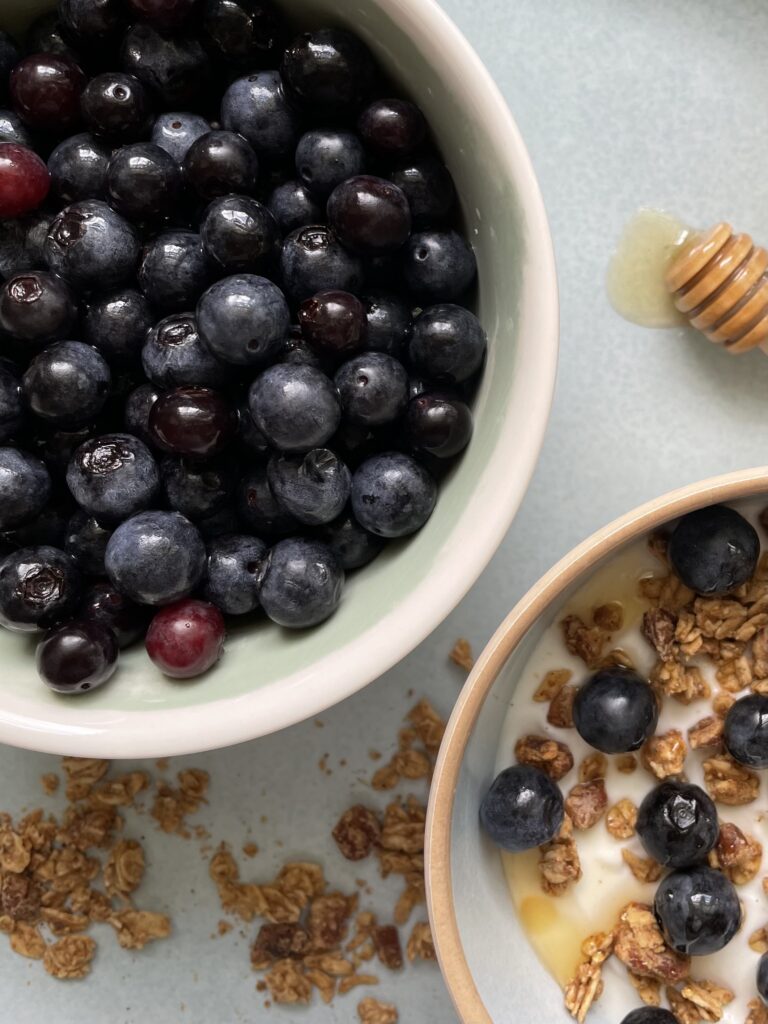
Fruit (carbohydrates) with yogurt (protein and carbohydrates) is a great snack choice to support energy levels before physical activity. Image Credit: RHN Team Picture Bank
When people begin increasing their physical activity, whether through walking more regularly, participating in group fitness classes, or squeezing movement breaks into their day, questions about nutrition often follow. “What should I be eating to support this activity?” This is an important question because physical activity and nutrition are closely connected. The way you eat affects how your body feels during activity, how well you recover afterward, and how your body adapts over time.
While nutrition can seem complex, the fundamentals are straightforward. Supporting physical activity does not require perfection or rigid rules, but it does benefit from consistency and intentional choices.
Why Nutrition Matters Alongside Physical Activity
Physical activity places increased demands on the body. Every time you move, your body uses energy and creates small amounts of stress in muscle tissue. This process is what leads to improved strength and endurance over time. However, for the body to adapt in a positive way, it must have the nutrients needed to support that process.
In response to physical activity, the body works to:
- Maintain or build muscle mass
- Repair muscle tissue after activity
- Restore energy that was used
- Support immune function and overall health
Adequate nutrition plays a central role in each of these processes. Without enough energy or nutrients, the body has fewer resources available to recover and adapt.
For example, when energy intake is too low, the body may:
- Break down muscle instead of building it
- Take longer to recover
- Lead to increased fatigue during activity
Research shows that sufficient energy and nutrient intake, particularly from carbohydrates and protein, supports muscle maintenance, recovery, and overall physical function. In simple terms, physical activity creates the stimulus for change, and nutrition provides the support that allows that change to happen.
Understanding the Role of Macronutrients
A helpful starting point is understanding macronutrients, which include carbohydrates, protein, and fats. These are nutrients your body needs in larger amounts each day. Each one plays a different role in supporting physical activity.
Carbohydrates: Primary Energy Source
Carbohydrates are the body’s main source of energy during most types of activity. After carbohydrates are eaten, they are broken down into glucose. Glucose enters the bloodstream, and this is referred to as blood glucose. Blood glucose is used by your muscles and brain as a primary source of energy during movement. When blood glucose levels are stable, energy levels are more consistent. When levels drop too low, you may feel tired, weak, or have difficulty continuing activity.
Examples of carbohydrate sources include:
- Fruits such as bananas, apples, and berries
- Whole grains such as oats, brown rice, and quinoa
- Starchy vegetables such as potatoes and corn
- Beans and lentils
Protein: Muscle Maintenance and Repair
Protein plays a key role in repairing and rebuilding muscle tissue. During activity, especially strength training, small amounts of muscle tissue are broken down. Protein provides the building blocks needed to repair that tissue and make it stronger over time. Regular protein intake helps maintain muscle mass, support recovery, and improve strength over time.
Examples of protein sources include:
- Lean meats such as chicken and turkey
- Fish and seafood
- Eggs
- Dairy products such as milk and yogurt, or fortified alternatives
- Plant based sources such as beans, lentils, tofu, and nuts
Fats: Supporting Overall Health
Fats provide a source of energy and support important functions in the body, including hormone production and nutrient absorption. They are especially important for overall health and can contribute to energy needs during longer or lower intensity activity.
Examples of healthy fat sources include:
- Nuts and seeds
- Avocados
- Olive oil and other plant oils
- Fatty fish such as salmon
A balanced intake of carbohydrates, protein, and fats helps support both activity and overall health.
Meal Timing to Support Physical Activity
When you eat can influence how you feel during activity and how well your body recovers afterward. While exact timing does not need to be strict, having a general structure can be helpful.
Eating Before Physical Activity
Meals
Eating before activity helps prepare your body by providing energy for movement. When time allows, typically one to three hours before activity, a balanced meal that includes carbohydrates, protein, and some fat can support both immediate and sustained energy.
Examples may include:
- Yogurt with fruit
- Toast with peanut butter and banana
- A quinoa based bowl with lean protein
If eating closer to activity, smaller portions and simpler foods are often better tolerated. Foods lower in fat and fiber may help reduce discomfort during movement.
Snacks
If a full meal is not practical, a small snack can still provide enough energy to support activity. Carbohydrates are the primary focus because they are quickly digested and available for immediate use.
Examples include:
- Fruit
- Crackers
- A granola bar
Limiting fat, fiber, and protein may help reduce the likelihood of stomach discomfort.
Eating After Physical Activity
After activity, the body enters a recovery phase. During this time, it works to restore energy and repair muscle tissue. Including both carbohydrates and protein supports this process. Carbohydrates help replenish stored energy, while protein supports muscle repair.
Examples include:
- Chicken with rice and vegetables
- Eggs with toast and fruit
- A smoothie containing fruit and a protein source
For most people, eating within a few hours after activity is sufficient to support recovery.
Hydration to Support Physical Activity
Hydration plays an important role in how the body performs and recovers during physical activity. Water supports circulation, temperature regulation, and muscle function. During activity, fluids are lost through sweat and need to be replaced.
Hydration During Activity
A practical guideline is to consume several gulps of water every fifteen to twenty minutes during activity. Even mild dehydration can lead to increased fatigue, reduced physical performance, and a greater sense of effort during movement.
Hydration After Activity
Replacing fluids after activity is also important, particularly when sweating has occurred. A general recommendation is to consume approximately twenty to twenty four ounces of fluid for every pound of body weight lost during activity. In practice, this means continuing to drink water after activity and paying attention to thirst throughout the day.
Summary
Physical activity and nutrition work together to keep you moving and feeling your best. Activity creates the opportunity for the body to become stronger, and nutrition provides the resources needed to support that process.
Key strategies include:
- Eating consistently throughout the day
- Including carbohydrates, protein, and fats
- Fueling before activity when needed
- Staying hydrated
- Supporting recovery with nutrition after activity
These habits can help people feel more prepared for activity, recover more effectively, and continue making progress over time.
References
- American College of Sports Medicine. (2026). ACSM’s guidelines for exercise testing and prescription (12th ed.). Wolters Kluwer.
- Jager, R., Kerksick, C., Campbell, B., et al. (2017). International society of sports nutrition position stand: protein and exercise. Journal of the International Society of Sports Nutrition, 14(20). https://doi.org/10.1186/s12970-017-0177-8
- Sawka, M., Burke, L., Eichner, E., et al. (2007). Exercise and fluid replacement. American College of Sports Medicine. Medicine and Science in Sports and Exercise, 39(2), 377-390. https://pubmed.ncbi.nlm.nih.gov/17277604/
- Thomas, D., Erdman, K., & Burke, L. (2016). Position of the academy of nutrition and dietetics, dieticians of canada, and the American college of sports medicine: nutrition and athletic performance. Journal of the Academy of Nutrition and Dietetics. 116(3), 501-528. https://doi.org/10.1016/j.jand.2015.12.006
- U.S. Department of Health and Human Services and U.S. Department of Agriculture. (2025). Dietary Guidelines for Americans, 2025-2030. https://cdn.realfood.gov/DGA.pdf
Author:
- Camden Bryan, Rural Health and Nutrition, Statewide
- Ellie Lane, Extension Associate, Rural Health and Nutrition
Reviewed By:
- Melissa Bales, Extension Associate, Rural Health and Nutrition
- Michelle Altman, Extension Associate, Rural Health and Nutrition
