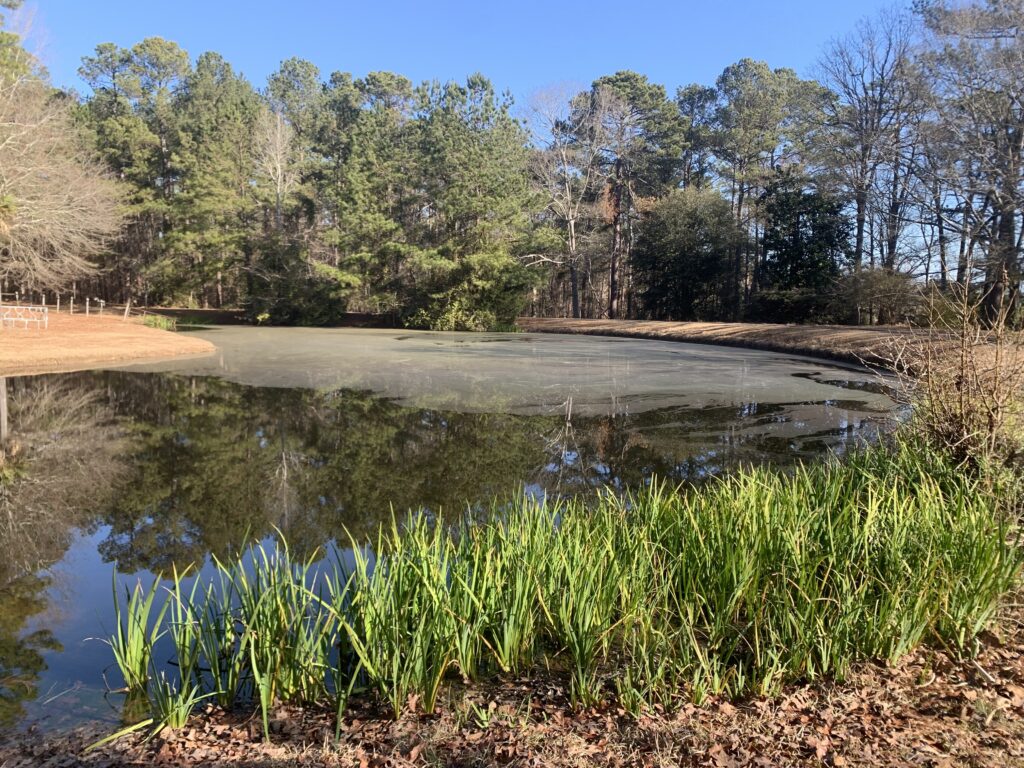
Water Quality Issues: Last year, harmful algal blooms (HABs) were plentiful and had a record long season, with SCDES identifying blooms in major reservoirs from 4/30/25 (Lake Hartwell) to 11/24/25 (J. Strom Thurmond Reservoir). We responded to many related complaints, including one that involved the deaths of 24 adult cows on a farm with cyanotoxin-producing HABs. In response, we are working to have new tools and materials available to improve and streamline responses later this year. Existing tools include several fact sheets, articles, manuals, a pocket field guide, and an online class – all available online at https://www.clemson.edu/extension/hab/materials.html.
Drought Status: Reports of low water levels in ponds are increasing across the Upstate. As of 2/19/26, all of Cherokee County is experiencing some level of drought (see map), including D2 Severe (northern ~61%) and D3 Extreme (southern ~39%).
By: Heather Nix, Upstate Regional Water Resource Agent
Water Quality Issues: Last year, harmful algal blooms (HABs) were plentiful and had a record long season, with SCDES identifying blooms in major reservoirs from 4/30/25 (Lake Hartwell) to 11/24/25 (J. Strom Thurmond Reservoir). We responded to many related complaints, including one that involved the deaths of 24 adult cows on a farm with cyanotoxin-producing HABs. In response, we are working to have new tools and materials available to improve and streamline responses later this year. Existing tools include several fact sheets, articles, manuals, a pocket field guide, and an online class – all available online at https://www.clemson.edu/extension/hab/materials.html
Drought Status: Reports of low water levels in ponds are increasing across the Upstate. As of 2/10/26, all of Greenville County is experiencing some level of drought (see map), including D3 Extreme (southern 30% of County), D2 Severe (middle ~50%), and D1 Moderate (northwestern 20%).
As we approach the one-year anniversary of Hurricane Helene, many of us are reflecting on – or still recovering from – the damage it caused. One lesson is the importance of being prepared before the next storm arrives.
If your home relies on a private well for drinking water, it’s especially important to know how to disinfect your well after flooding. Floodwater can contaminate private wells with bacteria, sewage, fuel, and other pollutants. If this happens, shock chlorination is the standard way to disinfect it to remove the bacteria. If your well is contaminated with fuel or other pollutants, this method will not be effective.
Supplies needed:
Regular, unscented bleach (5-6% sodium hypochlorite) – about 1 gallon (Do NOT use: scented, no- or low-splash, or color-safe bleach)
Waterproof gloves, eye protection
Small funnel or 5-gallon bucket (optional)
Tools to open well (if needed)
The Shock Chlorination Process
Below is a simplified overview of the steps. For detailed instructions, see these helpful resources:
Confirm electrical wiring to well has not been damaged and is turned off.
If wiring is damaged, do not proceed until it has been repaired and is safe to operate.
STEP 2: INSPECT THE WELL
Inspect well for damage (examples: cracked casing, missing cap, broken seal)
Inspect well and surrounding area for ongoing contamination (ex: sewer line break, dirty stormwater, oil/gas leaks)
The well must be repaired, with no active contamination, for disinfection to provide lasting results.
STEP 3: RUN WATER UNTIL CLEAR
Turn power on to well. Use caution!
If well is intact and there is no active contamination > run water from outside spigots until it appears clear.
Disinfection methods are less effective if water is not clear.
NOTE: If needed, collect water now for use during waiting period.
STEP 4: ADD BLEACH
Open well access (ex: plug, air vent, or lift entire well cover)
Pour bleach into the well casing. A funnel may help to direct bleach into the well.
See Disinfecting Your Water Well (https://dnr.mo.gov/document-search/disinfecting-your-water-well-pub2733/pub2733 ) for instructions on calculating the correct amount of bleach for your well. If you cannot perform the calculations, one (1) gallon bleach is usually (more than) enough per residential well.
STEP 5: CIRCULATE CHLORINE
Run water from outside hose into the well casing until you smell chlorine coming from the hose. Turn off outside hose.
Turn on all water faucets, inside and outside, until you smell chlorine at each. Then turn off all faucets.
STEP 6: WAIT
Do not use any water during the waiting period. Chlorine requires contact to disinfect.
Wait 8-18 hours before turning faucets back on. The high chlorine level will help disinfect the pipes but can be corrosive if left too long (24 hours maximum). *Use caution while any chlorine smell is present – bleach can burn eyes and irritate skin.
STEP 7: FLUSH THE SYSTEM
After the waiting period, turn on outside spigot and run water into an area where it will minimize damage (away from septic tanks, streams, etc.). This water contains high levels of chlorine and is not safe for human consumption or contact. The water may be used for cleaning (reminder – bleach may damage fabrics, clothes, etc.).
Run water until you no longer smell chlorine odor. Turn the water off.
Run water from inside faucets until you no longer smell chlorine odor. Turn the water off.
NOTE: The water should now be disinfected.
STEP 8: TEST THE WATER
After 3-7 days, the chlorine smell should be completely gone, and the well water should be tested for bacteria.
If available, have water tested professionally.
Otherwise, use DIY test kit to indicate presence of bacteria.
For additional resources on well care and water testing, try Clemson Extension’s Be Well Informed online class. It’s free and available anytime. (https://www.clemson.edu/extension/water/programs/be-well-informed.html )
Preparing now helps ensure that you’ll be ready to keep your drinking water safe if the next storm impacts your private residential well.
Are you a pond owner who always seems to struggle with algae or other aquatic weeds? It can seem like an ongoing battle each year that rears its head at the first sign of warm weather. Fortunately, there are strategies you can employ to help manage aggressive plant growth! Step one is always IDENTIFICATION! With a correct ID of the species(s), your local Extension agent can help match management strategies for you!
Also, make sure to check out the new Harmful Algal Blooms Online Course, to help better understand how to recognize, prevent, and treat these algal blooms that can often interfere with water use and pose potential harm to people, pets, livestock, and wildlife.
Lastly, a Pond Management Workshop will be held on April 2nd at Sandhill Rec as a part of the SC New and Beginning Farmer Program Advanced Workshop Series! Click here for more information or to register.
If you have questions regarding your pond or other water-related topics, please contact Charly Greenthaler at charlym@clemson.edu or (803) 520-1679.
Beyond the Surface is a water-themed art exhibition featuring work from 25 artists. The diverse artwork highlights the challenges to and beauty of South Carolina’s waters.
The project is a collaborative effort by Clemson Cooperative Extension, the SC Sea Grant Consortium, the SC Water Resources Center, and Tiger Strikes Asteroid Greenville.
Tiger Strikes Asteroid Greenville, 201 Smythe Street, Greenville, SC 29611. The exhibition is available through March 22, 2025, Saturdays (11am-5pm), free admission. https://www.scseagrant.org/beyondthesurface/
Photograph: Beyond the Surface team members included (L-R) representatives from Tiger Strikes Asteroid Greenville (Brooks Stevens, John Cummings), Clemson Cooperative Extension (Masha Bokar, Heather Nix), S.C. Sea Grant Consortium (Brooke Saari, Lola Renauer, Nora Walker), and the SC Water Resources Center (Jeff Allen, PhD). Image Credit: Noah Stillman, S.C. Sea Grant Consortium.