International Health and Hispanic Culture
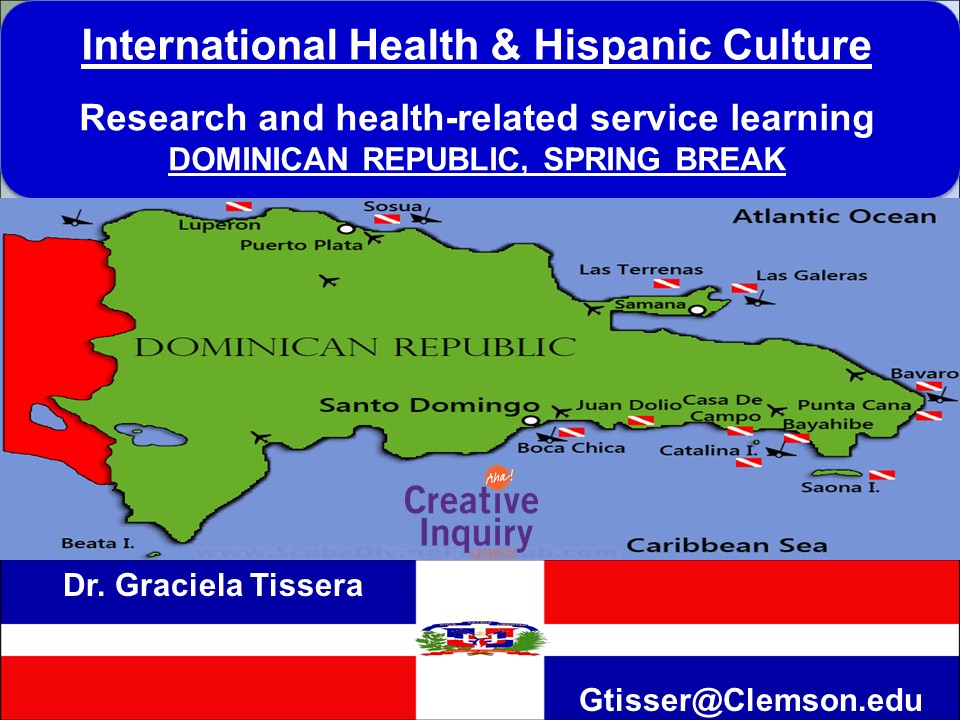
This research project will focus on the interrelations between health and culture in the Hispanic countries and their impact on individuals and communities. The research will explore medical diseases and conditions, people’s traditions, beliefs, and perceptions related to health issues, home remedies, behavior change, family and community, doctor-patient relationship, and social aspects of public health (ethnicity, gender, poverty). Students will have the opportunity to travel to the Dominican Republic with the researchers and participate in service learning activities to help Hispanic communities and collect data for the research project.
Students’ Research Projects
Emily Blackshire: Exploring the impact of domestic violence in the Dominican Republic<
Jardin Dogan: Overcoming postpartum depression in Dominican Women
Jada Jones: Risks of pregnancy and leading causes of infant and maternal mortality
Thomas Offerle: An investigation into the treatment of Kahler’s disease
Elizabeth Villegas: Sexual abuse among adolescents in the Dominican Republic
Ainsley Wingard: Factors affecting cardiovascular health in the Dominican Republic
Chelsea Frasier: Treatment of non-communicable diseases in children of Bolivia
Eandra Hall: Healthcare systems in the Dominican Republic
Nigel Jones: Healthcare services for Haitian immigrants in the Dominican Republic
Andrea Rojas: Premature babies and professional training for nurses
Katelyn Ragland: Private and public healthcare systems in Costa Rica
Kendyl Williams: Huntington’s disease in Venezuela
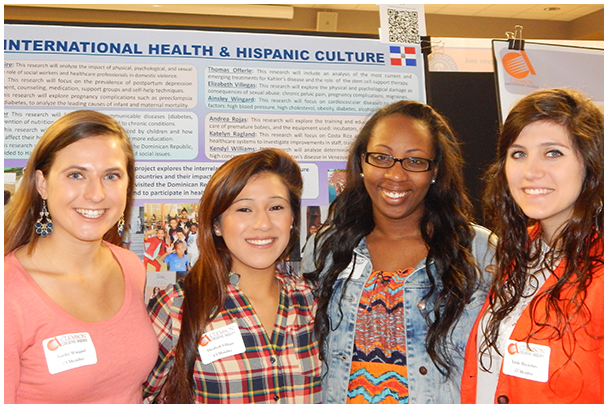
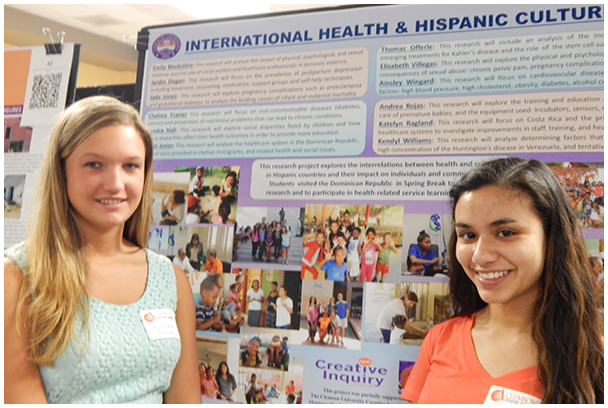
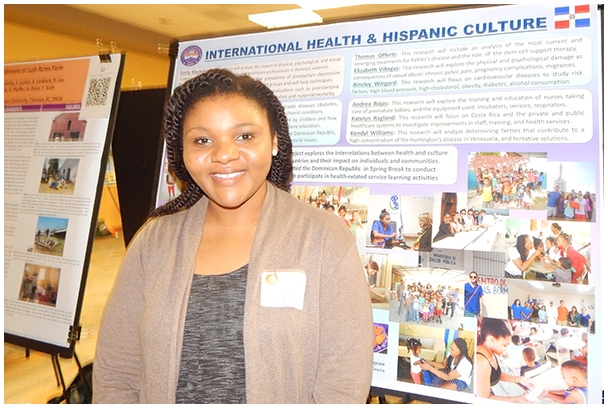
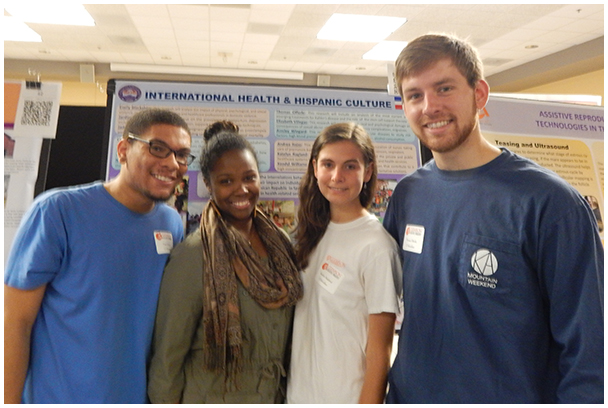
Students presented their research at the Focus on Creative Inquiry Poster Forum (Clemson University, April 6, 2015)
Gender and Leadership: Cinematic, Corporative & Media Portrayal
This project will explore different portrayals of men and women in leadership through film, media, and entertainment industries to define main strategies, motivation profiles, and common goals of diverse groups in a variety of disciplines. We will analyze new trends in leadership behaviors, styles, and gender-stereotypic arguments in the context of organizational and personal settings.
International professional conference and student’s research paper
The 14th Annual Hawaii International Conference on Arts and Humanities was held from January 9th to January 12th, 2016 at the Hilton Hawaiian Village Waikiki Beach Resort in Honolulu, Hawaii. The main goal of the 2016 Hawaii International Conference on Arts and Humanities is to provide an opportunity for academicians and professionals from various arts and humanities related fields from all over the world to come together and learn from each other. An additional goal of the conference is to provide a place for academicians and professionals with cross-disciplinary interests related to arts and humanities to meet and interact with members inside and outside their own particular disciplines.
Dre Martin: “Decoding filmic Symbols of the Power of the Female Community”
The research focuses on the complex relationships of women who strive to survive domestic violence and parental abandonment as portrayed in two films: Volver by Pedro Almodóvar (2006) and The Secret Life of Bees by <!—->Gina Prince-Bythewood (2008). Both directors brought controversial issues to life to have a more realistic idea of how these events impact individuals and communities.
Students’ Research Papers
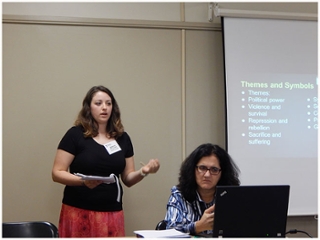
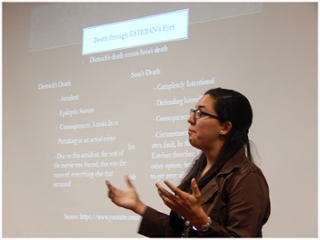
The 10th Biennial Associated Colleges of the South (ACS) Women’s and Gender Studies Conference, April 4-5, 2014. Furman University, Greenville, South Carolina. The theme of the conference, Intersections and Assemblages: Genders and Sexualities across Cultures, recognizes and addresses the multiplicity and diversity of scholarly approaches and activism to the long-standing aspiration for the abolition of all forms of inequality based on gender and/or sexuality. It especially welcomes transnational, cross-cultural, or comparative perspectives on gender and sexuality.
Panel: Culture, Gender, and Transgender in Latin American Cinema: Redefining the Boundaries
Chair: Graciela Tissera
Mahvash Husain: “Relations between Transgender and Female Persecution in Arturo Ripstein’s The Place without Limits (1977)”
Emily Winburn: “Transgender and Trans-reality: The Imagery of Repression in Héctor Babenco’s Kiss of the Spider Woman (1985)”
Katie Lovett: “Gender and Power in The House of the Spirits by Bille August (1993)”
Panel: Exploring Transgender Identities in Pedro Almodóvar’s Films
Chair: Dolores Martín Armas
Hannah Haire: “Bad Education (2004): The Conflicting Persona and Self-expression in Art”
Courtney Dunnigan: “Creation and Transgenesis in The Skin I live in (2011)”
Students presented their research at the Focus on Creative Inquiry Poster Forum (Clemson University, April 3, 2014)
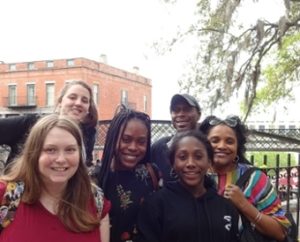
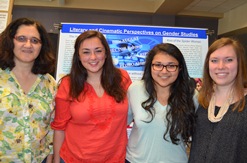
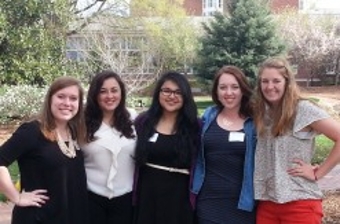
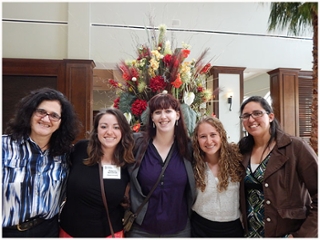
Emily, Hannah, Mahvash, Katie, and Courtney at the Gender Studies Conference (Furman University)
Health and Business Topics in Film
This project will analyze different perspectives on health, business, and related topics to explore their impact on Hispanic countries and/or other areas of the world. Students will research historical and cultural aspects of several nations through videos, mass media, and pertinent materials (such as actual footage, film adaptations of novels, documentaries, movies based on real events and business and medical literature) by world renowned authors and film directors.
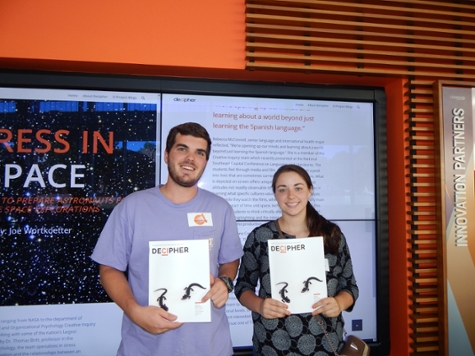
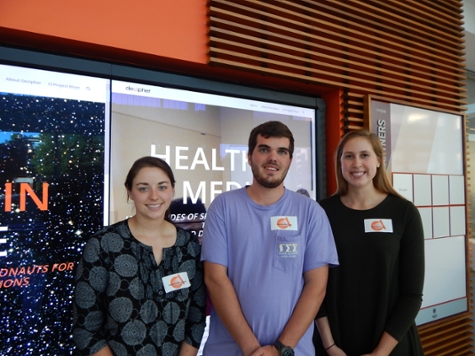
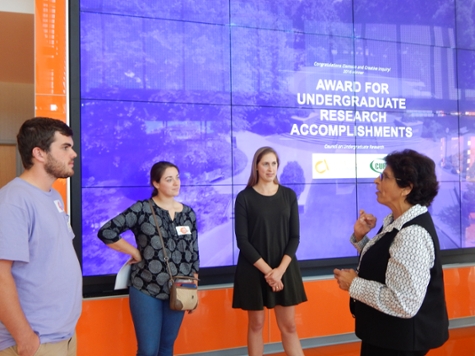
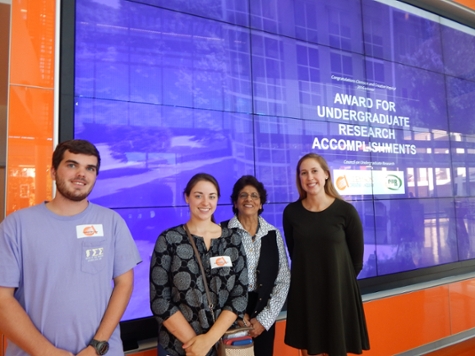
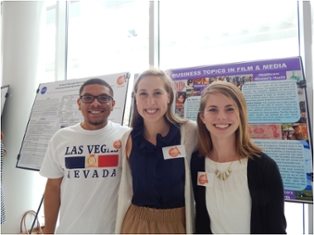
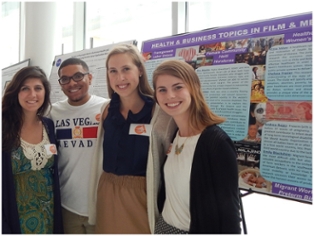
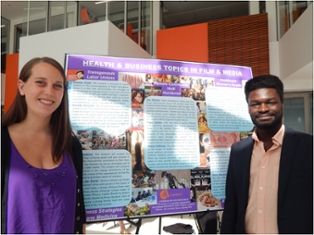
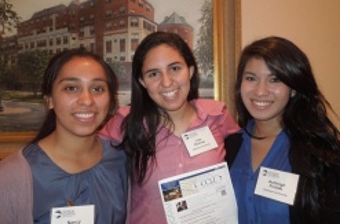
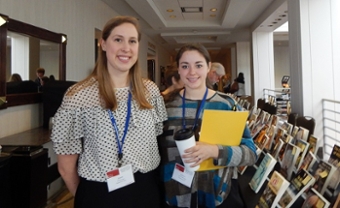
Elouise Cram (LIH), Rebecca McConnell (LIH), and Carson McCraw (Spanish) presented their Creative Inquiry research at the Decipher Debut.
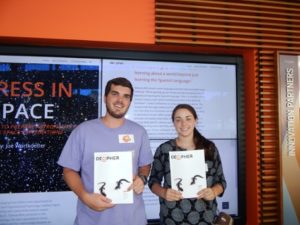
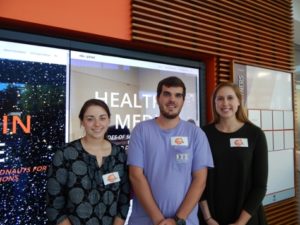
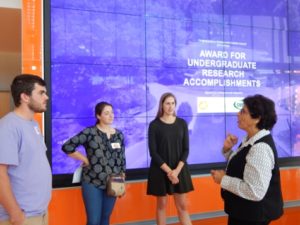
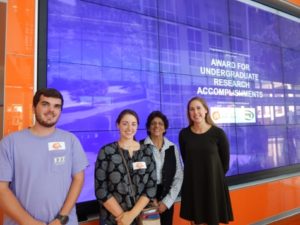
Elouise, Rebecca, and Carson attended the annual Decipher Debut on 6 October, 2016, in the Watt Atrium to present their Creative Inquiry research on Health and Business Topics in Film and Media mentored by Dr. Graciela Tissera. The article from Clemson’s Creative Inquiry magazine Decipher, “Health in Media: Hidden sides of Spanish culture are revealed through the analysis and discussion of foreign films” by Nichole Martinson, highlights main aspects of this Creative Inquiry project: the research on human sexuality, alternate realities, domestic violence, and feminist symbols, among other topics, the interpretation of perspectives from different cultures, the importance to think critically, and the opportunities students had to present their research at national and international professional conferences. Elouise, Rebecca, and Carson discussed their research with Dr. Barbara Speziale, Associate Director, Watt Family Innovation Center, and with those in attendance.
Professional National Conference and Students’ Research Papers
Gods & Heretics: Figures of Power and Subversion in Film and Television
The 2016 Film & History Conference, 26-30 October 2016
Session:
The Supernatural in Hispanic films: Awakening the Hidden Specters of Memory
Chair: Dr. Graciela Tissera
Research Presentations:
Rebecca McConnell: “The Occult beyond the Imagination in The Appeared by Paco Cabezas (2007)”
Jodie Holodak: “The Orphanage by Juan Antonio Bayona (2007): Paranormal Phenomena and the Game of Revelation”

Professional National Conference and Students’ Research Papers
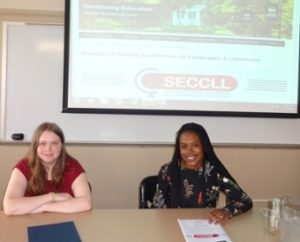
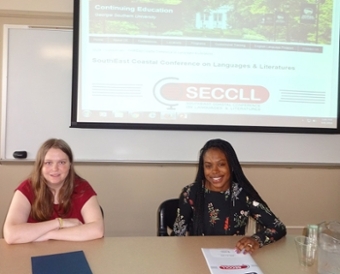
Southeast Coastal Conference on Languages and Literature (April 7-8, 2016). Conference organized by Georgia Southern University (Department of Foreign Languages). This conference includes topics in Arabic, French, German, Spanish, Hispanic Linguistics, Classics, Comparative Literature, East Asian/Chinese, and Special Topics in language, literature, culture, pedagogy and film.
Session: Unconventional Cinematic Portrayal of Gender, Health, and Business Premises
Chair: Graciela Tissera.
Research Presentations:
Elouise Cram: “Women and Sexual Violence in Almodóvar’s Cinematography”
This presentation will focus on two films by Pedro Almodóvar: Volver (2006) and La piel que habito (2011). The research will explore the way women are impacted by and cope with acts of sexual violence and how these responses portray women in Almodóvar’s films.
Nigel James: “Images of Haiti: The Flawed Jewel of the Caribbean”
Haiti was once a country flowing with economic production and natural resources. Now, it is the poorest country in the western hemisphere with most of its resources depleted. The purpose of this presentation is to explore this country’s status through documentaries and films to analyze issues related to culture, politics, and health.
Allison Watkins: “Extreme Filmic Journeys to Fathom Luminous Minds and Broken Bodies”
This presentation will analyze medical hardships and their impact on men and female characters seeking extreme resolutions as portrayed in the following films: The Fountain by Darren Aronofsky (2006) and El mal ajeno by Oskar Santos (2010).
Students present their research at the Focus on Creative Inquiry Poster Forum
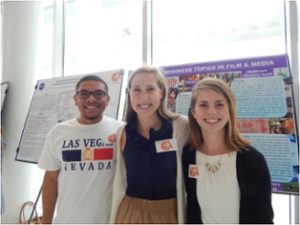
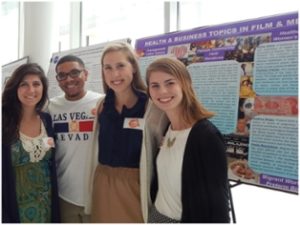
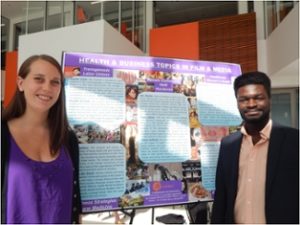
Elouise Cram, Emily Blackshire, Chelsea Frasier, Teri Jo van der Horst, Nigel James, Dre Martin, Merritt McCully, Andrea Rojas, Alyssa Sullivan, Drew Valvo, and Allison Watkins presented their research on health and business topics in film and media (Clemson University, April 6, 2016)
Students’ Research Papers
Southeast Coastal Conference on Languages & Literatures. Georgia Southern University. Savannah, Georgia, March 26-27, 2015.
Session:The Metaphor of Death in Film: Graphic Images, Surreal Transgressions
Chair: Dr. Graciela Tissera
Lisa Dueñas: “The Aura by Fabián Bielinsky (2005): Perceptions of Death in an Elusive Reality”
Meg O’Sell: “Confronting Death, Duty, and Love in Felicitas by Maria Teresa Costantini (2009)”
Session: Filmic Representations of the Art of War and Survival
Chair: Dr. Dolores Martín-Armas
Maggie Boyd: “Times of War and Alternate Existences in Pan’s Labyrinth by Guillermo del Toro (2006)”
Rebecca McConnell: “Europe under Fire: The Intricate Worlds of Survival”
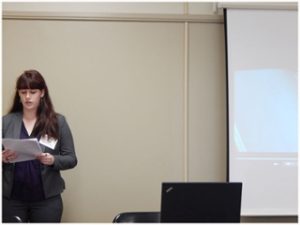
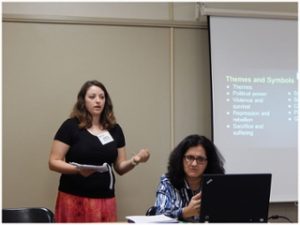
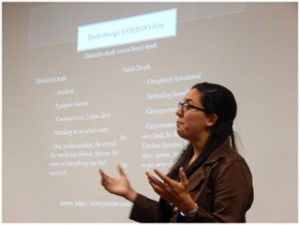
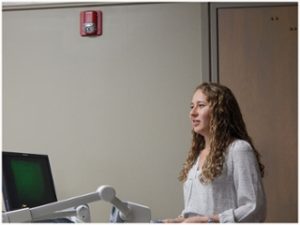
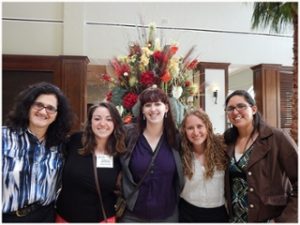
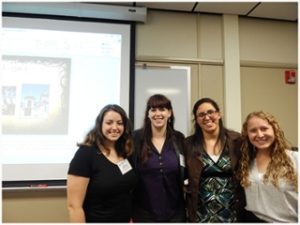
Students present their research at the Focus on Creative Inquiry Poster Forum
Caleb Addis, Lisa Dueñas, Meg O’Sell, Danielle Stephens, José Hernández, Rebecca McConnell, Maggie Boyd, Taylor Rouse, Jennifer Bolta, and Courtney Sipes presented their research on health, business, and gender topics in film (Clemson University, April 6, 2015)
Students’ Research Papers
Southeast Coastal Conference on Languages and Literatures (Savannah, Georgia, April 4-5, 2013). SECCLL is a scholarly conference organized by The Department of Foreign Languages and the College of Liberal Arts & Social Sciences at Georgia Southern University. The conference attracts scholars from the region and beyond. SECCLL is oriented toward the participation of scholars from both public and private institutions of higher education. It is a collegial and respectful environment marked by a rigorous and productive exchange among academics. Some of the topics include scholarship in French, German, Spanish, Linguistics, Classics, Comparative Literature, East Asian, and Special Topics, among others, in language, literature, culture, pedagogy and film.
Session: “Individual versus System: Cinematic Perspectives on Control and Rebellion”
Chair: Dr. Graciela Tissera
Ashleigh Frialde: “Filmic Portrayal of Social Factors in Children´s Critical Experiences”
Lisa Dueñas: “Buñuel and Piñeyro: Representations of Dehumanized Spaces and Conflicting Emotions”
Nancy Parra: “Two Face Mirror: The Unbalanced Scale of Power and Culture through Film”
Nancy, Lisa, and Ashleigh at the Conference on Languages and literatures (Georgia Southern University)
Spenser Staub, Alexa Parker, Aubrey Lawson, Michael Harris, Margaret Boyd (pictured), Victor Montilla, Ben Vukov, Patrick Wagner, Calie Berry, Kaela Gardner, Diamond Joseph, Jessie Phillips, and Kayla Wardlaw presented their research on Health and Business Topics in Film at the Focus on Creative Inquiry Poster Forum (Clemson University, April 9, 2013)
The Hispanic World through Film, Literature, and Media
This project will analyze social, political, economic issues or related topics in the Hispanic world through videos and pertinent materials by world renowned authors and film directors. Students will also have the opportunity to complete service learning projects to help Hispanic communities. Through their service to Hispanic communities, students will explore the impact of culture, immigration, education, language, health, and jobs on family members and their future expectations in multicultural environments.
Professional National Conference and Students’ Research Papers
The Southwest Popular/American Culture Association 38th Annual Conference
Albuquerque, New Mexico: February 15-18, 2017
Session:
Literature, Film, and Culture 4: Adapting Philosophers to Film
Chair: Dr. Graciela Tissera
Research Presentations:
Elouise Cram: “Gabriel García Márquez and Lisandro Naranjo: Recreating the Story of Margarito Duarte in the film Miracle in Rome (1988)”
Rebecca McConnell: “Cinematic Interpretation of Aura by Carlos Fuentes: Damiano Damiani’s The Witch (1966)”
Focus on Creative Inquiry Poster Forum:
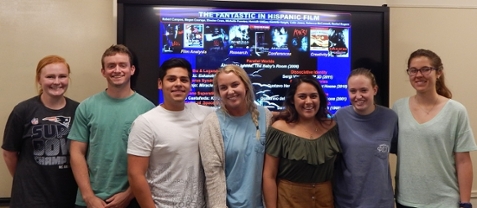
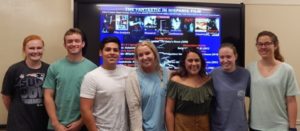
Robert Campos, Megan Courage, Elouise Cram, Michelle Fuentes, Hannah Gilliam, Danielle Haight, Colin Jones, Rebecca McConnell, and Rachel Rogers presented their research on The Fantastic in Hispanic Film at the Focus on Creative Inquiry Poster Forum (Clemson University, April 5, 2017). The project mentored by Dr. Graciela Tissera, focused on the genre of science fiction and fantasy through films by world renowned Hispanic film directors. The analysis explored uncanny and marvelous elements related to parallel worlds, urban legends, the Lazarus syndrome, extrasensory perception, and dissociative identity, among other topics, as well as cinematic conventions and themes in fantastic films. With historical, cultural, political, and scientific contexts, the project analyzed supernatural phenomena as presented in films to determine the line between reality and unreality and the gateways between alternate worlds in order to forge an understanding of the unknown.
Students’ Research Papers
XIII Jornadas “Borges y los otros” International Conference (Buenos Aires, Argentina, August 21-23, 2013). The conference, organized by Fundación Jorge Luis Borges, includes specialists in Argentinean Literature, communication and media researchers, historians, critics and professors in general. These Sessions propose to study the work of Jorge Luis Borges in the context of Argentinean Literature, considering “others” as his precursors, contemporaries and/or successors, whether they be identified with his aesthetics, or associated by imitation of or contrast to his aesthetics. The universe of Borgesian others will thus constitute the reader-writer canon formed in the Literature of Argentina around his writing.
Session: Literatura borgeana y otras artes
Elyse Dengler: “Cinematic Labyrinths and Symmetries in ‘Death and the Compass’ by Jorge Luis Borges”
Meg O’Sell: “Borges and ‘The South’: Text and Filmic Perspectives on the Essence of Time and Space”
Testimonials
Elyse Dengler:
“Researching the work of Jorge Luis Borges opened up my mind to a new way of analyzing literature and thinking about life. I wrote a paper comparing his short story “Death and the Compass” and the film version of this story. I was fortunate enough to be able to present my work at a conference in Buenos Aires, Argentina where Borges spent a majority of his life. Seeing his apartment, eating at Café Tortoni where he used to be a frequent visitor, and experiencing firsthand the charms of Buenos Aires helped me to develop a more profound understanding and appreciation of his work. This was an extremely beneficial and unique experience that has enriched my education, cultural values, and global awareness.”
Meg O’Sell:
“Attending the XIII Jornadas “Borges y los otros” International Conference was a fascinating experience. Sharing my research with others who are very interested and knowledgeable about Argentinean literature was a great opportunity. We were able to listen to other presentations by specialists in this field of literature and learn new ideas and concepts related to my own studies. In addition to my academic enrichment, I met natives and learned a lot about the Argentinean culture. Studying “El Sur” by Jorge Luis Borges and doing research about their culture helped me understand their way of life, but spending time in Buenos Aires myself deepened my understanding beyond what I was able to learn through literature and films.”
Meg and Elyse at the XIII Jornadas “Borges y los otros” (Fundación Internacional Jorge Luis Borges, Argentina)
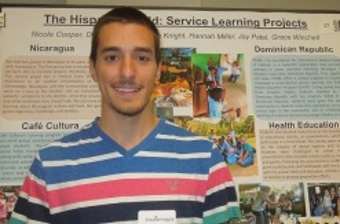
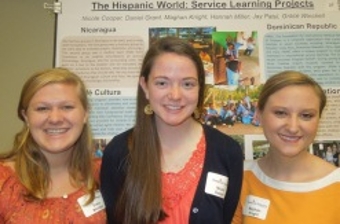
Daniel Grant, Grace Winchell, Nicole Cooper, Maghan Knight (pictured), Jay Patel, and Hannah Miller presented their research on The Hispanic World and Service Learning at the Focus on Creative Inquiry Poster Forum (Clemson University, April 9, 2013)
The trips to the Dominican Republic and the professional presentations at national and international conferences are made possible through competitive travel grants awarded by the Creative Inquiry Program.
Professional National Conference and Students’ Research Papers
SouthEast Coastal Conference on Languages & Literatures. Georgia Southern University. Savannah, Georgia, April 5-6, 2018
Session:
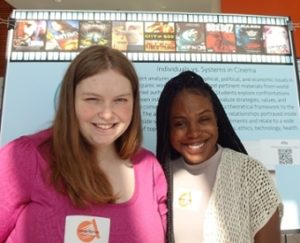
Individuals versus Systems in Cinema
Chair: Dr. Graciela Tissera
Research Presentations:
Jesse Bynum: “Systematic Defensive Memory and Psychological Trauma in David Carreras’ Hipnos (2004)”
Hannah Cheeks: “Exploring the Treacherous Systems of the Mind: Sergi Vizcaíno’s Paranormal Xperience (2011)”
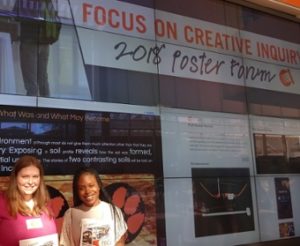
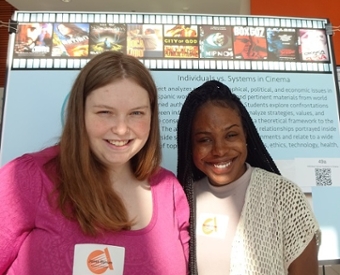
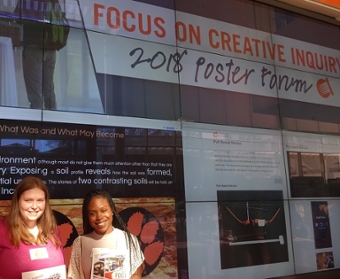
Students also presented their research at the Focus on Creative Inquiry Poster Forum at Clemson University (April 3, 2018).