Dr. Jody Cripps and his ASL Creative Inquiry team’s research has been published in Public Library Quarterly. Their article, “Exploring the Relationship between Libraries and American Sign Language,” examined ASL resource availability in libraries and museums across Martha’s Vineyard, a community with a long-standing history and deep connection to Deaf culture.
Earlier this year, the CI team presented their research, “Exploring the Relationship between Libraries and ASL,” at the 21st Annual Focus on Creative Inquiry (FoCI) poster forum, held April 8-10 at the Watt Family Innovation Center.
Dr. Jody Cripps and his Creative Inquiry students present their research, “Exploring the Relationship between Libraries and ASL,” at the 21st Annual Focus on Creative Inquiry (FoCI) poster forum.
Held each year, the FoCi poster forum gives undergraduate Creative Inquiry students the chance to showcase their project-related research, service-learning and other experiential learning activities to general audiences.
The Department of Languages remembers Helene Kastinger Riley, Distinguished Professor Emerita of German, who passed away in April.
Born in 1939 in Vienna, Austria, Riley attended business college in Vienna in the early 1950s. After coming to the US, she received her B.A. from the University of North Texas in 1970 and later earned her Ph.D. from Rice University.
After several years teaching at Yale University, Riley joined the Clemson University faculty in 1985 as a Professor of German and served as chair of the Department of Languages from 1985-1986. She was named an Alumni Distinguished Professor in 1995.
An active scholar, specializing in, among other subjects, the important 19th-century Romantic poet Ludwig von Arnim, Riley’s published writings in German Studies include Idee und Gestaltung. Das konfigurative Strukturprinzip in der Kurzprosa Achim von Arnims (Lang, 1977); Ludwig Achim von Arnims Jugend-und-Reisejahre. Ein Beitrag zur Biographie (Bouvier, 1978); Achim von Arnim in Selbstzeugnissen und Bilddokumenten (Rowohlt, 1979; revised, 1995); Michael Kalteisen: Ein Deutscher in South Carolina, (M. Fink, 1995); and Hildegard von Bingen (Rowohlt, 1997). Outside of German Studies, she also authored works on Virginia Wolf and Romain Rolland.
In 2002, she published a brief history of Clemson University, illustrated with numerous historical photos of the Clemson campus: Clemson University (Arcadia Publishing).
The Department extends its condolences to Dr. Riley’s family, to her fellow scholars and colleagues, and to the generations of alumni whose lives she impacted through her teaching.
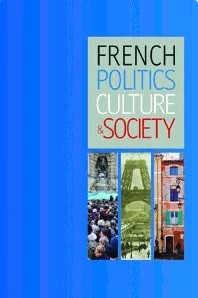
This special issue predominantly discusses the nonmedical aspects of Covid-19’s impacts on France today including politics, intersectional feminism, online activism, the public humanities, artistic performance, and flânerie. It seeks to make sense of a crisis that is still unfolding via its effects on people’s beliefs, thoughts, and behaviors. It demonstrates how Covid-19 breaks through diverse ethnic, cultural, socio-economic, and ideological realms, and encompasses the undefined, infinite, and invisible “other” engaged in the same traumatic experience. It transgresses limits and norms so that we may elevate ourselves to a higher degree of awareness and responsibility.
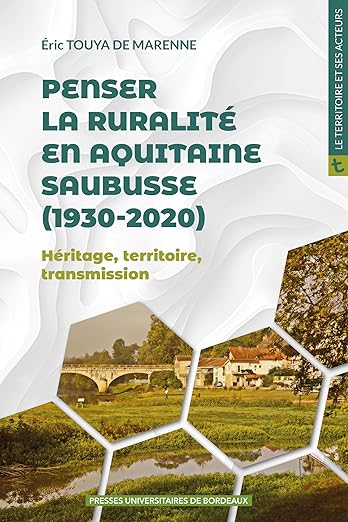
Penser la ruralité en Aquitaine : Saubusse (1930-2020). Héritage, Territoire, Transmission. Bordeaux: Presses Universitaires de Bordeaux, 2024.
The book explores France’s past and present from a rural perspective, a topic not often studied or understood. It also examines the transformations of rural France over the past century (including the collapse of agriculture and religious practices and the rise of technology and globalization) and what these changes mean for our perception of what constitutes a community, the common good, civic engagements, democratic values, and the future of France.
Rainer, Godel and Johannes Schmidt (eds.): Herder Yearbook 16 (2022).
The Herder Yearbook offers—now for the sixteenth time—a selection of current research on Johann Gottfried Herder. This year’s volume collects inquiries into Herder’s reception of Lessing, his sensualism of the 1760s, Herder’s contribution to a theory of climate change, as well as into the reception of Herder in the nineteenth and twentieth century. As in previous years, this volume presents the continuation of the extensive Herder bibliography of primary and secondary literature. Two reviews of current Herder scholarship—one addressing an Italian study of Herder’s philosophy of religion—conclude this volume. The Herder Yearbook is published every other year on behalf of the International Herder Society and presents interdisciplinary scholarship on all aspects of Herder’s works as well as their publication history and reception.
Rainer, Godel and Johannes Schmidt (eds.): Herder Yearbook 17 (2024).
This year’s volume – with the new Publishing house Mohr Siebeck – offers a selection of current research on Johann Gottfried Herder (1744–1803). Now for the seventeenth time, this volume presents contributions on Herder’s understanding of nature, the influence of English and Scottish philosophy on Herder, his reception of the English satirist Jonathan Swift, four book reviews as well as the continuation of the Herder bibliography of primary and secondary literature.
This edited collection is the first volume solely dedicated to research on Johann Gottfried Herder’s understanding of history, time, and temporalities.
Although his ideas on time mark an important transition period that advanced the emergence of the modern world, scholars have rarely addressed Herder’s temporalities. In eight chapters, the volume examines and illuminates Herder’s conception of human freedom in connection with time; the importance of the concept of forces (Kräfte) for a dynamic ontology; human beings’ sensuous experience of inner and external temporality; Herder’s conception of Bildung, speculations on extra-terrestrial beings and on different perceptions of time; the mythological figure Nemesis and Herder’s view of the past and the future; the temporal dimension in Herder’s aesthetics; and Herder’s biblical studies in relationship to divine infinitude and human temporality. The volume concludes by outlining the influence of Herder’s understanding of time on following generations of thinkers.
Forms of Temporality and Historical Time in the Work of Johann Gottfried Herder is ideal for scholars, graduates, and postgraduates interested in Herder’s metaphysics, epistemology, and philosophy of history, as well as any scholar concerned with eighteenth-century concepts of time and the emergence of the modern world at the beginning of the nineteenth century.
Rainer, Godel and Johannes Schmidt (eds.): Herder Yearbook 15 (2020)
This year’s volume collects inquiries into Herder’s activities as a reviewer, his view on Homer in comparison to Wolf’s and Humboldt’s, furthermore Herder’s deliberations on a “Neue Mythologie” as well as a contribution on the Älteste Urkunde. Besides two studies elucidating the reception of Herder during the nineteenth century, the yearbook also offers editions of original Herder manuscripts: a letter to Bertuch, a poem, and an outline for a sermon. A report on Herder research in Brazil and four reviews conclude this volume.
The Department of Languages learned with sadness of the passing of Professor Ed Arnold. Please see this message from Lecturer of German, Lee Ferrell.
“It is with sadness that I learned only recently of the passing of our former colleague Prof. Ed Arnold on January 3, 2024 after a years-long battle with dementia. Ed taught German at Clemson University from 1968 until 2000.
In the summer after I was hired to teach at Clemson in 2003, Ed invited me for lunch to talk to me about the university and to welcome me to the German program. This began a tradition for us both of meeting once per semester to have breakfast and chat about our lives. Ed frequently would talk about his former students, the trips he had arranged for them in the former East Germany and about his work with Habitat for Humanity and Clemson Community Cares. He remained active in the community until declining health made it impossible.
In addition to his community work, Ed regularly translated documents from German to English including the book Blues and Trouble by Lutheran Pastor and activist Theo Lehmann.
Ed was a man of faith but more impressive to me was his humility. He was very sincere and also very accepting of other people and grateful for the students he had taught throughout his career. One of his students, Chris Broome (LAIB ’96), recalls his first semester in German “I didn’t do great in that course, but Ed told me to ‘keep on keepin’ on. It will click eventually.’” Today Chris uses the German language daily in his work at BMW. In addition to class, Chris had participated in one of Ed’s trips to Germany. Ed also helped Chris find an internship in Switzerland in 1994.
Chris fondly recalls how Ed regularly stayed in touch long after he graduated. “He would always reach out after that, sending messages or inviting me out for a meal.”
Ed had a lasting impact on the lives of his students, was a beating heart in his community, and will be remembered by all whose lives were touched by him.”
The Department thanks Professor Ferrell for the heartfelt words about a valuable member of the Department of Languages and the Clemson community.
Department of Languages and LAIB Program host annual Language and International Business Conference
The Language and International Business Program will be hosting its annual Language and International Business Conference on Wednesday, March 5, in the Hendrix Student Center Ballrooms A & B. The conference is an excellent opportunity for all members of the Clemson University community to learn about the role of international businesses in the region, make valuable connections with companies and their representatives, and explore post-graduation career options.
The morning session will begin at 10 AM with a welcome address, keynote speech, and an alumni panel discussing career opportunities for language majors after graduation and the evolving role of women in the business world.
Following the morning session, a free networking lunch is provided for all attendees
The afternoon session will feature three roundtable discussions with various hosts. The conference will conclude with a job fair, offering students valuable networking and career opportunities.
For more information, please see the flyer below or visit the event’s website.
“Food Insecurity: Global and Local” Event Series (Mar 3-Mar 6)
On Wednesday, March 5, Public Forum on Food Insecurity at1 PM in the Honors College Great Hall as a part of the four-part “Food Insecurity: Global and Local” series.
The third event in the “Food Insecurity: Global and Local” series, attendees of the Public Forum will learn valuable insights from a panel of practitioners and researchers working on the topic of food sovereignty and security.
The event will feature diverse and experienced speakers from across numerous departments in the University, including Arelis Moore (College of Arts and Humanities), Jagger Harvey (College of Agriculture, Forestry and Life Sciences), Brooke Brittain, (College of Behavioral, Social and Health Sciences, and Clemson student Ellison Fleming. The Public Panel will also feature community leaders from across the upstate.
Other events in the series include :
Book talk featuring William Moseley, DeWitt Wallace Professor of Geography and Director of the Food, Agriculture, and Society Program at Macalester College. Moseley will speak on his new book, Decolonizing African Agriculture: Food Security, Agroecology, and the Need for Radical Transformation. (March 3; 5:00 p.m.; Hardin 100)
Lecture featuring Former South Carolina governor David Beasley, who accepted the 2020 Nobel Peace Prize on behalf of the United Nations World Food Program. (March 4; 4:00 p.m.; Strom Thurmond Institute Auditorium)
Film screening of food justice documentary Rooted (2024). (March 6; 4:30 p.m.; Watt Family Innovation Center Auditorium)
For more information see the attached flyer and event description from Clemson News.