Introduction
Diabetes is a complex chronic disease that, when left untreated, can impact every part of the body. Often, one may hear older generations refer to diabetes as a “touch of sugar” or “sugar diabetes.” While these names for the condition of diabetes are technically inaccurate terms, they do in some ways describe a small piece of what is going on in the body when one has diabetes.
Diabetes occurs when one’s body is unable to produce enough insulin to meet one’s needs or is unable to utilize insulin properly. As a result, an individual’s blood sugar levels rise higher than normal which, for a prolonged period, can have devastating consequences. Because diabetes impacts the amount of sugar in our blood, and blood extends across the entire body, when one has diabetes, every part of the body has the potential to be impacted by the condition. This makes it even more pertinent to manage blood sugar levels as quickly as possible.
Why is nutrition important when managing diabetes?
For many, after receiving a diagnosis of diabetes, they are instructed by a physician to make dietary and other lifestyle and / or behavioral changes to manage their condition. However, that can be as far as the recommendations extend. Moving forward, this article will discuss one component of behavior/lifestyle modifications that patients with diabetes can make: dietary changes.
However, to understand the basis of dietary recommendations for diabetes care, one must first work to understand how food choices impact blood sugar levels. The food we eat is comprised of a mix of micro and macronutrients. There are three major macronutrients that are the building blocks of the foods that we eat: Protein, Carbohydrates, and Fat.

Protein: Proteins are found throughout the entire body in muscles, tissues, skin, hair, nails, and bones. Consuming protein is vitally important to keep organs and body systems healthy. However, it is important when one has a diagnosis of diabetes to choose good quality proteins such as lean proteins found in chicken, turkey, tofu, fish, and beans. Given that those with diabetes are at greater risk for developing heart disease or having a heart attack and stroke those with diabetes should strive to lessen the amounts of fattier meats consumed, such as red meat, as these can raise bad cholesterol levels which can lead to clots, or a hardening of the arterial walls called atherosclerosis. However, protein is not only important to keep our body’s muscles and organs strong and healthy, but when there is a diagnosis of diabetes, protein works to slow the rate of glucose absorption into the blood stream thereby keeping blood sugar levels more balanced overtime. This can help prevent major peaks and valleys in blood sugar readings which can lead to better blood sugar management and can correlate to a better hemoglobin A1C reading (an average of blood sugar over 2-3 moths) which can be associated with better self-management strategies.
Carbohydrates: When one is diagnosed with diabetes, carbohydrates are often where people turn their focus. This macronutrient can often cause many people a great deal of frustration and confusion. This is because carbohydrates are responsible for the most considerable increase in blood sugar numbers over time because in their simplest, digested form, carbohydrates are converted to glucose or sugar. However, this does not mean that carbohydrates are bad for those who have diabetes. In fact, carbohydrates are the body’s preferred form of energy – it is what the brain, the body’s cells and tissues like to feed on. It is imperative that one chooses better quality carbohydrates such as non-starchy vegetables, whole grains, and whole fruit. These foods are not only good for the body because of their fiber content, but they also contain a wide variety of other important vitamins and minerals to keep the body healthy.
Fat: Like protein, fat does not raise blood glucose levels. Additionally, similarly to carbohydrates, fat can also be demonized in the diet but plays a key role in the body as well. One of the biggest benefits of fat in the diet is that it can help one feel full during and following mealtimes. Fats are also important for functions such as temperature regulation of the body, hormone production and release, and the absorption of some vitamins and minerals. However, it is important to choose good quality fats over lesser quality fats. There is an easy distinction to be made between these types of fat. Unsaturated fats are better quality and are typically made up of plant-based oils, and they exist at room temperature in a liquid state. Some examples include olive oil, canola oil, vegetable oil, avocados, nuts, and seeds. These oils can have considerable health benefits such as how olive oil is considered a heart healthy oil due to its high content of monounsaturated fats, polyphenols, antioxidants, and other anti-inflammatory compounds. On the other hand, saturated fats are lesser quality oils and are typically made from animal-based sources but can include a few plant-based sources as well. They tend to exist at room temperature in a solid or semi-solid state. Some examples of these include butter, lard, tallow, coconut oil, and palm oil. Saturated fats are fine in smaller amounts but can raise one’s bad cholesterol levels which can increase the risk of developing heart disease, which is often an additional diagnosis seen with a diagnosis of diabetes.
So how does it all work when we have diabetes?
The food consumed by an individual goes through a process of digestion in the mouth and stomach where proteins and carbohydrates are broken down into their simplest forms for absorption. Once the partially digested food reaches the small intestine, this is where fat is digested and nutrients from our food are absorbed into our bodies bloodstream where those nutrients are circulated and sent to various areas of the body. As the nutrients are absorbed and begin passing into the blood stream, the pancreas is signaled to release insulin, a hormone, which acts as a key to unlock doors to the cells and tissues of the body to let glucose or sugar in to be utilized as energy.
However, as previously stated, when one has diabetes, the body may not be producing enough insulin or may not be utilizing insulin properly. This means that the body’s cell doors do not open and as a result, cells are starved for energy. This can cause the body to try to produce its own glucose via the liver which can further lead to elevated blood glucose levels and is often why many individuals with diabetes crave sugary foods. As previously stated, diabetes is an incredibly complex condition with many additional diseases and disorders associated with the diagnosis such as heart disease, high blood pressure, kidney disease, and obesity. Managing blood sugar through the diet can not only be beneficial in reducing blood sugar numbers over time, but can also improve blood pressure, weight, and lower risks for developing an additional condition like kidney disease or heart disease.
Recommendations for Adults
According to the United States Department of Agriculture’s (USDA) MyPlate tool, many American adults are under-consuming many vital foods and nutrients in their daily diet. Because America has a food system largely built upon convenience, many adults are not getting an adequate amount of fruits, vegetables, fiber, water, and omega-3 fatty acids. While recommendations for the amounts of fruits and vegetables one needs depends on their age, sex, height and weight, for most adults the recommendation for fruit varies from 1.5 – 2.5 cups of fruit a day, while vegetables range from 2-4 cups per day. Similarly, there is no one size fits all answer for fiber, water, and omega-3 fatty acids; all these recommendations vary based upon a variety of factors. However, what is known, is that in general, citizens of the United States are under-consuming these nutrients and overconsuming foods that are highly processed with excess fat, sodium, sugar, and fatty proteins. This can lead to nutritional deficiencies and other health outcomes that are linked to poor dietary choices.
Fiber provides easy movement of food through the body and is beneficial in helping stabilize blood sugar. It allows for smooth absorption and digestion of our food and plays an important role in hunger cues and satiety, another word for feeling full and satisfied after a meal. Fiber also aids in providing blood sugar balance support for those with diabetes. The range needed each day varies by person but should be around 25-38 grams each day. Fruit, non-starchy vegetables, and whole grains are some of the best sources of fiber to include in the diet.
Water is needed for homeostasis (balance) throughout the body to keep body temperature, blood pressure, and blood sugar at normal levels. While water is used throughout the body in many ways, one huge way it impacts nutrition is in its role in absorption and digestion. Like fiber, water provides easier movement of food through the body. With adequate amounts of water, foods can be broken down into essential nutrients as well as the digested forms of protein, fat, carbohydrates, vitamins, and minerals, and then absorbed into the blood stream.
Omega-3 fatty acids work throughout the body in various ways such as keeping our heart, joints, eyes, and brain functioning healthily. They work to lower cholesterol and blood pressure, and they help with movement and prevent joint break-down. We often find omega-3 fatty acids in foods like olive oil, walnuts, salmon, and chia seeds. It is important to note, however, that these foods are often higher in calories. Therefore, while they are essential parts of a healthful diet, they should be consumed in moderation.
Nutrition recommendations for diabetes according to the American Diabetes Association
The American Diabetes Association (ADA) is the leader in diabetes-related information for the public in the United States. For all the macronutrients covered previously, the American Diabetes Association recommends an individualized approach to the intake of these, including carbohydrates. Some of the factors which may determine an individual’s personalized carbohydrate intake amount include, age, sex, activity level, metabolic goals, and personal preference. However, the American Diabetes Association does provide a general range for carbohydrates that help most individuals find adequate blood sugar balance. Focusing on nutrient dense carbohydrates such as whole fruits and non-starchy vegetables, whole grains, legumes, and low-fat dairy products, is key to success. It is important to limit as much as possible foods that have added sugars or foods such as refined grains.
One serving of carbohydrates consists of 15 grams of carbohydrates. Reading a nutrition facts label can be great way to identify how many carbohydrates are in a particular food to determine how many total carbohydrates are in a meal. Some examples of foods and portion sizes that generally have 15 grams per serving are 1 cup of nonfat milk, ½ cup of unsweetened applesauce, 2/3 cup Greek yogurt, ½ English muffin, 1/3 cup brown rice, or ¾ cup blueberries. For most individuals the recommendations for carbohydrates as determined by the American Diabetes Association are as follows:
PER MEAL
- Women: 30-45 g carb per meal
- Men: 45-60 g carb per meal
- Snacks: 15-30 g carb per meal
Talk to your doctor or a Registered Dietitian for more information on how many carbohydrates you need.
The Plate Method

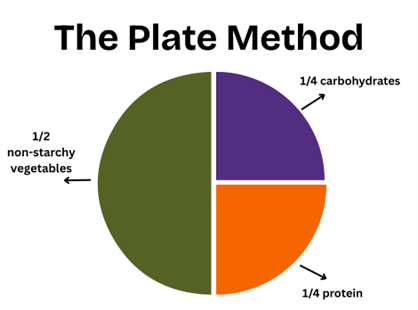
The Plate Method is an effective tool to utilize when one has diabetes to help build a balanced plate. This works by monitoring the types of carbohydrates consumed at meal times and focuses on helping individuals plan out adequate portion sizes. To follow this method, do the following:
- Start with a 9 in round dinner plate and to break it into three sections – one ½ section, and two ¼ sized sections.
- The first section of the plate is the ½ section. A diabetes-friendly plate is filled with a variety of non-starchy vegetables such as spinach, broccoli, brussels sprouts, cabbage, carrots, tomatoes, peppers, or zucchini and yellow squash. These vegetables have a lower carbohydrate impact than their starchy counterparts and are full of fiber, a nutrient which can help us feel full and can balance our blood sugar.
- The second portion of the plate, the first of the ¼ size sections, is for protein. This can include foods such as chicken, turkey, fish, tofu, legumes, or eggs. As previously stated, these foods help to balance and stabilize blood sugar. However, one should focus on consuming lean or lower fat proteins.
- The last portion of the plate, the second ¼ section, is reserved for carbohydrate rich foods. This could include a starchy vegetable such as potatoes, peas/beans, corn, or winter squash. Or it could include a whole grain such as bread, rice, pasta, barley, or oats as well as fruits.
This method of eating promotes balance and portion control which can result in better blood sugar levels over time.
When do I need some extra support and who can help me?
It is not uncommon for an individual with diabetes to seek additional support for nutrition counseling. However, it is imperative that those who do look for support and answers to their diabetes-related nutrition questions, seek advice from a qualified individual such as a Registered Dietitian Nutritionist (RDN). A RDN is a food and nutrition expert. These individuals have advanced training in the sciences related to nutrition and metabolism to understand how food impacts the body. It is required for an RDN to attend a university with an accredited program, complete a master’s degree, and complete at least 1000 hours of supervised practice during an internship before they can sit to complete their licensing examination. It is important when looking for support for a diabetes diagnosis that one utilizes an RDN for nutrition advice, as they understand the complexities of dietary needs related to chronic diseases and can provide what is called Medical Nutrition Therapy.
There are many others who may try to provide advice related to diabetes-specific nutrition, but one should be wary of advice from unlicensed individuals. Some people you SHOULD NOT take advice from for diabetes nutrition include: personal trainers (they may have a background in physical activity, but that doesn’t mean that they really understand diabetes specific nutrition), health coaches, wellness specialists, or people who label themselves as just a “nutritionist” (an RDN will call themselves a dietitian). All these individuals may have a background in some health or wellness-related field but are not trained to deliver nutrition recommendations related to chronic disease and dietary prescriptions.
What is Medical Nutrition Therapy?
Medical Nutrition Therapy (MNT) is an important part of diabetes self-management. Many times, outpatient diabetes clinics that offer Diabetes Self-Management Education & Support (DSMES), have a Registered Dietitian Nutritionist who is also a Certified Diabetes Care and Education Specialist on staff. For those with a diagnosis of diabetes, this time working with a Registered Dietitian Nutritionist can be spent developing a personalized nutrition plan that supports blood sugar balance, improves health outcomes, and works to address personal and cultural preferences and goals. During these appointments, a Registered Dietitian Nutritionist may work with a client to address their specific caloric needs and then break that down into further recommendations that look at the specific macronutrients mentioned earlier – carbohydrates, protein, and fat. These recommendations can be based upon medical history and other lifestyle factors which directly contribute to the outcomes related to diabetes self-management for that individual. Additional education during these appointments may include counting carbohydrates, reading food labels, creating a meal timing schedule, and selecting nutrient dense foods.
For many, they can receive a baseline of diabetes-related nutrition information through a group class such as Health Extension for Diabetes, or DSMES at their local hospital. However, Medical Nutrition Therapy may be especially necessary if an individual with diabetes has an additional healthcare need such as gastroparesis, celiac disease, kidney disease, or heart disease. These conditions create a need to receive more nutrition education than what can be attained in just a standard diabetes education setting. Studies have shown that Medical Nutrition Therapy and working alongside a dietitian can greatly improve blood sugar control and provide those with a diagnosis of diabetes an essential tool to live a healthier life.
With this in mind, dietitians do not want to write an individual meal plan. They theoretically can for education purposes and as a sample, but the goal of Medical Nutrition Therapy is not to tell an individual what to do and eat but instead teach that individual how to integrate education principles into their life so they can apply knowledge using the foods that one enjoys eating or that are significant to an individual’s cultural background.
Preparing for your MNT appointment
In preparation for a Medical Nutrition Therapy appointment with a dietitian, there are a few things to remember and consider.
- Bring a list of questions to the appointment – this will keep the conversation moving and help ensure that all concerns are met.
- Because Medical Nutrition Therapy involves diet, it may be helpful to the dietitian for a patient to bring a journal of 7 days of eating – breakfast, lunch, dinners, and snacks.
- It is important that the information in this diary is truthful and an accurate representation of what one truly eats in a day. One should not try to “clean up” or alter their dietary practices just for the appointment. By doing this, a dietitian may not be able to provide accurate and relevant advice.
- Bring a log of blood sugar readings correlating to the food diary provided. This will help a dietitian examine how one’s blood sugar is being impacted by the food consumed.
Conclusion
Understanding nutrition recommendations in the treatment of diabetes can be a vitally important step to take. However, given how complex a condition diabetes is, and how individual nutrition recommendations are from person to person, it is vitally important that one seeks support from qualified individuals. However, if one takes their behavioral self-care skills seriously such as eating healthful foods, then one can greatly improve their diabetes self-management outcomes.
References:
- Academy of Nutrition and Dietetics. (2024). Become a registered dietitian nutritionist. Retrieved from https://www.eatright.org/become-an-rdn.
- American Diabetes Association. (2023). Nutrition for life: The plate method. Retrieved from https://professional.diabetes.org/sites/dpro/files/2023-12/plan_your_plate.pdf.
- American Diabetes Association. (2020). The diabetes plate method. Retrieved from https://www.diabetesfoodhub.org/articles/what-is-the-diabetes-plate-method.html
- Centers for Disease Control & Prevention. (2024). About insulin resistance and type 2 diabetes. Retrieved from https://www.cdc.gov/diabetes/about/insulin-resistance-type-2-diabetes.html.
- Centers for Disease Control and Prevention. (2014). Carb choices. Retrieved from https://www.cdc.gov/diabetes/healthy-eating/carbohydrate-lists-starchy-foods.html.
- Centers for Disease Control and Prevention. (n.d., a). About water and healthier drinks. Retrieved from https://www.cdc.gov/healthy-weight-growth/water-healthy-drinks/index.html.
- Centers for Disease Control and Prevention. (n.d., b). Monitoring your blood sugar. Retrieved from https://www.cdc.gov/diabetes/diabetes-testing/monitoring-blood-sugar.html#:~:text=Importance%20of%20monitoring&text=Some%20change%20is%20normal%2C%20but,your%20blood%20sugar%20target%20ranges.
- Cleveland Clinic. (2024a). Medical nutrition therapy. Retrieved from https://my.clevelandclinic.org/health/treatments/medical-nutrition-therapy-mnt.
- Cleveland Clinic. (2024b). Omega-3 fatty acids. Retrieved from https://my.clevelandclinic.org/health/articles/17290-omega-3-fatty-acids.
- Mayo Clinic. (2024). Dietary fiber: Essential for a healthy diet. Retrieved from https://www.mayoclinic.org/healthy-lifestyle/nutrition-and-healthy-eating/in-depth/fiber/art-20043983.
- Raymond, J., & Morrow, K. (2023). Krause and Mahan’s food and the nutrition care process (16th ed.). St Louis, Missouri: Elsevier.
- United States Department of Agriculture. (2023a). MyPlate fruits. Retrieved from https://www.myplate.gov/eat-healthy/fruits.
- United States Department of Agriculture. (2023b). MyPlate vegetables. Retrieved from https://www.myplate.gov/eat-healthy/vegetables.
Authors:
- Julianna Lyle, Rural Health and Nutrition Agent, Anderson County
- Jenna Lynes, Graduate Student Intern, Rural Health and Nutrition
- Jessica Lynes, Graduate Student Intern, Rural Health and Nutrition
