Andy Rollins
Commercial Horticulture Agent
Spartanburg County
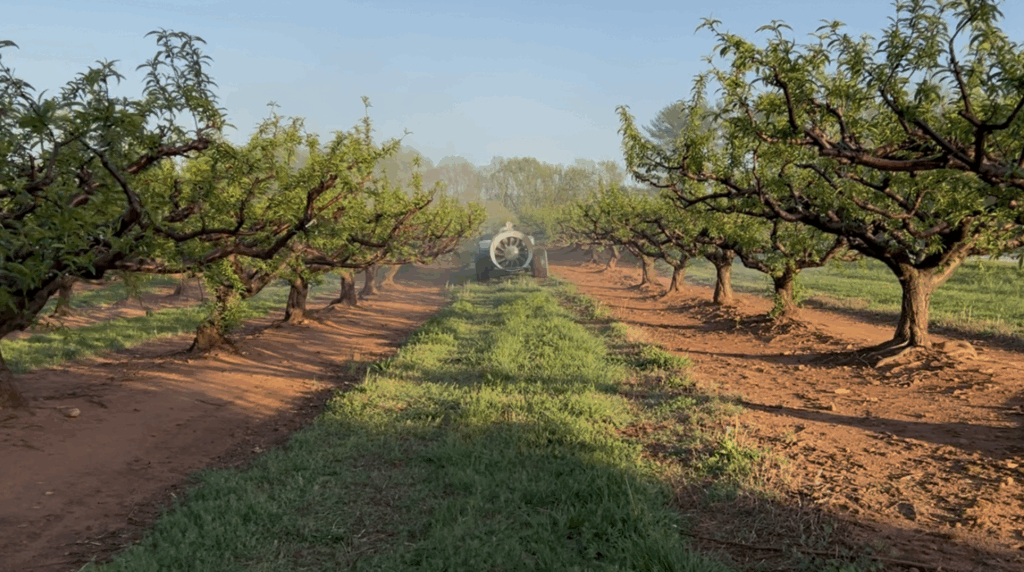
Andy Rollins has made significant progress in chemically thinning peaches using ethylene. Ethylene is a naturally occurring gas that increases as many fruits ripen. A common example of its use is placing a ripe banana peel in a paper bag with an unripe tomato, which helps accelerate the tomato’s ripening process.
In commercial peach production, thinning is typically done by hand after the risk of the last frost has passed—generally around April 15th, although this can vary. However, the rapidly rising cost of legal H2A labor, combined with widespread inflation across other farm inputs, has severely eroded profit margins. Many farms are now uncertain whether they can remain operational even for another year.
Rollins has applied ethylene in liquid form to young peach flowers and fruit, which causes the trees to naturally abort a portion of the developing fruit. This spring, he was able to thin 50–60% of the fruit from multiple peach varieties at a cost of just $1.67 per acre (approximately 150 trees), excluding labor for application. In contrast, traditional hand thinning can cost $8–10 per tree. While he encountered some challenges thinning certain varieties, he plans to continue refining the process next year, believing it to be a critical step forward for the future of peach production.
In addition to his work with ethylene, Rollins is also exploring the use of a new biological fumigant applied through an innovative method. Fumigants are essential in commercial agriculture to combat soil-borne diseases, weeds, and pests that can severely damage crops. These substances are highly dangerous, but by using inline injection through irrigation drip tape, exposure to harmful gases is reduced and the fumigant remains concentrated in the soil, where it can effectively target plant pathogens and pests.
This method has gained popularity since Rollins began working with it. He is scheduled to demonstrate the technique at the NC Strawberry Growers Association meeting on November 11, 2025. During the demonstration, he will use blue dye through the irrigation system to simulate the fumigant, highlighting the importance of saturating the entire root zone to ensure maximum efficacy.
Further educational meetings on these practices are currently being planned for early next year.
