Clemson Extension Upstate District

Laurens County Youth Livestock Show 

Lauren Smith, 4-H Agent

Youth Dairy Showmanship

The Laurens County Youth Livestock Show brought together almost 150 young exhibitors from 19 counties across South Carolina to showcase their hard work and dedication to animal care. This year’s event featured a wide variety of livestock, including beef and dairy cattle, swine, rabbits, dogs, and meat goats at our brand-new Agricultural Center.  

Creative Contest

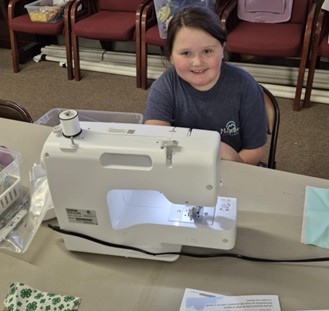
Alongside the livestock show, youth also had the chance to show off their creative talents in the expanded Youth Creative Contest. There were over 55 entries ranging from photography and delicious homemade foods to sewing projects, pottery, and original drawings. Each piece reflected the imagination, effort, and unique style of its creator. The contest was a great reminder that 4-H youth programs aren’t just about animals. Young people have opportunities to express themselves, try new skills, and be proud of their creativity as well. 

Families, friends, and community members filled the stands, cheering on the youth and celebrating the importance of agriculture in Laurens County. Their support made the show feel welcoming, celebrating not just the animals in the ring but also all the hard work the kids put in to get there. 
New 4-H Clubs Growing in Laurens County 

Lauren Smith, 4-H Agent

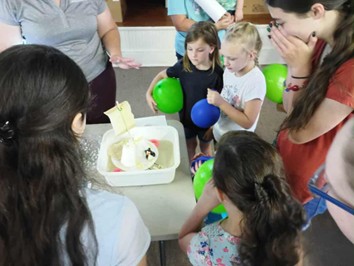
Exciting things are happening in Laurens County 4-H! Several new clubs are forming, and a few clubs are reestablishing, giving local youth even more opportunities to explore their interests, build leadership skills, and connect with others in the community. 

Among the newest additions are: 

Crafty Crew – A perfect fit for creative minds who love hands-on art and DIY projects. 

Herd & Harvest Club – Combining agriculture and animal science for youth passionate about livestock and farming. 

Crusader 4-H Club at Laurens Academy – Bringing the spirit of 4-H directly into the LA school community. 

Among the relaunched clubs are: 

Homeschool 4-H – A program for homeschool families to engage in fun, educational 4-H experiences. 

Teen Council – Youth leaders who are passionate about making a difference in their clubs, community, and beyond. 

These exciting new clubs are supported by the strong foundation of our established groups Raiders at Laurens High, Clinton House Shell Shockers, Joanna Woodson Afterschool, and the ever-popular Greenville- Laurens Dairy Club, which continues to offer enriching experiences for members interested in dairy education and animal care.  

From cooking and crafts to agriculture and service, each club provides a space where kids can learn by doing, grow their confidence, and make lasting friendships. Dedicated parents and volunteers play an essential role in supporting these efforts, helping to guide the next generation of 4-H members.  As these clubs take root and flourish, Laurens County youth will have more opportunities than ever to grow, lead, and make their mark. 

Laurens County Hosts a Hybrid Master Gardener Course

SC Master Gardener Logo

Bryan Smith, Area Extension Agent-Agricultural Engineer

The Laurens County Extension Office is currently hosting a hybrid Master Gardener course.  The Master Gardener course began on August 12, 2025 and will meet each Tuesday through December 2.  This year’s course has 5 students.

Students in the course will complete 16 three-hour classes on subjects including lawn care, vegetable gardening, urban tree care, soils and plant nutrition, tree fruits and small fruits, and many more.  Each class is presented by an Extension Agent or a Master Gardener graduate that has experience in the subject matter, which allows them to provide practical experience along with research-based information.

This year’s course is once again a hybrid model, which includes 9 in-person presentations and 11 presentations by video (20 presentations in total will be presented over the 16 week course).  The hybrid model is an attempt to provide the same training to Master Gardener students across the State so they will all have the same base knowledge in the “Core” subjects.  The in-person classes allow coordinators to tailor the course for each county’s needs by offering local topics most useful to their students.

After completing the course the students will provide 40 hours of community service over the next 12 months to become Certified Master Gardeners.

For more information about the program visit https://www.clemson.edu/extension/mg/ .

Confined Animal Manure Manager Trainings – Virtual and In-Person

Bryan Smith, Area Extension Agent-Agricultural Engineer

Confined Animal Manure Managers Program

SC State Regulation R.61-43 requires all confined animal facility operators to attend the Confined Animal Manure Manager (CAMM) certification program provided by Clemson Extension.  The CAMM team has worked hard to provide trainings for South Carolina’s confined animal facility operators this year.  From July 1, 2024 through June 30, 2025 Bryan Smith (Laurens), Brian Beer (Lancaster), Lee van Vlake (Florence), and Amber Starnes (Chesterfield) worked together to offer two initial, full day trainings and also worked with local county agents across the state to provide 65 recertification trainings including 53 in-person trainings and 12 online Zoom trainings.

Presenters included Bryan Smith, Dr. Julie Helm (Livestock Poultry Health), Dr. John Chastain (Clemson University), Dr. Sean Eastman (Livestock Poultry Health), Lee van Vlake, Brian Beer, and Tonya O’Cain (SCDES).  Topics included “Crop Utilization of Manure Nutrients and Soil Fertility,” “Vectors and Vector Control,” “Horse Manure Issues and Management,” “Mortality and Composting,” “Energy Saving Opportunities for Swine Facilities,” “Beef Grazing Systems and Water Quality Protection,” “Poultry Litter Fertilization for Hybrid Bermudagrass,”  and “Tunnel Ventilation & Evaporative Cooling: Heat Stress Reduction, Performance, and Energy Use,” as well as several others.

597 growers attended the in-person recertification trainings and 435 growers attended the online recertification trainings.  60 growers attended the two initial, full-day trainings.

The team plans to offer two initial, full-day trainings in February 2026 and a slate of recertification trainings for our growers from January through March 2026 and another slate from late April through August 2026.  More information about the training program may be found at www.clemson.edu/camm .

Laurens County Beekeepers’ Association

Bryan Smith

Laurens County has a very active Beekeepers group.  The Laurens County Beekeepers Association meets the first Thursday of each month at 6:30 pm in the Joe Adair Educational Center, 110 Scout Creek Ct, Laurens.  The Association provides programs that are educational and informative to both new and experienced beekeepers.  Their average meeting attendance is 30 persons.

Secretary Jessica at secretary@laurensbeekeepers.com for more information. Dues are $10.00. Contact Association
 

Laurens Spotlight on Agriculture

The Laurens County Spotlight on Agriculture is an annual awards banquet held each year to honor the accomplishments of our local farmers and farm families.  The event will be held this year on March 13, 2025, in the First Presbyterian Church Family Life Center in Clinton, South Carolina.

We are very pleased to announce that Mr. Chip Carter, host of RFD TV’s “Where Food Comes From” will be our speaker for this year’s Laurens County Spotlight on Agriculture.  Mr. Carter has traveled the country, seeing just how food gets from the farm to our tables.  His adventures include “busting” watermelons in the Rio Grande Valley, pulling Vidalia Onions in Georgia, making cheese in Wisconsin, and plowing with a mule and a single-bottom plow.

This event averages over 300 persons in attendance each year and is funded by sponsors of the event.   Tickets for the event are $10.00 each and are available at the Laurens Extension Office on 219 W Laurens Street in Laurens and from the Laurens Extension Advisory Committee members.

The Jim and Susan Curry family, recipients of the Farm Family of the Year Award during the 2024 Spotlight on Agriculture.
Over 330 persons enjoyed the 2024 Spotlight on Agriculture event.

Laurens County Extension Welcomes New 4-H Agent

Bryan Smith

We are happy to announce that Mrs. Lauren Smith has accepted the Laurens County 4-H Agent position.  Her first day was March 3, 2025. 

Lauren has a B.S. in Animal and Veterinary Sciences from Clemson University.  She has spent the past several years working as the Outdoor Program Manager with the Girls Scouts of South Carolina – Mountains to Midlands (based in Spartanburg), providing over 40 programs each year as well as hiring and training seasonal staff.

We are excited to have her in Laurens County.  Welcome, Lauren!

Lauren Smith, New 4-H Agent

Armyworms Invade Laurens County

Bryan Smith, Area Extension Agent-Agricultural Engineer

This fall a huge number of Fall Armyworms invaded Laurens County.  Fall Armyworms are usually in our county in some small number each year, but this year’s numbers created quite a bit of damage in landscapes, pastures, and hayfields.

Fall Armyworms migrate northward each year from the Gulf coast and may arrive in Laurens County as early as August.  There may be as many as three “waves” of armyworms each year depending on many factors.  The Fall Armyworm life cycle is typically 30 days in the summer, with the larval or caterpillar stage being the destructive one.  Fall Armyworms remain in the caterpillar stage for 14 days and are most destructive during the last 4 days of that stage.  They then pupate and emerge as moths, which feed on nectar from various flowers and are not destructive.

Fall Armyworms seem to prefer bermudagrass, crabgrass, johnsongrass, millet, and sorghums.  They will ignore other grasses such as fescue and bahia while sufficient quantities of their preferred foods are present.  However, if those food sources are exhausted before they pupate they will move to less desirable species and decimate them as well.  This happened in 1977 in Laurens County when Fall Armyworms killed entire pastures of fescue after they had eaten their preferred crops.

Rainfall does encourage the growth of fungi that are detrimental to Fall Armyworms, but it does not kill them.  Clemson Extension recommends that insecticides be used to control them when growers see 3 armyworms in a one square foot area.  If Fall Armyworms are found in a hay crop we recommend that the hay be harvested if it has enough growth to do so – Fall Armyworms eat green growth and will not eat cured hay.  Local Extension Offices can provide a list of insecticides labelled for use in lawns, pastures, or hay fields.

Fall Armyworm damage in a home lawn. Remaining green areas are fescue or bahia.
Fall Armyworm damage in a home lawn. Remaining green areas are fescue or bahia. Image credit: Bryan Smith


Winter Forage Field Day

Reid Miller, Area Livestock and Forages Agent

People looking at a pasture at Winter Forage Field DayOn April 2nd, 2024, the Greenwood County Extension office and the Greenwood Soil and Water Conservation District held a Winter Forages Field Day at the Henderson Farm in Ninety Six, SC. Planning for this event began in the fall of 2023 with the planting of a winter annual variety trial. In total, twenty-three different varieties of small grains, ryegrasses, and legumes were planted. Variety trials give producers a side-by side comparison of different forages, so they are more educated about their choices of forages before they purchase seed for themselves. Planting was conducted in late October on a plot of two acres. The field day began with a showcase of the forage variety trial given by Greg Henderson (Greenwood County Soil & Water Conservation District board member and retired Clemson Extension Agent), Dr. Liliane Severino da Silva (Forage Specialist, Clemson Extension), and Reid Miller (Livestock and Forages Agent, Clemson Extension). The next section of the field day was a pasture soil fertility discussion over an intensively grazed pasture of winter annuals given by Greg Henderson and Reid Miller. The last part of the program was an NRCS cost share program update given by Myra Jones with American Forest Management. In total, we had forty people in attendance from Greenwood, Laurens, McCormick, Abbeville, and Edgefield Counties, and all producers involved in the Climate-Smart program received credit for their attendance.

Cicadas Leave an Odd Signature

Cicada damage to an oak tree. There will be no lasting health effects for the tree. Image Credit: SC Forestry Commission

Bryan Smith, Area Extension Agent-Agricultural Engineer

Cicadas are extremely noisy insects that hatch once every 13 or 17 years depending on the brood. There are more than 20 separate broods, with most of them being 17-year broods.  The United States had two broods of cicadas hatch this spring across the country, Brood XIII, which is a 17-year brood, and Brood XIX, which is a 13-year brood.  Thankfully only one brood, Brood XIX, was predominate in Laurens County.  Even so residents endured considerable noise from the huge numbers insects as they emerged from the ground, bred, and laid eggs that later hatched and returned into the ground for another 13-year hiatus.

After the cicada noise subsided many residents became concerned with what they thought might be an oak tree disease.  Oak trees across the county showed signs of small branches or twigs near the outer edges yellowing and dying.  This was not a disease of oak trees, but a part of the cicada life cycle.

After cicadas breed they lay their eggs in the young stems of hardwood trees.  Eventually those stems die and break off, falling to the ground.  The cicada eggs then hatch and the young move into the ground.  This does look like a disease issue for the tree, but it does not cause any health concerns for healthy trees.  So the yellowing of small branches are not a cause for concern – they are just the parting act of the cicada.