Clemson Extension Upstate District

Succession Planning Workshop was a Success

Succession Planning Workshop in Pacolet, SC

Over 97% of US farms are family-owned, and less than one-third have a formal succession plan.

Let’s try to imagine a business that is worth over a million dollars in assets and holdings. A new investor/partner has started with the company and scheduled a meeting with the CEO/Founder to discuss the transition plan. The CEO obliges, but instead of meeting in an office, they meet at the CEO’s kitchen table. The table is covered with invoices, receipts, seed, parts list and so forth. During the meeting, the CEO’s phone constantly rings with calls about fences, hay, and other “urgencies.” Both parties are beginning to wonder if this is a waste of time; unfortunately, the meeting gets cut short by an issue with a hay baler in the field. No progress was made.

This is a common scene in our family-run farms. Everyone would agree that developing a succession plan is a high-value task for our farm families. Still, the small, less valuable task often takes precedence due to its perceived urgency. 

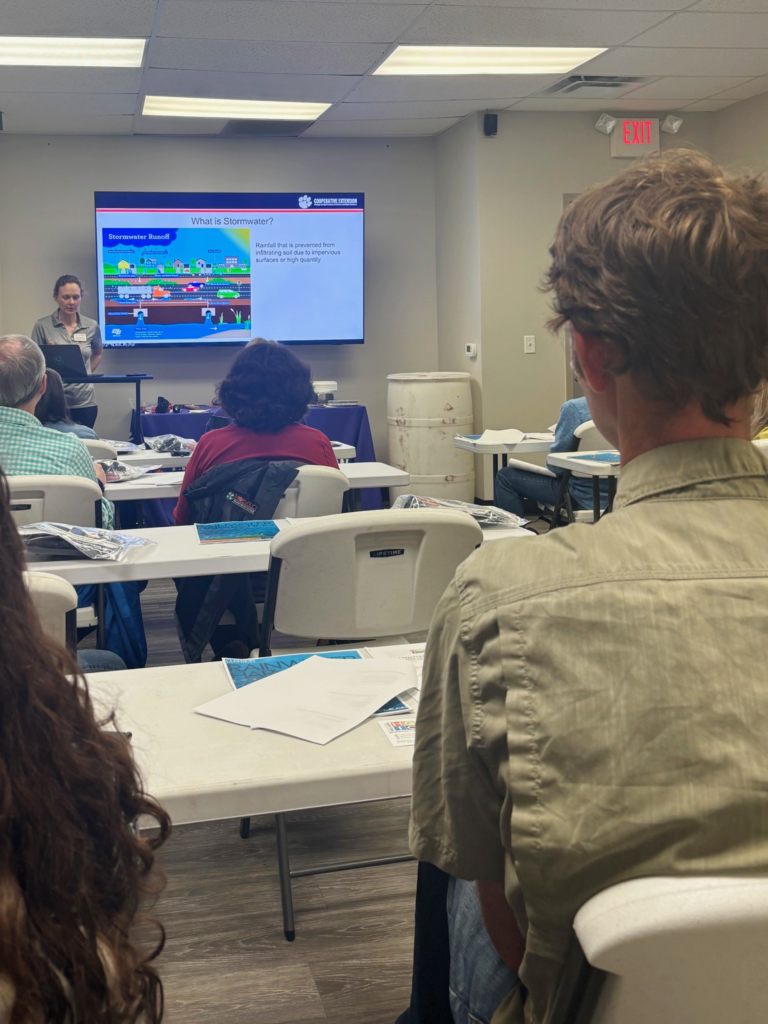
On September 21st, there were over 75 farmers at the succession planning workshop in Pacolet, South Carolina. Speakers from FSA, SC land, and Clemson Extension gave farm families the tools necessary to get started with this vital task. We covered much ground but only scratched the surface of these critical topics. We are working on suggestions and feedback for the next installment of this workshop series. There were farmers from several counties in our region, and we had a great deal of support from our sponsors.

We look forward to equipping farmers now so these farms will still be in farmland tomorrow. Farms are businesses, and successful businesses need a good plan for carrying on to the next generation.

Cherokee County 4-H Teen Council: Building Leaders Through Service, Careers, and Civic Engagement

Haven Blackwell
4-H Youth & Development Agent

Cherokee County

Cherokee County 4-H is excited to announce the launch of our new Teen Council club, a group designed to empower young people to become leaders in their communities and beyond. With a focus on community service, career exploration, and civic engagement, this club offers teens meaningful opportunities to grow while making a positive impact right here at home.

Our Teen Council currently consists of six dedicated teens who are already hard at work planning their first community service project. In partnership with a local soup kitchen, the club is developing a way to serve those in need and learn firsthand the importance of giving back. This project will not only benefit our neighbors but also help members gain valuable skills in leadership, organization, and teamwork.

Beyond community service, Teen Council will also focus on career exploration and civic engagement. Members will have the chance to:

  • Explore different career paths through guest speakers, workshops, and hands-on experiences.
  • Learn what it means to be an active and productive citizen.
  • Develop leadership skills that will serve them throughout their lives.

We are currently looking for more teens who want to be a part of this exciting new club. If you are passionate about making a difference, curious about future careers, or eager to get involved in your community, we invite you to join us!

For more information or to get involved with the Cherokee County 4-H Teen Council or any of our other opportunities, please contact your 4-H agent, Haven Blackwell, at daynab@clemson.edu or (864) 649-8252. Together, we can Make the Best Better. 

Click here for the Cherokee County 4-H Newsletter for October!

Harvesting Learners

Haven Blackwell, 4-H Youth & Development Agent
Cherokee County

Cherokee Charter Academy student holds up a sweet potato.

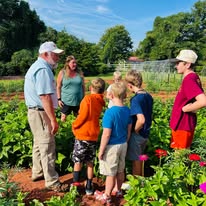
Cherokee County 4-H along with Clemson Extension’s School and Community Gardening Team have partnered with teachers and administrators across Cherokee County to implement school gardens across four schools. Luther Vaughan Elementary, Blacksburg Elementary, Cherokee Charter Academy, and Corinth Elementary are currently participating in this wonderful program and we would love to add even more schools to that list.

he first step in getting your school one of our awesome gardens is to have two of your teachers/administrators complete our School Gardening for South Carolina Educators Online Course. Alongside the knowledge of running a school garden that you will get from this course, you will also

receive our Garden STEM curriculum, the Seasonal Planting Guide and Calendar, and other lessons and activities. Next, we can help you obtain a grant to cover the cost of your raised beds and other necessary supplies. Don’t worry! All these supplies get delivered directly to your school. Throughout the year, I will bring your seeds and transplants for your garden.

Youth in Cherokee County are able to learn how to grow their own food and the importance of that skill through this program. These students are also contributing fresh fruits and vegetables to their school cafeteria’s.

If you are interested in starting a school garden at your school, please contact me at daynab@clemson.edu. Happy harvesting!

Students from Cherokee Charter Academy tend to their garden.

Gearing Up for Growth

Christopher LeMaster, Area Livestock & Forage Agent
Cherokee, Spartanburg, & Union Counties

Loss of Farmland is a top concern among our stakeholders as South Carolina continues to grow at an unprecedented rate. Last year, over 90,000 people moved to our state (which is more than the population of the city of Greenville). Additionally, Industry is quickly relocating to the Sunbelt states. Even in Cherokee County, we are experiencing development pressure compounded by the rising average age of farmers. I don’t have to explain the importance of farmland to this group, but without farms and farmland, we increase our dependency on something we need at least 3 times a day. I appreciate the opportunities that come with this growth, but I think we are justified in our concerns about this rapid loss of farmland. There’s no simple solution; it involves advocacy, education, zoning, regulation, and, most importantly, profitable farms.  Yes, farms need to be profitable and enjoyable to survive. Farming is hard work, both physically and mentally, and many of our farmers are aging out. Nothing ages you faster than hard, unpleasant work for no money.

                My goal for 2025 is to offer classes focusing on profitability and ways to bring another farming generation on board. The classes I have planned for this year will challenge farmers to look at their farms as businesses and break their operations down into enterprises to assess profitability and viability and hopefully identify solutions for some of the drudgery of farming. I invite you to attend the Beef Market Outlook and Profitability Workshop on 3/20 and the Succession Planning for Farm Families and Conservation Easements Workshop on 8/21. Both programs will be in Pacolet for a central location to my counties (Cherokee, Union, and Spartanburg).  Additionally, we have teamed up with a few like-minded organizations to form the Broad River Conservation Partnership to offer field days to assist landowners with conservation practices such as prescribed fire, native grass establishment, and conservation easements.

                I hope to see you at one of these programs this spring. Here are a few other workshops to look forward to.

3/11

3/20


3/21-22

3/25

3/28

3/28

4/5

4/11-12

4/18

4/29

5/9

5/27

6/24

7/29

Wheat/Soybean Production Meeting

Beef Market Outlook & How to Assess Your Operation’s Profitability

Peach Country Livestock Show

Home Gardening Series: Beekeeping for Beginners

Backyard Poultry Processing

Down on the Farm Day

Urban Homesteading Poultry

Union Livestock Rodeo

Small Ruminants Field Day

Home Gardening Series: Sustainable Pest Management

Broad River Conservation Partnership Field Day

Home Gardening Series: Pruning & Turf Care

Home Gardening Series: Small Fruit Production

Home Gardening Series: Global Seed Diversity

Gaffney, SC

Pacolet, SC


Spartanburg, SC

Gaffney, SC

Orangeburg, SC

Cherokee County, SC

Spartanburg, SC

Union, SC

Union, SC

Gaffney, SC

Union, SC

Gaffney, SC

Gaffney, SC

Gaffney, SC

Time to Firewise your Home

Carolyn Dawson
Upstate Forestry Agent

Forest burning near a home

It’s that time again, folks, time to Firewise your home. In order to help prevent a wildfire from destroying your home, you must prepare ahead of time. If there is ever an active wildfire in your area, you may be asked to leave immediately and not have time to defend your home. If your home is in or near the woods, then it is at risk of a wildfire.

The Firewise Program provides homeowners and communities with simple and easy steps to help reduce a home’s vulnerability by preparing ahead of time for a wildfire.
These steps are rooted in principles based on solid fire science research into how homes ignite. The program is promoted by the SC Forestry Commission and Clemson Extension. Here are a few basic, simple steps to help protect your home

  • Clear leaves and other debris from gutters, eaves, porches and decks. This prevents embers from igniting your home. Leaf blowers can save you hours of time and labor!
  • Remove vegetation and items that could catch fire from around and under decks.
  • Remove flammable materials (firewood stacks, propane tanks, dry vegetation) within 30 feet of your home’s foundation and outbuildings, including garages and sheds. If it can catch fire, don’t let it touch your house, deck or porch.
  • Prune back any tree limbs overhanging or touching your home’s roof, deck, porches, driveway, or outbuildings.
  • Inspect the chimney and install a spark-arresting mesh screen if needed.
  • Keep all vegetation at least 10 feet from chimneys or stovepipes.
  • Remove or prune flammable plants and shrubs near windows.
  • Create a separation between trees, shrubs, and items that could catch fire, such as patio furniture, wood piles, swing sets, etc.
  • Cover exterior attic vents with metal wire mesh no larger than 1/8 inch to prevent sparks from entering the home.
  • Enclose under-eave and soffit vents or screen with metal mesh to prevent ember entry.
  • Even though you don’t want to keep a garden hose attached to a spigot during the winter, make sure to keep it accessible if needed.

Although this list is far from complete, I’d like to personally add one extra bullet point to the list. Do you have a plan for your pets? Dogs can easily be led to the car, but what about cats and other small animals? What about farm animals such as chickens, goats, or horses?

So now that you know the steps to reduce the chance of home ignition from direct flame, firebrand showers, and radiant heat, there is one last thing to be mindful of, always safely dispose of fireplace ashes. Winds can reignite ashes and coals left on the ground days later. Firewise recommendations can help establish an effective line of defense in regions where fire is a potential hazard. Will you…your home be ready? Be Firewise!

For more information about the Firewise program, please visit www.firewise.org/usa or contact Carolyn Dawson, Upstate Forestry Agent Clemson Extension at Dawson4@clemson.edu .

Enriching Schools with 4-H

Haven Blackwell
4-H Agent
Cherokee County

A new school year means new learning opportunities! This year, Cherokee County 4-H wants to enrich schools with positive agricultural learning experiences.

             We will offer our popular Caterpillar to Butterfly Project to all kindergarten teachers! Students make predictions and observations during this project and love seeing the physical changes made each day.

            For first grade teachers, we will offer a series of healthy lifestyles lessons where students will learn where their food comes from and what components are in that food that make it healthy. And let’s not forget the best part… taste tests!

Cherokee County second graders attending Down on the Farm Day

Second graders will take part in Down on the Farm Day. Our partnership with the Institute of Innovation allows students to take a field trip to us where they will rotate through six different stations and experience a different aspect of farming at each one.

Third grade teachers! We have an awesome opportunity for you! Please contact me to learn how you can sign up to get South Carolina Farm Bureau’s Ag. Learning Lab in route to you this school year!

Fourth graders will be offered a series of agriculture lessons taught by me, your 4-H agent!

AgMags are wonderful resources to teach your students about agriculture. Fifth grade teachers can receive a class set of AgMags each month beginning in November on a variety of topics. Think, “How It’s Made”, agriculture style.

Two stendents participate in STEM activities

Last but certainly not least, embryology! Chick embryology is a fan favorite! Students enjoy incubating and hatching chicken eggs and caring for the chicks after hatching. Along with this hands-on experience, teachers will also receive very detailed curriculum to guide them through each day of the process with their students, making this an awesome learning experience for all! This program will be offered to any school librarian in Cherokee County (elementary, middle, and high school).

Aside from school enrichment, Cherokee County 4-H has many other opportunities to get involved in such as community cubs, independent projects, statewide events, and livestock shows. Please contact me if you are interested in getting your youth involved!

Water Resource Updates

Heather Nix
Upstate Water Resource Agent

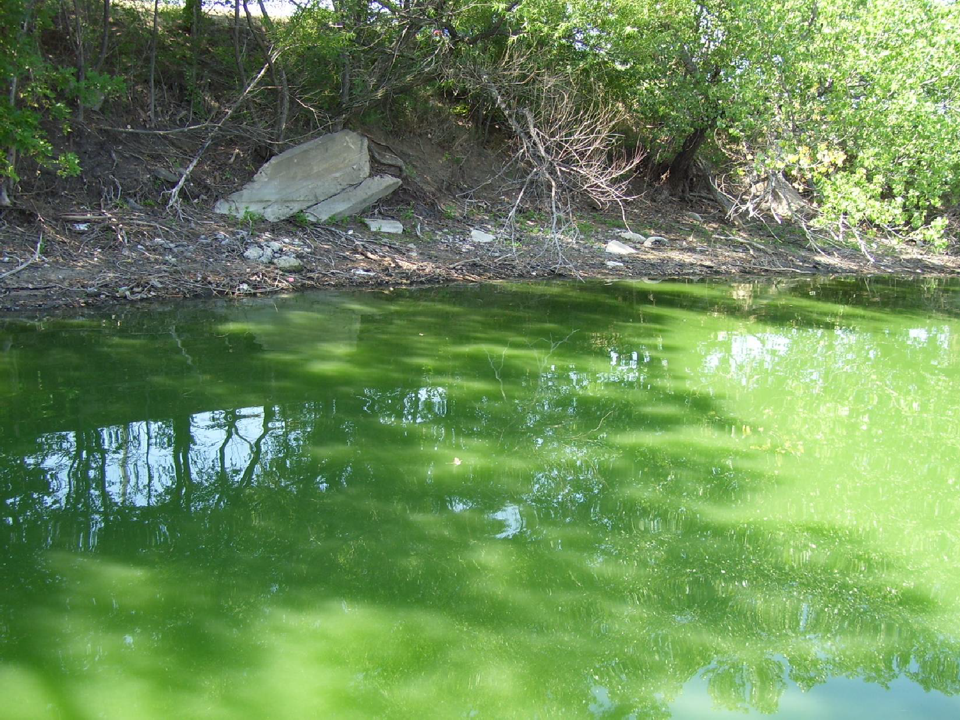
Seasonal Pond ManagementNew Online Course! Seasonal Pond Management If you own or manage a freshwater pond, the Seasonal Pond Management course is for you! For $15, you’ll receive on-demand access to course materials for 365 days. The course focuses on actions throughout the year that can help maintain a healthy pond.


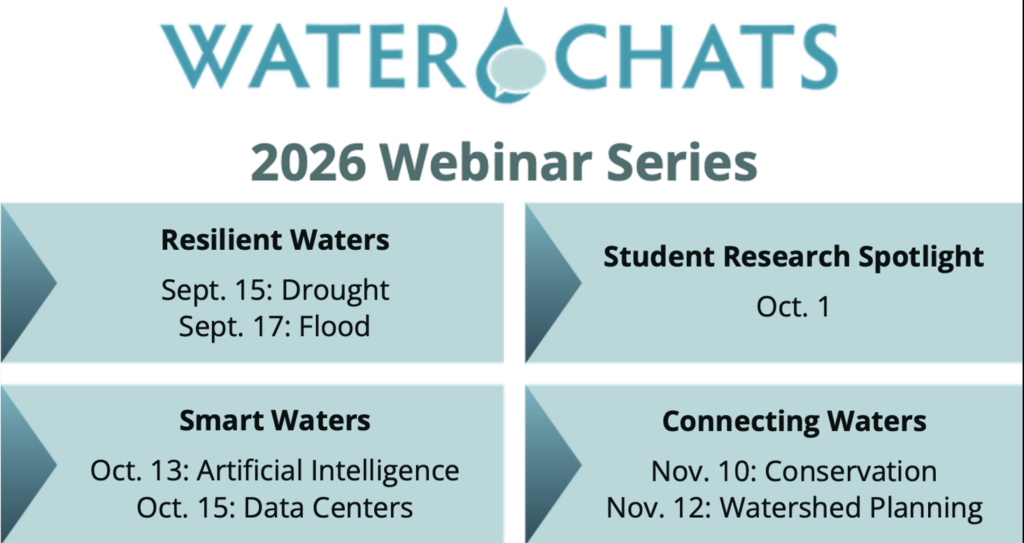
Water ChatsWater Chats Program

We are wrapping up another successful season of the Water Chats program with final sessions in September and a student-focused session in October. This partnership between Clemson Extension, S Sea Grant Consortium, and the SC Water Resources Center, has helped educate professionals across the state on a range of water quality issues and solutions.

Missed a webinar that you you wanted to see? Let us know (nix4@clemson.edu) and we’ll provide access to the recordings, when available.

Upcoming events: Please visit the Clemson Extension Events Calendar for information on various events.

Farmers are Hard to Replace

Chris LeMaster
Livestock & Forages Agent
Cherokee, Spartanburg, & Union Counties

Safety data (2019) by the U.S. Bureau of Labor Statistics indicates that the agriculture sector continues to be the most dangerous in America with 573 fatalities, or an equivalent of 23.1 deaths per 100,000 workers. Even in Cherokee County, we have had two ag-related fatalities less than a year apart. As we prepare for the busyness of fall hay harvest, a reminder about farm safety is much needed.

On August 1st we held a farm safety workshop tailored for cattle and hay producers. Typically, safety talks bring about a glazed and yawning audience. However, our speaker, Marion Barnes, used many real-life examples from around our state. He shared startling facts about the dangers of youth around farms. One point that shapes the deadly youth statistics is that on most farms, there is no separation between the barnyard and the children’s play area . This leads to complacency around dangerous equipment for both the youth and the parents.

Aside from the loss of limb or life, accidents on the farm are very costly and, in many cases, can bankrupt a farm. If you want to see your farm passed down another generation, you had better make good decisions on your “calculated” risks around equipment and livestock.

After the presentation, many stories were shared with the audience about ag-related deaths and injuries in our county from the past couple of decades. I received several calls after the workshop from farmers stating they appreciated the safety talk and planned to implement changes in their operations.

Grain Bin Safety Trailer

This program stemmed from an in-service training held on June 3rd at the Sandhills Experiment Station. Agents and specialists from across the state received presentations and demonstrations on farm safety topics. The demonstrations included legally transporting equipment, Rollover protection systems, and grain bin rescue. The grain bin rescue simulator was the most impressive demonstration. It was designed and constructed by the Ag Mechanization department to fit a small grain bin on top of an enclosed trailer that houses specialized equipment for the extraction demonstration. This trailer has been all over the state to help rescue teams train for grain bin entrapment. We plan to have this trailer visit some local fire departments in our farming communities.

Farmers are hard to replace, and so many people count on us. Please slow down and think about any avoidable risks. We need our farmers, and your families need you. For more information on farm safety and mental health for farmers, visit the links below:

http://blogs.clemson.edu/agsafety/

https://www.clemson.edu/extension/agribusiness/resources/farm-stress.html


2024 SC 4-H Showcase

Adam Petty
4-H Agent
Laurens County

Winners of the 2024 SC 4-H Showcase: Miss 4-H Hennelly Gavin, Miss Junior 4-H Brooklyn New, Miss Cloverleaf Dixon Freeman, and Miss Cloverbud Hannah Dye.

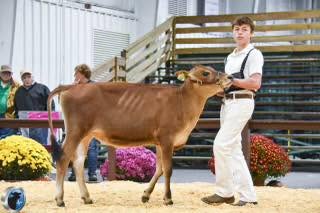
On Saturday, January 13th the Laurens County 4-H volunteers presented the 2024 SC 4-H Showcase at the Gilliam Center for Performing Arts on the campus of Thornwell Charter School. The 4-H Showcase is a unique fundraising event that is meant to highlight the achievements of 4-H’ers across South Carolina. This is accomplished while building confidence, improving public speaking skills, and instilling a sense of pride in the hard work of our contestants.

Our 16 contestants competed in three onstage divisions: business wear, 4-H project wear, and formal wear. In addition, our Junior and Senior contestants participated in an interview with the judges earlier in the day. This was a great opportunity for them to gain self-confidence.

We were pleased to welcome three outstanding judges for the event:

Erica Eadicicco – former Laurens County 4-H’er, Presidential Tray recipient, and native of Kinards, SC.

Courtney Stonell – Keep Laurens County Beautiful affiliate coordinator with the Laurens County Chamber of Commerce.

Haleigh Tomlin – former Greenville County 4-H’er and the current Miss Newberry.

Matthew Brownlee of Laurens served as our Master of Ceremonies. This was the fifteenth year that Laurens County has presented this program, so in honor of that occasion we were pleased to welcome the very first Miss 4-H, Mrs. Anna Crowder, ag teacher at Laurens District 55 High School, to assist in the crowning of our winners.

The winners will go on to represent 4-H in their local communities and at various state events during the year. The winners of the 2024 SC 4-H Showcase were:

Miss Cloverbud – Hannah Dye of Chester County

Miss Cloverleaf – Dixon Freeman of York County

Miss Junior 4-H – Brooklyn New of Laurens County

Miss 4-H – Hennelly Gavin of Lexington County

Congratulations to all our winners and participants in this year’s 4-H Showcase. Thank you to our dedicated volunteers without whom this event would not be possible and thank you to our sponsors, the Laurens County Water and Sewer Commission, Piedmont Rural Telephone Cooperative, and the Laurens/Greenville 4-H Dairy Club. Also, a special thanks to Thornwell for allowing us the use of their facilities.

Cool-Season Forage Pointers

Reid Miller
Livestock & Forages Agent
Greenwood, Laurens, & McCormick Counties

Pasture, picture taken January 2, 2024
Date taken: 1/2/24

While it is commonplace for producers in the upstate region of South Carolina to grow fescue as their primary forage crop, many producers utilize cool-season annuals to help get them through the winter. Cool season annuals are great for sodseeding into warm-season perennials like bermudagrass and for decreasing dependency on feeding hay. Cool-season annuals include a variety of small grains, ryegrasses, legumes, and some brassicas. In ideal conditions (adequate rainfall and extreme heat is gone), planting can begin in late September to early October. The earlier the planting the better your chances of being able to graze in the fall and early winter. Of course, the transition from summer to fall in this state can oftentimes be unpredictable with lingering heat and drought conditions. In the case of a late planting in early December, you may provide enough forage to carry cattle from spring to summer. Be sure to let forage grow to at least 6” in height before grazing, and do not graze below 2-3” in height. These parameters will allow the forage to develop a root system to promote drought tolerance and to sustain itself over the long term. The month of February is a great time to apply a second round of fertilizer regardless of whether you’re growing fescue or cool-season annuals. Remember to refer to your soil sample results when applying fertilizer. This is also a good time to evaluate the condition of your forage after the heavy frost events we received within the last month. The extent of the damage may determine whether it is worth fertilizing (regrowth must occur to justify fertilizer), replanting heavily damaged areas, or feeding hay until warm season grasses take over. To help our local clients gain some perspective on how cool-season annuals perform, we have a variety trial in place in Ninety-Six, South Carolina. We planted twenty-five different varieties including oats, wheat, ryegrasses, clovers, and other specialty forages. We hope to present the trial in the coming months if all goes well. Contact your local Clemson Extension office for more information.