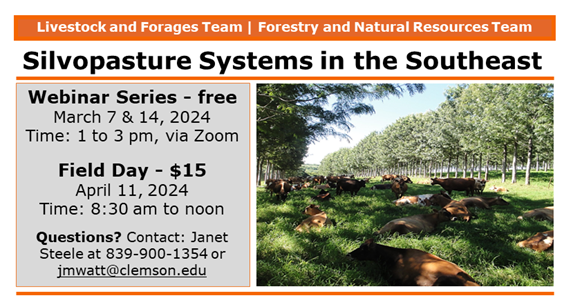
Discover the benefits of using Silvopasture Systems and register for the upcoming Webinar Series and Field Day.
Webinar Sessions
The two-part webinar series will address the establishment, management, and economics of implementing silvopasture systems.
Session 1 – March 7, 2024:
1:00 PM– “Introduction to Silvopasture Production Systems” by Dr. John Fike, School of Plant and Environmental Sciences, Virginia Tech University.
2:00 PM– “Animal Health and Environmental Benefits of Use of Silvopasture Systems” by Dr. Bruno Pedreira, Department of Plant Sciences, University of Tennessee.
Session 2 – March 14, 2024:
1:00 to 3:00 PM – Aroundtable with agricultural professionals, producers and Extension personnel will discuss relevant topics and share experiences and challenges related to silvopasture systems in South Carolina and the Southeast region.
Field Day
You can also join Extension specialists and agents for a Field Day on April 11, 2024 from 8:30 AM to Noon.
The field day will focus on topics about the establishment and management of woodlands and forage systems and the challenges and successes in using a silvopasture system for commercial livestock production. This event will be held at Varnville, SC.
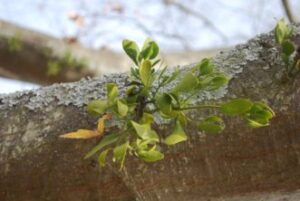
Now that deep winter is upon us, and the trees are bare of leaves, it is extremely easy to see the round, green balls of leaves scattered throughout the tree canopies. This is mistletoe.
Is it harmful to trees? Well, kind of. It is considered a parasite, a hemiparasite, to be exact. A hemiparasite makes some of its own food through photosynthesis but takes water and most of its nutrients from the host tree. American or Oak Mistletoe (Phoradendron serotinum) is commonly found on deciduous trees such as pecans, oaks, elms, hackberries, maples, and wild cherries. In the fall, it produces white berries that contain toxic chemicals poisonous to people and domestic animals.
Where did it come from? Birds are the most common culprit. They consume the sticky, white berries, and then transport the seeds to other trees where the seeds can germinate and begin their parasitic journey.
Mistletoe uses specialized roots called haustoria, which penetrate the host tree’s bark, allowing them to embed themselves in the vascular tissue. Through this connection, mistletoe siphons off nutrients from its host, sustaining itself.
What should you do if you have mistletoe? The primary method of management involves pruning out the infected branches. Prune the affected branch at least 18 inches beyond the point of attachment. Simply removing the mistletoe plant, without removal of the infected branch, will provide some protection from spreading. However, if you remove only the mistletoe, it will probably regrow.
For more extensive infestations higher in the tree, it’s advisable to enlist the services of a professional Certified Arborist. For some older, larger, heavily infested trees, it may not be feasible to remove such large portions of the canopy, and best just to let the tree live out its natural life or have it removed.
If you’d like to learn more about tree insects, diseases, and issues, or perhaps invite Carolyn Dawson, Clemson Extension Forestry Agent, to speak at your event, please contact her at dawson4@clemson.edu.
Two years ago, a retired US Forest Service ranger named David Hedden entered my office and politely asked if anyone was doing anything to save the hemlock trees in the Upstate. In case you were not aware, there is a tiny insect named the Hemlock Wooly Adelgid (HWA) that is threatening the existence of the Eastern and Carolina Hemlocks trees. Prognosis for the trees is not good. Luckily for David, he stumbled into the right place, and the seed was planted to turn concern and passion into actions.
With the help of Clemson Extension, David and his wife Carla recently formed the non-profit organization called Carolina Hemlocks. The goal of Carolina Hemlocks is to bring together governmental agencies, non-governmental organizations, private landowners, practitioners, and other stakeholders to maintain, re-establish, and enhance the Hemlock tree population in the South Carolina landscape through outreach, resource sharing, collaboration, and applied learning.
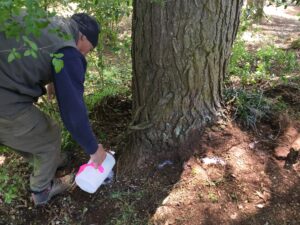
David Hedden with Carolina Hemlocks non-profit, teaching volunteers how to treat infested trees.
To date, this non-profit has treated close to 1,000 private home/landowner trees. Partnering with Clemson Extension, we continually hold educational programs, presentations, and outdoor workshops., We have treated approximately 1,000 Hemlocks in the Greenville Watershed. We have also been cleared by several agencies to treat all trees along the SC Foothills Trail. We have partnered with Clemson Extension, South Carolina Forestry Commission, USFS, SC State Parks, Foothills Trail Conservancy, Duke Energy, and Greenville Watershed to locate, treat, record, and monitor existing hemlock populations. We have trained and utilized volunteers to help treat hemlock trees.
To keep updated on the latest scientific treatment methods, we attend workshops and presentations held by the Tennessee Dept. of Forestry, UGA, Georgia Forestry Commission, and often consult with Dr. Elizabeth McCarty, who is a current expert in the treatment of HWA.
If you have hemlocks trees, know of trees that need treating, or would like to volunteer to help treat, please contact Carolyn Dawson, Clemson Extension Forestry Agent at dawson4@clemson.edu.
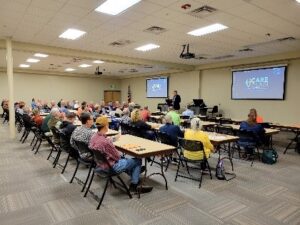
Lucas Clay with Clemson Extension presenting to the Laurens Forest Landowners Association on Carbon Markets.
The last few months have been a busy time in Extension. I have offered numerous programs, field days, and visited with many landowners. Our programs have ranged from timber taxes, carbon credits, field tours, and many other current issues concerning natural resources. Office visits and landowner visits have ranged from vegetable garden problems, pine beetles, nuisance wildlife, and ponds. I always enjoy this time of year since there are more one on one landowner visits to discuss better ways to manage our natural resources.
The Laurens Forest Landowners Association has hosted three meetings this year. Our first meeting was held Tuesday, February 28, 2023, at the Laurens County Farm Bureau Office. At this meeting David Jenkins from the South Carolina Forestry Commission spoke on Insects and Diseases of the South Carolina Forest. We had 29 people in attendance at this meeting. Our second meeting was held on Tuesday, May 23, 2023, at the Laurens County Farm Bureau Office. Todd Mahan from AgSouth spoke on programs available to forest landowners through AgSouth. We had 31 people in attendance at this meeting. Our third meeting of 2023 was held on August 22, 2023, at the Laurens County Farm Bureau Office. We had 28 people in attendance to hear Lucas Clay with Clemson University speak on carbon markets. We also recognized Matt Stewart, with Quail Pines Tree Farm LLC, with the Woodland Owner of the Year Award at the Spotlight on Ag.
Mr. Bennie Hallman showing the Newberry Forestry Association how he grafts buds on root stock to grow desirable trees.
The Newberry Forestry Association has hosted two meeting and one field tour this year. Our first meeting was held at the Stoney Hill Community Center on Tuesday February 14, 2023. Dr. Adam Kantrovich presented a program on timber taxes, we had 28 people in attendance. Our second meeting was held on May 9, 2023, at the Pomaria Community Center, where Lucas Clay from Clemson University presented information on Carbon Markets. We had 30 people in attendance for the meeting. We hosted a field tour on Tuesday, August 8, 2023, at Hallman Farms Wildlife Nursery. We had 18 people in attendance to learn about how Mr. Benny Hallman grafts trees such as persimmon, apple, and pear. These trees are then grown and sold to landowners interested in providing quality fruit trees for better wildlife habitat. At this meeting, we also presented William Folk with the Newberry Forestry Association Scholarship of $500 to continue his education.
Cam Crawford with the Forestry Association of South Carolina speaking at the 2023 Newberry Forestry Focus Program.
This year I was also able to offer Forestry Focus again after taking 2021 off due to covid. The program was hosted on March 4, 2023, and had 63 people attend the program. Topics at this program included SC Landowner Issues, Hardwood Management, Local Market Impacts, Wildlife Food Plots, and Herbicides in Pine Management. There were 39 evaluations completed which showed that 15,789 acres owned, and 43,399 acres managed could be potentially impacted by this program.
The Forestry and Wildlife Team hosted another hybrid Master Tree Farmer program this spring. After completion of the virtual part of the program we hosted several field days across the state. On April 21, 2023, we held a field day at Mike Meetze’s tree farm to visit various sites and see numerous timber practices being put into place. We had a good turnout at this field day with 17 in attendance.
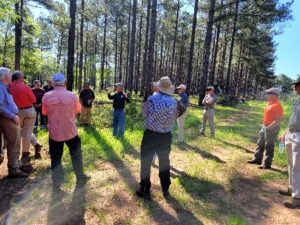
Mike Meetze presenting at the Master Tree Farmer Field Tour.
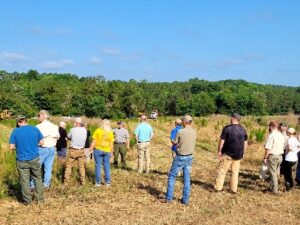
The Indian Creek Quail Restoration Committee held a field day on Friday June 16, 2023. This field day allowed participants to see what private landowners and the US Forest Service has done to improve quail habitat management. We visited old agricultural fields converted over to pollinator habitat, completed prescribed burns, and timber stands where herbicides had been used to control invasive weeds. We had 23 people in attendance for this field day.
I also had the opportunity to take the 4-H Shooting Sports trailer to the Newberry Camp Conservation. Campers had the opportunity to learn about gun safety while learning how to shoot air rifles. There were 30 plus campers in attendance at the camp.
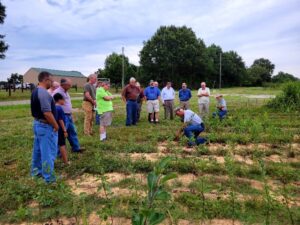
Jake McClain, the South Carolina Quail Focus Area Coordinator, leading a field tour for Indian Creek Quail Restoration Committee.
As summer turns into fall, festivals and fairs will pick up along with site visits. The Union Extension Office had the opportunity to set up a booth and demonstration at the Environmental Art and Music Festival at the Piedmont Physics Garden on April 25, 2023. Participants were able to see the Forged in 4H program, Home and Garden Information, Natural Resource Information, and Rural Health Information. You will also be able to find us some of the upcoming events like the Union County Antique Farm Show and the Union County Agricultural Fair. Make sure to check out the upcoming events in our newsletter to see what is coming this fall and winter.
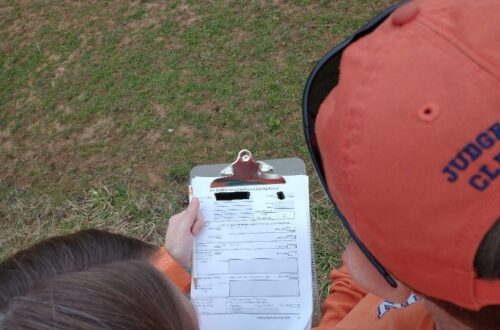
In January, I always look forward to judging the 4-H Wildlife Food Plots that were planted by 4-H’ers in the fall of the year. This year I visited Newberry, Laurens, and Saluda Counties to judge six different food plots. The 4-H Wildlife Food Plot Project gives participants a bag of seed to plant a certain size food plot. The participants then monitor that food plot through a specified time frame and complete a record book with their findings. Many participants set up game cameras, bird houses, and blinds to monitor the wildlife that visit their plot. They also monitor rainfall and document nutrients added to soil to help the pot grow. If you know of youth between the ages of 5 and 19 that maybe interested in the 4-H Wildlife Food Plot Project have them contact their local 4-H Agent at Clemson Extension. The Laurens Forest Landowners Association and the Newberry Forestry Association both hosted meetings in November of 2022.
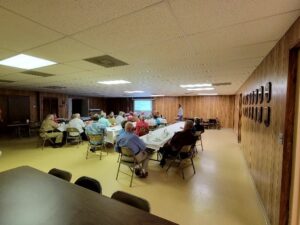
Laurens Forest Landowners Association Meeting
The Laurens Forest Landowners Association meeting focused on vegetation management for the landowner, while the Newberry Forestry Association learned how to calculate and measure seedling survival on a newly planted stand. Wood Magic Forest Fair is a program hosted by the South Carolina Forestry Commission. This is a great program that teaches fifth graders from across the state about forestry. This year I had the opportunity to present at the gifts stations during the Harbison Wood Magic Forest Fair. For more information this program please visit: https://www.scfc.gov/education/wood-magic/
October is always a busy time in Union, because the Clemson Extension Office is actively involved in the local fair. We manage the livestock shows, home economics department, agronomy department and the poultry department. On Thursday of the fair, we invite all the 5K classes throughout the county to visit the fair and to come learn about agriculture in Union County. Through this field trip, the students get a tour through the barn and learn about crops, bees, horses, dairy cows, beef cows, pigs, and chickens.
Fairfield is covered by seven specialized extension agents: Agribusiness, Food Systems and Safety, Forestry and Wildlife, Livestock and Forages, Urban Horticulture and Specialty Crops, Water Resources, and 4-H. During the meeting, these agents highlighted programs offered both virtually and in-person including “Be Well Informed” (testing well water for quality and maintenance) and “Know Diabetes by Heart” (health education program).
The advisory council’s main collaborative project suggestion was implementing more community gardens for Fairfield residents. These gardens could serve as a hosting site for programming including beginner and advanced gardening skills, student engagement with 4-H, as well as food storage and canning workshops. Partnership opportunities with groups such as the Fairfield Farmers and Artisans’ Market, Fairfield Forward, and the Fairfield Career and Technology Center’s horticulture class could also benefit from this community project.
Have suggestions for improvement or future collaborations with the Fairfield community? Clemson Extension welcomes your feedback, so please fill out our anonymous survey to meet the needs of Fairfield County utilizing Clemson Extension’s resources. To get involved with future advisory council meetings and share ideas or resources, contact Fairfield County’s Clemson Extension Service County Coordinator Stephanie Eidt: seidt@clemson.edu | 803-589-8977. Thank you for your continued support!
In January, I always look forward to judging the 4-H Wildlife Food Plots that were planted by 4-H’ers in the fall of the year. This year I visited Newberry, Laurens, and Saluda Counties to judge six different food plots. The 4-H Wildlife Food Plot Project gives participants a bag of seed to plant a certain size food plot. The participants then monitor that food plot through a specified time frame and complete a record book with their findings. Many participants set up game cameras, bird houses, and blinds to monitor the wildlife that visit their plot. They also monitor rainfall and document nutrients added to soil to help the pot grow. If you know of youth between the ages of 5 and 19 that maybe interested in the 4-H Wildlife Food Plot Project have them contact their local 4-H Agent at Clemson Extension.
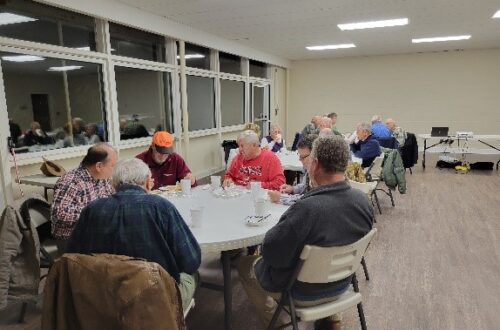
Forest Landowner Association meeting
The Laurens Forest Landowners Association and the Newberry Forestry Association both hosted meetings in November of 2022. The Laurens Forest Landowners Association meeting focused on vegetation management for the landowner, while the Newberry Forestry Association learned how to calculate and measure seedling survival on a newly planted stand.
Wood Magic Forest Fair is a program hosted by the South Carolina Forestry Commission. This is a great program that teaches fifth graders from across the state about forestry. This year I had the opportunity to present at the gifts stations during the Harbison Wood Magic Forest Fair. For more information this program please visit: https://www.scfc.gov/education/wood-magic/.
October is always a busy time in Union, because the Clemson Extension Office is actively involved in the local fair. We manage the livestock shows, home economics department, agronomy department and the poultry department. On Thursday of the fair, we invite all the 5K classes throughout the county to visit the fair and to come learn about agriculture in Union County. Through this field trip, the students get a tour through the barn and learn about crops, bees, horses, dairy cows, beef cows, pigs, and chickens.
The New Year brings new educational opportunities in the field of forestry and natural resources for our area. In 2023, the Newberry Forestry Association and Clemson Extension will host the 18th biennial Forestry Focus Program. Unfortunately, we had to cancel the 2021 program due to Covid. This program is hosted every odd year and in 2023 the meeting will be held on Saturday March 4, 2023. Topics covered this year will include, SC Landowner Issues, Hardwood Management, Local Market Impacts on Stumpage Prices, Wildlife Food Plots, and Herbicides in Pine Management. The program runs from 9:00 am to 3:30 pm and will have pesticide credits and continuing forest education credits with the program. Registration details can be found at the following link: https://www.eventbrite.com/e/2023-newberry-forestry-focus-tickets-506426213437
The Laurens Forest Landowners Association will start their year off on February 28, 2023 with David Jenkins from the SC Forestry Commission speaking on insects and diseases. We meet on the fourth Tuesday of the second month of each quarter (February, May, August, November). If you are interested in joining the Laurens Forest Landowners Association please let me know.
The Newberry Forestry Association starts their New Year off on February 14, 2023 with Dr. Adam Kantrovich from Clemson Extension. Dr. Kantrovich will be presenting on timber tax. We meet on the second Tuesday of the second month of each quarter (February, May, August, November). Bring your sweet heart on valentines day and come get a better understanding of timber taxes.
The Newberry Forestry Association also offers a $500 scholarship. To be eligible to apply for the scholarship one must be a resident of Newberry County and/or a direct family member of a member of the Association. The applicant must also be majoring in forestry or a natural resource based field. For more information on the scholarship, please contact Jeff Fellers at fellers@clemson.edu.
Last summer Janet Steele and Carolyn Dawson successfully offered two Woods in Your Backyard workshops in our area. These workshops were designed specifically for landowners with 1-10 acres to help them learn how to implement sustainable outcomes for their woodlands, wildlife, water, and recreational objectives.
The focus on smaller acreages was to educate owners on how to better manage areas of their property, as well as to help them find professionals to complete the more significant tasks. Participants attending the workshop utilized the Woods in Your Backyard guide and workbook pages to learn more about their land.
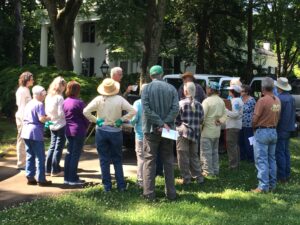
Participants engaged in the Woods in Your Backyard Workshop.
Elements of The Woods in Your Backyard Workshop consisted of Understanding the benefits of managing your land, Mapping your property, assessing why you own it and what you hope it will become, Understanding how your property functions in the larger landscape, Identifying habitat units on your property, Learning basics of tree ID, forestry, and habitat management, Assessing and improving your property’s water resources, recreational possibilities, and aesthetic appeal, Choosing a few backyard projects to help meet your goals, and setting a timetable and marking your progress.
Due to the success of the workshops, the program will be offered again later in the year.
February 24, 2024Saluda County Cattlemens 32nd Annual Heifer Sale starts at 12:00, Noon
February 27, 2024 – Saluda 4-H Livestock Club Meeting here at the office at 4:00pm
March 3,2024 – Registration Deadline for the 4-H Pullet Chain Poultry Project
March 5, 2024– State 4-H Legislative Day , Columbia SC
March 6, 2024 – Saluda County CAMM Training at Hollywood Ruritan for 10am to 12. March 6, 2024 – Saluda County Private Applicators Recertification for Recert. Credits up to 3 Credits Meeting at 1 to 4pm at Hollywood Ruritan in Saluda, SC
March 8, 2024 – Deadline to register for the 4H Dairy Judging Contest.
March 22, 2024– 4-H Dairy Judging Competition in Pendleton and Dairy Spring Show. Also, deadline to Register for the 4H Livestock Judging Competition.
April 5, 2024 – Deadline to Register For the 4-H Small Garden Project April 5, 2024 – 4-H Livestock Judging Competition in Pendleton
April 19-24 – Nation 4-H Conference in Washington, DC