Chris LeMaster Livestock & Forage Agent Cherokee, Spartanburg, & Union Counties
Over 97% of US farms are family-owned, and less than one-third have a formal succession plan.
Let’s try to imagine a business that is worth over a million dollars in assets and holdings. A new investor/partner has started with the company and scheduled a meeting with the CEO/Founder to discuss the transition plan. The CEO obliges, but instead of meeting in an office, they meet at the CEO’s kitchen table. The table is covered with invoices, receipts, seed, parts list and so forth. During the meeting, the CEO’s phone constantly rings with calls about fences, hay, and other “urgencies.” Both parties are beginning to wonder if this is a waste of time; unfortunately, the meeting gets cut short by an issue with a hay baler in the field. No progress was made.
This is a common scene in our family-run farms. Everyone would agree that developing a succession plan is a high-value task for our farm families. Still, the small, less valuable task often takes precedence due to its perceived urgency.
On September 21st, there were over 75 farmers at the succession planning workshop in Pacolet, South Carolina. Speakers from FSA, SC land, and Clemson Extension gave farm families the tools necessary to get started with this vital task. We covered much ground but only scratched the surface of these critical topics. We are working on suggestions and feedback for the next installment of this workshop series. There were farmers from several counties in our region, and we had a great deal of support from our sponsors.
We look forward to equipping farmers now so these farms will still be in farmland tomorrow. Farms are businesses, and successful businesses need a good plan for carrying on to the next generation.
Urban Horticulture Agent Jackie Jordan teamed up with Fairfield County 4-H agent, Martina Wicker to offer Pots of Possibilities. The spring Pots of Possibilities workshop offered participants a chance to make their own edible container garden. Participants combined Malabar spinach, cucumber and tomato plants in pots and learned how to care for the plants. The goal of Pots and Possibilities is to provide citizens of Fairfield County with the tools to grow their own nutritious food.
Master Gardener Training Classes
Jackie Jordan, the Fairfield County Urban Horticulture Agent and Master Gardener Coordinator will offer two Master Gardener Training Classes this fall starting in September. The Kershaw County class will be held on Tuesdays and the Richland County class will be offered on Thursdays through November.
The Master Gardener Training Class trains, selects, and utilizes knowledgeable volunteers to facilitate the educational work of the local Horticulture Agent by delivering research-based information to the citizens of the state.
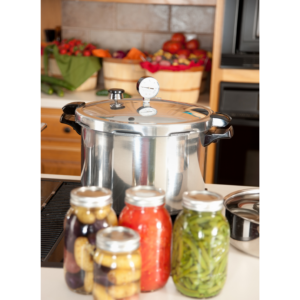
The latest Spring/Summer canning workshops have been highly successful, equipping individuals with the skills to preserve food at home. These interactive, practical sessions have breathed new life into age-old techniques and have also cultivated a spirit of togetherness and teamwork among attendees.
Get Ready for Fall: Exciting Workshop Opportunities
The buzz around our canning workshops is growing, and we’re thrilled to announce our upcoming fall schedule! If you’re interested in learning how to preserve food and have a great time doing it, this is your chance. Bring a friend along and join us for a fun and educational experience. Our workshops are not just about learning new skills; they’re also about making unforgettable memories with new friends. Sign up now and be part of something special!
Don’t let these enriching opportunities pass you by! Join us in keeping tradition alive, building community, and acquiring invaluable skills. We eagerly anticipate welcoming you and your friends to our next workshop!
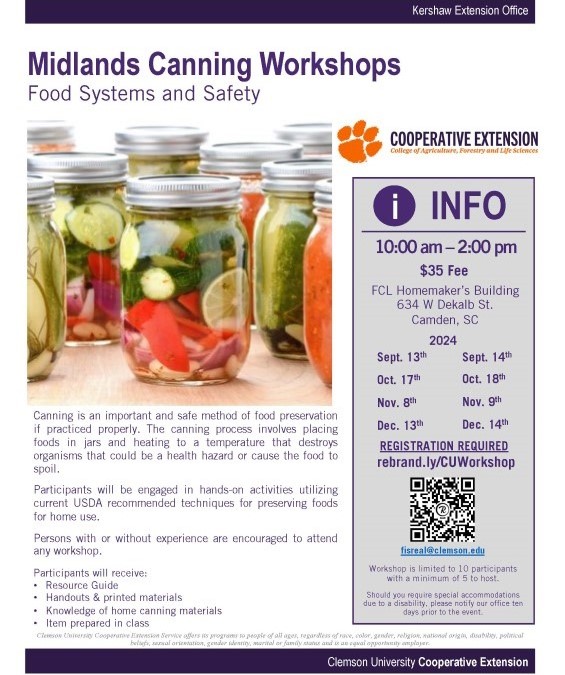
Come join us and learn the basics of canning fruits and vegetables from local farms and home gardens through a unique canning workshop. Participants will engage in hands-on activities using current recommended techniques for preserving foods for home use. Those with or without experience are encouraged to attend. Participants will receive the item(s) they prepare in class, a resource book, other printed materials, and knowledge of safe home canning methods.
Cost is $35 per workshop. Class size is limited to 10 participants, with a minimum of 5. Participants should bring their lunch and wear closed-toe shoes.
Workshops will be held at the FCL Homemakers Building in Camden, SC from 10:00 AM to 2:00 PM on the following Dates:
Friday, September 13th Pickling
Saturday, September 14th Pickling
Thursday, October 17th Pressure Canning
Friday, October 18th Pressure Canning
Friday, November 8th Pressure Canning
Saturday, November 9th Pressure Canning
Friday, December 13th Jams, Jellies & Soft Spreads
Saturday, December 14th Jams, Jellies & Soft Spreads
Canning is an important and safe method of food preservation if practiced properly. The canning process involves placing foods in jars and heating to a temperature that destroys organisms that could be a health hazard or cause the food to spoil.
Participants will be engaged in hands-on activities utilizing current USDA recommended techniques for preserving foods for home use.
Persons with or without experience are encouraged to attend any workshop.
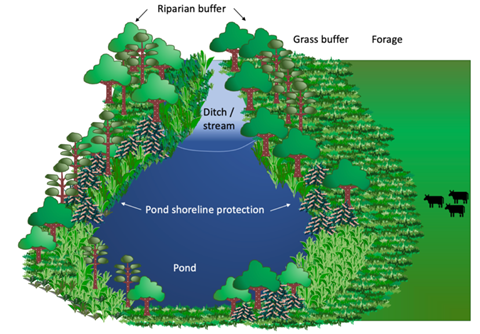
New Online Course! Be Well Informed If you rely on a private well to provide drinking water for your home, the Be Well Informed course is for you! There is no cost and it’s available anytime. Figure 1. Example of a healthy riparian buffer with livestock-safe plants. Image credit: Sarah White
Prepare your pond for spring!
The winter is a great time to start preparing for a healthier pond
when warm weather arrives! Here are some actions to consider.
Consider adding plants to the shoreline of
streams and ponds. Riparian buffers with healthy, native vegetation support
clean water and help prevent erosion along the shoreline. If the waterbody is
in a pasture, see our new Land Grant Press article on Livestock-Safe
Buffers!
When vegetation decays in ponds, the
nutrients from the plant tissue are returned to the water – and can spur future
plant growth. Remove decaying vegetation and compost in an upland area to help
reduce in-pond nutrients.
Consider installing an aerator in ponds that
stratify (or, to simplify, that develop layers of different temperature water)
and in areas with slow or stagnant water. Pumping air to the bottom of a pond
and letting it bubble to the service can increase dissolved oxygen levels and
support healthy fish populations.
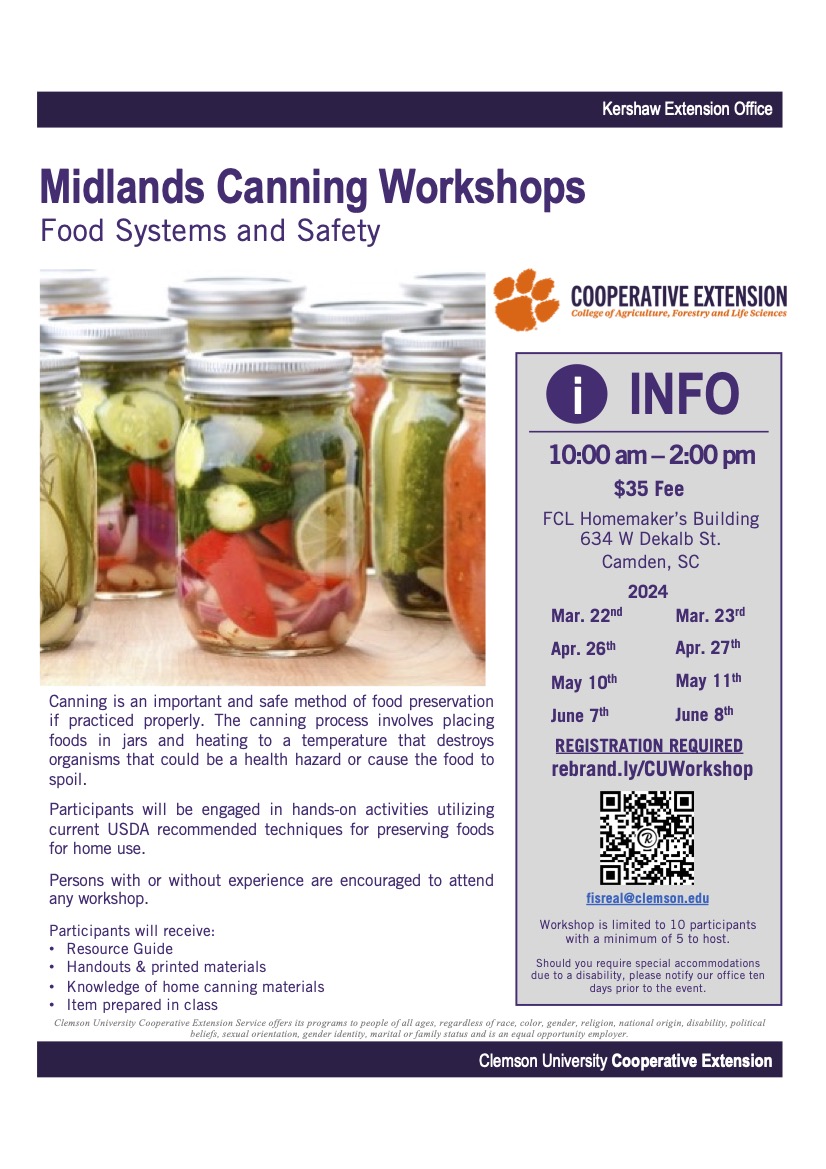
Come join us and learn the basics of canning fruits and vegetables from local farms and home gardens through a unique canning workshop. Participants will engage in hands-on activities using current recommended techniques for preserving foods for home use. Those with or without experience are encouraged to attend. Participants will receive the item(s) they prepare in class, resource book, other printed materials, and knowledge of safe home canning methods.
Cost: $35 per workshop. Participants should bring their lunch and wear closed-toe shoes.
Class
Size: Class
is limited to 10 participants, with a minimum of 5.
Dates:
Friday, September 29th
Salsa
Saturday, September 30th
Salsa
Thursday, October 19th
Pressure Canning
Friday, October 20th Pressure
Canning
Friday, November 10th
Pressure Canning
Saturday, November 11th
Pressure Canning
Friday, December 14th
Jams, Jellies & Soft Spreads
Saturday, December 15th
Jams, Jellies & Soft Spreads
Location: FCL Homemakers
Building 634 Dekalb St. Camden, SC 29020
First Fridays York County Master Gardeners host garden talks that are presented on the first Friday of every month at Glencairn Garden Learning Center in Rock Hill from 11 am to noon. The 2023 topics are available here: https://www.yorkmg.org/programs/first-friday
First Fridays in the Garden Expands Starting February 3rd, the talks will also be offered at the Clover Library from 2:00 to 3:00 pm.
Woody Plant Identification Class
Woody Plant Identification is a 12-week class from April 12th through June 28th at Bartlett Tree Research Lab arboretum. It will be on Wednesday evenings from 6:00 to 8:00 pm. This class is for the commercial horticulture industry to prepare them for a Certified Nursery Professional exam administered by the SC Green Industry Association. We will cover approximately 25 plants per week as we walk the property. Contact Paul Thompson at (803) 639-9101 for more information.
2023 Master Gardener Class
The 2023 class starts August 2 and ends November 8. It will be held at the Glencairn Garden Learning Center at 825 Edgemont Avenue in Rock Hill. Classes are each Wednesday from 9:00 am to 12:30 pm.
Contact Paul Thompson via email at pthmpsn@clemson.edu for an application that needs to be remitted by June 1, 2023.
Mud is a universal issue among all species of livestock, and South Carolina’s mild winters and heavy rainfall contribute to its abundance. While mud is not unique to winter, it is usually a greater concern during periods of heavy feeding. Join us on March 18th from 12 to 12:45 to discuss the challenges of mud as it relates to animal health and nutrition, as well as issues with pasture and soil damage. You must register to attend this free, virtual event.
Animals use more energy standing and moving across soft muddy ground than hardened or dry surfaces. The increased difficulty of traveling through the mud for feed and water has a compounding effect by decreasing intake and increasing energy requirements, which can decrease animal performance up to 25%. This can affect the profitability of production animals such as cattle. The Alberta Feedlot Management guide reports cattle standing in four to eight inches of mud can experience an 8% to 15% decrease in feed intake and a 14% decrease in daily gains. In hock-deep mud of twelve to twenty-four inches, expect a reduction of 30% in feed intake and a 25% decrease in daily gains. Muddy conditions also reduce the animal’s ability to maintain critical body temperature. Mud-caked coats reduce insulation and thereby increase energy demands to maintain core body temperatures, which have negative effects both in summer and winter. These environmental stressors can decrease the animal’s immune response and predispose it to infections such as foot rot. Additionally, muddy conditions can lead to abscesses, poor udder hygiene, increased calf sickness, and calving problems. For equine, slick conditions can increase the risk of injury.
Congregation and high traffic areas around gates, feeding, or watering areas are the most difficult areas to keep free of mud. These heavy-use areas are often over-grazed, exposing bare ground that is further devastated by hoof traffic and feeding machinery. Furthermore, the standing pressure of cattle and horses, at 27 pounds per square inch (psi), is twice that of a human at 14 psi, whereas tractors place 175 psi on the soil. Many South Carolina soils can withstand pressures up to 28 psi when dry but will quickly weaken when wet.
Allowing livestock to graze wet pastures can crush and bruise plants while damaging soil structure. Treading damage from grazing livestock exposes bare soil, increases compaction, and reduces soil infiltration rates. Compaction in the soil further reduces plant and root growth, the water-holding capacity of the soil, and infiltration rates compounding the poor drainage issues in the pasture. Bare soil also increases the risk of erosion and nutrient run-off. Research in New Zealand documented a 50% to 64% reduction in spring pasture productivity following wet winter treading damage.
Unfortunately, there is no “silver bullet” solution to managing mud; however, there is a systems approach requiring many small changes to your operation and feeding practices. View Clemson’s Land-Grant Press article for more information, references for data in this blog, and mitigation recommendations. Some of these recommendations can (and should be) implemented immediately, however many require dry weather and time to get satisfactory results.